The Ins and Outs of Using a Charcoal Chimney Starter to Preheat Your Grill
You’ll get faster, cleaner coal ignition using a chimney starter-it uses convection to evenly heat charcoal from the bottom up in 15–20 minutes. Skip the lighter fluid; just add newspaper underneath and light it. Once coals are ashed over and glowing red, they’re ready. Opt for lump charcoal for high heat or briquettes for steady burns. Always handle the hot chimney with gloves, let it cool fully, then knock out ash. Keep it clean for best airflow. There’s more to mastering your fire than you think.
Notable Insights
- A charcoal chimney starter uses convection to evenly heat coals from the bottom up in 15–20 minutes.
- Place crumpled newspaper beneath the chimney and light it to ignite coals without lighter fluid.
- Coals are ready when covered in gray ash and glowing red, with no visible flames.
- Use lump charcoal for hotter, faster burns or briquettes for longer, more consistent heat.
- Always place the chimney on a flat, fireproof surface and handle with heat-resistant gloves when hot.
How a Chimney Starter Lights Coals Faster
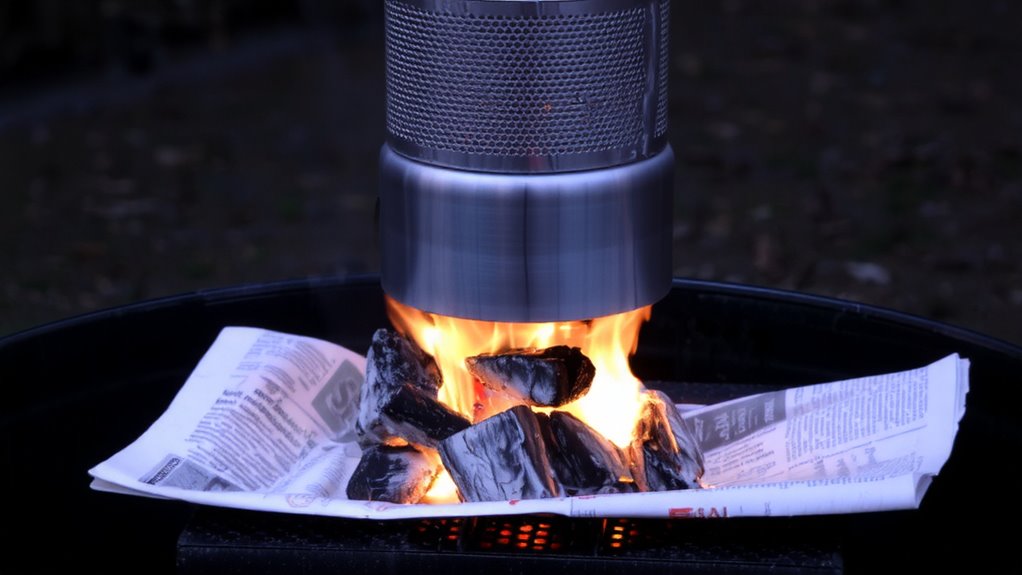
While traditional lighter fluid can get the job done, a chimney starter lights charcoal far more efficiently by using convection to carry heat upward through the stack, igniting coals evenly in about 15 to 20 minutes. You’ll notice the difference right away-no lingering chemical taste, just clean, consistent results. The design promotes superior heat distribution, ensuring each coal lights uniformly from bottom to top. That even spread means fewer hot or cold spots once you’re grilling. Compared to fluid-soaked coals, the ignition speed is faster and more reliable, especially in windy conditions. You’re not waiting around or fussing with matches and paper. The chimney’s simple metal construction traps and recycles heat, accelerating the burn without additives. It’s a smarter, no-nonsense method that serious grillers prefer. When performance and flavor matter, this tool proves its worth every time-no guesswork, just predictable, high-quality results from the first spark to the final sear. For those looking to choose the best model, checking a reliable buying guide can help streamline the decision.
Light Charcoal in a Chimney Starter (No Fluid!)
You’ve seen how a chimney starter uses convection to ignite charcoal faster and more evenly than lighter fluid, and now it’s time to put that design to work. Proper ventilation is key-never block the bottom vents or airflow holes. Place the chimney on the grill’s lower grate or a fireproof surface. Crumple a couple sheets of newspaper, insert them under the starter or into the bottom vents, then light them. The flames rise, drawing air through the charcoal bed for even lighting. Avoid using lighter fluid-it defeats the purpose and introduces chemical flavors. Here’s how the chimney compares to fluid-started methods:
| Feature | Chimney Starter | Lighter Fluid |
|---|---|---|
| Lighting Speed | 10–15 minutes | 10–20 minutes |
| Even Lighting | Excellent | Inconsistent |
| Proper Ventilation | Built-in design | Requires caution |
Reliability and cleanliness make the chimney your best bet.
Tell When Coals Are Ready to Grill
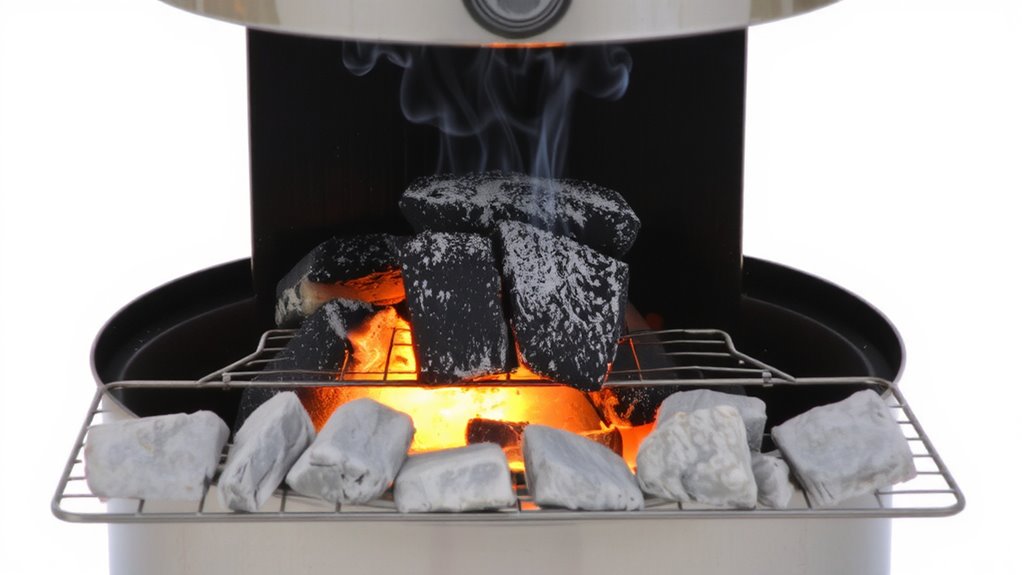
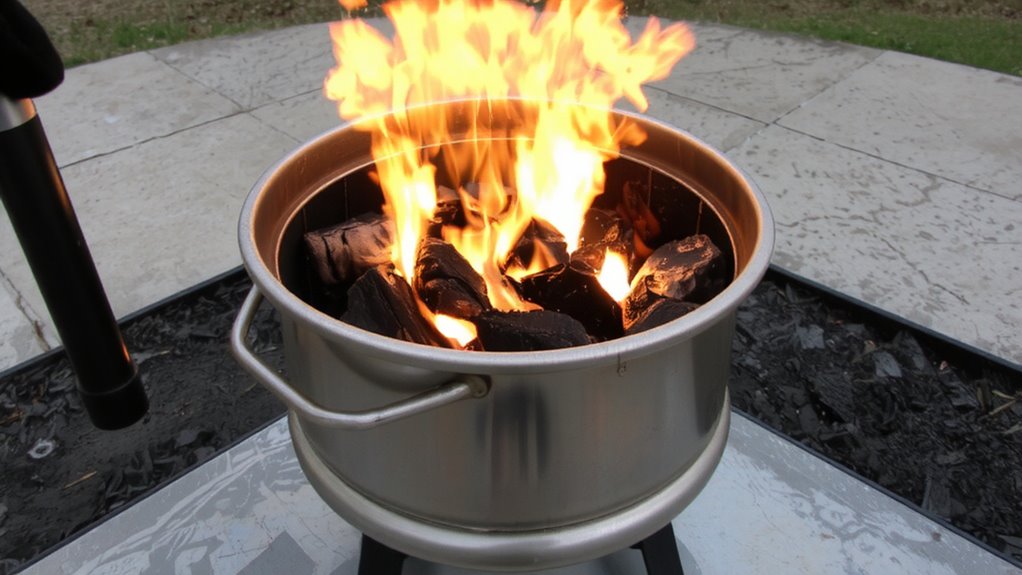
Look for the signs-gray ash forming over glowing red coals-because that’s your cue the charcoal’s ready. When the coals are glowing steadily and covered in a light layer of ash, they’ve reached a temperature consistent enough for grilling. You shouldn’t see any flames licking at the edges; that means combustion isn’t complete. Hold your hand an inch above the grate-if you can only manage about three seconds before it’s too hot, the heat’s where it should be. Coals glowing evenly across the surface guarantee uniform cooking, reducing hot spots. Uneven glow means rearranging or waiting longer. Trust visual cues over time estimates, since chimney design and charcoal type affect burn rate. Once the coals are glowing uniformly and the temperature consistent, you’re set. This stage typically takes 15–20 minutes. Skipping this check risks undercooked food or frustrating flare-ups. Proper readiness isn’t just about heat-it’s control.
Pick the Best Charcoal for Even Heat
Charcoal choice shapes the foundation of great grilling, and lump charcoal stands out for its fast ignition and responsiveness to airflow. You’ll find it burns hotter and adjusts quicker to vent changes, giving you tighter control over cooking temps. Among charcoal types, lump is made from pure wood, so it lights easily and leaves less ash than briquettes. That means cleaner airflow and fewer flare-ups. But if you prioritize long, steady sessions, some briquettes offer better heat consistency, especially for low-and-slow BBQ. They’re engineered to burn uniformly, which helps when you can’t tend the grill constantly. Still, many pitmasters prefer lump for its natural composition and versatility across grilling styles. Whichever you pick, consistency matters-uneven charcoal leads to hot spots and undercooked food. Look for dense, uniform pieces with minimal dust. Quality charcoal types make mastering your grill a whole lot easier. For top-performing options, check out the best charcoal for smoking based on expert testing and user feedback.
Handle a Hot Chimney Safely
Once the right charcoal is selected, attention shifts to safely managing the chimney starter during ignition. You’ll need solid heat protection-never handle the chimney barehanded, even briefly. The metal conducts heat rapidly, and burns are likely without insulated gloves or a wrap. Always use tools designed for high temperatures. Grip stability matters just as much; a wobble or slip can dump hot coals dangerously. Choose a chimney with a secure, heat-resistant handle or wrap the existing one in a dry cloth for better control. Position it on a flat, non-flammable surface before lighting. Avoid tilting it prematurely-wait until coals glow evenly. Your body should stay to the side, not over the top, minimizing exposure. Smart handling isn’t just about performance-it’s a core part of safe, effective outdoor cooking. For reliable protection, consider investing in a pair of best heat resistant BBQ gloves.
Clean Your Chimney After Use
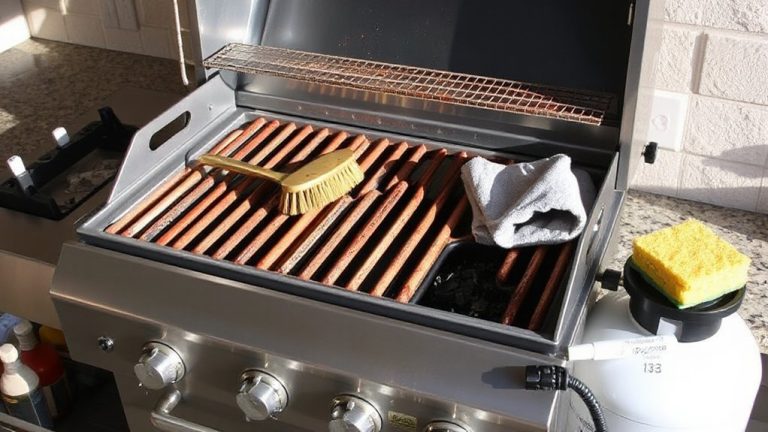
A clean chimney starter isn’t just tidy-it’s essential for reliable performance and longevity. After each use, let the chimney cool completely before starting ash disposal. Tap it upside-down over a metal container to remove residue; never leave ash packed inside, as it can corrode steel over time. For stubborn buildup, perform routine brush cleaning using a sturdy wire brush to clear carbon deposits from the walls and grate. This maintains airflow and guarantees even ignition during future uses. Regular maintenance also lets you inspect for warping or weak spots, especially around the handle and seams. A well-kept chimney delivers consistent results and lasts years longer. Small efforts like brush cleaning and proper ash disposal contribute greatly to performance-this isn’t just cleanliness, it’s functional upkeep. Skimping on care might save time now, but it compromises efficiency and durability down the road.
Why You’ll Never Need Lighter Fluid Again
You’ve just cleaned your chimney starter, knocking out the leftover ash and brushing away the grime, so it’s ready for the next cook-now envision never having to reach for a bottle of lighter fluid again. Using a chimney starter eliminates the need for chemical accelerants, reducing your environmental impact and avoiding toxic fumes. Lighter fluid doesn’t just linger in the air; it can taint your food with off-flavors and pose health benefits by introducing harmful compounds when burned. The chimney relies solely on focused heat convection, igniting coals evenly in 15–20 minutes. You get pure, consistent heat without residue or risk. It’s efficient, cost-effective, and safer for frequent use. Over time, skipping lighter fluid means cleaner grill components and better-tasting BBQ. This method supports sustainable grilling practices while protecting your well-being. Once you master the chimney, you’ll question why you ever relied on fluid in the first place.
On a final note
You’ll get consistent, fast results every time with a chimney starter, eliminating the need for lighter fluid and its chemical taste. It efficiently preheats charcoal to an even, ready-to-grill temperature, enhancing flavor and control. Durable models handle repeated use, while simple cleaning maintains performance. For reliable ignition and better BBQ outcomes, this tool proves essential-practical, safe, and effective when managed properly.