Achieving Crispy Skin on Chicken Legs Cooked Solely on a Leaning Spit
Pat your chicken legs dry and air-dry them uncovered in the fridge for hours or overnight-dry skin renders fat better and crisps faster on a leaning spit. Season after any brine, letting flavors sink in while the skin stays parched. Preheat the spit 20–30 minutes so radiant heat sears immediately. Space legs evenly, spin smoothly, and keep temps steady at 325–375°F. Use a thermometer to check doneness near the bone without poking. Rest them briefly, tented, so juices stay in and skin stays crackling-there’s more to mastering the method.
Notable Insights
- Pat chicken legs dry and air-dry uncovered in the fridge to remove moisture for crispier skin.
- Preheat the leaning spit for 20–30 minutes to ensure immediate searing and even radiant heat.
- Season after brining or season in advance to enhance flavor and support crust development.
- Space legs evenly on the spit to allow balanced rotation, even browning, and proper airflow.
- Cook within 325–375°F and rest after reaching 165°F internally to retain juices and crisp skin.
Dry the Skin for Crispy Chicken on a Spit
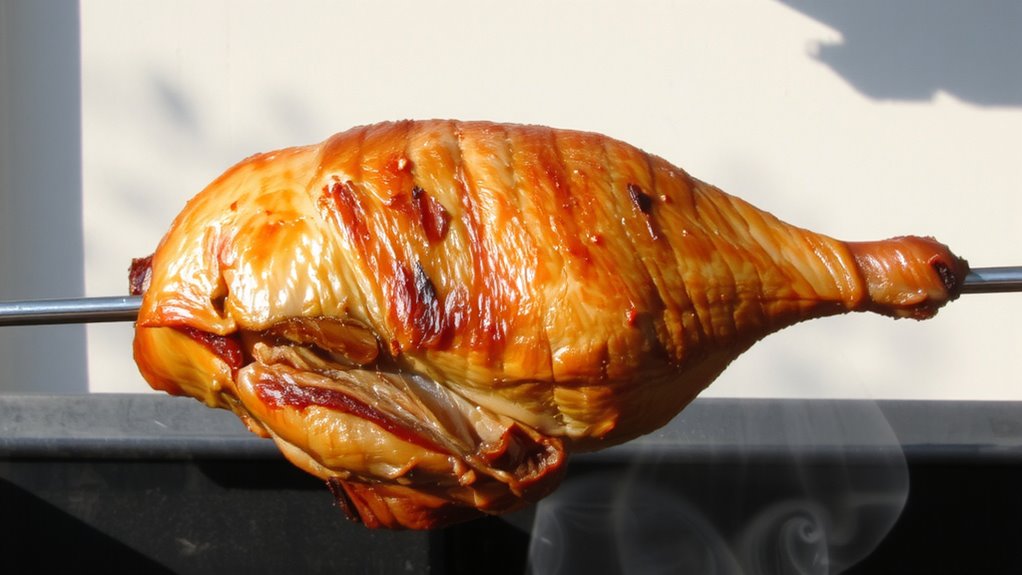
Starting with dry skin means you’re already ahead when aiming for that perfect crisp on chicken legs cooked over an open flame. You’ll want to pat the legs dry first, then let them rest uncovered in the fridge for several hours or overnight-this air drying step pulls moisture from the surface, creating ideal conditions for browning. While some skip this, those who commit notice a dramatic difference in texture. A salt brine beforehand can help retain moisture inside the meat, but it leaves the skin damp, so you must follow up with thorough drying. The combination of a brief brine and extended air drying balances flavor and crispness. Skip either, and your results will vary-especially over live fire, where control is limited. Properly dried skin renders fat more efficiently, crisping faster and staying crunchy longer. It’s not just preparation-it’s precision.
Season Early to Enhance Crisp and Flavor
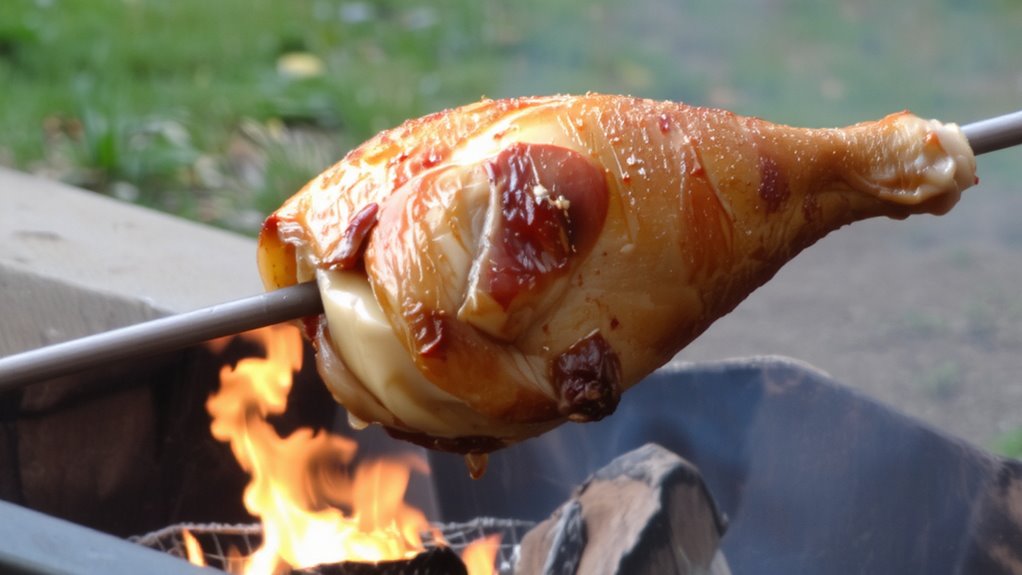
Though you’ve already set the stage with dry skin, your timing with seasoning can make or break the final result when cooking chicken legs on a spit. Seasoning early-ideally after a proper brining technique-allows salt to penetrate the meat, improving moisture retention and deepening flavor. But don’t stop at salt; applying your rub hours or even a day ahead helps develop a more cohesive crust as the skin absorbs the spices. This early seasoning also supports better crisp, as compounds in the rub interact with the surface during slow rotation. Aim for a balanced spice balance-too much heat or sugar can scorch, while the right mix enhances without overpowering. The combination of pre-salted meat and well-timed seasoning transforms your spit-cooked legs into a textural and flavorful success, elevating both juiciness and crunch through careful, deliberate preparation.
Preheat Your Spit for Steady, Crisping Heat
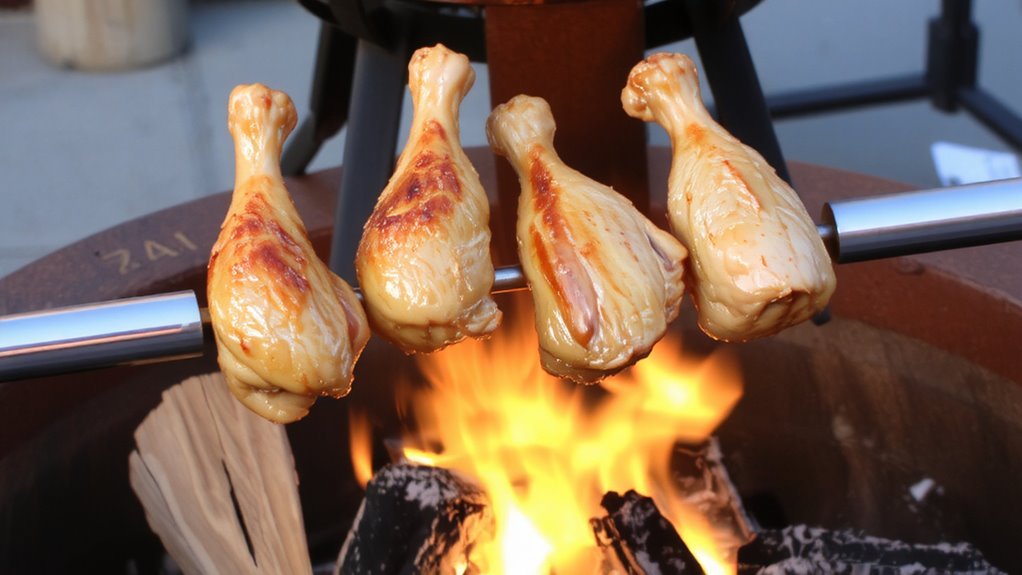
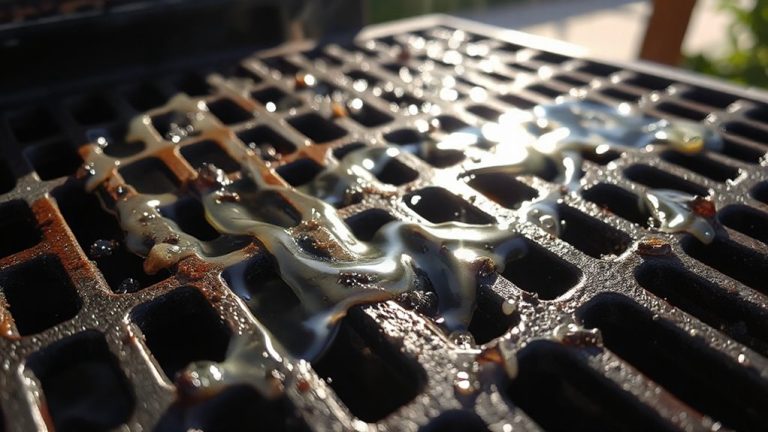
Because consistent heat is essential for achieving perfectly crisped skin and evenly cooked meat, preheating your spit isn’t just a preliminary step-it’s a crucial part of the process. You need steady radiant heat from the start, and that comes only after your spit and fire have reached equilibrium. Depending on your fuel type-whether charcoal, wood, or gas-the preheat time varies, but always allow at least 20 to 30 minutes for proper thermal buildup. This ensures immediate searing upon placement, locking in juices and jumpstarting crispness. Proper spit maintenance also plays a role: a clean, unobstructed spit rotates evenly, distributing heat uniformly. Residue or grease buildup can disrupt airflow and cause uneven cooking. Preheating also reveals mechanical issues early, letting you adjust before cooking. A well-preheated spit provides predictable performance, necessary for mastering outdoor cooking. Skimp here, and your chicken skin won’t stand a chance.
Place Legs for Even Spinning and Browning
Your spit’s running steady and hot, just like you set it up to do after that proper preheating. Now, place each chicken leg carefully along the spit, ensuring even spacing from end to center. Proper spit alignment prevents wobbling and keeps the rotation smooth, which is critical for consistent browning. Don’t crowd the legs-leave space so heat circulates freely, crisping all sides equally. Rotational balance matters too; if one end feels heavier, redistribute or counterbalance with another piece to maintain stability. An uneven load strains the motor and creates hot spots, leading to uneven cooking. Center the mass as much as possible, aligning the thickest parts toward the axis. This setup maximizes exposure to radiant heat while minimizing flare-ups. Good placement isn’t just about looks-it directly affects texture, doneness, and skin crispness. With solid alignment and balance, your legs will spin true, brown evenly, and deliver that deep, golden finish you’re after.
Use a Thermometer to Avoid Touching the Chicken
While keeping the chicken spinning steadily on the spit, resist the urge to poke or prod the legs as they cook-every touch risks losing precious juices and disrupting even browning. Instead, rely on a reliable meat thermometer for the safety check. Guessing doneness leads to overhandling and uneven results. Insert the thermometer near the bone, avoiding contact with it for an accurate meat temperature reading. You’ll get consistent outcomes without halting the rotation or opening the heat chamber too often. For precise and fast readings, consider using a digital meat thermometer with a high accuracy rating.
| Stage | Temp (°F) | What It Tells You |
|---|---|---|
| 145° | Juices run clear, skin crisping | |
| 150° | Nearly done, retain moisture | |
| 155° | Safe zone entered | |
| 160° | Maximum tenderness | |
| 165° | Full safety check passed |
This method guarantees food safety and superior texture-all without touching the chicken.
Keep the Heat Consistent for Golden Skin
After the chicken legs have settled into their rotation on the spit, maintaining a steady heat becomes critical for achieving that rich, golden skin everyone expects from well-roasted poultry. You’ll need precise heat control to avoid scorching or undercooking, especially with open flames that fluctuate. Aim for a consistent 325–375°F zone, using adjustable vents or burners to regulate output. Thermal stability isn’t just ideal-it’s essential, as uneven temperatures cause blotchy browning and rubbery patches. Reflective shields or indirect setups help balance exposure, particularly on leaning spits where one side may face more radiant energy. Charcoal users should opt for a two-zone fire, while gas grills benefit from preheated ceramic plates to store and distribute warmth evenly. Don’t open the lid often; each peek disrupts the chamber’s thermal stability. With solid heat control, you’ll coax out deep color and crisp texture without drying the meat. That’s how golden skin is reliably earned.
Rest the Chicken to Lock in Juice and Crunch
Once the chicken legs come off the spit, letting them rest isn’t just a pause-it’s a crucial step that seals in both juiciness and crunch. You need at least five to ten minutes off the heat, tented loosely with foil. This pause allows carryover cooking to finish subtly while enabling juice retention by giving muscle fibers time to reabsorb moisture. If you cut too soon, those precious juices flood out, leaving meat dry despite perfect roasting. Meanwhile, resting helps preserve skin texture-crispiness stays intact instead of turning leathery from trapped steam. A well-rested leg delivers both succulent interior and shatteringly crisp exterior. Skimp on rest, and even expertly cooked poultry loses edge. For consistent results on a leaning spit, where airflow and radiant heat shape outcomes, this final step isn’t optional-it’s essential for balance between flavor, structure, and performance.
On a final note
You’ve got the tools to nail crispy skin on chicken legs using just a leaning spit. Drying, seasoning early, and steady heat are key. Preheating guarantees immediate searing, while proper placement promotes even browning. A thermometer keeps you from guesswork, preserving juices. Consistent fire management delivers golden, crackling skin. Resting locks in moisture without sacrificing crunch. This method, rooted in control and timing, proves outdoor spit cooking isn’t just effective-it’s ideal for texture and flavor done right.