Resting Spit-Roasted Meats Properly Before Carving Outdoors in Cool Air
You should always let your spit-roasted meat rest outdoors before carving-it’s key to juicy, flavorful results. Cool air speeds up surface cooling, so at 40°F, heat loss hits 1.8°F per minute, risking uneven temperatures if not managed. Place the roast on a clean, elevated surface in a covered area, tented with butcher paper or foil to protect from bugs without trapping steam. Thicker cuts need 20–30 minutes, thinner ones 5–10. Proper resting guarantees stable carryover heat and juice retention; skipping it wastes your effort. The right technique makes all the difference in texture and taste, especially when conditions aren’t ideal-knowing how to adapt is where true outdoor mastery begins.
Notable Insights
- Rest meat 5 minutes per inch of thickness to allow juices to redistribute and prevent dryness when carving.
- Use a clean, elevated surface in a covered outdoor area to protect from contaminants and animals.
- Avoid tight foil wrapping; tent loosely or use butcher paper to preserve crust and prevent sogginess.
- Cold air accelerates surface cooling, so monitor resting time to balance crust integrity and internal temperature.
- Keep meat visible and monitored during resting to ensure safety and maintain quality in outdoor settings.
Why Resting Meat Outdoors Is Non-Negotiable
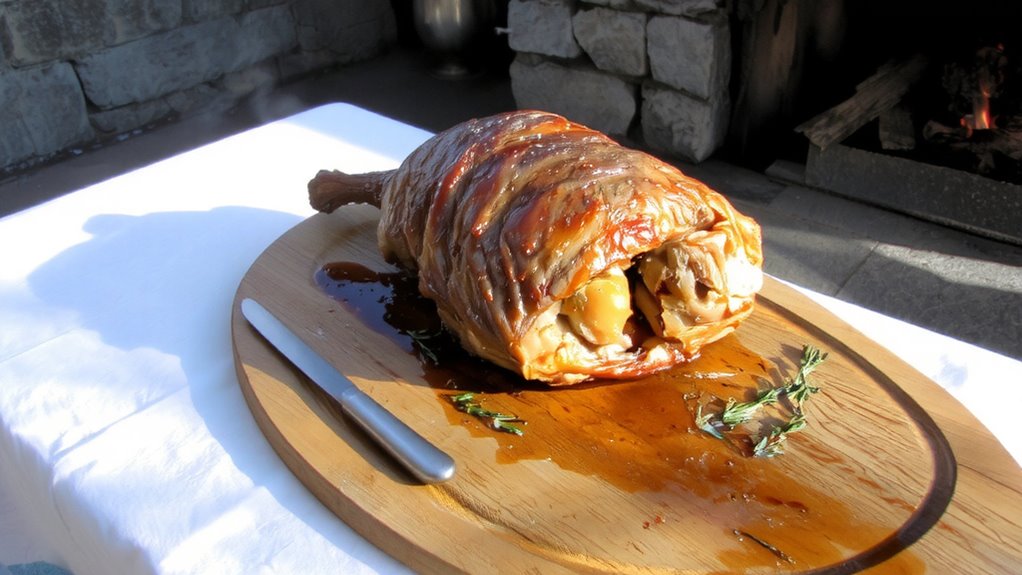
Even if you’ve cooked your spit-roasted meat to a perfect internal temperature, skipping the outdoor rest will cost you in both texture and flavor. Letting it sit allows juices to redistribute, directly improving meat texture and ensuring each slice stays moist. When you carve immediately, those precious juices spill out, leaving the meat dry and compromising flavor retention. Outdoors, the natural airflow-without being too aggressive-helps form a slightly crisp exterior while the interior finishes relaxing. This balance enhances mouthfeel and taste without overcooking. Resting isn’t passive; it’s a vital phase in the cooking process. You’re not waiting-you’re actively refining. The brief downtime elevates presentation and palatability, making it non-negotiable for serious outdoor cooks. Whether it’s pork, beef, or poultry, proper resting delivers consistent, high-quality results you can taste. Skip it, and you sacrifice too much.
How Cold Air Speeds Up Heat Loss in Roasts
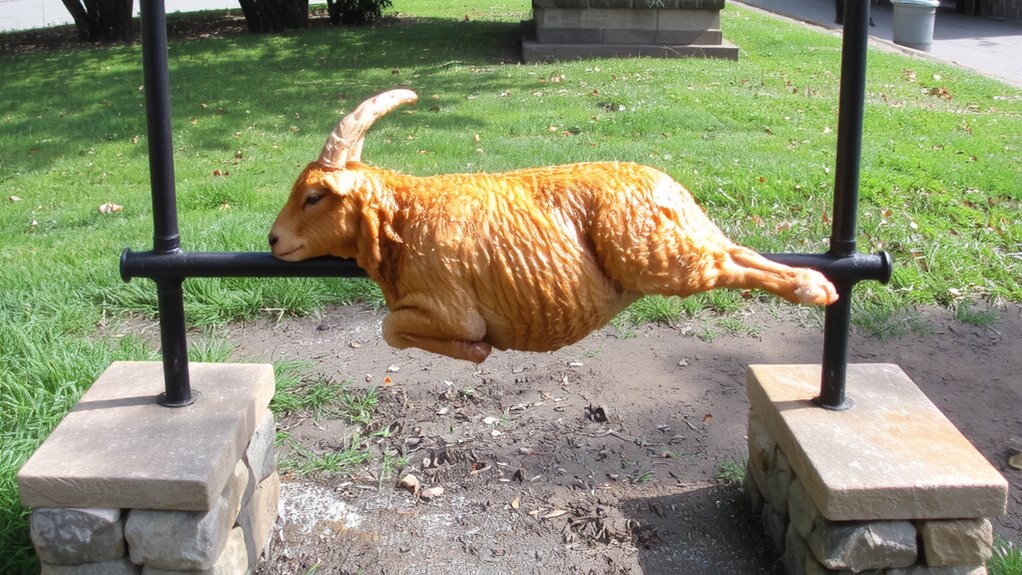
You’ve let your roast rest outside, giving those juices time to settle back into the fibers where they belong, and now you’re seeing another effect at play-cold air pulling heat from the surface faster than you might expect. The reason? Cold air has higher thermal conductivity than warm, and ambient convection moves cooler molecules across the roast’s surface, accelerating heat loss. This isn’t just about feeling chilly-it’s physics working in real time. While this cools the exterior quickly, the interior continues redistributing heat, balancing temperature throughout.
| Air Temp (°F) | Surface Cooling Rate (°F/min) | Convection Effect |
|---|---|---|
| 40 | 1.8 | High |
| 60 | 1.2 | Moderate |
| 80 | 0.7 | Low |
Though outdoor resting offers control, remember: too much cooling may leave you carving a cold-outside, warm-inside roast.
Where to Rest Spit-Roasted Meat Outside Safely
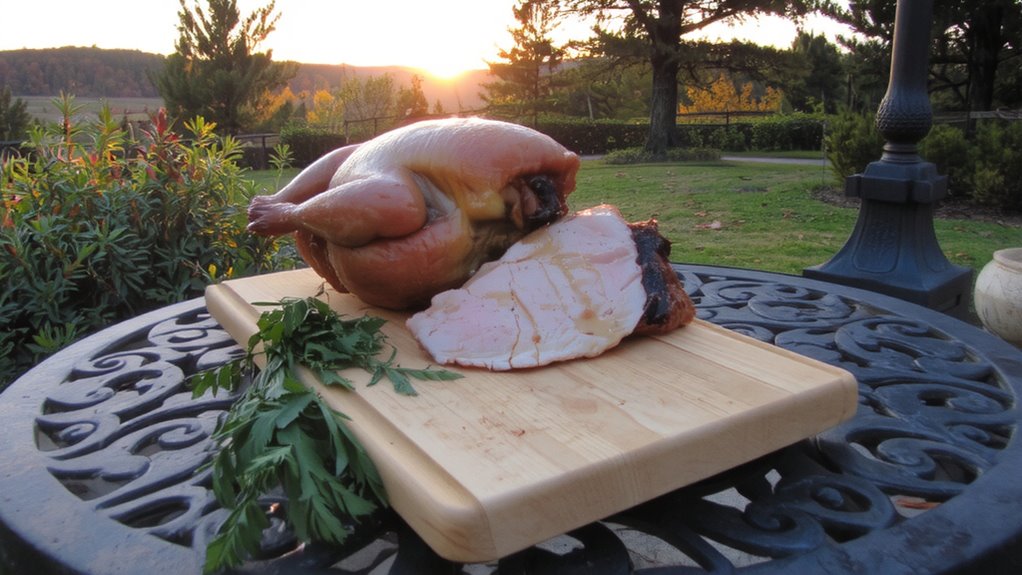
Your roast’s resting spot matters just as much as the cook itself, especially when choosing where to rest spit-roasted meat outside safely. You’ll want a clean, flat surface away from wind gusts that could cool it too quickly. Opt for a covered area like a patio or gazebo to limit animal interference-raccoons, dogs, or birds can ruin your meat placement in seconds. Elevate the roast on a cutting board or tray, never directly on furniture or grass. Use a meat tent or loose foil to protect from insects while allowing steam to escape. Avoid placing it near the grill flare zone or open trash, both of which attract pests. Smart meat placement isn’t just about convenience-it’s food safety and flavor preservation. Keep it visible and monitored; unattended meat invites contamination or theft. A well-chosen rest zone protects your effort from flare-up to fork.
How Long to Rest Different Meats After Spitting
While cooking times and temperatures often take center stage, letting your spit-roasted meat rest is just as critical to achieving tender, juicy results. You should rest meat based on both meat thickness and grill temperature-thicker cuts like a 3-inch prime rib need 20–30 minutes, while thinner items like chicken breasts only require 5–10. High grill temperature sears the exterior fast, locking in juices that need time to redistribute. If you carve too soon, those flavorful juices spill out, leaving meat dry. A 1.5-inch steak, even at ideal doneness, loses moisture without a 10-minute rest. Generally, aim for 5 minutes per inch of thickness. This balance guarantees fibers relax and moisture reabsorbs evenly. Resting outdoors works well in cool air, but avoid wind or direct sun. Your patience directly impacts texture and flavor-skip it, and all your careful cooking loses reward.
How to Cover Meat Without Trapping Steam
Letting meat rest uncovered risks cooling too quickly, yet wrapping it tightly traps steam that softens the crust you worked to build. To strike the right balance, use a loose cover that retains warmth without suffocating the meat. Butcher paper is ideal-it’s breathable, locks in moisture moderately, and preserves crust integrity better than aluminum foil, which seals in steam and promotes sogginess. Tenting foil loosely helps if butcher paper isn’t available, but avoid direct contact with the surface. Here’s how they compare:
| Material | Breathability | Crust Protection |
|---|---|---|
| Butcher paper | High | Excellent |
| Aluminum foil | Low | Poor |
| Foil (tented) | Medium | Fair |
| Uncovered | None | Good |
Use butcher paper when possible; it’s the smart choice for outdoor rest.
How to Tell When Meat Is Fully Rested
How do you know when your spit-roasted meat has rested enough? You’ve let it sit, loosely tented, away from direct heat-now it’s time to assess. First, check for internal temperature stability: insert a reliable probe thermometer into the thickest part. If the reading holds or drops only slightly over 5–10 minutes, the meat’s thermal energy has equalized. This stability means carryover cooking has tapered, reducing the risk of overcooking. Next, evaluate juice redistribution balance. Well-rested meat releases fewer juices when carved because proteins have relaxed, letting moisture settle evenly. If you cut too soon, juices flood the cutting board-wasted flavor and dry bites. For cuts like leg of lamb or whole chicken, 15–20 minutes usually suffices; larger roasts may need 30. Trust both temp and texture: firm yet yielding means it’s ready. A fast and accurate meat thermometer ensures you’re not guessing when your meat has finished resting.
Top Outdoor Resting Mistakes (And How to Fix Them)
You’ve nailed the cook and monitored the rest like a pro, but outdoor conditions can still undermine your results if you’re not careful. One common mistake is leaving meat in overcrowded prep areas, where airflow is restricted and cross-contamination risks rise. Without proper space, heat retention becomes uneven, leading to over-resting or cold spots. Always position rested meat on a clean, open rack away from raw items. Another issue is wildlife interference-squirrels, birds, or insects drawn to the aroma can contaminate or damage your work. Keep meat covered with a breathable mesh dome or tented foil, which blocks pests while allowing residual heat to escape. Avoid plastic covers that trap steam and make surfaces soggy. In cool air, these strategies preserve both safety and texture, ensuring your carefully roasted meat stays pristine until carving. Prevention beats correction every time outdoors.
On a final note
You’ve roasted it low and slow, so don’t rush the rest. Cooling meat outdoors speeds heat dissipation, improving texture and moisture retention. Just keep it in a clean, shaded spot above 40°F, loosely tented to avoid steam buildup. Larger roasts need 15–30 minutes; poultry, 10–15. Use a probe to check for stabilized internal temps. Skipping this step wastes effort-resting isn’t passive, it’s essential finishing work.