Knowing Local Regulations About Fire Bans Before Lighting Any Camp Stove
You should always check local fire bans before firing up your camp stove, since most agencies classify even gas stoves as open flames. Regulations vary-some allow elevated propane stoves during restrictions, while others ban all flames outright. Ignoring rules risks fines up to $1,000 or sparking a wildfire, especially in dry, windy conditions. Rangers look for fuel type, stove placement, and recent use. Knowing the current alerts keeps you safe and compliant-there’s more to weigh than just your meal.
Notable Insights
- Check local land agency websites or apps for current fire bans before using a camp stove.
- Contact park rangers or forest service offices for verified, up-to-date fire restriction information.
- Most camp stoves are classified as open flames and may be restricted during fire bans.
- Rules vary by location-federal lands may allow gas stoves while state parks prohibit them.
- Violating fire restrictions can result in fines up to $1,000 or legal consequences regardless of intent.
How to Check Fire Bans That Affect Camp Stoves
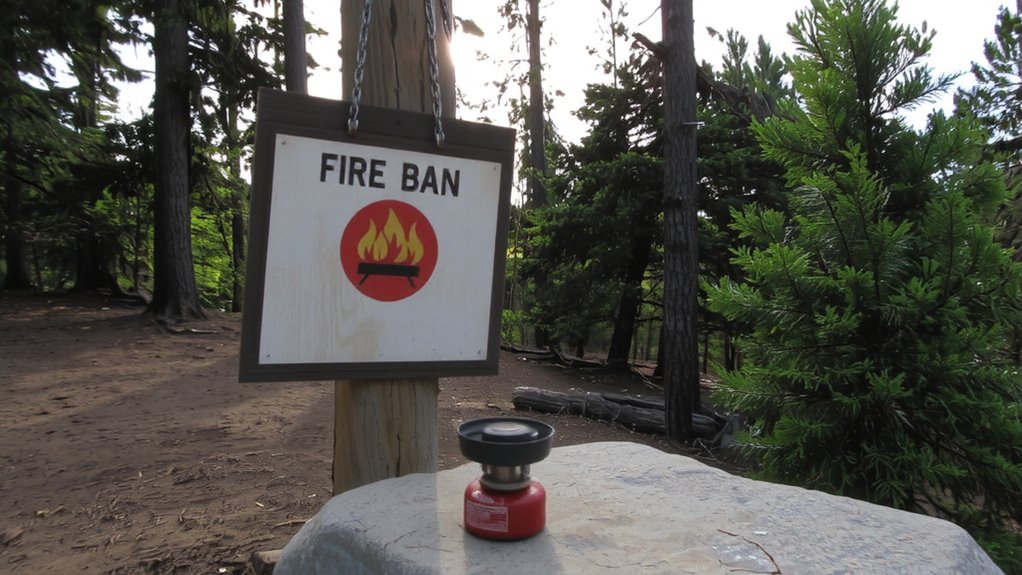
How do you know if your camp stove is even legal to use on your next outdoor trip? You start by checking alerts from local land management agencies, which often post fire restrictions online or through apps. These updates tell you whether gas stoves are allowed or banned, even if they’re not considered open flames. Contacting authorities like park rangers or forest service offices gives you confirmed, up-to-date guidance-don’t rely solely on signage or outdated websites. Some areas prohibit all ignition sources during high-risk seasons, regardless of stove type. Checking alerts regularly throughout your trip is smart, as conditions change fast. Contacting authorities also helps clarify gray areas, especially in intermediate zones between public lands. Skipping these steps risks fines or accidental wildfires. Responsible outdoor cooking means respecting local rules, not just gear performance. Stay informed, stay compliant, and keep your trip safe and legal.
Is a Camp Stove Considered an Open Flame?
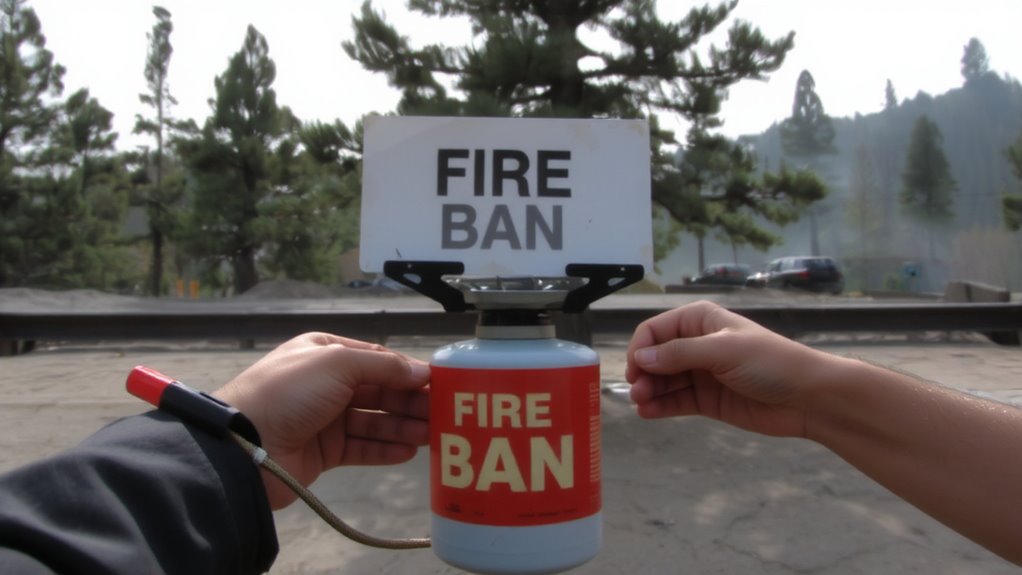
You can’t assume your camp stove is fine to use just because it’s not listed alongside campfires in a fire ban. Whether it’s considered an open flame depends on local definitions, but most authorities classify camp stoves as open flames due to their exposed burner and continuous flame during use. The fuel source-typically propane, butane, or white gas-feeds a consistent flame regulated by a valve, making it more controlled than a campfire but still combustible. Your stove’s ignition method, whether piezo spark or match-light, also plays a role, as both create a direct flame. While stoves are portable and efficient, they aren’t automatically exempt during restrictions. Regulations often hinge on flame containment and risk level, so even if your setup seems safe, it might still fall under open flame prohibitions. Always verify with local officials, because a controlled flame is still a flame.
Where Camp Stoves Are Allowed During Fire Bans
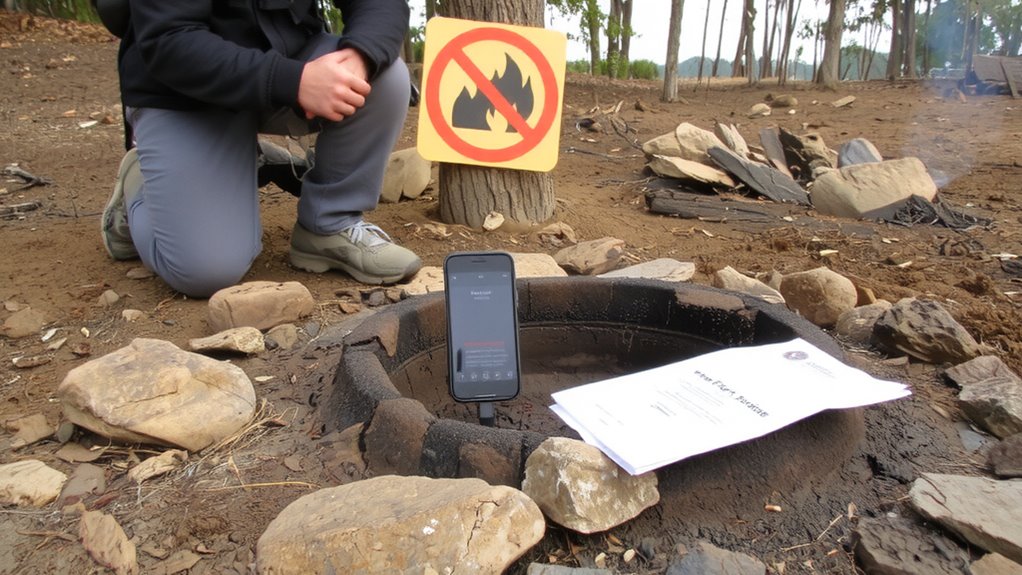
A camp stove isn’t automatically off-limits during a fire ban, but where you can use it depends heavily on jurisdiction-specific rules and the type of land you’re on. On federal land, like national forests or BLM areas, stove use is often permitted if it’s elevated and fueled by gas, not liquid. State parks may restrict even stoves during extreme weather conditions, especially drought or high winds. Always check with local ranger stations or official websites before you rely on your gear. Cooking etiquette matters-using a stove responsibly means minimizing flame exposure and avoiding flammable surroundings. Even if regulations allow it, poor judgment in windy or dry conditions can create unnecessary risk. You’re better off preparing meals in cooler, stable weather when fire danger is lower. Knowing the design and limits of your stove helps you make safer choices. It’s not just about legality-it’s about responsible outdoor cooking.
Fines for Using a Camp Stove Illegally
Several hundred dollars could be the price of a moment’s negligence if you fire up a camp stove in violation of local fire restrictions. You might not realize it, but penalty amounts vary widely depending on the jurisdiction and severity of the violation-some areas impose fines as low as $50, while others exceed $1,000. These legal consequences aren’t just about money; they can include citations, bans from public lands, or even misdemeanor charges during extreme fire conditions. Enforcement is taken seriously, especially in drought-prone regions where a single spark could trigger a wildfire. You’re responsible for knowing the rules before you cook, not after you’re fined. While camp stoves are efficient and convenient, their use carries accountability. Ignoring fire bans undermines public safety and natural resource protection. Compliance isn’t optional-it’s part of being a responsible outdoor user.
No-Cook Meals During Fire Bans
What if your next outdoor meal didn’t require a flame at all? During fire bans, no-cook meals aren’t just convenient-they’re essential. With proper meal prep, you can enjoy wraps, grain salads, or fruit and nut mixes without risking fines or safety hazards. These options skip the need for a camp stove and reduce fire danger markedly. You’ll want to prioritize food safety, especially in warm weather; use insulated coolers with ice packs to keep perishables like cheese or chicken below 40°F. Shelf-stable proteins like tuna packets or nut butters offer reliable nutrition. Though they lack the sizzle of BBQ, no-cook meals perform well under restrictions, maintaining flavor and energy. They demand planning, but the trade-off is safety, compliance, and simplicity. Smart preparation guarantees you stay fed, safe, and in line with local fire regulations-no flame required.
When Fire Restrictions Change Overnight
Even if you’ve planned your trip around current fire regulations, you might wake up to a sudden change-overnight restrictions can go into effect without warning, especially as weather conditions shift or fire risk escalates. When weather shifts bring dry winds or extreme heat, land management agencies often issue emergency declarations to limit fire use immediately. These changes can catch campers off guard, particularly in regions where conditions deteriorate rapidly. You should assume that posted rules may not reflect real-time updates, since signage and websites aren’t always current. Relying on a camp stove could suddenly become a violation. Checking with local ranger stations or official alerts each morning is a practical precaution. While this responsiveness might seem inconvenient, it’s a necessary measure to prevent wildfires. Emergency declarations prioritize public safety over convenience, and adapting quickly guarantees you stay compliant and minimize environmental risk. A reliable camping stove can still be essential during fire bans when alternative heat sources are allowed.
What Rangers Look for When Enforcing Stove Bans
You wake up to a fresh red flag warning posted online-overnight, the forest you’re in has shifted to extreme fire danger, and stove use is now banned. Rangers begin checking compliance using established stove inspection criteria: they look for fuel type, stove placement on non-flammable surfaces, and whether the unit is off or recently used. Even canister stoves aren’t exempt during high-risk periods. You’ll notice ranger patrol patterns intensify near trails, campsites, and water sources-places with high visitor traffic. They’re not just checking for active flames but signs of recent use: warm equipment, lingering gas odor, or charred surfaces. Their goal is prevention, not punishment. These inspections balance safety with practicality, recognizing that many hikers rely on stoves but also understanding how quickly a small mistake can ignite disaster. Knowing what they look for helps you stay compliant and responsible outdoors.
On a final note
You should always check local regulations before using your camp stove, since rules vary by region and season. While not always classified as open flames, many fire bans restrict their use during high-risk periods. Ignoring these can lead to steep fines and increased wildfire risk. Opting for no-cook meals is often safer and legal. Rangers watch for smoke, flame, and fuel types, so compliance isn’t just about avoiding penalties-it’s about responsibility in fragile outdoor spaces.