Mastering the Art of Smoker Cooking for Flavorful Meats
You’ll get the best results by matching your smoker type to your skill level-pellet models offer convenience, while offset smokers deliver deep flavor with practice. Pair mild woods like apple with chicken, and bold mesquite or oak with beef. Brine meat for 12–24 hours and apply rubs ahead of time for better bark. Keep the smoker steady at 225°F with proper airflow, then rely on a good thermometer and rest the meat before slicing. There’s more to fine-tuning your technique just ahead.
Notable Insights
- Choose a smoker type that matches your skill level and flavor goals, such as pellet for ease or offset for authentic smoke flavor.
- Select wood chunks wisely: use apple or cherry for mild meats, hickory or pecan for pork, and oak or mesquite for beef.
- Prep meat with a brine (12–24 hours) and a spice rub (applied 1+ hours ahead) to boost flavor and smoke absorption.
- Maintain a steady 225°F cooking temperature with proper airflow and damper control for tender, evenly smoked results.
- Monitor internal meat temperature with a reliable thermometer and rest for 30 minutes to 2 hours before slicing against the grain.
Choose the Best Smoker for Your Cooking Style
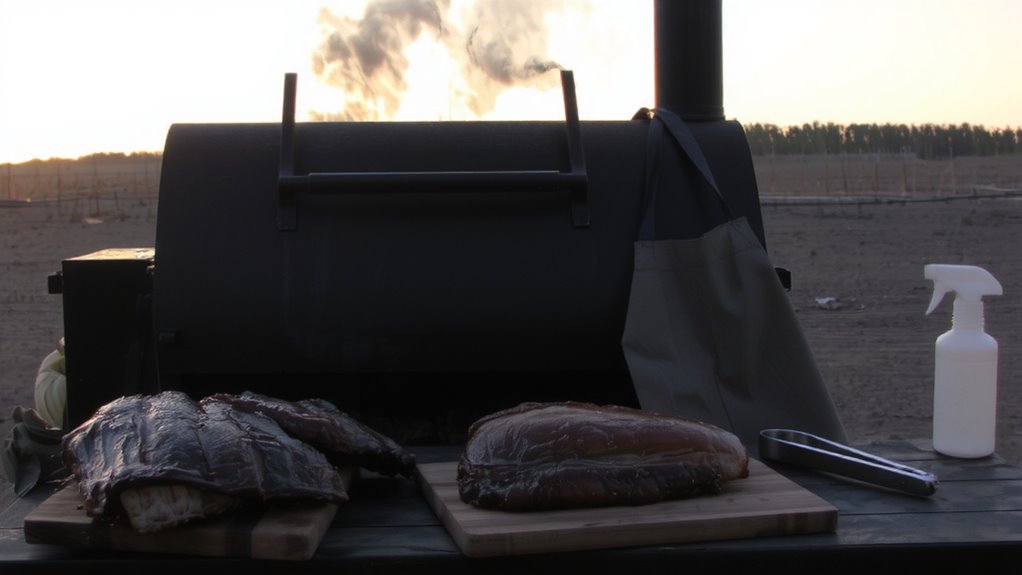
So, how do you pick the right smoker when so many types promise great results? You’ve got to match the smoker to your cooking habits, not just its looks or price. If you’re grilling weekly, a pellet smoker offers ease with digital controls and steady heat. For purists, offset smokers deliver authentic flavor but need more attention. Charcoal and electric models fall somewhere in between. Consider smoker placement-keep it on stable, non-flammable ground away from walls. Ventilation control is critical; it manages heat and smoke flow, directly affecting cooking consistency. Too much airflow, and you’ll burn fuel fast; too little, and your meat steams instead of smokes. Reliable dampers let you tweak temperature gradually. A well-designed firebox and exhaust system make maintenance easier and performance more predictable. Ultimately, the best smoker fits your space, schedule, and skill level while supporting precise, long cooks. For trusted picks based on performance and value, check out our guide to the best smokers for every grilling enthusiast.
Pick the Right Wood for Your Meat’s Flavor
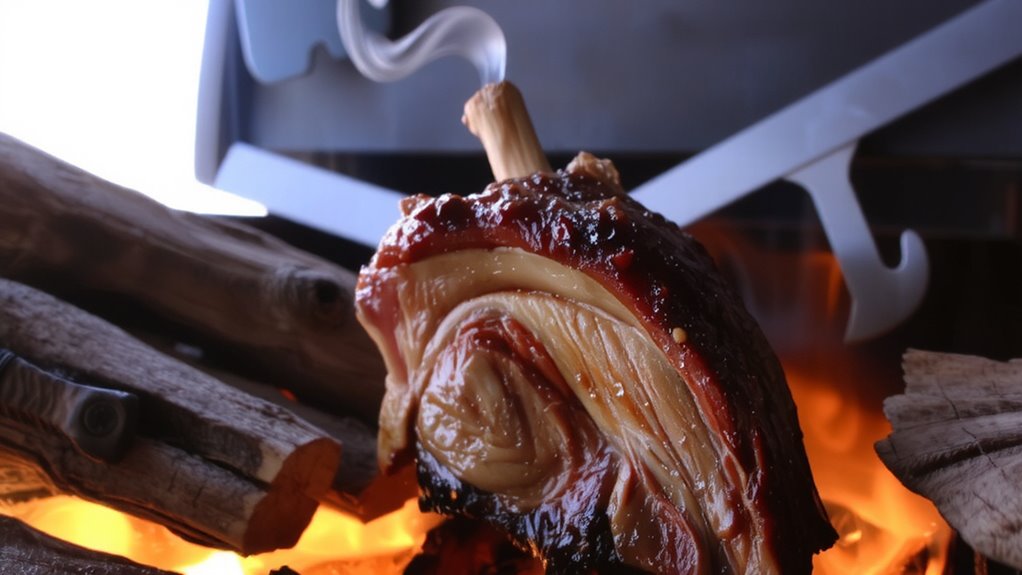
Picking the right wood isn’t just about adding smoke-it’s about shaping flavor, and matching the wood to your meat makes all the difference in building a balanced, satisfying taste. The key is in proper wood pairing and understanding smoke intensity. Mild meats like turkey or fish need lighter woods to avoid overpowering, while beef brisket thrives with bold, smoky notes. Here’s a quick guide:
| Meat Type | Recommended Wood |
|---|---|
| Chicken, Fish | Apple, Cherry |
| Pork | Hickory, Pecan |
| Beef | Mesquite, Oak |
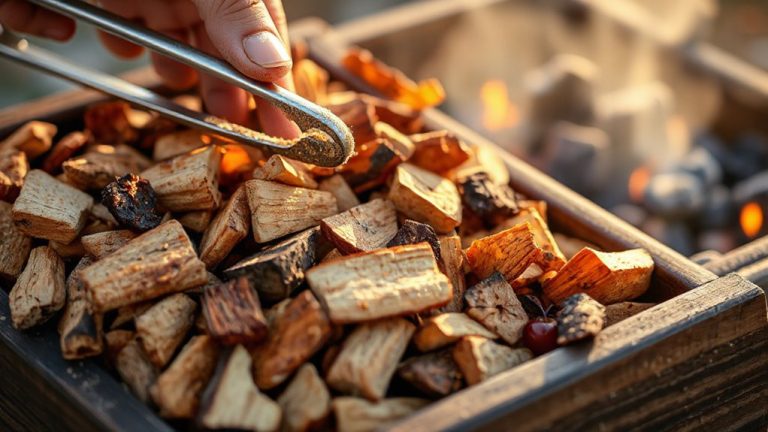
Apple wood delivers subtle sweetness with low smoke intensity, perfect for delicate proteins. Hickory adds a robust, bacon-like depth, ideal for pork shoulder. Mesquite burns hot and strong, so use it sparingly-it can turn bitter if overapplied. Oak offers consistent smoke intensity and is a reliable all-rounder. Mastering wood pairing elevates your barbecue from good to exceptional. For best results, choose quality smoker wood that is food-grade and free from chemicals or additives.
Prep Meat to Soak Up Maximum Smoke
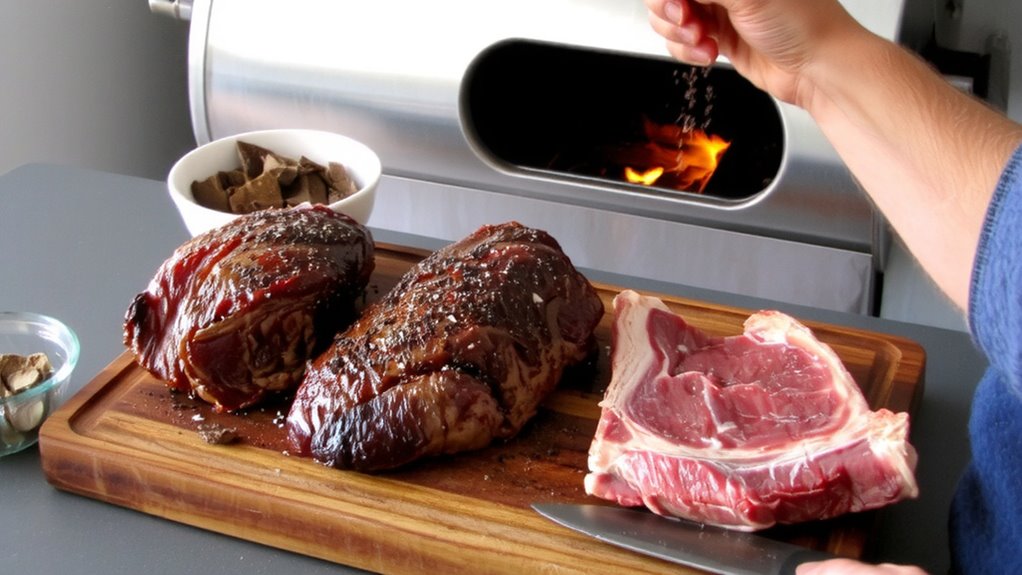
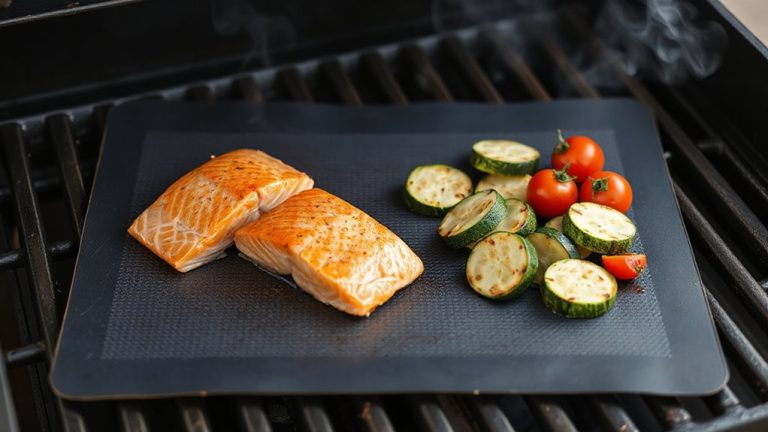
While the right wood sets the foundation for great smoke flavor, how you prepare the meat determines how deeply those flavors penetrate. You should consider brine duration carefully-too short, and the meat won’t absorb enough moisture and seasoning; too long, and it can become overly salty or mushy. For most cuts, 12–24 hours strikes the ideal balance, enhancing juiciness while allowing smoke to bind better to the surface. Equally important is spice rub timing. Applying it just before smoking is tempting, but letting it sit for at least an hour-or even overnight-builds deeper flavor. The rub’s spices meld with the meat’s surface, improving bark formation and smoke adhesion. A well-timed rub and proper brine duration work together, not just seasoning the meat but creating conditions for smoke to cling and infuse thoroughly, transforming good barbecue into something exceptional. A high-quality cooking surface, like a durable grill insert for outdoor kitchens, ensures consistent heat distribution for optimal smoke infusion.
Hold a Steady 225°F for Tender Results
Keeping your smoker locked at 225°F isn’t just a suggestion-it’s the sweet spot where tough connective tissues break down without drying out the meat, giving you that tender, pull-apart texture prized in great barbecue. Success hinges on consistent fuel management and precise airflow control. Too much oxygen spikes the temperature; too little starves the fire and stalls cook times. Maintain balance by adjusting dampers gradually and adding fuel in small, timed increments.
| Factor | Effect on Smoker Performance |
|---|---|
| Stable airflow | Promotes even, predictable burns |
| Excessive fuel | Raises temp, risks bitter smoke |
| Insufficient air | Causes smoke thinning and stalls |
| Regular monitoring | Prevents major temp swings |
| Damper finesse | Enables fine-tuned airflow control |
Mastering these elements guarantees reliability and superior results every cook.
Check Internal Temperatures Like a Pro
Temperature is the truth teller of barbecue-no guesswork, no shortcuts. You can’t eyeball doneness when crafting smoky brisket or pulled pork; you need a reliable meat thermometer. For food safety, every cook must verify that proteins reach the proper internal temperature to eliminate harmful bacteria. But it’s not just safety-thermal equilibrium guarantees even cooking, so the thickest part matches the outer layers in doneness. Insert your probe early and check often, but avoid over-removing the meat, which disrupts smoker stability. Digital instant-read thermometers give quick results, while leave-in probes with wireless alerts offer real-time tracking. Trust me, once you master this, you’ll see how precision trumps tradition. Relying on time alone fails; internal temp accounts for variables like meat thickness and airflow. It’s the pro move-the only move if you want consistently tender, safe, and flavorful results.
Rest and Slice for Juicy, Smoky Flavor
A well-rested brisket isn’t just a luxury-it’s the secret to maximizing juiciness and smoke penetration. Proper resting time allows the meat’s fibers to reabsorb juices, preventing dryness when you cut into it. After removing your meat from the smoker, let it rest undisturbed for at least 30 minutes-up to two hours for larger cuts-wrapped loosely in foil and placed in a warm spot. Skipping this step forces moisture out, leaving you with less flavor and a tougher bite. Once rested, your slicing technique becomes just as critical. Always cut against the grain to shorten muscle fibers, ensuring tenderness. For brisket, separate the point from the flat and adjust your angle based on the grain direction. A sharp knife and mindful approach preserve both texture and smoky essence, delivering maximum satisfaction with every bite.
On a final note
You’ve got the tools and techniques to master smoker cooking. Choosing the right smoker and wood, maintaining a steady 225°F, and monitoring internal temps guarantee tender, flavorful results. Proper prep and resting lock in juices. With practice, you’ll balance smoke, heat, and time like a pro. Outdoor cooking isn’t just practical-it’s a precise craft worth perfecting for consistently great BBQ.