How to Convert a Grill Into a Temporary Tandoor Using a Metal Drum
Choose a food-grade steel drum, 30–36 inches tall and at least 16-gauge, to guarantee heat retention and durability. Cut adjustable intake vents near the base and an exhaust vent mid-drum to control airflow and maintain 400–500°F. Secure it evenly over your grill using heat-resistant supports like cinder blocks. Use hardwood charcoal for intense, even heat and add aromatic wood for authentic tandoor flavor. Keep it clean and covered-there’s more to mastering this setup than just heat.
Notable Insights
- Use a food-grade or galvanized steel drum, 30–36 inches tall, to ensure heat resistance and adequate cooking space.
- Cut adjustable intake vents near the bottom and exhaust vents higher up for controlled airflow and stable high heat.
- Place the drum securely over the grill using heat-resistant supports like cinder blocks to ensure stability and even heating.
- Fuel with hardwood charcoal and add aromatic wood chunks to generate intense heat and authentic tandoor-style smoke flavor.
- Clean the drum after use, store it in a dry area, and cover it to prevent rust and ensure long-term usability.
Choose the Right Metal Drum for Your Grill
A sturdy metal drum is the backbone of any good tandoor conversion, so picking the right one matters. You’ll want to prioritize drum material-steel, especially food-grade or galvanized, holds up well under intense heat and resists warping. Avoid drums previously used for chemicals; they can leave harmful residues. Thickness matters too: 16-gauge or heavier guarantees durability and consistent heat retention. Size selection is just as critical-aim for around 30 to 36 inches tall with a 16- to 20-inch diameter. That gives you enough cooking space for naan and skewers without overwhelming your grill’s structure. Too small, and you’ll lack capacity; too large, and heat distribution suffers. This balance makes a real difference when replicating traditional tandoor results. With the right drum, your grill won’t just mimic a tandoor-it’ll perform like one, turning out flavorful, char-kissed dishes with reliable efficiency.
Cut Vents for Proper Airflow and Heat Control
You’ll need to cut vents into your metal drum to maintain proper airflow and precise heat control, since unrestricted oxygen flow directly impacts combustion efficiency and temperature stability. Proper vent placement-near the bottom for intake and higher up for exhaust-ensures consistent airflow regulation, which is critical when simulating a traditional tandoor’s environment. Aim for two to three small, adjustable vents at the base to control how much oxygen enters, and position an upper vent to release smoke and hot air. This setup allows you to fine-tune temperatures, avoiding flare-ups while sustaining the 400–500°F range ideal for searing meats and cooking naan. Poor airflow regulation leads to uneven cooking and fuel waste. Adjustable metal covers or sliding dampers give you real-time control, improving both performance and safety. Well-placed vents aren’t just functional-they’re essential for achieving authentic results in your converted grill-tandoor system.
Secure the Drum Over Your Grill Safely
With the drum properly vented, it’s time to position it securely over your grill-because stability isn’t just about safety, it directly affects heat retention and cooking consistency. You need solid drum stability, so place the drum squarely over the grill’s cooking surface, ensuring it doesn’t wobble or tilt. Use heat-resistant supports like cinder blocks or steel stands to hold it firmly in place. Any movement can disrupt heat distribution, creating hot spots that ruin searing and lead to uneven cooking. A stable setup keeps temperatures high and uniform, mimicking a real tandoor’s performance. Avoid makeshift supports that degrade under heat; they compromise both structure and function. Check alignment from multiple angles-your drum should sit level to promote proper airflow and thermal balance. This step isn’t just precautionary-it’s foundational to achieving authentic results.
Maximize Heat and Smoke Like a Real Tandoor
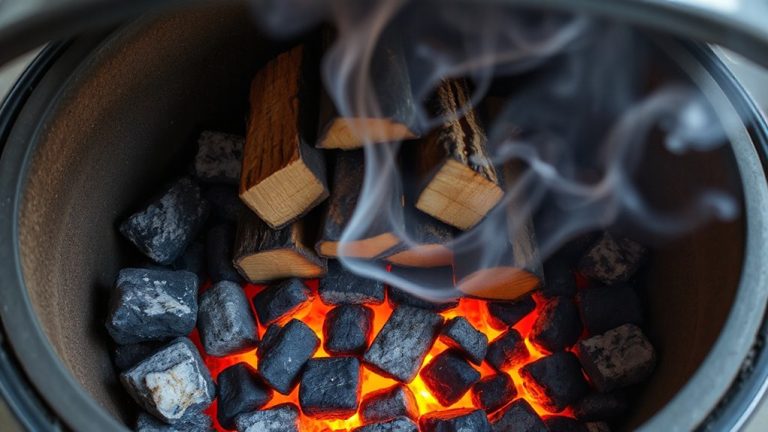
Getting that intense, radiant heat and rich smoke flavor characteristic of a true tandoor means fine-tuning both your fuel source and airflow control. You’ll want to use hardwood charcoal or hardwood chunks, as they deliver consistent heat retention and better smoke infusion than standard briquettes. Position your vents at the drum’s base and top to create a convection effect-this boosts internal temperatures and circulates smoke evenly. Keep the drum sealed as much as possible to trap heat, and monitor the internal temp with a reliable thermometer. The metal drum’s thick walls help maintain steady heat retention, mimicking the thermal mass of clay. For deeper smoke infusion, add small amounts of aromatic wood like mango or oak. Don’t overload the fuel; balance is key. With practice, you’ll achieve tandoor-like results: seared, smoky, and intensely flavorful. A great option for achieving consistent performance is selecting the best charcoal for smoking.
What to Cook in Your DIY Drum Tandoor
The beauty of your DIY drum tandoor lies in its versatility-just like its traditional clay counterpart, it excels at high-heat searing, moist-heat roasting, and smoke-infused grilling. As a durable alternative to fragile clay tandoors, your metal drum setup responds well to intense thermal cycling, making it ideal for dishes that depend on rapid, radiant heat. Mastery of marination techniques-especially yogurt-based mixes with acidic components-enhances flavor penetration and tenderizes meats before the intense cook.
| Dish Type | Ideal Temp Range (°F) | Cooking Time (min) |
|---|---|---|
| Tandoori Chicken | 450–500 | 20–25 |
| Naan | 500–550 | 2–4 |
| Lamb Chops | 475–525 | 12–15 |
You’ll find these clay alternatives deliver authentic results when managed with attention to heat layering and airflow. Success hinges on balancing smoke, sear, and moisture retention-achievable through precise fuel placement and ingredient prep.
Clean Your Drum After Every Use
Always clean your drum tandoor after each use to preserve its performance and extend its lifespan. Residue from cooking-especially fats and charred bits-can degrade the metal over time and lead to unwanted flare-ups or off-flavors. For effective drum maintenance, start by letting the drum cool slightly, then scrub the interior with a wire brush to remove buildup. Wipe down the exterior with a damp cloth to prevent rust and maintain appearance. Empty accumulated ash from the bottom to guarantee proper airflow during future use. Consistent hygiene practices not only promote food safety but also enhance flavor consistency across cooks. You’ll notice cleaner burns, more reliable temperatures, and fewer surprises. Ignoring cleaning might seem harmless short-term, but it compromises efficiency and longevity. Treat your drum tandoor like any serious cooking appliance-regular upkeep guarantees peak performance every time you fire it up.
Store It Properly to Last Longer
Your drum tandoor’s longevity hinges not just on how you use it, but where and how you store it between cooks. Proper storage location is critical for rust prevention and structural integrity. Leaving it outdoors exposed to rain or humidity speeds up corrosion, especially if you’ve skipped post-cook cleaning. For best results, keep it in a dry, covered area like a shed or garage. Elevate it slightly off the ground to avoid moisture wicking. A fitted weatherproof cover adds extra protection. Even durable steel degrades over time without care.
| Storage Tip | Why It Matters |
|---|---|
| Use a dry storage location | Prevents moisture buildup |
| Elevate the drum | Reduces ground dampness |
| Apply heat-resistant paint | Aids rust prevention |
| Cover when idle | Blocks rain and debris |
| Check monthly | Catches early corrosion |
On a final note
You’ve turned your grill into an efficient, tandoor-style cooker using a metal drum-smart, practical, and surprisingly effective. This setup traps heat well, mimics traditional convection, and chars meats and flatbreads convincingly. With proper vents, secure placement, and post-use cleaning, it performs reliably. It’s not a perfect substitute, but for home cooks seeking smoky depth without buying a full tandoor, it’s a solid, cost-effective solution worth trying-and maintaining.