Smoking Fish in an Open Pit: Alder Wood & Cedar Plank Guide
Choose fatty fish like salmon or mackerel for best results-they hold up well over low, smoky heat. Soak cedar planks in cold water for at least an hour to prevent burning and boost flavor. Use dry alder wood to build a small coal bed, maintaining 200–250°F for clean, steady smoke. Place skin-on fillets on charred planks, cooking 60–90 minutes until the flesh flakes easily and reaches 145°F. You’ll find refined depth and juiciness when technique meets the right materials-there’s more to master in each step.
Notable Insights
- Choose oily fish like salmon or mackerel for better moisture retention and smoke absorption during open pit smoking.
- Soak food-grade cedar planks in cold water for 1–2 hours to prevent burning and enhance smoke release.
- Build a fire with dry alder wood, creating a bed of coals for indirect heat at 200–250°F.
- Place soaked cedar planks over coals, then lay fish skin-side down for even cooking and smoke infusion.
- Monitor for thin blue smoke, cook 60–90 minutes, and ensure fish reaches 140–145°F internally for doneness.
Choose the Best Fish for Smoking on an Open Pit
When it comes to open-pit smoking, fat content is your best ally-fattier fish like salmon, mackerel, and bluefish hold up much better over low, smoky heat than their leaner counterparts. Your fish selection directly impacts moisture retention and texture, with oily species resisting drying and absorbing alder smoke more effectively. Lean fish, such as cod or haddock, tend to become brittle unless closely monitored. For ideal flavor pairing, match the fish’s richness with the wood’s profile-alder’s mild sweetness complements salmon beautifully, while stronger bluefish handles bolder smoke without overpowering. Consider skin-on fillets; they protect the flesh and enhance smoke adhesion. Whole fish work well too, especially mackerel, as cavity seasoning deepens flavor pairing from within. Ultimately, smart fish selection isn’t just about fat-it’s about balance between texture, smoke absorption, and how well the flesh supports the alder and cedar plank method without falling apart during extended cook times. For consistent results, consider using a dedicated best smokers for fish that maintain steady temperatures ideal for delicate seafood.
Soak Cedar Planks: Time, Temperature, and Tips
Though often overlooked, properly soaking cedar planks before use can make or break your smoked fish, so don’t skip this step if you want consistent results. You’ll need to submerge the planks in water for at least 1–2 hours to prevent flare-ups and guarantee steady smoking. Always match your wood type to your fish-cedar pairs beautifully with salmon or trout. Consider how your brining methods affect moisture content; a well-brined fillet holds up better during the extended soak and smoke. Use cold water for soaking, as it penetrates the grain more effectively. Avoid hot water-it can warp the wood. Choosing pre-cut, food-grade cedar planks for grilling ensures optimal thickness and safety for open-pit smoking. Here’s a quick guide:
| Soak Time | Water Temperature |
|---|---|
| 1 hour | Cold (40°F/4°C) |
| 2 hours | Room temp (70°F/21°C) |
| Overnight | Cold (40°F/4°C) |
Planks soaked less than an hour may scorch, while overly saturated ones can hinder smoke adhesion.
Build an Alder Wood Fire for Steady, Low Heat
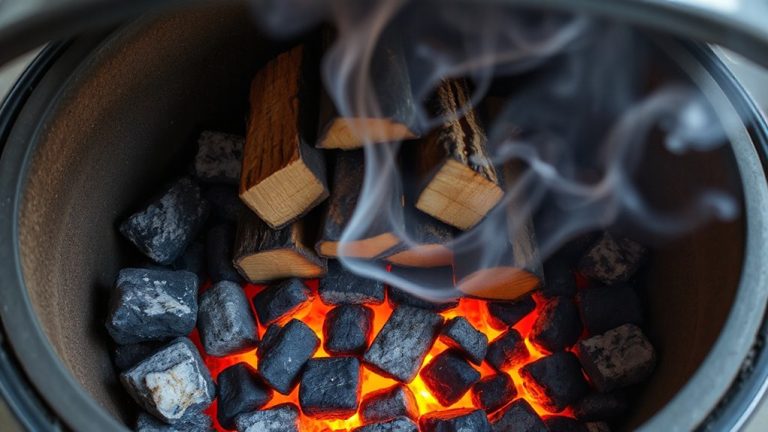
If you’re after a clean, moderate heat that enhances rather than overpowers your fish, alder wood is one of the best choices for smoking, especially for delicate species like salmon or whitefish. Start your fire with dry, seasoned alder chunks or split logs-they ignite easily and burn steadily without flaring up. Build a small, controlled bed of coals on one side of the pit to allow indirect heat, essential for even cooking. Maintain consistent heat control by adding small pieces of alder gradually, avoiding thick smoke. This approach supports effective fire management, keeping temperatures in the ideal 200–250°F range. Alder’s mild aroma complements fish without dominating it, making it superior to stronger woods for this application. With steady attention to airflow and fuel, you’ll sustain a clean, low flame that guarantees tender, flavorful results. Proper heat control isn’t just helpful-it’s essential.
Place Fish on Cedar Planks Over the Pit
Cedar planking isn’t just a cooking method-it’s a flavor decision that defines the final character of your smoked fish. You’re not only preventing sticking but also infusing a soft, aromatic smoke that alder alone can’t deliver. Position each soaked cedar plank directly over the coals, allowing gentle plank charring to begin within minutes. This subtle burn releases essential oils, enhancing the fish with earthy, slightly sweet notes. Lay your fillets skin-side down, pressing lightly so they make full contact-this guarantees even heat transfer and discourages curling. While true grill marks aren’t the goal here, slight searing at the edges adds texture and visual appeal. The plank acts as a barrier, steaming the fish gently while still permitting smoky depth. You’ll notice consistent color development and moisture retention, proving this method’s superiority for delicate species. Proper plank placement maximizes thermal efficiency and flavor integration, making it a critical step in open-pit mastery.
Maintain Smoke Levels and Track Cooking Time
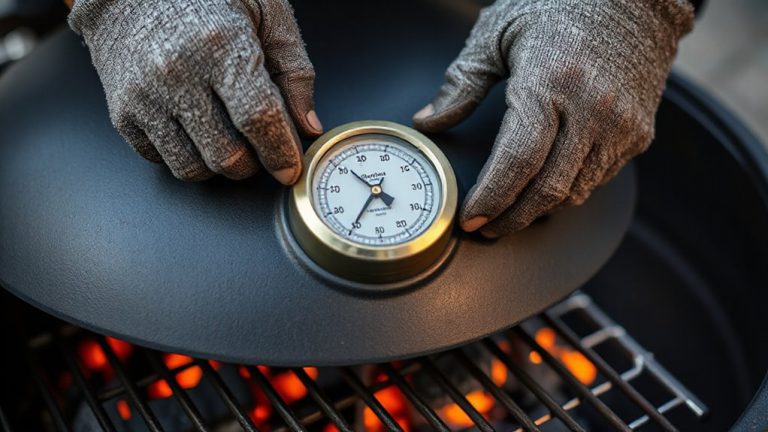
You’ve got your fish settled on the cedar planks, the first wisps of aromatic smoke curling upward as the wood begins to singe. Now, maintaining consistent smoke density is key-aim for thin, blue smoke, not thick and white, which can impart bitterness. Alder burns clean, but you’ll need steady airflow control to keep combustion efficient. Adjust the pit’s vents slightly; too much oxygen and the fire races, too little and smoke stalls. Monitor the clock closely-most fish need 60 to 90 minutes depending on thickness. A reliable thermometer helps, but time paired with visual cues gives better precision. Consistent smoke means even flavor, while erratic airflow leads to uneven cooking. Proper airflow control doesn’t just manage temperature-it shapes smoke density, directly impacting taste. Stay attentive, make minor tweaks, and let the alder do the work. For those interested in elevating their smoking experience, consider exploring high-quality Japanese charcoal as an alternative or complement to wood for enhanced heat control and subtle flavor nuances.
Check for Doneness: How to Know When Fish Is Fully Smoked?
A well-smoked fish shows several clear signs of doneness, and knowing when to pull it from the smoker can make the difference between flaky perfection and dried-out flesh. You’ll want to check the internal temperature first-most fish are fully smoked when they reach 140°F to 145°F at the thickest part. Use a reliable meat thermometer to avoid guesswork. Alongside temperature, perform the flake test: gently poke the fish with a fork. If the flesh separates easily along the natural grain and appears opaque throughout, it’s done. Smoked too long, and the texture turns dry; pulled too early, and it might still be undercooked. Combining both methods-internal temperature and the flake test-gives the most accurate result, ensuring your fish is both safe and succulent.
Serving, Storing, and Enjoying Your Smoked Fish
Once the fish reaches the proper internal temperature and passes the flake test, attention shifts to how best to serve and preserve your smoked catch. Let the fish rest for 10–15 minutes before serving; this stabilizes the texture and guarantees an ideal serving temperature-just cool enough to enhance the smoky richness without dulling the flavors. Serve it chilled or at room temperature, depending on preference and dish. For wine pairings, opt for crisp whites like Sauvignon Blanc or a light Pinot Noir, which complement the fish’s oily depth without overpowering it. To store, wrap tightly in parchment and then foil, keeping it in the refrigerator for up to five days. For longer preservation, vacuum-seal and freeze portions-thaw in the fridge before use. Proper storage maintains moisture and smoke integrity, letting the quality shine each time you serve.
On a final note
You’ve mastered a time-tested method: alder wood delivers a soft, sweet smoke, ideal for delicate fish, while soaked cedar planks prevent scorching and impart subtle flavor. Cooking over steady, low heat guarantees even smoke penetration and moist results. This technique rewards patience and attention-ideal for outdoor enthusiasts who value flavor and tradition. Properly smoked fish stores well and elevates simple meals with rich, aromatic depth.