How to Rotate Food Across Zones to Prevent Overcooking During Long Grilling Sessions
You set up direct and indirect heat zones to control cooking during long grills. Move food from direct to indirect every 4 to 5 minutes to prevent overcooking. You rotate steaks 90 degrees per side for even searing and juice retention, using tongs to avoid piercing. Dense veggies go indirect after searing. Proper spacing and clean tools guarantee consistent results-skip the forks and avoid overcrowding. There’s more to mastering the rhythm.
Notable Insights
- Divide the grill into direct and indirect heat zones to control cooking speed and prevent overcooking.
- Start searing food over direct heat, then move it to indirect heat for slower, even cooking.
- Rotate food periodically when on indirect heat to ensure uniform doneness without charring.
- Use tongs or a spatula to flip items gently, avoiding piercing that causes juice loss.
- Monitor cook times and rotate based on food thickness, moving thicker cuts to cooler zones after searing.
Set Up Direct and Indirect Zones for Rotating Food
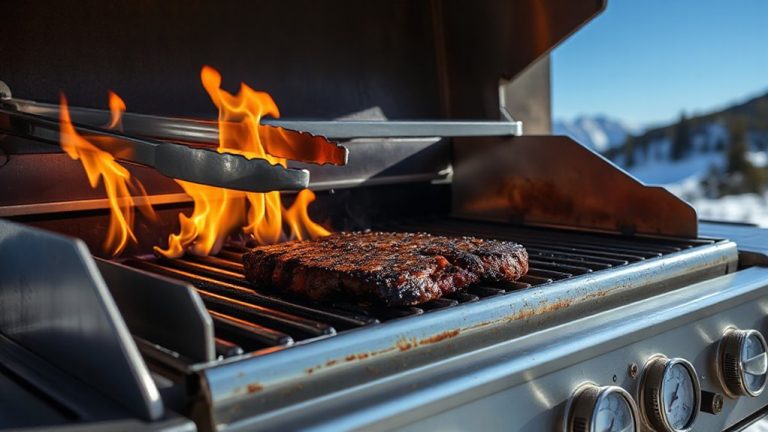
To get the most out of your grill, start by dividing the cooking surface into direct and indirect heat zones-this simple setup gives you far more control over how food cooks. You’ll use the direct zone for searing and browning, while the indirect side allows slower, gentler cooking. Proper heat distribution prevents hotspots and flare-ups, especially during long sessions. Zone management isn’t just about placement-it’s strategic control. Moving food between zones helps regulate doneness without overcooking. For thicker cuts or delicate items, this method is essential. Most grills don’t evenly spread heat, so creating zones compensates for weak spots. Whether gas or charcoal, adjusting burner settings or coal arrangement establishes clear zones. Once set, you maintain consistent results. Effective zone management turns unpredictable grilling into a reliable process, improving outcomes every time. You’re not just cooking-you’re guiding the heat exactly where it’s needed.
When to Rotate Steaks, Veggies, and Skewers
How do you know when to shift items like steaks, veggies, or skewers without losing heat control or texture? You should rotate veggies when they start browning on one side-usually after 4 to 5 minutes-ensuring even cooking consistency and balanced flavor development. Dense vegetables like potatoes need more time over indirect heat after initial searing. For skewers, turn them every 3 to 4 minutes; this maintains structural integrity and promotes uniform char. Cubed meats and veggies cook faster, so frequent rotation prevents burning. You’ll notice ideal results when pieces caramelize evenly without drying out. Rotating at these intervals supports controlled heat exposure, which is essential during long grilling sessions. It’s not just about timing-it’s about watching for visual cues and adjusting. This approach enhances flavor development and guarantees consistent results across all ingredients, making your grill work smarter, not harder.
Rotate Steaks for Juicy, Even Cooking
You’ve already seen how timing and attention keep vegetables and skewers cooking evenly, but when it comes to steaks, rotation isn’t just about appearance-it directly impacts juiciness and texture. By rotating your steak 90 degrees halfway through each side, you promote even heat exposure and consistent grill marks, which helps manage marbling distribution. This guarantees fat renders uniformly, enhancing flavor and tenderness. Uneven rotation can lead to dry spots or under-rendered areas, especially in well-marbled cuts like ribeye. Plus, proper rotation supports better carryover cooking during resting periods, allowing juices to redistribute fully. Skipping this step often results in a steak that’s overcooked on one edge and underdone on another. For best results, use tongs to pivot the steak precisely-don’t pierce it. Combined with disciplined resting periods, consistent rotation delivers a reliably juicy, balanced bite every time.
Rotate Veggies to Prevent Burning
While searing temperatures are essential for developing flavor in grilled vegetables, they also increase the risk of charring if rotation isn’t managed carefully. Proper veggie marination not only boosts taste but also creates a protective barrier that slows moisture loss and reduces sticking. You should rotate frequently-every 3–4 minutes-to guarantee even exposure and prevent hot spots from turning your zucchini to charcoal. Skewer spacing plays a vital role when grilling smaller pieces; crowding traps steam and inhibits caramelization. Leave at least ¼ inch between items for consistent airflow and browning. Consider this helpful guide:
| Factor | Effect |
|---|---|
| Tight skewer spacing | Uneven cooking, steaming |
| Proper spacing | Crisp edges, even char |
| Poor marination | Drying, sticking |
Rotate with care, and your veggies come out vibrant, tender, and flavorful every time.
Use Tongs or Spatula to Rotate Without Tearing
Often, the success of flipping delicate proteins or fragile vegetables on the grill comes down to choosing the right tool-and tongs or a thin-edged spatula usually deliver the best results. You’ll want tongs with spring-loaded handles for better control and a secure gripping surface to prevent food from slipping. Their narrow tips let you slide easily under fish fillets or peppers without breaking them apart. A thin spatula, especially one made of metal or heavy-duty nylon, works well when you need broad support beneath softer items like tofu or mushrooms. Both tools enable gentle flipping, reducing the risk of tearing or losing juices. Avoid forks or serrated edges-they pierce and drain flavor. With consistent use, you’ll notice cleaner turns and more evenly cooked meals. Proper tool maintenance, like cleaning after use and checking for warping, guarantees long-term performance. For best results, choose tools from a well-rounded set of best BBQ tools that are designed for durability and precision.
Avoid These 5 Rotating Mistakes
Choosing the right tool sets the foundation for successful rotation, but even with tongs or a spatula in hand, common missteps can still lead to uneven cooking or damaged food. One major error is uneven timing-flipping items too often or too seldom disrupts sear development and heat penetration. Another issue is ignoring mislabeled zones; if your grill’s hot and cool areas aren’t accurately identified, rotation becomes guesswork, increasing the risk of charring or undercooking. Skipping preheating leads to sticking, while overcrowding impedes airflow and creates erratic temperatures. Finally, not cleaning grates between rotations transfers old residue, affecting flavor and texture. These mistakes compromise control and consistency, especially during long sessions. Smart rotation relies on preparation, awareness, and discipline. By avoiding these errors, you maintain steady heat exposure, achieve even doneness, and protect the integrity of sensitive proteins-ensuring every piece comes off the grill exactly as intended. For precise handling during rotation, consider investing in a pair of best BBQ tongs that offer durability, grip, and optimal length for control.
Let Heat Do the Work: Rotate, Then Relax
Every successful rotation starts with trust-trust that the heat will do its job once you’ve turned the food and stepped back. You don’t need to hover or flip constantly; heat penetrates steadily when you leave it alone. After rotating from high to low zones, let carryover cooking work in your favor-the internal temperature keeps rising even off direct flame. That’s why rest periods are vital: they allow juices to redistribute and final doneness to stabilize. Skipping them risks dry, overcooked results. Think of rotation not as constant adjustment but as strategic timing. You’re guiding the process, not micromanaging it. For thicker cuts like chops or roasts, this approach prevents burnt exteriors and raw centers. Letting heat do the work maximizes control without extra effort. Rest periods aren’t downtime-they’re essential to precision. With carryover cooking, patience delivers better texture, deeper flavor, and consistent results across long grilling sessions.
On a final note
You’ve set up your direct and indirect zones, rotated steaks for even sear and juiciness, and turned veggies just in time to avoid charring. Using tongs prevents tearing, while avoiding common mistakes guarantees consistent results. Trust the process-rotate, then let heat do the work. Proper rotation isn’t just movement; it’s strategic control, enhancing flavor and texture. For reliable, restaurant-quality BBQ, this method delivers every time.