Adjusting Bottom Vents to Slow Down Burn Rate During Overnight Smokes
Partially close your bottom vents to slow the burn rate during overnight smokes-this restricts oxygen and keeps combustion steady. Bottom vents control fire intensity better than top vents, which mainly manage smoke exit. At one-third open, they balance airflow for a stable 225°F, especially with dense woods like hickory. Pair this with even fuel spacing and proper insulation to avoid temperature swings. You’ll get longer, more efficient burns with fewer adjustments. There’s more to optimizing airflow and fuel layout for all-night consistency.
Notable Insights
- Partially close bottom vents to restrict oxygen and slow the burn rate overnight.
- Set bottom vents to about one-third open for steady, low-and-slow combustion.
- Balance airflow to maintain 225°F without rapid fuel consumption.
- Avoid fully closing vents to prevent fire smothering and temperature drops.
- Use dense charcoal and proper fuel spacing to support controlled, even burning.
Adjust Bottom Vents for a Slow Overnight Burn
While getting your smoker to maintain a steady temperature overnight starts with quality fuel and proper setup, fine-tuning the bottom vents is where precision really matters. You’ll want to partially close them to restrict oxygen flow, slowing combustion without suffocating the fire. Proper vent placement guarantees even draft across the firebox, preventing hot spots and maintaining consistent heat. If the vents are too far forward or back, airflow becomes uneven, affecting burn efficiency. Similarly, fuel spacing plays a critical role-coals or wood chunks placed too close together burn hotter and faster, while wider spacing promotes a slower, more controlled release of energy. You’re aiming for a balance where the fuel feeds the fire gradually, and the vents regulate that burn like a throttle. Done right, this setup supports a stable, low-and-slow cook that holds through the night with minimal intervention, delivering tender, flavorful results by morning. For optimal smoke flavor and temperature control, consider using one of the best smokers for BBQ flavor.
Why Bottom Vents Control Temperature Better
You’ve already seen how tweaking the bottom vents helps stabilize your smoker’s burn through the night, but understanding why those adjustments have such a strong effect comes down to airflow dynamics. Proper vent placement at the base directly controls oxygen intake, which governs combustion intensity. Since heat rises, restricting lower airflow limits flame growth while improving heat retention in the cook chamber. Top vents alone can’t achieve this balance-they mainly expel smoke, not manage fire behavior.
| Feature | Impact |
|---|---|
| Bottom vent control | Directly regulates burn rate |
| Top vent control | Mainly manages smoke exit |
| Ideal vent placement | Enhances temperature stability |
| Balanced airflow | Maximizes heat retention |
You get finer temperature control because bottom vents influence the fire at its source, making them more effective than upper adjustments for steady, low-and-slow cooks.
How Airflow Affects Burn Time and Fuel Life
Because airflow governs combustion, how you manage your smoker’s vents directly shapes how long your fuel lasts and how consistently it burns overnight. When you restrict the bottom vents, you limit oxygen, slowing the burn and extending fuel life-critical for long smokes. Too much airflow and your fuel burns too hot, too fast, wasting chunks or pellets and risking temperature spikes. Proper airflow control helps maintain steady heat retention, ensuring the smoker holds temperature without constant refueling. Denser fuels, like hickory or mesquite, benefit from restricted airflow because their fuel density means they burn longer but need careful oxygen management to avoid smothering. You’ll find that balancing intake with exhaust keeps combustion efficient. Over time, effective vent use reduces fuel consumption and stabilizes cooking conditions, making it easier to wake up to perfectly smoked meat.
Ideal Vent Settings for Steady 225°F Overnight
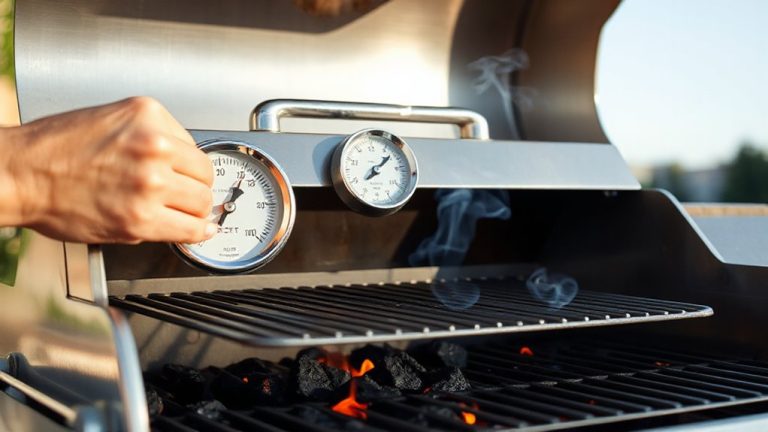
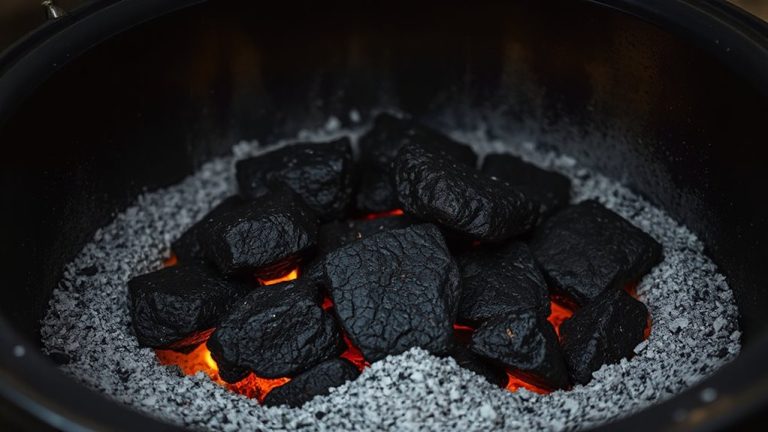
Getting your smoker to hold 225°F through the night starts with setting the bottom vents just right-too open and you’ll burn through fuel, too closed and the fire risks stalling. You’ll want about one-third open to maintain steady airflow without overheating. Your charcoal arrangement plays a vital role: a tight pyramid or snake pattern guarantees even burn and consistent heat. Spread coals evenly and avoid gaps, which create hot spots or drops in temperature. Ambient humidity also affects performance-moist air slows combustion, so you might need slightly more airflow on damp nights. Monitor the gauge, but trust your setup; a well-prepped smoker with proper venting and solid fuel layout handles most conditions. Fine-tune based on real-time feedback, not assumptions. With these adjustments, you’ll maintain that ideal 225°F with minimal intervention and maximum efficiency, letting you sleep easy while the smoke does the work.
Fix Common Airflow Mistakes and Bounce Back
While airflow control is central to maintaining a stable smoking temperature, even seasoned pitmasters occasionally misjudge vent placement or fuel distribution. If your fire’s dying, you’ve likely restricted airflow too much-partially closed vents can suffocate the coals, undermining fire management and reducing heat retention. Conversely, wide-open vents might burn fuel too fast, spiking temps and risking a failed overnight smoke. The key is responsiveness: if the temperature drops, slightly open the bottom vent to reignite airflow without flooding the chamber. You’ll regain combustion quickly while preserving thermal mass in the cook chamber. Avoid over-adjusting-small tweaks restore balance faster than drastic shifts. Proper airflow recovery isn’t just reactive; it reflects your understanding of how oxygen intake governs burn efficiency. Mastering this gives you control, ensuring the smoker rebounds smoothly and maintains consistency when it matters most.
Maximize Burn Time: Pair Vents and Fuel Load
When you’re aiming for a long, uninterrupted burn through the night, matching your fuel load to the right vent settings isn’t just helpful-it’s essential. Proper fuel pairing guarantees your smoker maintains steady combustion without excess oxygen feeding the fire. Too much air with a light load causes rapid burnout; too little with a heavy load risks smothering. You need balance. Load balance depends on both the amount of charcoal or wood and how open the bottom vents are. Start with a moderate fuel load-around two-thirds full-and adjust vents to 25–50% open. This setting sustains a consistent burn, letting coals ignite gradually. Overloading demands tighter vent control, while sparse fuel needs slightly more airflow. Mastering this interplay means fewer top-ups and stable heat. The best results come when fuel pairing and vent adjustment work together, not against each other. A well-chosen charcoal grill smoker can significantly enhance heat retention and airflow control for extended smoking sessions.
Stop Temperature Dips During Long Smokes
Why do some overnight smokes hold steady while others plummet before dawn? The difference often comes down to temperature stability and how well your smoker retains heat. You can’t ignore vent control-partially closing the bottom vents restricts airflow, slowing combustion and boosting heat retention. Too much oxygen and your fire burns too hot, then crashes. Too little, and it suffocates. Aim for balance. A steady 225–250°F is ideal, especially during the dreaded 3 a.m. drop. Insulating your smoker, using thicker walls, or adding a water pan helps maintain consistency. These methods don’t just trap heat-they promote even smoke circulation. Think of your smoker as a thermal battery: the better it stores heat, the smoother the burn. With smart vent adjustments and attention to heat retention, you’ll avoid dips and wake up to perfectly cooked meat, not a cold, stalled cook.
On a final note
You’ve seen how adjusting bottom vents fine-tunes airflow and sustains steady 225°F burns overnight. Proper vent control boosts fuel efficiency, prevents temp swings, and guarantees clean combustion. Pairing this with a superior fuel load maximizes burn time and minimizes intervention. Common mistakes, like over-closing vents or skimping on charcoal, lead to stalls or flameouts. Mastering airflow isn’t just technique-it’s the foundation of reliable, low-and-slow barbecue success.