Converting Pellet Grills Into Dehydrators for Jerky and Fruit Preservation
You can absolutely use your pellet grill as a dehydrator, thanks to its precise temperature control and steady airflow. Set it between 130°F and 165°F depending on whether you’re drying fruit or jerky, and keep the lid slightly ajar if there’s no dedicated dehydrate mode. Trim meats lean, slice uniformly, and space items well on the grates for consistent results. With proper prep and monitoring, you’ll get flavorful, shelf-stable batches every time-just stick with quality pellets and clean maintenance for best performance. There’s more to optimizing this method that could elevate your results even further.
Notable Insights
- Pellet grills offer precise temperature control ideal for safely dehydrating jerky and fruit.
- Set temperatures to 160°F for beef jerky and 135°F for apples for optimal drying.
- Use lean meats and firm, ripe fruits to ensure even dehydration and longer shelf life.
- Clean the firepot and grease system, and ensure steady airflow by adjusting vents or leaving the lid ajar.
- Avoid overloading racks and use mesh liners to improve airflow and prevent sticking.
Can You Use a Pellet Grill as a Dehydrator?
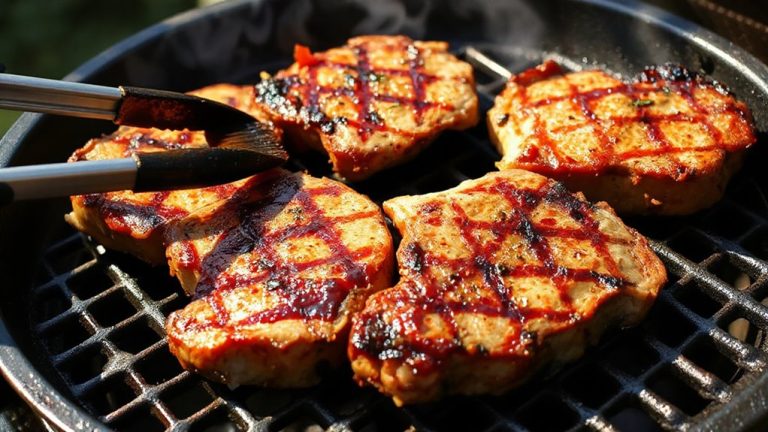
Why wouldn’t you use your pellet grill as a dehydrator when it’s already built to maintain precise low temperatures? You absolutely can - and it’s more effective than most realize. With consistent heat and steady airflow control, your pellet grill creates ideal drying conditions that prevent spoilage while preserving flavor. These grills circulate air evenly, reducing hot spots and ensuring uniform dehydration across racks. Plus, digital thermostats allow hours of unattended operation, a major advantage over makeshift methods. But success depends on proper pellet maintenance; oily or damp pellets cause temperature swings and uneven drying. Clean smoke tubes and a well-maintained firepot keep combustion stable, which supports steady airflow. You’ll also want to leave the lid slightly ajar or use a rack if your model doesn’t have a dedicated dehydrate mode. Given their design, pellet grills aren’t just for searing - they’re hidden dehydration tools waiting to be used. For best results, consider a model specifically highlighted in guides on the best smokers for jerky.
Set the Ideal Temperature for Jerky and Fruit
While dehydrating food in your pellet grill relies heavily on consistent airflow and fuel quality, getting the temperature right is what ultimately determines whether your jerky turns out tender and safe or tough and risky to eat. Proper temperature control guarantees pathogens are eliminated while preserving flavor and texture. Too high, and you’ll lose moisture retention too quickly, resulting in brittle jerky or leathery fruit. Too low, and dehydration takes too long, risking spoilage. A well-insulated unit like those found in top beginner offset smokers can help maintain stable temperatures even in fluctuating outdoor conditions.
| Food Type | Ideal Temp (°F) | Dehydration Time (hrs) |
|---|---|---|
| Beef Jerky | 160 | 4–6 |
| Chicken Jerky | 165 | 5–7 |
| Apples | 135 | 6–8 |
| Bananas | 130 | 8–10 |
For best results, use a reliable thermometer and maintain steady temps. Your grill’s insulation and ambient weather affect moisture retention, so aim for stable conditions.
Choose the Best Meats and Fruits to Dehydrate
The right cuts and varieties make all the difference when turning your pellet grill into a dehydrator. For meat selection, lean cuts like top round or flank work best-fat doesn’t dehydrate well and can spoil faster. Trim thoroughly to prevent rancidity and guarantee even drying. Lean poultry breast or wild game also performs well, offering clean, consistent jerky. When it comes to fruit ripeness, aim for ripe but firm produce-overripe fruit turns mushy, while underripe fruit dries too tough. Apples, plums, and pears hold their structure nicely, while bananas and grapes need thin slicing. Berries work well if spaced properly for airflow. Good meat selection prevents waste and boosts shelf life, while ideal fruit ripeness balances sweetness and texture. These choices directly impact flavor, safety, and drying efficiency-so take time to pick wisely. Your end results depend on starting right. For even more reliable outcomes, consider starting with one of the Best Jerky Picks recommended for high-quality dehydration.
Prepare Your Pellet Grill for Low-and-Slow Drying
You’ll want to treat your pellet grill like a precision drying chamber, and that starts with proper prep. Begin with thorough grill maintenance-clean the grates, vacuum out grease, and remove any leftover debris from prior cooks, since residue can affect flavor and heat distribution. A well-maintained unit guarantees consistent performance during long drying cycles. Check the firepot and heat baffle for obstructions, and verify that the auger delivers pellets smoothly. Next, focus on airflow control: adjust the vents or baffles to maintain steady circulation without creating hot spots. Most pellet grills aren’t designed for ultra-low temps, so aim for 160°F to 180°F with the lid slightly ajar if needed. This small tweak enhances airflow control, preventing moisture buildup. Proper prep transforms your grill into an effective dehydrator, making it a reliable tool for preserving foods safely and efficiently.
How to Make Smoked Jerky on a Pellet Grill
What does it take to make perfect smoked jerky on a pellet grill? It starts with solid marinade techniques-use acidic bases like Worcestershire or vinegar to tenderize and deepen flavor, letting meat soak for at least 12 hours. You’ll want consistent slicing thickness, ideally ¼ inch, to guarantee even drying without overcooking edges. Thinner cuts dry too fast and toughen; thicker ones risk uneven dehydration. Load trimmed meat strips directly onto the grill grates or a wire rack, spacing them for airflow. Set your pellet grill to 165–180°F using hickory or mesquite for a balanced smoke profile. Maintain steady temps-pellet grills shine here-with minimal fluctuation over 4–6 hours. Check periodically; jerky should bend, not snap. Proper slicing thickness and smart marinade techniques separate amateur batches from pro-quality results. It’s reliable, hands-off cooking that leverages precision and smoke control effectively.
Dry Fruit With Wood-Fired Flavor on a Pellet Grill
Smoking isn’t just for meats-your pellet grill can transform fruit into sweet, concentrated snacks with a subtle wood-fired depth that store-bought versions rarely match. By setting your grill to 150–160°F and using indirect heat, you encourage slow moisture loss while promoting wood fired caramelization, enhancing natural sugars with a warm, smoky richness. Thinly sliced apples, pears, or apricots work best, drying in 6–12 hours depending on humidity and fruit density. The consistent low heat of a pellet grill allows for precise control, ensuring even drying without scorching. You’ll notice a distinct fruit smoke infusion-light yet aromatic-especially when using fruitwoods like apple or cherry. Unlike electric dehydrators, this method adds complex flavor layers, turning simple dehydration into a culinary enhancement. With minimal prep and passive monitoring, you get nutritious, flavorful dried fruit that showcases the grill’s versatility beyond BBQ.
Fix Common Pellet Grill Dehydration Problems
Why does your dried fruit come out unevenly textured or overly smoky sometimes? It’s likely due to airflow blockage or poor moisture retention control. When racks are overloaded or spaced too close, air can’t circulate properly, leading to inconsistent drying. Make sure you leave at least ½ inch between trays and rotate them halfway through. Also, tightly packed food traps humidity, increasing moisture retention and extending drying times. Use a mesh liner to improve airflow while preventing small pieces from falling through. If smoke intensifies late in the cycle, your grill may be smoldering instead of burning cleanly-check the pellet quality and hopper feed rate. Most pellet grills maintain temperature well, but only if airflow stays unobstructed. Monitor vent settings and clean grease trays regularly to prevent flare-ups or flavor overpowering. With minor tweaks, you’ll achieve even, flavorful results every time.
On a final note
You can effectively convert a pellet grill into a dehydrator with precise temperature control, typically between 160°F and 180°F for jerky and 125°F to 135°F for fruit. High-quality meats like flank steak and fruits such as apples or bananas yield consistent results. Proper airflow and clean grills prevent moisture buildup. While not as specialized as dedicated dehydrators, pellet grills offer superior wood-fired flavor and versatile low-temperature performance, making them practical, multifunctional tools for outdoor preservation.