Optimizing Airflow When Mixing Charcoal and Hardwood Chunks in Kamado Joe
You get richer smoke and steady temps in your Kamado Joe by balancing airflow when using lump charcoal and hardwood chunks. Charcoal burns hot and fast, while hardwood smolders slower for flavor, so 2–3 inch chunks work best-big enough to last, small enough to let air flow. Open both vents to start, then tweak the bottom draft door and top vent to maintain a thin, steady smoke. Too much restriction kills combustion; too much oxygen burns wood too fast. Fine-tune for clean, flavorful results every time-next, learn how fuel placement affects heat zones.
Notable Insights
- Use Kamado Joe’s draft door and top vent to balance oxygen for clean, flavorful smoke when mixing fuels.
- Start with vents fully open to ignite charcoal, then adjust for stable airflow once coals are hot.
- Combine lump charcoal for heat efficiency and hardwood chunks for consistent, aromatic smoke production.
- Use 2–3 inch hardwood chunks to maintain airflow and prevent burn issues in the firebox.
- Restrict top vent slightly to control temperature while maintaining a thin, steady smoke stream.
How Airflow Boosts Smoke Flavor in Your Kamado Joe
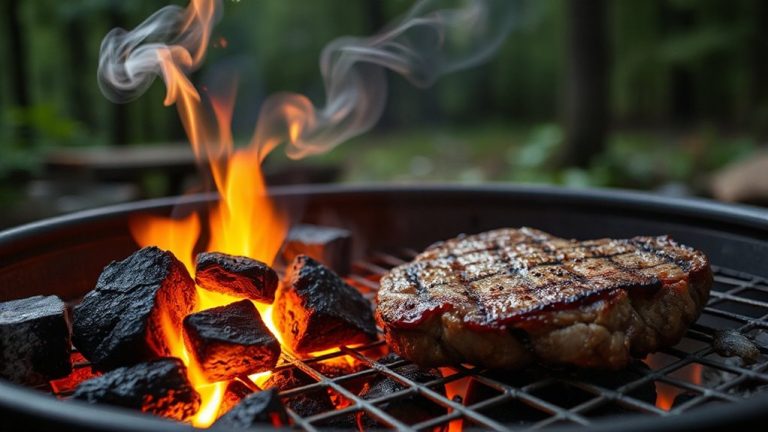
While you might think smoke flavor comes just from adding wood chips, the real secret in your Kamado Joe lies in how well you manage airflow. Proper airflow control directly impacts smoke density-too much oxygen and the wood burns too fast, producing thin, flavorless smoke; too little and you risk smothering, which creates bitter notes. You want that sweet spot where airflow is restricted just enough to generate thick, rolling smoke without choking the fire. This balance supports ideal flavor development, letting meat absorb rich, nuanced notes over time. The Kamado Joe’s precision draft door and top vent let you fine-tune oxygen flow efficiently, maintaining steady temperatures and clean combustion. You’ll notice the difference in every bite-clean smokiness, not ashiness. Consistent airflow doesn’t just regulate heat; it shapes the quality of smoke, making it the driving force behind deep, satisfying barbecue flavor. For best results, pairing this airflow control with the right fuel setup, such as a charcoal and hardwood blend, enhances both heat retention and smoke quality in your cook.
Why Charcoal and Hardwood Burn Differently
You’ve probably noticed how your Kamado Joe produces different smoke profiles depending on what you’re burning, and that starts with understanding how charcoal and hardwood behave under heat. Charcoal, especially lump variety, has a higher heat intensity and faster burn rate than hardwood chunks, giving you strong, consistent base heat quickly. Hardwood, on the other hand, burns slower and at lower peak temperatures, making it ideal for flavor, not fuel. Its denser structure means it chars gradually, releasing aromatic smoke over time. When you mix the two, you’re balancing efficiency with flavor-charcoal sustains the fire, while hardwood adds complexity. Because of their differing burn rates, airflow becomes critical: too much oxygen and your hardwood vanishes too fast; too little and the charcoal can’t maintain heat intensity. Understanding this distinction helps you control cooking conditions more precisely.
Choose Lump Charcoal for Kamado Joe and Hardwood Mixes
If you’re chasing both high heat and rich smoke in your Kamado Joe, opting for lump charcoal as your base fuel makes strong practical sense. It delivers superior charcoal quality-burning hotter and cleaner than briquettes-while enhancing fuel efficiency due to its responsiveness to airflow changes. Paired with hardwood chunks, it creates a balanced fire ideal for searing or slow smoking. You’ll notice fewer impurities and consistent temperature control, especially during long cooks. According to comprehensive reviews, the best lump charcoal for smoking combines high heat output with minimal ash production, making top picks a smart choice for discerning users.
| Charcoal Type | Heat Output | Fuel Efficiency |
|---|---|---|
| Lump Charcoal | High | Excellent |
| Briquettes | Moderate | Fair |
| Hardwood Chunks | Low (as primary) | Poor |
The natural composition of lump charcoal supports cleaner combustion and quicker ignition, letting you focus on smoke management rather than correcting flare-ups or temperature swings. For serious Kamado performance, it’s your best foundation.
Use 2–3 Inch Hardwood Chunks for Steady Airflow
Selecting the right charcoal sets the stage, but how you manage airflow and smoke flavor hinges just as much on the hardwood chunks you choose. Using 2–3 inch pieces strikes the ideal balance between wood size and airflow efficiency. Chunks this size allow oxygen to circulate freely around the coals, promoting steady combustion without smothering the fire. Smaller chips burn too fast, creating a spike in smoke and heat that’s hard to control, while oversized pieces restrict airflow and lead to uneven burn rate. With 2–3 inch chunks, you get consistent smoke output and longer, more predictable burns-essential for low-and-slow cooking. They integrate smoothly with lump charcoal, letting you maintain clean, stable temps. You’ll notice fewer flare-ups and better flavor control. This wood size isn’t just convenient; it’s functional, supporting both combustion dynamics and long cooks with minimal intervention. For optimal results, consider pairing your hardwood chunks with the best wood chips for smoking, as recommended in expert guides, to enhance flavor complexity and best wood chips for smoking.
How to Set Vents for Clean Combustion in Your Kamado
Though the quality of your fuel and wood chunks sets the foundation, mastering the vents is what truly activates clean, efficient combustion in your Kamado Joe. Proper vent placement-bottom inlet and top exhaust-creates a balanced draft that pulls oxygen through the coals, ensuring consistent airflow control. Start with both vents fully open to fire up; once coals glow, adjust the bottom vent to regulate oxygen intake while using the top vent to manage smoke evacuation and temperature. Closing the top vent too much restricts airflow, causing soot and incomplete burns. For clean combustion, maintain a slight upward draft-visible as a thin, steady stream of smoke. Experienced users find that precise airflow control not only reduces flare-ups but also enhances flavor clarity. Ultimately, your vent settings directly affect heat stability and combustion efficiency, making them critical to achieving professional-grade results with every cook.
Don’t Choke Your Fire: Fix Common Airflow Mistakes
When your Kamado Joe struggles to maintain heat or produces thick, lazy smoke instead of a clean draft, chances are you’re restricting the airflow more than necessary. Poor fire placement is a common culprit-piling fuel randomly blocks natural air movement, creating dead zones that hinder combustion. You should center the fire over the firebox for maximum draft and even burn. Likewise, how you handle wood stacking makes a big difference. Overpacking chunks or scattering them haphazardly suffocates flames and disrupts airflow. Instead, stack wood loosely to allow oxygen to circulate between pieces, promoting steady ignition and efficient burn. Avoid burying the fire under too much fuel, which starves it of air. Proper spacing in both fire placement and wood stacking guarantees the chimney effect works as designed. These adjustments aren’t just minor tweaks-they’re essential to accessing your Kamado’s full potential.
Adjust Vents to Balance Smoke and Temperature
Since your Kamado Joe relies on precise oxygen control to manage heat and smoke output, adjusting the vents isn’t just a fine-tuning step-it’s the core mechanism that shapes your cook. You need proper ventilation control to maintain steady temperatures, especially when mixing charcoal and hardwood chunks. Opening the bottom vent increases airflow, boosting combustion balance for higher heat, while partially closing it restricts oxygen, favoring smoke production over flame. The top vent works in tandem-adjusting it helps regulate draft and smoke evacuation. If the fire’s too hot, choke both vents slightly; if smoke turns thin and blue, you’re burning too clean. Thick, lazy smoke means poor combustion balance-crack the vents. Mastering this interaction means consistent results, whether you’re searing at 600°F or smoking at 225°F. Effective airflow management isn’t optional-it’s the foundation of precision outdoor cooking.
On a final note
You’ve optimized airflow by pairing lump charcoal with 2–3 inch hardwood chunks, ensuring clean, steady combustion. Proper vent settings balance temperature and smoke, enhancing flavor without smothering the fire. Choking the vents risks creosote and uneven burns, while thoughtful airflow control improves efficiency and taste. For best results, monitor draft carefully-small adjustments make a noticeable difference in heat retention and smoke quality, especially during long cooks.