How to Prevent Seasoning Burn-Off When Cooking at High Temperatures Outdoors
You’re wasting flavor if you season too early on a hot grill-delicate spices and sugars burn fast. Wait until your meat has a light sear, then apply dry rubs for better adhesion and less charring. Use high-smoke-point oils like avocado or grapeseed to protect the blend. Preheat your grill 10–15 minutes to reduce flare-ups, then shift food to a cooler zone after searing. This keeps seasoning intact while building deep, balanced taste. There’s more to mastering the flame than timing alone.
Notable Insights
- Apply seasoning halfway through cooking, after the meat develops a light sear, to prevent burn-off of delicate herbs and sugars.
- Use coarse spice blends later in the cook to avoid charring while maintaining robust flavor.
- Choose high-smoke-point oils like avocado (520°F) or grapeseed (420°F) to stabilize seasoning under intense heat.
- Preheat the grill for 10–15 minutes to burn off residue and reduce flare-ups that cause seasoning burn.
- Move food to a cooler zone after searing to preserve rub integrity using indirect heat for even cooking.
Time Your Seasoning to Lock in Flavor
While you might be tempted to apply your seasoning the moment the meat hits the grill, doing so too early can lead to flavor loss from high heat and flare-ups. Timing matters-adding spices too soon exposes delicate herbs and sugars to intense flames, causing them to burn rather than blend. For better flavor retention, wait until the surface has developed a light sear, typically halfway through cooking. At that point, the meat’s exterior is stable, reducing the risk of charring your rub. Coarse blends benefit from later application, while pre-mixed dry rubs with salt may need an earlier base layer. Still, final seasoning just before finishing enhances aroma and taste most effectively. You’re not just cooking-you’re layering flavor strategically. Proper timing guarantees your efforts aren’t lost in smoke, giving you control over the outcome. In outdoor cooking, precision like this separates good results from great ones. Choosing the right best grilling spices ensures your seasonings can withstand high heat without burning.
Pick High-Smoke-Point Oils to Prevent Burn-Off
You’ve nailed the timing of your seasoning application, letting the meat develop that ideal sear before introducing delicate spices-now it’s time to evaluate what you’re using to help that flavor stick. Oil selection is essential when grilling at high heat, as the wrong oil can break down fast, causing bitterness and wasted seasoning. You need oils with a high smoke threshold to stay stable. These oils resist burning, letting your spices cling and caramelize instead of char. Skip butter or extra virgin olive oil-they smoke too early. Go for refined oils that can handle the heat. For consistent results, choose oils like avocado oil that are known for both high smoke points and suitability in high-heat chicken cooking.
| Oil Type | Smoke Point (°F) | Best For |
|---|---|---|
| Avocado Oil | 520 | Searing, direct flame |
| Grapeseed Oil | 420 | High-heat grilling |
| Refined Canola | 400 | General outdoor use |
| Peanut Oil | 450 | Stir-fry or fry grids |
Smart oil selection means better flavor and no flare-ups.
Use Dry Rubs for Better Grill Adhesion
Since seasoning doesn’t just flavor but also forms a protective crust on meat, choosing the right rub matters more than most realize-dry rubs, especially, are proven to adhere better under intense heat than wet pastes, which often drip off or steam away too quickly. You’ll get better grill adhesion when you use a dry blend, letting spices stick firmly instead of burning off. Spice layering becomes easier too; without moisture weighing it down, each seasoning stays in place and develops complexity as it toasts. Rub penetration is deeper when applied to slightly oiled meat, letting the spices grip the surface and work into crevices before searing. Unlike wet marinades that can boil away, dry rubs remain stable, enhancing flavor without sacrificing integrity. For consistent results and a robust crust, dry rubs outperform-especially on steaks, ribs, or chicken grilled over open flame. They’re simply more reliable when heat is high and timing’s tight. One effective way to ensure optimal adhesion and flavor development is by choosing from the best meat rubs for smokers, which are specifically formulated to withstand high heat and enhance smoky richness.
Preheat Your Grill to Stop Flare-Ups
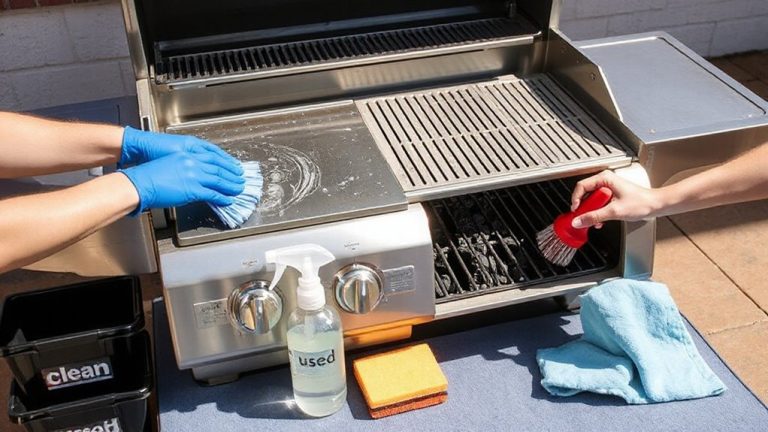
A properly preheated grill does more than just sear meat effectively-it actively reduces the risk of sudden flare-ups that can ruin both flavor and texture. By heating your grill for 10–15 minutes before cooking, you burn off residue, stabilize temperature control, and create a clean cooking surface. This step is essential for effective grill maintenance and helps maintain seasoning integrity on your food. Flare-ups often stem from accumulated grease igniting, but a preheated grate minimizes this hazard. Consistent temperature control also guarantees even cooking and reduces charring.
| Grill Type | Preheat Time (min) |
|---|---|
| Charcoal | 15 |
| Gas | 10 |
| Pellet | 10–12 |
| Electric | 8–10 |
| Portable | 8 |
Proper prep enhances safety and performance across all models.
Move Food Away From Direct Flame
While high heat can deliver a strong sear, leaving food directly over an open flame for too long risks charring the seasoning and triggering bitter, acrid flavors. That’s where smart grill placement comes in. You should move food to a cooler zone of the grill, especially after the initial sear, to maintain flavor without scorching. Proper heat management isn’t just about temperature control-it’s about knowing when to shift items from direct to indirect heat. This technique preserves the integrity of rubs and marinades while allowing proteins to cook evenly. Most grills have hot spots, so repositioning food prevents uneven browning. Whether you’re using charcoal or gas, mastering this balance improves results. You’ll get better crust development and juicier outcomes without burnt seasoning. Practicing intentional grill placement and consistent heat management transforms outdoor cooking from guesswork to precision.
On a final note
You’ve got the tools to protect your seasoning and boost flavor, even at high heat. Timing matters-add delicate spices late, use high-smoke-point oils like avocado or grapeseed, and stick to dry rubs for crust formation. Preheating prevents sticking and flare-ups, while strategic grill placement avoids scorching. These steps aren’t just best practices-they’re the difference between charred disappointment and a perfectly seared, flavorful result every time you fire up the grill.