How to Bake Bannock Bread in a Dutch Oven With Campfire Coals
You’ll need a well-seasoned hardwood fire to create steady, glowing coals-avoid pine or softwoods that add bitter smoke. Build a two-zone fire, then place your Dutch oven on the cooler side with embers evenly spread underneath and a few on top. Mix bannock dough by hand with flour, baking powder, salt, cold butter, and water, kneading briefly until smooth. Let it rest 10–15 minutes to improve texture. Once in the oven, rotate it every few minutes for even baking. Golden crust, pillowy interior-this method delivers superior results every time, especially when you get the coal balance right. There’s more to mastering outdoor baking than heat alone.
Notable Insights
- Build a two-zone campfire with glowing hardwood embers for consistent, smoke-free heat.
- Prepare bannock dough by mixing flour, baking powder, salt, sugar, cold butter, and water until smooth.
- Let the dough rest 10–15 minutes under a damp cloth to improve texture and rise.
- Place Dutch oven on even bed of embers, with 25% of coals on lid and 75% underneath.
- Rotate Dutch oven every few minutes and bake until bannock is golden and cooked through.
Build a Campfire for Baking Bannock
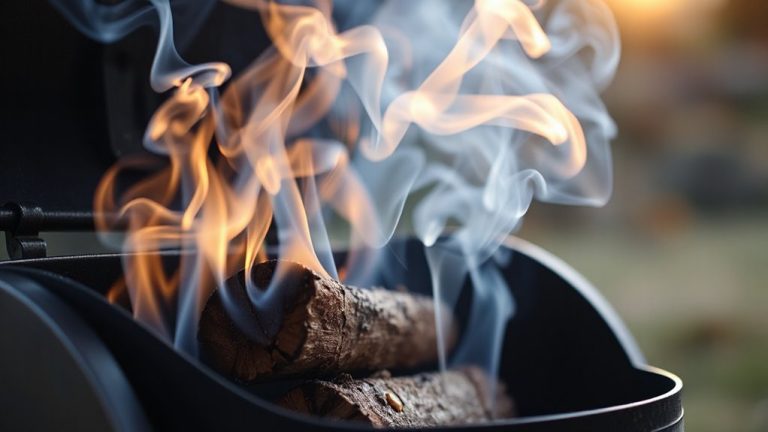
When preparing to bake bannock in a Dutch oven, your fire setup is just as important as the recipe itself-get it wrong, and you risk uneven cooking or scorched bread. You’ll want a two-zone fire: hot coals on one side for direct heat, and cooler embers on the other to regulate temperature. Start with seasoned hardwood, which burns clean and provides steady, long-lasting coals. Maintain fire safety by clearing debris within a three-foot radius and keeping water nearby. Spark control is critical-use a fire ring or rocks to contain flames and reduce airborne embers. Avoid softwoods like pine; their erratic burn and excessive sparks compromise both safety and heat consistency. Ideally, the fire should be medium intensity, producing glowing coals without heavy smoke. This setup guarantees even radiant heat under and above the Dutch oven, essential for proper baking. Monitor the fire closely, adjusting airflow and fuel as needed to sustain performance. A well-seasoned fire enhances the flavor of your bannock just as a well-formulated prime rib rub enhances the flavor of roasted meat.
Mix the Bannock Dough by Hand
The right mix starts with feel-your hands are the best tools for gauging dough consistency and guaranteeing a perfect bannock every time. Your mixing technique matters: start by combining flour, baking powder, salt, and a pinch of sugar in a bowl, then work in cold butter until crumbly. Gradually add water while stirring, but once it starts clumping, plunge in with your fingers. Hand kneading for 5–7 minutes develops gluten gently, giving bannock its signature chew without toughness. You’ll know it’s ready when the dough feels smooth and springs back slightly. Unlike electric mixers, hand kneading lets you adjust moisture on the fly-critical outdoors where humidity varies. It’s low-tech but effective, a time-tested method that aligns with the simplicity of campfire cooking. This tactile approach guarantees consistency, especially when baking with unpredictable heat sources. Mixing by hand isn’t just traditional-it’s practical, reliable, and central to authentic bannock performance.
Let the Dough Rise Before Baking
Though bannock doesn’t rely on yeast like traditional breads, letting the dough rest for 10 to 15 minutes still makes a noticeable difference in texture and rise. This short proofing time allows the baking powder to activate slightly and the gluten to relax, yielding a lighter, more even crumb. Your rising environment doesn’t need to be warm or sealed-just cover the bowl with a plate or lid and set it near (not in) the heat. A stable, draft-free zone guarantees consistent results. Below are key factors affecting your bannock’s rise:
| Factor | Ideal Condition | Why It Matters |
|---|---|---|
| Proofing time | 10–15 minutes | Optimizes lift without over-activating leavening |
| Rising environment | Sheltered, room temp | Prevents drying and uneven expansion |
| Covering method | Plate or damp cloth | Retains moisture and heat |
Skipping this step works, but you’ll sacrifice tenderness and rise.
Set Up Coals for Even Dutch Oven Heat
If you’re after evenly baked bannock with no hot spots or scorching, managing your coals properly makes all the difference. For reliable heat regulation, spread hot coals evenly under the Dutch oven and place a layer of coals on top of the lid. Use about three-quarters of your total coals underneath and one-quarter on top-this setup guarantees consistent coal distribution and balanced baking. Rotate the oven a quarter turn every few minutes to counteract any uneven heating. Avoid large, flaming coals; instead, use glowing embers for steady, radiant heat. Too many coals or clustered placement can lead to burnt bottoms and raw tops, undermining your baking effort. Proper spacing and controlled additions during cooking maintain ideal temperature. It’s not just fire management-it’s precision outdoor cooking. Smart heat regulation transforms rustic campfire baking into a dependable, repeatable process.
Serve Bannock With Buttery or Savory Toppings
Fresh from the Dutch oven, bannock offers a golden, slightly crisp exterior and a soft, pillowy interior-perfect for pairing with a range of butters, spreads, or savory accompaniments that elevate it from campfire staple to satisfying centerpiece. You’ll find that a smear of herb infused spreads, like rosemary-garlic butter or dill-infused honey, enhances the bread’s subtle warmth without overwhelming it. These spreads meld beautifully into the porous surface, delivering flavor in every bite. For those with a sweet tooth, a spoonful of jam varieties-think wild blueberry, blackberry, or spiced apple-adds a tart contrast that complements the bannock’s mildness. Savory pairings, such as crumbled cheese or smoked salmon, work just as well, especially when shared around a campfire. The bread’s versatility makes it ideal for both breakfast and dinner, adapting readily to what you’ve got on hand.
On a final note
You’ve mastered a reliable method for baking bannock in a Dutch oven using campfire coals. This traditional technique delivers even heat when managed well, producing a sturdy, golden loaf with a slight crust. It’s practical, requires minimal tools, and works in remote settings. While monitoring coal placement takes practice, the results justify the effort-offering warmth, nutrition, and a satisfying connection to outdoor cooking heritage.