How to Roast Coffee and Toast Nuts on a Rocket Stove Simultaneously
You can roast coffee and toast nuts together on a rocket stove by stacking compatible pans-place nuts on the bottom for direct heat and delicate beans above for gentler warming. Use cast iron or heavy steel pans with perforations to guarantee airflow and even roasting. Control temperature with precise airflow adjustments and small, dry fuel pieces to maintain steady heat. This method enhances flavor development while maximizing efficiency, and there’s more to mastering the balance of heat and timing with the right techniques.
Notable Insights
- Use a rocket stove’s intense, focused heat to simultaneously roast coffee and toast nuts with minimal fuel and even thermal output.
- Stack durable, perforated roasting pans: place nuts on the bottom for direct heat and coffee on top for gentler, indirect warmth.
- Choose cast iron or heavy-gauge steel pans to withstand high heat and ensure consistent conduction without degradation.
- Regulate temperature by adjusting airflow and feeding small, dry twigs incrementally to maintain steady combustion.
- Monitor roast times and cues-first crack for coffee, color and aroma for nuts-adjusting positions if needed for even results.
Use a Rocket Stove for Coffee and Nut Roasting
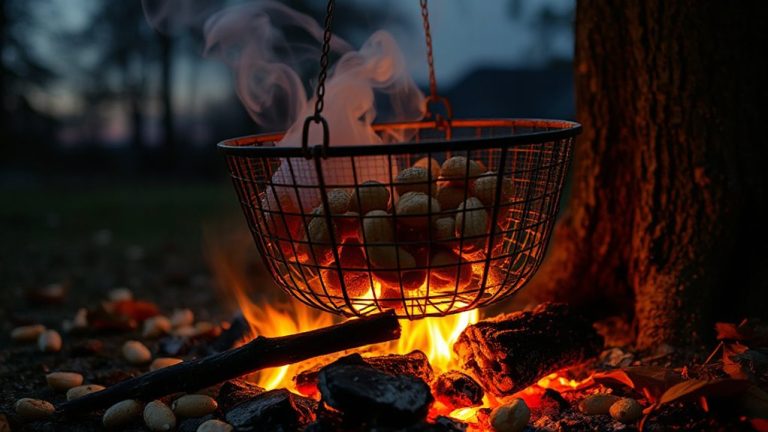
A rocket stove isn’t just for boiling water or simmering stews-it’s a surprisingly effective tool for roasting coffee beans and toasting nuts, delivering intense, concentrated heat with remarkable efficiency. You’ll appreciate the precise temperature control, especially when you need consistent heat retention for even roasting. The insulated combustion chamber keeps temperatures high while using minimal fuel, making it ideal for prolonged toasting sessions. Unlike open fires, the focused burn reduces scorching and enables deeper flavor infusion in both coffee and nuts. You’ll notice richer, more complex profiles-nut oils develop evenly, and coffee beans crack uniformly, preserving aromatic compounds. It’s not just about convenience; the stove’s design supports thermal efficiency and flavor development in ways standard grills can’t match. With proper airflow management, you get repeatable results that rival dedicated roasters-all while enjoying the simplicity and portability of a compact system built for outdoor use.
Choose the Right Roasting Gear
Gear matters when you’re relying on a rocket stove for roasting coffee or toasting nuts-your results hinge on the right tools. You’ll want roasting pans made from materials with strong heat retention, like cast iron or heavy-gauge steel, so temperatures stay consistent even with fluctuating fire output. Material compatibility is key: avoid nonstick or plastic-coated gear, as high heat can degrade coatings and taint your food. Perforated pans work well for airflow, helping roast evenly while letting chaff escape during coffee processing. Look for oven-safe, durable construction-thin aluminum warps and cools too quickly. Lids or vented covers help trap heat and protect from ash. Handles should be sturdy and heat-resistant for safe maneuvering. You’re balancing efficiency and control, so gear must endure intense, direct flames while transferring heat effectively. Well-chosen tools make the process reliable, repeatable, and far more delicious.
Stack Pans for Even Heat Distribution
While you can roast directly over the flame, stacking pans improves heat distribution by creating a mini-convection chamber that stabilizes temperature spikes common in rocket stoves. Proper pan alignment ensures even exposure, minimizing hot spots and helping manage the heat gradient across both coffee beans and nuts. A well-stacked system allows radiant heat to cycle upward, offering more consistent roasting than single-pan setups.
| Pan Position | Effect on Heat |
|---|---|
| Bottom | Highest direct heat, best for nuts |
| Middle | Balanced gradient, ideal shift |
| Top | Gentle warmth, suited for delicate beans |
| Gaps between | Encourages airflow, reduces scorching |
| Tight stack | Traps heat, increases convection |
This method delivers better control and more predictable results when multitasking over open flame.
Adjust Airflow and Fuel for Control
How do you maintain steady heat when roasting coffee and toasting nuts on a rocket stove, where temperature swings can ruin a batch in minutes? You rely on precise airflow management and smart fuel efficiency. By adjusting the intake opening, you control combustion speed-open it more for higher heat, close it slightly to stabilize. Your stove’s draft directly affects roast consistency, so use a damper or baffle to fine-tune airflow without killing the flame. Small, dry twigs burn hotter and more predictably than large logs, boosting fuel efficiency and reducing smoke. You’ll notice less char and better development when heat is steady, not spiking. Feed fuel in small increments, letting each piece burn fully before adding more. This method keeps temperatures even across both pans, essential for balancing coffee’s first crack and nuts’ browning. Smart airflow and fuel choices don’t just conserve resources-they guarantee quality, repeatable results every time.
Monitor Coffee and Nut Roasts Together
You’ve got your airflow dialed in and your fuel feeding steadily, so now it’s time to keep a close eye on what’s happening in the pans. Monitoring both roasts together means balancing bean density and roast timing carefully-coffee beans expand and release moisture, while nuts brown more evenly but can scorch. Stay attentive to color, scent, and crackling sounds; they’re your best indicators.
| Item | Time (min) | Visual Cue |
|---|---|---|
| Coffee | 8–12 | First crack, golden swell |
| Almonds | 10–14 | Light golden, fragrant |
| Pecans | 8–10 | Slight curl, oil sheen |
| Hazelnuts | 12–15 | Blistered skin, nutty aroma |
| Bean density | Varies | Less dense = faster roast |
Adjust heat subtly if one lags, but avoid sudden changes. Proper roast timing guarantees both products finish near-simultaneously with rich, even results.
Fix Common Dual-Roasting Problems
What happens when your coffee finishes roasting ten minutes before the nuts even start to brown? You’ve got uneven heat distribution, likely from poor airflow or inconsistent fuel loading. Temperature fluctuations are common in rocket stoves, especially when running dual batches. To fix this, adjust the fuel feed rate and guarantee your grate levels are properly spaced-one higher for coffee, one lower for slower-toasting nuts. Monitor smoke patterns closely; excessive smoke can lead to smoke contamination, giving your nuts a bitter, acrid taste. That’s not just unpleasant-it ruins careful roasting work. Use dry, seasoned wood to maintain steady combustion and reduce creosote buildup. Stir both batches often for even exposure. If one item pulls ahead, remove it and let the other catch up. With practice, you’ll balance timing and avoid cross-contamination, making dual-roasting efficient and delicious.
On a final note
You’ve now mastered using a rocket stove to roast coffee and toast nuts at once. This efficient method leverages intense, focused heat and smart airflow control. Stacking pans optimizes thermal distribution, though close monitoring is key. While dual roasting demands attention, the setup saves fuel and time outdoors. It’s a practical, scalable technique ideal for off-grid cooking or backyard experimentation, blending performance with sustainability where precision and patience yield rich, consistent results.