Simmer Thai Curry on a Rocket Stove: Heat & Timing Guide
You get rich, authentic Thai curry flavors on a rocket stove by leveraging its intense, steady heat to bloom spices and reduce coconut milk evenly. Use green or massaman curry, prepping all ingredients before lighting, since there’s no instant shutoff. Control temperature with small, dry fuel and airflow adjustments-avoid wet wood. Simmer gently after searing, letting oils separate for creamy depth. Watch for flare-ups; they often mean poor airflow. For best results, fine-tune heat layer by layer.
Notable Insights
- Use high heat to bloom curry paste in oil, then reduce to a gentle simmer for flavor development.
- Choose full-fat coconut milk without additives to maintain rich, authentic texture and taste.
- Opt for green or Massaman curry, which thrive with steady rocket stove heat and long simmering.
- Control temperature by adjusting airflow and fuel size to prevent scorching and ensure even cooking.
- Simmer until oil separates slightly, indicating proper reduction and fully melded, vibrant flavors.
How to Simmer Curry on a Rocket Stove for Authentic Thai Flavors
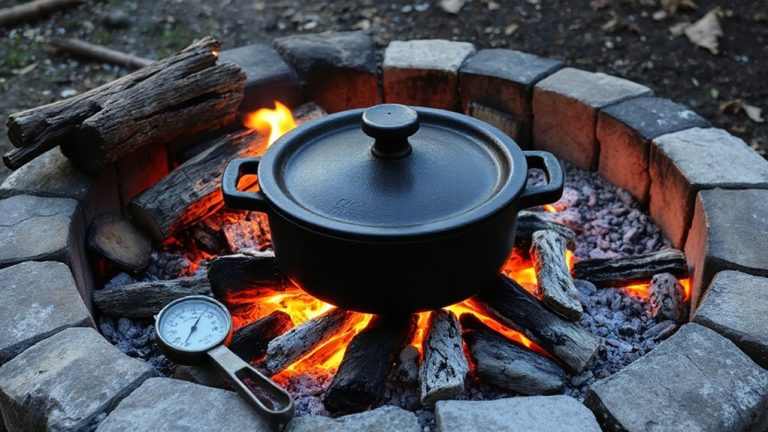
Why do some curries just taste more alive when cooked outdoors? You’re tapping into something real-thermal dynamics and airflow on a rocket stove create steady, high heat that accelerates flavor development without scorching. The intense but controllable flame reduces cooking time considerably compared to stovetops, letting aromatics like lemongrass and galangal bloom faster while preserving brightness. Unlike gas or electric, the radiant heat from the insulated combustion chamber promotes even simmering, essential for coaxing complexity from curry pastes. You’ll notice deeper umami and more layered spice integration, especially in coconut-based sauces. The draft-driven burn also minimizes fuel waste, maintaining consistent output. With practice, you’ll balance heat input and pot placement to fine-tune texture and depth, making each batch reflect both technique and environment. It’s efficient, responsive, and surprisingly precise for open-flame work.
Choose the Best Thai Curry for Outdoor Simmering
You’ve already seen how a rocket stove’s intense, steady heat can deepen the flavors of Thai curry by accelerating extraction and preserving aromatic brightness. For outdoor simmering, green and massaman curries perform best-green for its vibrant heat and herbal layers, massaman for its rich, slow-developing spices. These varieties handle prolonged, even cooking, allowing the sauce to meld thoroughly. When outdoors, coconut milk quality is critical; opt for full-fat, additive-free versions to prevent separation under fluctuating heat. Canned options with minimal preservatives maintain richness and texture. Also, consider your outdoor spice storage-keep curry pastes and dry spices in airtight, dark containers to shield them from humidity and sunlight, which degrade potency. Freshness directly impacts depth, so avoid exposing them to temperature swings. A stable base of quality ingredients guarantees your curry develops authentic, balanced flavor despite the open-air environment.
Prep Ingredients for Open-Flame Cooking
Efficiency starts with preparation, especially when cooking over an open flame. You’ll want to complete all ingredient prep before igniting your rocket stove-chop vegetables uniformly for even cooking, measure spices, and have liquids ready. This minimizes time spent away from the flame, reducing fire safety risks. Use non-flammable containers and keep your workspace organized and clear of combustibles. Since open-flame cooking lacks the instant shutoff of stovetops, proactive organization prevents accidents. Prep ingredients in advance so you can focus on monitoring simmering curry without distractions. Fire safety isn’t just about the flame-it’s about workflow, too. Proper ingredient prep guarantees smooth execution, preserves delicate flavors, and supports consistent results. When outdoor variables like wind or fluctuating heat arise, being prepared means you respond quickly, safely, and effectively, maintaining control throughout the simmering process.
Master Heat Control on Your Rocket Stove
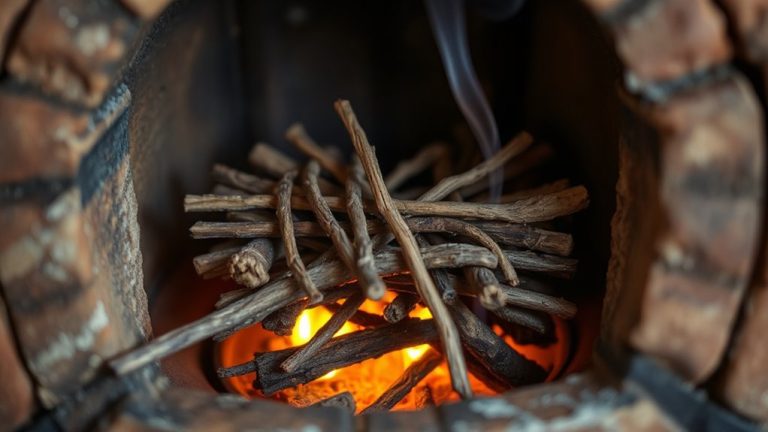
While rocket stoves deliver impressive heat output from minimal fuel, mastering temperature control is key to transforming raw ingredients into a well-balanced curry. You can achieve precise cooking temps by adjusting the fuel load and position-small, dry sticks burn hot but fast, so careful fuel efficiency matters. The real secret, though, lies in airflow management: restrict the intake for a gentler flame or open it to boost intensity. Since rocket stoves lack dials or settings, you’ll rely on observation and subtle tweaks-lifting the pot slightly to reduce contact or nestling it deeper into the chamber for more direct heat. Consistent airflow keeps combustion clean and predictable, avoiding sudden spikes that scorch delicate spices. With practice, you’ll balance heat retention and oxygen flow just right, turning raw components into a rich, unified dish without wasting resources.
Simmer for Creamy, Aromatic Results
Once the spices have bloomed and the protein or vegetables are well-seared, it’s time to bring the curry to a gentle simmer, which allows flavors to meld without breaking down delicate ingredients. You’ll want to maintain a low, steady heat-this is where your rocket stove shines, offering precise control once you’ve mastered airflow. Proper spice bloom timing guarantees aromatic depth, so don’t rush the initial sauté. Now, as the curry simmers, watch for subtle signs: the oil may begin to separate from the coconut milk, a hallmark of well-reduced richness. Coconut milk separation indicates the fats have released their flavor, but if it happens too soon, your heat’s likely too high. A slow simmer preserves cream这时候 while deepening complexity. Stir occasionally, not constantly, to encourage even infusion. This stage isn’t passive-it’s where technique meets patience, and the foundation of authentic Thai flavor truly develops. Get it right, and the result is aromatic, balanced, and deeply satisfying.
Fix Common Rocket Stove Problems
Why does your rocket stove flare up suddenly or die out just as the curry starts to simmer? It’s often due to poor airflow or wet fuel. You need consistent combustion for steady heat, especially during delicate simmering. Check the burn chamber: blockages disrupt draft and kill fuel efficiency. Use dry, small-diameter wood-split and seasoned-for cleaner, hotter burns. If flames surge unpredictably, the fuel stack might be too dense; space the sticks to allow oxygen flow. Wind can worsen instability, so position your stove beside a rock or use a custom shield for wind protection. Avoid open fields when possible. A well-tuned rocket stove maintains high heat with minimal fuel, making it ideal for long simmers. Regular cleaning of the chimney and heat riser guarantees reliable performance. With smart loading and simple mods, flare-ups and stalls become rare.
On a final note
You’ve learned how to simmer Thai curry on a rocket stove with precision. The high, controllable heat sears aromatics effectively, while steady low flames allow for slow infusion of lemongrass, galangal, and coconut milk. This method enhances authenticity, mimicking traditional open-fire cooking. With proper ventilation and fuel management, your stove delivers efficient, flavorful results. Mastery means fewer flare-ups and consistent simmering-key for complex curries. Outdoor cooking, though demanding, rewards patience with depth and aroma electric stoves rarely achieve.