How to Simmer Tomato Sauce on a Liquid Fuel Stove for Spaghetti
Use a heavy, tri-ply stainless steel pot with a 2.5–3mm base to evenly distribute heat and avoid scorching on a liquid fuel stove. Keep the flame low, with small, steady bubbles, adjusting for sudden output shifts common in liquid fuel systems. Stir every few minutes, especially as sugars in tomatoes caramelize. Add hardy herbs early, delicate ones at the end. Simmer uncovered for 30–45 minutes until thick and rich. You’ll soon discover how each detail transforms a simple sauce into something exceptional.
Notable Insights
- Use a 2.5 to 3 mm thick tri-ply or clad stainless steel pot for even heat distribution on a liquid fuel stove.
- Adjust the flame to maintain small, steady bubbles and avoid rapid temperature swings during simmering.
- Stir the sauce every few minutes to prevent scorching and ensure consistent texture and flavor.
- Add robust herbs like thyme and bay leaf at the start; stir in delicate basil and parsley in the last 10 minutes.
- Simmer for 30–45 minutes until the sauce thickens and coats the back of a spoon for optimal richness.
Pick the Right Pot for Even Heat
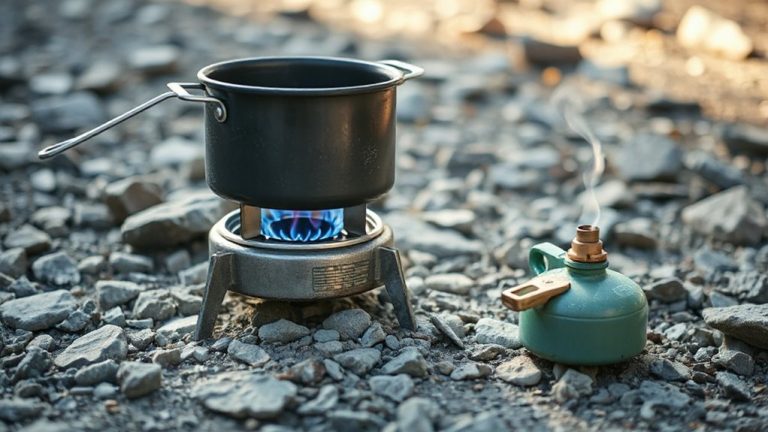
A well-chosen pot makes all the difference when you’re simmering tomato sauce over a liquid fuel stove, especially in outdoor settings where heat control isn’t as predictable as in a kitchen. You’ll want a pot with solid material thickness-around 2.5 to 3 millimeters-to buffer sudden temperature spikes and prevent scorching. Thin pots react too quickly, creating hot spots that ruin your sauce. A heavier base, often found in tri-ply or clad stainless steel, guarantees even heat distribution, spreading warmth uniformly across the cooking surface. Aluminum-core models excel here, transferring heat efficiently while maintaining stability over flickering flames. Avoid nonstick unless specifically designed for high-heat use; durability matters when you’re cooking outdoors. Cast iron retains heat well but may be overkill for simmering. Stainless steel with encapsulated bottoms strikes the ideal balance-responsive, reliable, and easy to clean after a long cook.
Control the Flame for a Steady Simmer
You’ve picked the right pot-thick-walled, with a layered base that spreads heat evenly-so now it’s time to get the flame under control. On a liquid fuel stove, flame regulation is essential because these stoves can deliver intense, uneven heat if left unadjusted. You’ll want to lower the flame until you see small, steady bubbles breaking the surface occasionally-no rapid churning. This maintains heat consistency, preventing hotspots that could compromise your sauce’s texture. Unlike electric burners, liquid fuel models require closer attention due to their responsive, sometimes abrupt, output shifts. A too-high flame won’t just risk boiling too hard-it wastes fuel and creates temperature swings. Proper flame regulation guarantees a true simmer, preserving flavor development over time. With the lid slightly ajar and the flame dialed in, your sauce reduces evenly. Master this, and you’re not just cooking outdoors-you’re refining technique.
Stir Often to Prevent Scorching
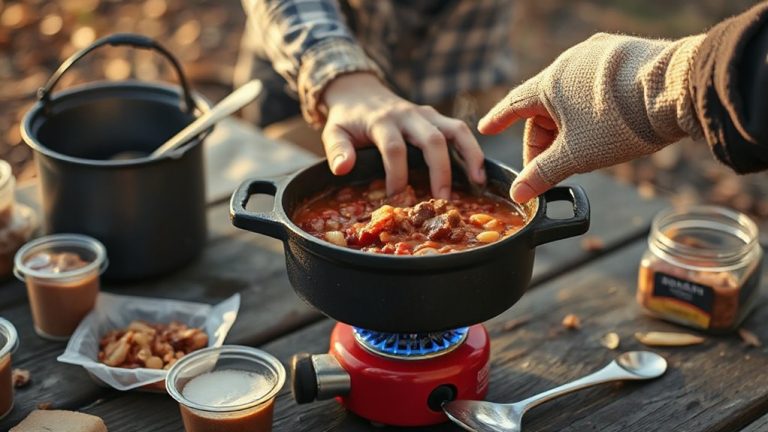
Often, stirring the sauce every few minutes makes all the difference in avoiding a burnt bottom, especially when using a liquid fuel stove that can create uneven heat zones. Good temperature control is essential, but even a well-regulated flame can’t replace the need for consistent stirring. It guarantees even heat distribution and prevents sugar-rich tomato solids from caramelizing too hard on the pot’s base. Think of it as active monitoring-every pass of the spoon checks progress and protects flavor.
| Emotion | Cause | Outcome |
|---|---|---|
| Frustration | Burnt sauce | Wasted ingredients |
| Satisfaction | Smooth texture | Rich, deep taste |
| Regret | Neglected pot | Bitter aftertaste |
| Pride | Careful tending | Perfect simmer |
Without consistent stirring, small lapses become big mistakes. Combine this habit with smart temperature control, and your sauce won’t just cook-it’ll develop.
Add Herbs at the Right Time for Flavor
Stirring keeps the sauce safe from scorching, but timing your herbs right is what builds depth. You’ll want to add hardy herbs like rosemary, thyme, and bay leaves at the beginning-these benefit from longer cooking, releasing complex oils slowly. Delicate herbs such as basil and parsley? Toss them in during the final 5–10 minutes to preserve their bright, floral notes. That’s a key technique among timing techniques: matching herb texture and oil volatility with simmer duration. Pairing matters too-oregano and garlic complement tomatoes beautifully, while a touch of red pepper flake enhances herbal notes. Try these herb pairing suggestions to elevate your sauce without overpowering it. On a liquid fuel stove, consistent heat lets you fine-tune these layers, unlike erratic campfires. Proper timing techniques don’t just release flavor-they lock it in, turning a simple sauce into something balanced and intentional.
Simmer for 30–45 Minutes for Thickness
A half-hour to forty-five minutes of steady simmering is typically enough to transform a thin, raw tomato sauce into a rich, cohesive blend with deeper flavor and ideal thickness. Using canned tomatoes as your base, this slow reduction concentrates flavors while allowing excess water to evaporate. You’ll notice the sauce darkens and coats the back of a spoon-your sign of proper consistency. Maintaining a low, even heat on your liquid fuel stove guarantees controlled evaporation without scorching. Adjust the sugar balance near the end, as sweetness intensifies with reduction. Taste carefully; a pinch of sugar might be all you need.
| Factor | Impact on Sauce |
|---|---|
| Simmer Time | Increases body and depth |
| Canned Tomatoes | Provide consistent base flavor |
| Sugar Balance | Prevents acidity from dominating |
Perfect Your Spaghetti Sauce Every Time
What separates a good spaghetti sauce from a great one when cooking outdoors? It’s attention to detail and ingredient quality. Start with high-quality canned tomatoes-they’re consistent, flavorful, and ideal for simmering over a liquid fuel stove. Crush them by hand or blend lightly for the right texture. Once your base is simmering, taste as you go; adjust acidity with a pinch of sugar if needed. The real game-changer? Fresh basil. Stir in torn leaves near the end to preserve their bright, herbal notes. Avoid boiling vigorously-gentle simmering guarantees depth without scorching. A well-regulated stove lets you maintain that ideal low, even heat. With good ventilation and steady fuel flow, your sauce develops complexity over time. Perfect your spaghetti sauce every time by respecting ingredients, process, and the unique control a liquid fuel setup offers. It’s simple, reliable, and built for outdoor precision.
On a final note
You’ve got the tools and technique to simmer tomato sauce effectively on a liquid fuel stove. Control the flame closely-too high and it scorches, too low and it won’t reduce. Stirring prevents sticking, while timed herb additions deepen flavor. Thirty to forty-five minutes gives ideal thickness. Though less stable than electric burners, liquid fuel stoves offer portability and real heat control in outdoor settings, making them practical for camp-style spaghetti prep when managed carefully.