How to Use a Hibachi Grill in Cold Weather Without Heat Loss
Place your hibachi so the wind hits the side or back, never head-on, and use a low, sturdy windbreak to shield the coals without causing turbulence. Preheat 10–15 minutes longer to overcome cold metal’s heat drain, and choose high-quality lump charcoal for hotter, more stable burns. Add 20–30% extra fuel and keep the lid closed tight-cold air saps heat fast. You’ll find these steps make winter grilling nearly as reliable as in warm months.
Notable Insights
- Position the hibachi so wind hits the back or side, using walls or fences to block direct gusts and reduce heat loss.
- Build a low, stable windbreak from non-flammable materials to shield the coals without causing airflow turbulence.
- Extend preheating by 10–15 minutes to ensure the grill body and coals reach a consistent, high temperature.
- Use high-quality lump charcoal or hard-shell briquettes for longer, hotter burns in cold conditions.
- Add 20–30% more charcoal and keep the lid closed to maintain steady heat and offset increased heat loss.
Position Your Hibachi Out of the Wind
Your hibachi’s performance in cold weather hinges largely on its placement, and one of the most critical factors is shielding it from wind. You’ll lose heat fast if the breeze hits the coals directly, so checking wind direction before lighting up is essential. Position your hibachi so the airflow hits its back or side, never head-on. Shelter placement near a wall, fence, or deck railing helps, but leave enough clearance for safety and airflow. Avoid corners that trap smoke or create turbulence. A well-placed hibachi holds temperature better, cooks food evenly, and uses less fuel. Think of it like setting up a campfire-natural barriers matter. You’re not just grilling; you’re managing combustion under pressure. Smart shelter placement isn’t optional in winter. It’s part of the technique. With the right positioning, even a small hibachi can deliver consistent results despite the chill. For best results, consider using one of the top hibachi grills recommended for their heat retention and wind-resistant design.
Build a DIY Windbreak for Steady Heat
Sheltering your hibachi from wind is only the first step-sometimes the natural barriers around your patio or backyard don’t provide enough protection, especially when gusts slice through open spaces. You’ll want to build a DIY windbreak to maintain steady heat. Start by observing the prevailing wind direction; position your barrier upwind to block gusts effectively. A simple frame covered with sturdy insulation materials like plywood, brick, or heat-resistant fabric works well. Keep it low enough to avoid creating turbulence but tall enough to shield the coals. These materials not only block wind but also reflect heat back toward the grill, improving efficiency. A well-placed windbreak made of dense, non-flammable insulation materials delivers visible improvements in temperature stability, especially in sustained cold. Just make sure it’s stable and safe-secure it firmly so strong gusts don’t topple it.
Preheat Longer in the Cold
While the ambient temperature drops, you’ll need to account for how quickly heat escapes from your hibachi, especially during startup. Cold metal absorbs warmth fast, slowing charcoal ignition and compromising initial heat retention. You should let the coals burn longer before cooking-typically 10 to 15 minutes beyond what you’d do in warmer weather. This extended preheat guarantees the grill grates and body absorb enough energy to stabilize cooking temperatures. Proper charcoal ignition isn’t just about flames; it’s about achieving a consistent, glowing bed that won’t falter when exposed to cold air. The longer preheat improves heat retention across the cooking surface, reducing cold spots and flare-ups. Though it takes more patience, this step is essential for reliable performance. In cold conditions, rushing the process leads to uneven results and prolonged cook times. Letting the system fully warm up pays off in temperature control and overall grilling efficiency.
Use Hot-Burning Charcoal for Winter Grilling
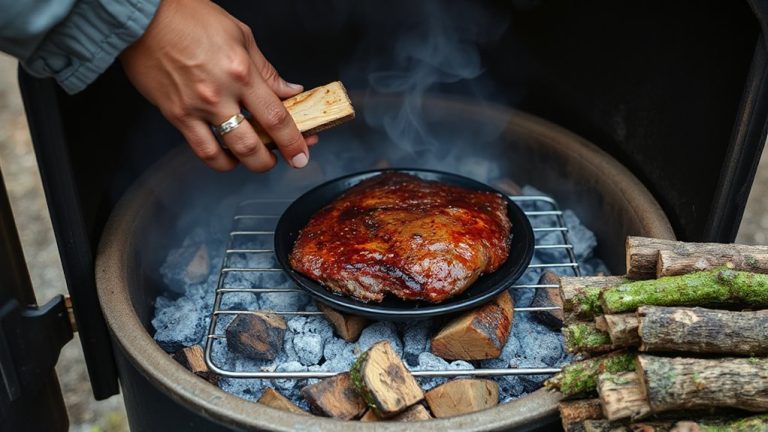
A significant number of winter grillers find that not all charcoal performs equally when temperatures dip below freezing. You’ll notice a clear difference when using hot-burning varieties like lump charcoal or hard-shell briquettes, which maintain higher temperatures longer. Charcoal quality matters-it directly affects heat output and burn consistency in cold air. Low-quality charcoal breaks down too fast, robbing you of control. Your ignition method also plays a vital role; chimney starters deliver even, reliable ignition without lighter fluid, which can interfere with flavor. Electric starters work too, but require power. Avoid match-light charcoal-it’s often lower grade and designed for ease, not performance. For steady, high heat in winter, invest in premium charcoal and pair it with a solid ignition method. You’ll see fewer temperature swings and better searing, even in snow. For optimal performance, consider models reviewed in the best charcoal grill smokers roundup to ensure durability and heat retention in harsh conditions.
Add Extra Charcoal to Maintain Heat
You’ll likely need around 20 to 30 percent more charcoal than usual when grilling in cold weather, simply because low temperatures make it harder for the grill to retain heat. Adding extra charcoal compensates for quicker temperature drops and maintains consistent cooking conditions. Proper charcoal storage is essential-keep your fuel dry and off cold ground to guarantee reliable ignition and longer burn times. Moisture from snow or damp air reduces efficiency, so store charcoal in a sealed container away from the elements. Good heat retention starts with preparation: preheat longer and monitor temperature closely. For optimal performance, consider using high-quality Japanese charcoal known for its density and long, steady burn.
Keep the Lid Closed in Winter Grilling
Because heat escapes more quickly in cold conditions, keeping the lid closed on your hibachi grill isn’t just good practice-it’s essential for maintaining steady cooking temperatures. Every time you lift the lid, you lose precious heat, making it harder to sear or cook foods evenly. Good lid insulation plays a key role here, slowing heat loss and improving overall heat retention. Most hibachi grills have tight-fitting lids, but checking for warping or gaps can prevent unnecessary airflow. For best results, resist the urge to peek-plan your cooking moves ahead and limit lid openings. This method not only conserves fuel but also delivers more consistent results, especially with thicker cuts. Experienced grillers know that managing lid time separates a decent cook from a great one in winter. Proper heat retention through disciplined lid use guarantees your meals stay flavorful and safely cooked, even in chilling winds.
On a final note
You’ll need to adapt your hibachi setup for cold weather, but these changes make winter grilling reliable. A windbreak and proper positioning help retain heat, while hot-burning charcoal like lump or hardwood briquettes sustain higher temperatures. Preheating longer and adding extra fuel compensate for thermal loss. Keeping the lid closed preserves consistent heat, essential for even cooking. With these adjustments, your hibachi remains efficient and effective, proving that outdoor cooking is doable year-round with smart technique.