Maintaining Stable Temperatures With Uniform Charcoal Grades in Kettle Grills
You get more consistent heat using uniform charcoal grades because evenly sized briquettes or lump burn at a synchronized rate, preventing erratic spikes and cold spots. Load them in a level bed to promote even ignition and proper airflow. Pair this with measured vent control-adjusting the bottom damper first, then the top-to maintain your target range. Briquettes offer longer, steadier burns, ideal for 8+ hour smokes with minimal fluctuation. Once you establish a repeatable fire setup, temperature management becomes predictable and reliable-you’ll soon see how small tweaks improve long-term control.
Notable Insights
- Use uniform charcoal grades to ensure consistent ignition and predictable, even heat output.
- Arrange charcoal in a level, pyramid-free bed to promote balanced airflow and thermal stability.
- Opt for briquettes for steady combustion, longer burn times, and minimal temperature fluctuations.
- Avoid mixing charcoal sizes to prevent hot spots and disruptive heat spikes during long cooks.
- Control temperature by adjusting the bottom damper first, then fine-tuning with the top vent.
Load Charcoal for Even Heat
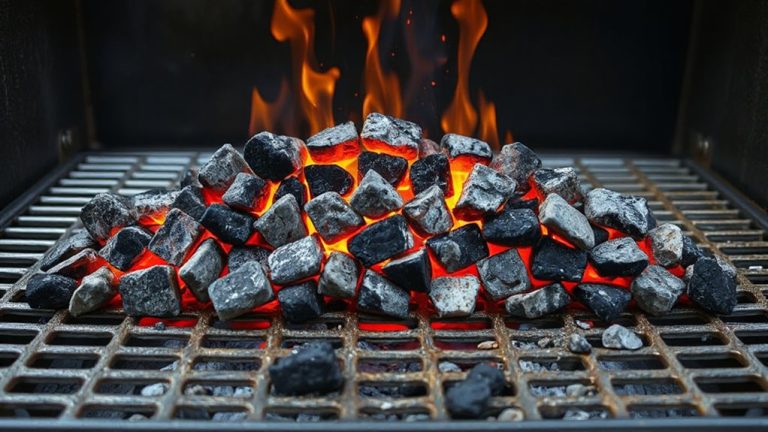
When you’re aiming for consistent cooking results on a kettle grill, how you load the charcoal plays a decisive role in heat distribution and overall performance. You need to balance charcoal density to avoid hot spots or weak zones-packing too tightly restricts airflow, while spreading too thin reduces thermal resilience. A uniform pyramid or even bed promotes better ignition consistency, ensuring flames spread evenly without sudden flares or stalls. Light the coals from the bottom using a chimney starter, which eliminates lighter fluid and supports reliable catch across all pieces. Once ashed over, redistribute them based on your cooking zone needs. This method maintains stable core temperatures longer, especially when using uniform charcoal grades. Proper loading isn’t just ritual; it’s practical thermodynamics. You’re not just starting a fire-you’re engineering controlled combustion for precision outdoor cooking. For best results, use a charcoal chimney that ensures fast, even lighting without chemical additives.
Choose Briquettes or Lump for Steady Heat
You’ve already set up your charcoal for even heat, but the kind you choose makes just as big a difference in how steadily that heat holds. If you want consistent temperatures, briquettes are your best bet. They’re engineered for uniform ignition speed, so they light evenly and burn longer. Their predictable ash composition-fine and compact-doesn’t block airflow, helping maintain a steady fire. Lump charcoal, while natural and fast-burning, varies in density, leading to uneven burn rates and fluctuating heat. Its chunkier ash can also disrupt airflow over time. Though lump lights quicker and appeals to purists, its inconsistency makes it less ideal for long cooks. For reliable, stable performance in a kettle grill, briquettes outperform due to controlled composition and slower, more even burn. You’ll spend less time adjusting and more time cooking. Top-rated options like best charcoal for smoking deliver consistent results for long cooks.
Use Vents to Control Temperature
Through careful manipulation of airflow, you can fine-tune your kettle grill’s temperature with surprising precision-something many overlook when struggling to maintain consistent heat. Proper vent positioning is essential: the bottom damper regulates oxygen intake, while the top vent controls exhaust. Opening both increases airflow balance and raises temperature; closing them restricts oxygen, cooling the fire. For steady cooking temperatures, adjust the bottom vent first-it directly impacts burn rate-then fine-tune the top vent to stabilize airflow balance. Many beginners make the mistake of touching only the top vent, which can suffocate the fire or create erratic heat. With uniform charcoal grades, consistent vent positioning guarantees predictable combustion. Monitoring these airflow adjustments lets you maintain desired temps for hours, whether searing or slow-smoking. It’s not just about how much charcoal you use, but how well you manage airflow balance through deliberate vent positioning. That control separates good cooks from great ones.
Why Mixed Charcoal Causes Heat Spikes?
Why does your grill sometimes surge with unpredictable heat, throwing off cooking times and scorching food? It’s likely because you’re using mixed charcoal grades. When chunks vary in size and charcoal density, they don’t burn evenly-smaller pieces ignite faster, spiking the temperature, while denser, larger chunks ignite later, creating inconsistent output. This mismatch causes wild swings in burn rate, making stable heat nearly impossible. Since airflow and fuel composition are tightly linked, uneven charcoal disrupts even the best vent control. You’re left reacting, not managing. Uniform charcoal grades guarantee each piece lights at a similar pace, matching your airflow settings and maintaining predictable combustion. Mixed batches might seem cost-effective, but they sacrifice control. For precise outdoor cooking, consistent charcoal isn’t just helpful-it’s essential. You want steady performance, not surprises. Choosing the right best charcoal grills can significantly improve heat management and make maintaining consistent temperatures easier.
Hold Steady Heat for Long Smokes
Maintaining a steady temperature over several hours isn’t just about patience-it’s about preparation. Using uniform charcoal grades ensures reliable fuel density and superior burn consistency, which are critical when you’re smoking brisket or ribs for 8+ hours. Inconsistent chunks cause erratic airflow and unpredictable heat, but evenly sized briquettes or lump charcoal create stable, long-lasting coals. For best results, arrange your fuel in a tight, even layer-this promotes uniform ignition and minimizes hot spots.
| Time (hrs) | Grill Temp (°F) | Coal Appearance |
|---|---|---|
| 0 | 225 | Newly lit, blue edges |
| 2 | 230 | Gray ash forming |
| 4 | 227 | Solid gray, steady glow |
| 6 | 224 | Evenly glowing |
| 8 | 226 | Light ash, no flames |
You’ll maintain target temps with fewer adjustments, thanks to predictable burn consistency and maximum fuel density.
Set Up a Repeatable Burn Timeline
Once you’ve chosen the right charcoal grade, you can build a burn timeline that’s both predictable and repeatable-key for anyone serious about low-and-slow BBQ. Start by establishing a consistent charcoal ignition method, like a chimney starter, to guarantee every burn begins the same way. Light the charcoal evenly, then spread it out once glowing to promote uniform heat. Track how long it takes to reach your target temperature-usually 225–250°F-and mark that as your ignition baseline. Monitor the grill’s internal temp hourly, adjusting airflow slightly if needed. With uniform-grade charcoal, you’ll notice better burn consistency, meaning less fluctuation over time. This repeatability lets you plan fuel additions at the same intervals each cook. Over several sessions, refine your timeline until it’s nearly automatic. A reliable burn timeline isn’t just convenient-it’s the foundation of precise, hands-off barbecue.
Briquettes vs. Lump: Which Keeps Heat Steadier?
A well-stocked grill depends on the right fuel, and when it comes to steady heat in a kettle setup, briquettes often have the edge over lump charcoal. You’ll find they offer more consistent heat retention thanks to their uniform fuel density and engineered composition. Made from compressed charcoal dust and binders, briquettes burn longer and more predictably, which helps maintain stable temps-key for low-and-slow cooks. Lump charcoal, while natural and quick to ignite, varies in size and density, leading to hotter but uneven burns that require more airflow tweaks. If you’re chasing reliability over raw flame, briquettes deliver better temperature control. Their steady output pairs well with a calibrated vent system, making them ideal for beginners and set-and-forget cooks. Though lump has its fans, especially for searing, briquettes excel in consistency. For heat retention and even cooking, they’re your best bet.
On a final note
You’ll maintain stable temperatures best by using uniform charcoal-briquettes offer consistency, while lump varies more in burn rate. Mixed grades create uneven airflow and hot spots. By setting up a repeatable fuel layout and adjusting top and bottom vents gradually, you gain precise control. For long smokes, this method guarantees steady, predictable heat, minimizing flare-ups and temperature swings common with irregular charcoal mixes.