Mastering Temperature Stability With Self-Igniting Charcoal in Kamado Grills
You can master temperature stability in your Kamado by using self-igniting charcoal like Royal Oak Fast Lite or Big Green Egg Easy Start, which burn cleaner and more evenly than traditional briquettes. Arrange them in a tight pyramid for uniform ignition, then control airflow with partially closed dampers to prevent spikes. Once lit, these fuels deliver steady heat between 225°F and 350°F with minimal adjustment. The ceramic body retains this consistent environment, reducing the need for constant monitoring - and there’s more to optimizing this system than just fuel choice.
Notable Insights
- Use self-igniting charcoal with natural ingredients like hardwood or coconut shells for cleaner, more stable heat.
- Arrange charcoal in a tight pyramid to ensure uniform ignition and consistent initial burn temperatures.
- Start with partially closed dampers to control airflow and prevent temperature spikes during ignition.
- Load one to two layers of charcoal to match cook duration while maintaining optimal oxygen flow.
- Leverage the Kamado’s ceramic insulation and efficient combustion to sustain steady temps with minimal adjustments.
Why Kamado Temperature Swings Ruin Your Cook
Have you ever opened your Kamado lid to find unevenly cooked meat, dried-out brisket, or worse-raw spots in your pork shoulder? These issues usually trace back to temperature swings caused by fuel inconsistency and airflow imbalance. When your charcoal burns unevenly, hot and cold zones develop, sabotaging even heat distribution. Kamados rely on precise airflow control, and if the vents aren’t calibrated right, oxygen either floods the chamber or starves the fire. That leads to spikes or drops in temperature, ruining long cooks. Even minor shifts can compound over hours, especially with large cuts like brisket or pork shoulder that need stable, low-and-slow heat. Fuel inconsistency-where some briquettes ignite faster or burn hotter-exacerbates the problem. An airflow imbalance further destabilizes combustion, making temperature control unpredictable. Without consistency, your cook suffers, no matter how good your seasoning or wrap technique.
Choose the Best Self-Igniting Charcoal for Steady Heat
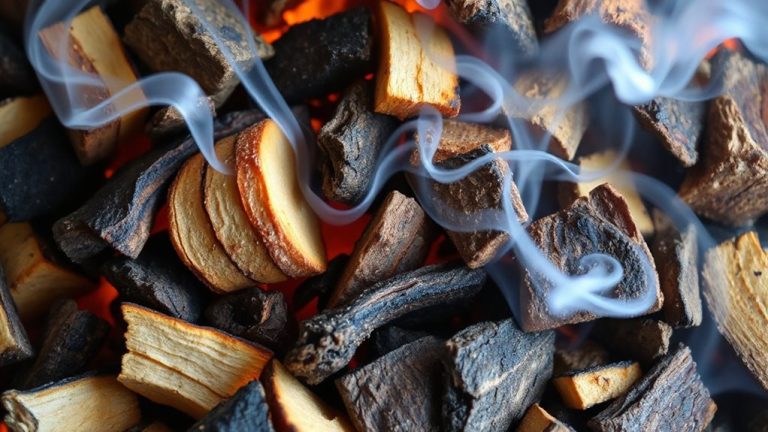
While consistent heat is essential for flawless low-and-slow barbecue, not all self-igniting charcoals deliver the stability your Kamado needs. The key lies in charcoal composition and the type of ignition additives used-both substantially impact burn rate and temperature control. You want a blend that lights reliably but burns evenly, avoiding the spikes and drops that ruin delicate cooks. Below is a quick comparison to guide your choice:
| Brand | Charcoal Composition | Ignition Additives |
|---|---|---|
| Kingsford Match-Light | Bituminous coal, sawdust | Petroleum-based |
| Royal Oak Fast Lite | Hardwood, natural lump | Food-grade paraffin wax |
| Big Green Egg Easy Start | Coconut shells, bamboo | Vegetable-based gel |
| Cowboy Instant Flame | Charred wood, starch binder | Ethanol-infused paper |
Opt for natural binders and minimal additives-Royal Oak and Big Green Egg versions offer cleaner, steadier heat with less flavor interference.
Light and Load for Instant, Stable Temperatures
Once you’ve selected a high-quality self-igniting charcoal with natural binders and clean-burning additives, the next step is mastering the lighting and loading process to achieve immediate and sustained temperature stability. Arrange the coals in a tight pyramid to promote even ignition-this setup guarantees rapid, uniform lighting without hot spots. Self-igniting coals light faster than traditional lump, so you’ll see flame rise quickly; maintaining proper flare control minimizes temperature spikes and prevents fuel waste. Don’t overload the chamber-overpacking causes uneven combustion and accelerates ash buildup, which restricts airflow and dampens heat consistency. Instead, load only what’s needed for your cook duration, typically one to two layers for most sessions. You’ll notice cleaner burns and steadier temps when you balance quantity with oxygen availability. This method supports precision cooking from startup through long smokes, letting you hit target temps fast and keep them there.
Adjust Your Dampers When Using Self-Igniting Coals
Since self-igniting charcoal reaches peak temperatures faster than traditional fuels, you’ll need to adjust your dampers early to manage the surge in heat and maintain control. Proper damper positioning is critical-start with the top and bottom dampers partially closed to limit excessive airflow and prevent temperature spikes. As the coals ignite and stabilize, fine-tune the airflow control by gradually opening or closing the dampers to achieve your desired cooking zone. Unlike natural lump charcoal, self-igniting varieties often burn hotter and quicker, making real-time airflow adjustments essential. You’ll notice that even small changes in damper positioning markedly affect internal temperature, so patience and observation are key. Effective airflow control not only protects your food from sudden heat bursts but also extends fuel efficiency. Mastering this balance gives you reliable performance and consistent cooking conditions right from the start.
Maintain Consistent Heat With Minimal Effort
You’ve got your dampers set and the coals firing up fast-now the goal shifts to keeping that heat steady without constant tinkering. Self-igniting charcoal delivers reliable thermal consistency, locking in stable temps once the initial burn-off passes. Because these briquettes ignite uniformly and maintain even combustion, you get outstanding burn efficiency with minimal input. That means less babysitting the grill and more confidence in your cook times. The Kamado’s ceramic walls trap heat beautifully, but pairing that insulation with predictable fuel means you rarely need to adjust the dampers mid-session. You’ll notice fewer spikes and dips, especially between 225°F and 350°F-the sweet spots for smoking and roasting. Thanks to the consistent fuel output, you achieve steady results without opening the lid or fiddling with airflow every 20 minutes. This isn’t just convenience-it’s precision, making your process more efficient and your outcomes more repeatable.
Fix Common Temperature Issues Fast
Even when using self-igniting charcoal, temperature swings can still catch you off guard-especially if airflow isn’t balanced or fuel distribution is uneven. If you’re seeing sudden temperature spikes, check your vents first; too much oxygen can send heat soaring past your target. Adjust the bottom and top dampers gradually-small tweaks make a big difference. Airflow blockage from ash buildup is another common culprit, so clean the firebox regularly to maintain consistent draft. Uneven charcoal placement can also create hot spots, leading to inconsistent cooking results. Stir the coals gently after ignition to distribute heat more evenly. Self-igniting briquettes reduce startup time, but they still rely on proper airflow management. Monitor your dome thermometer closely during the first 20 minutes. Fast fixes like clearing blockages or adjusting vents can restore stability quickly, letting you focus on perfecting your cook instead of chasing temperatures. For even greater precision, consider using a temperature controller specifically designed for Big Green Egg models.
On a final note
You’ve seen how self-igniting charcoal streamlines heat management in your kamado. It delivers fast, reliable ignition and remarkably stable temperatures when paired with proper damper control. While traditional lump charcoal offers purity, self-igniting options save time and reduce effort without drastically compromising performance. For consistent cooks and weekday grilling, they’re a practical upgrade. Just monitor airflow closely-small adjustments prevent spikes. With the right technique, you’ll maintain precision, efficiency, and great results every time.