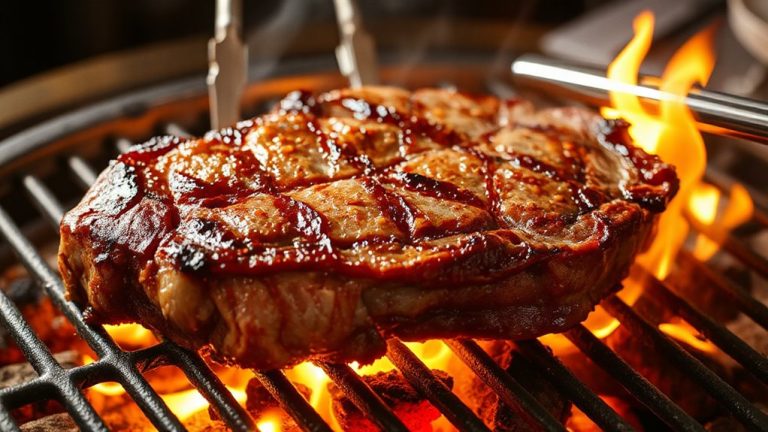
Maximizing Burn Time With Premium Oak-Dominant Charcoal Blends
You’ll get the best burn time from premium oak-dominant charcoal by stacking it evenly with small gaps for airflow, boosting thermal mass without choking the fire. Oak’s dense structure holds heat longer and burns cleaner than softer woods. Avoid wet charcoal, over-lighting, and poor airflow-these kill consistency. Adjust dampers to maintain 225–275°F, and add pre-heated coals when temps dip. There’s more to mastering steady heat than just fuel choice.
Notable Insights
- Use a pyramid or volcano stacking method to promote even ignition and maximize burn time with dense oak charcoal.
- Maintain small, consistent gaps between coals to support airflow without accelerating combustion.
- Store oak-dominant charcoal in a dry place to preserve density and prevent moisture-related burn issues.
- Control burn rate by adjusting dampers to sustain temperatures between 225–275°F for long cooking sessions.
- Add dry, pre-heated charcoal when temperatures drop 25–50°F to avoid thermal shock and maintain steady heat.
Load Charcoal for Long Burns
While you might be tempted to pile in as much charcoal as possible, loading it properly is actually more important than sheer volume when you’re aiming for a long, steady burn. You need to take into account charcoal density-tighter stacks increase thermal mass, helping maintain consistent heat. But pack too tightly, and you’ll choke the fire. That’s where airflow control comes in. Leave small gaps between coals to allow oxygen to circulate, feeding the burn without speeding it up excessively. A pyramid or volcano shape works best, promoting even ignition and sustained combustion. You’re not just lighting fuel; you’re engineering a system. Premium blends respond well to this method, as their uniform density supports predictable burn patterns. With the right load, you’ll get longer duration, fewer top-ups, and better cooking results. It’s not about more-it’s about smarter. Proper loading turns good charcoal into peak performance. For best results, choose a high-quality charcoal for smoking that ensures cleaner burns and enhanced flavor.
Why Oak Charcoal Gives Longer Burn Time
Stability in heat output starts with the wood you choose, and when it comes to long, reliable burns, oak stands out. You’ll find oak charcoal delivers superior heat retention, maintaining steady temperatures without constant fueling. That’s because oak’s dense grain structure translates to higher energy density-more heat per pound compared to softer woods. This means you get longer cooking sessions with fewer fluctuations, ideal for slow-smoking briskets or roasting for hours. The slow, even burn minimizes hot spots and wasted material, giving you better control. Unlike lighter charcoals that flare and fade, oak holds its composure, releasing energy gradually. It’s not just about burn duration-it’s about consistent performance. When you prioritize energy density and heat retention, oak becomes the logical choice. You’re not just extending burn time; you’re maximizing efficiency, flavor development, and temperature precision. For serious outdoor cooking, oak’s performance advantages aren’t just noticeable-they’re essential.
Top 3 Mistakes That Shorten Burn Time
If you’re not getting the lengthy burn you expected from your premium oak charcoal, chances are a few common missteps are sabotaging your setup. Poor storage is a major culprit-exposing charcoal to moisture degrades its density and efficiency, leading to weak, inconsistent burns. You’ll see this fast: damp briquettes crackle and fizzle instead of glowing steady. Another issue? Incorrect ignition. Lighting too much charcoal at once or using excessive lighter fluid creates a hot, short burst that burns out fast instead of a slow, radiant heat. You’re better off with a chimney starter-no chemicals, even lighting. Finally, ignoring airflow control chokes the fire when you need sustained heat. These mistakes waste quality fuel and undermine cooking precision. Your oak blend is designed for endurance, but only if handled right. Fix these three, and you’ll notice improved consistency, stronger sear, and far longer cook windows. For budget-conscious pitmasters, securing the best value without sacrificing quality is possible with savvy shopping for Best Charcoal Deals.
Manage Fire for Longer Burn Time
You’ve avoided the storage slips, skipped the lighter fluid overload, and set up your chimney starter like a pro-now it’s time to keep that fire going strong. Proper fire placement is key: position coals evenly across the grate to create consistent heat without hot spots or dead zones. Stack them slightly deeper toward the air intakes for better heat retention. Airflow control determines burn rate-open vents too wide and you’ll blaze through charcoal too fast; restrict them too much and the fire suffocates. Use the dampers to fine-tune oxygen flow, maintaining a steady 225–275°F for long cooks. A well-managed fire burns clean, sustains temperature, and makes the most of premium oak-dominant blends. With smart airflow control and thoughtful fire placement, you’ll stretch burn time without sacrificing performance.
When to Add Charcoal Without Ending the Burn
While maintaining a steady cook, there’ll come a point when the fire starts to wane-coals turn ashen, temps dip, and smoke thins out. That’s your cue to add more fuel without killing the burn. Do it too early, and you’ll smother the fire; too late, and recovery takes longer than needed. The best moment? When the temperature drops just 25–50°F from your target. Use dry charcoal with low moisture content to guarantee quick ignition and clean combustion. Dumping wet or damp charcoal cools the bed and creates steam, disrupting airflow control. Pre-heat new coals on the edge of the grate or in a chimney starter to avoid sudden temp swings. Maintain airflow control throughout by adjusting vents gradually-don’t open them wide all at once. Properly timed additions with dry fuel preserve burn continuity, extend cook time, and keep flavor consistent. It’s not just about fuel; it’s about balance.
On a final note
You’ll get the most burn time by starting with premium oak-dominant charcoal, known for its density and consistent heat. Proper stacking, avoiding common airflow mistakes, and adding fuel at peak ignition temperature keep the burn steady. These steps, backed by real grill performance, extend cooking windows without flavor spikes. While other blends may ignite faster, oak delivers longer, more controllable burns-ideal for slow roasting or searing. It’s a reliable choice for serious outdoor cooking.