3-2-1 Ribs Method: 225°F Smoke, Wrap & Glaze Guide
You start by smoking ribs unwrapped for 3 hours at 225°F, using clean fruitwood smoke for flavor without bitterness. Then, wrap them tightly in butcher paper or foil for 2 hours to tenderize with retained moisture. Finally, unwrap and glaze during the last hour, building a sticky, caramelized crust. This method balances smoke, texture, and tenderness perfectly-keep going, and you’ll see how to avoid common mistakes and boost results.
Notable Insights
- Select high-quality St. Louis cut ribs with even thickness and a solid fat cap for best results.
- Smoke unwrapped for 3 hours at 225°F using clean fruitwood or oak smoke for flavor development.
- Wrap ribs tightly in foil or butcher paper at 165°F to tenderize and retain moisture for the next 2 hours.
- Unwrap and glaze ribs during the final hour, applying sauce every 15 minutes for a sticky finish.
- Let ribs rest 10–15 minutes after smoking to allow juices to redistribute before serving.
Choose the Best Ribs for the 3-2-1 Method
While you might be tempted to grab whatever ribs are on sale, going with a high-quality cut makes a real difference when using the 3-2-1 method, especially since this slow smoking process highlights both the strengths and flaws of your meat. Rack selection is critical-look for a full St. Louis cut with even thickness and a solid fat cap. Meat quality matters just as much; choose ribs with good marbling and a pinkish-red hue, avoiding any that look gray or smell off. Vacuum-sealed packs often preserve freshness, but fresh ribs from a trusted butcher usually deliver better texture. Trimmed racks save time, but you’ll want to remove the membrane yourself for maximum smoke penetration. A well-chosen rack guarantees tender, flavorful results after hours in the smoker, while a poor one exposes dryness or toughness. Invest in quality upfront-you’ll taste the difference.
Why the 3-2-1 Smoking Method Works
Because it balances exposure, tenderness, and flavor development, the 3-2-1 method has earned its reputation as a go-to technique for smoking ribs. You start by letting the meat absorb smoke and heat, kickstarting the Maillard reaction on the surface-this builds that rich, savory crust you love. Then, wrapping the ribs for the next two hours accelerates collagen breakdown, turning tough connective tissue into gelatin without drying out the meat. The final hour unwrapped gives you control over texture, letting the exterior firm up slightly while the interior stays tender. This phased approach isn’t gimmicky-it’s practical science. You’re managing heat, moisture, and time in stages that align with how meat behaves under low-and-slow conditions. The method works because it respects biological and chemical processes, delivering consistent results when you follow through with attention to internal temp and bark development.
Smoke Unwrapped for 3 Hours
Three hours of uninterrupted smoke exposure sets the foundation for deep flavor and a well-developed bark. You need clean, thin blue smoke throughout this stage-thick white smoke can make ribs bitter, so monitor smoke intensity closely. Your wood selection plays a critical role; fruitwoods like apple or cherry add a mild, sweet essence, while hickory or oak provide a stronger, robust character. Avoid resinous woods-they’ll ruin the taste. Maintain a steady 225°F in your smoker, letting the meat absorb that smoky essence without drying out. This phase isn’t just about flavor-it’s where the bark begins forming, thanks to the spice rub binding with smoke and heat. Resist peeking; every lid lift disrupts temperature and smoke flow. Proper wood selection and consistent smoke intensity during these first three hours directly influence how rich and balanced your ribs taste. It’s time well spent-no shortcuts here. For optimal smoke flavor and consistent heat, consider using high-quality best pellets for cooking pork ribs.
Wrap Ribs for 2 Hours (And When to Do It)
After those initial three hours of steady smoke, the ribs have built a solid foundation of flavor and a bark that’s beginning to firm up-now it’s time to shift focus from smoke absorption to tenderization. You’ll want to wrap the ribs tightly to trap moisture and accelerate breakdown of connective tissue. Think of this phase like sealing a house: the wrap acts like foam insulation, holding in heat and humidity, while preventing flare-ups much like weather stripping seals gaps against drafts.
| Method | Effect on Ribs |
|---|---|
| Foil wrap | Speeds tenderization, creates softer bark |
| Butcher paper | Allows slight breathability, preserves bark |
Foil locks in more moisture but risks over-steaming; butcher paper offers balance. Choose based on your smoker’s stability and desired finish. This two-hour phase is essential for transforming tough collagen into succulent, pull-apart ribs. A reliable tool for handling wrapped ribs without tearing is using high-quality best grilling tongs.
Glaze and Finish With Sauce for 1 Hour
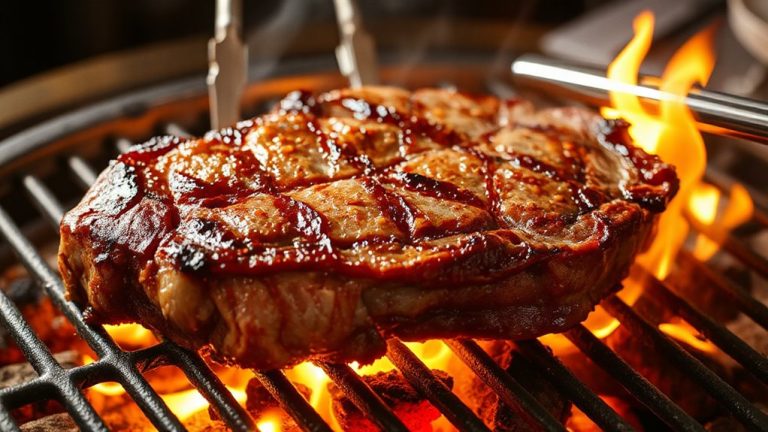
While the ribs have spent the past five hours developing depth and tenderness, the final hour is where they earn their finish-this is your chance to build a glossy, sticky surface that enhances both appearance and flavor. You’ll apply sauce every 15 minutes, starting at the 45-minute mark, to control glaze timing and prevent burning. Thin layers allow the sugars to caramelize without scorching, gradually building complexity. Ideal sauce consistency is slightly thicker than ketchup-runny enough to spread, but not so thin it drips off. This balance guarantees adhesion and a polished sheen. Avoid slathering too early; premature application can lead to char instead of a proper glaze. Each pass adds sheen and depth, yielding a finish that’s visually appealing and rich in taste. This disciplined approach outperforms haphazard basting, delivering professional results at home. For authentic flavor, consider using a Kansas City BBQ sauce known for its thick, sweet, and smoky profile.
Pro Tips for Tender, Juicy 3-2-1 Ribs
Since texture and moisture are what separate great ribs from the merely acceptable, mastering a few key techniques can make all the difference in achieving that ideal bite-tender enough to pull apart with light pressure, yet firm enough to hold structure. You’ll want to wrap your ribs at the two-hour mark; this locks in moisture and dramatically improves rib texture by softening collagen without sacrificing integrity. Use a mix of apple juice and a touch of vinegar in the wrap for added succulence and subtle flavor balance. Choose a rub with both sweetness and spice to complement, not overpower, the meat. Maintain a steady smoker temp around 225°F-fluctuations can toughen fibers. Finally, let ribs rest 10–15 minutes post-smoke; this evens out juices, enhancing both tenderness and overall flavor balance.
Fix Common 3-2-1 Rib Problems
Why do some racks come out tough, dry, or unevenly cooked despite following the 3-2-1 method to the letter? Often, it boils down to poor temperature control and imbalanced smoke. Even slight fluctuations in heat can stall collagen breakdown, leaving ribs chewy. Too much smoke creates bitterness, while too little delivers bland results-maintaining smoke balance is key. Wrapping at the right moment locks in moisture, but only if internal temps are on point.
| Problem | Cause | Fix |
|---|---|---|
| Tough ribs | Low temp, short smoke | Monitor temp, extend smoke |
| Dry bark | Poor wrap, high heat | Wrap at 165°F, regulate heat |
| Bitter flavor | Excessive smoke | Use clean, thin blue smoke |
Consistent temperature control and proper smoke balance turn good ribs into great ones. Calibrate your thermometer, use quality wood, and trust the process-not just the clock.
On a final note
You’ve now mastered the 3-2-1 method: a reliable, structured approach to smoking ribs with consistent results. The initial smoke builds flavor, the wrap tenderizes, and the final glaze adds depth and texture. When executed properly, ribs come out juicy, tender, and rich in barbecue character. With attention to temperature, timing, and smoke balance, this method works exceptionally well across various smokers. It’s efficient, effective, and ideal for both beginners and seasoned grillers seeking predictable, high-quality barbecue performance.