Using a Temperature Dampener Plate to Reduce Direct Heat in Charcoal Grills
You’re using a dampener plate to block intense radiant heat and spread temperatures evenly across your charcoal grill. It sits between coals and food, smoothing out hot spots caused by uneven airflow. Stainless steel and cast iron work best-durable, heat-resistant, and effective at heat diffusion. You’ll see fewer flare-ups and better control, especially with delicate items. Position it close to coals for gentle cooking or raise it slightly for more direct heat. There’s more to mastering your grill’s climate than just placement.
Notable Insights
- A temperature dampener plate reduces direct heat by acting as a barrier between coals and food.
- Position the plate directly above coals to diffuse intense radiant heat and minimize hot spots.
- Using the plate with controlled airflow helps maintain consistent, lower cooking temperatures.
- It prevents flare-ups by shielding flames from dripping fats while moderating heat exposure.
- Stainless steel, cast iron, or ceramic plates are ideal for durability and even heat distribution.
Why Charcoal Grills Have Hot Spots (And How to Fix Them)
Ever wonder why some parts of your steak sear to perfection while other sections barely register a sizzle? It’s all about grill geography and airflow dynamics. Charcoal grills develop hot spots because heat doesn’t distribute evenly-airflow fuels hotter zones where oxygen reaches the coals most freely. You’ll notice these spots directly above the charcoal pile, while edges stay cooler due to restricted airflow. Uneven grates, inconsistent coal distribution, or poorly designed vents further skew temperature zones. Even minor shifts in how you load the charcoal can reshape the heat map across your cooking surface. Managing this means adjusting your setup: spreading coals strategically, using a two-zone fire, or smoothing out airflow with careful vent control. While you can’t eliminate hot spots entirely, understanding airflow dynamics lets you predict them. Mastering grill geography isn’t just helpful-it’s essential for reliably great results.
What Is a Temperature Dampener Plate and How It Works
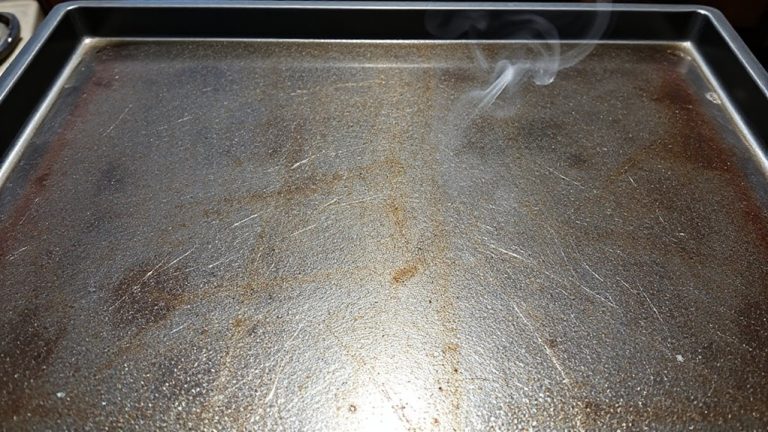
A temperature dampener plate is a flat, heat-resistant barrier-often made of stainless steel or cast iron-positioned between the charcoal and the cooking grate to moderate intense radiant heat and even out thermal extremes across the grill surface. You’ll find it especially useful when managing heat distribution, since it diffuses direct flames and prevents hot spots that can scorch delicate foods. By spreading thermal energy more evenly, the plate helps maintain consistent cooking temperatures, which is critical for precision tasks like slow-roasting or searing. It also plays a role in airflow control, subtly influencing how oxygen reaches the coals without fully restricting it like a dampened lid might. Though it won’t replace proper vent management, it complements your overall heat strategy. While some grillers worry it reduces efficiency, the trade-off in improved temperature stability is often worth it, particularly during long cooks where control trumps raw intensity. Some high-performance charcoal grill smokers are designed with integrated heat management systems that work in tandem with dampener plates for optimal results.
How to Use a Dampener Plate for Even Cooking
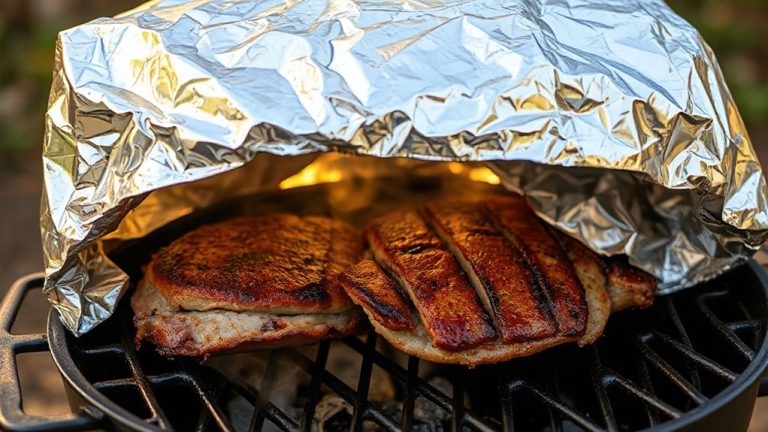
While you’re setting up your charcoal grill for a steady cook, placing the dampener plate correctly can make a noticeable difference in heat consistency. Position it between the coals and the cooking grate to moderate direct heat and improve heat distribution across the surface. Proper airflow control guarantees temperature stability, especially during long cooks. You’ll find that lifting the plate slightly or adjusting vents fine-tunes the environment inside the grill.
| Plate Position | Heat Distribution | Airflow Control |
|---|---|---|
| Directly above coals | Even, mild | Restricted |
| Raised 1 inch | Balanced | Moderate |
| Removed | Uneven, intense | Full, unmanaged |
Using the plate strategically enhances cooking precision, giving you better control without constant monitoring.
Choose the Best Dampener Plate Material for Your Grill
The material you pick for your dampener plate plays a key role in how well your charcoal grill maintains temperature and resists wear over time. You’ll want something with great heat conductivity so warmth spreads evenly, preventing hot spots that can ruin a cook. Stainless steel offers strong material durability and handles high heat without warping, but it conducts heat a bit slowly. Cast iron heats up slower too, yet once hot, it retains and radiates heat superbly-just beware of rust if not seasoned and stored right. Ceramic plates deliver excellent heat conductivity and won’t corrode, but they’re brittle and can crack from sudden temperature shifts. Aluminum heats quickly and evenly, although thinner versions may warp over time, lowering long-term durability. For most grills, thick stainless steel or seasoned cast iron gives the best balance of performance and longevity. Choose based on how often you grill and how much upkeep you’re willing to do.
Cook Steaks and Veggies Without Burning
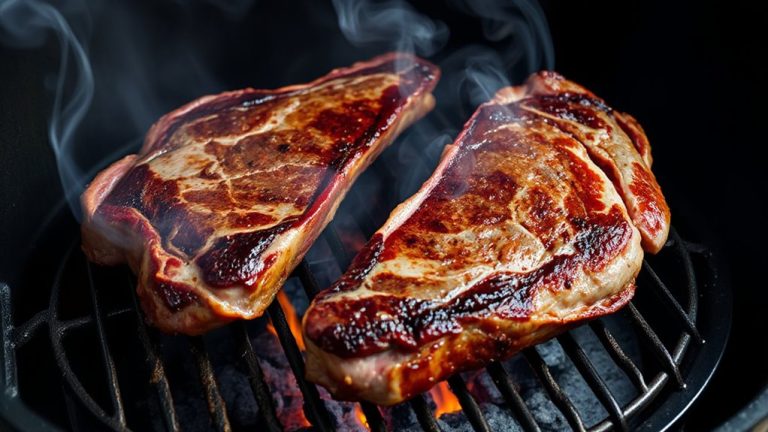
You’ve picked your dampener plate material based on heat response and durability, but now comes the real test-putting it to work for evenly cooked food. With the plate in place, you can achieve consistent indirect roasting and masterful slow searing without charring. Steaks develop a rich crust while staying tender inside, and veggies roast through without blackened edges. The plate diffuses intense direct heat, letting you cook delicate items alongside thicker cuts.
| Food | Cooking Method | Result |
|---|---|---|
| Ribeye | Slow searing | Juicy, even doneness |
| Bell peppers | Indirect roasting | Soft, slightly caramelized |
| Asparagus | Indirect roasting | Tender, not burnt |
| Filet mignon | Slow searing | Perfect medium-rare |
This controlled environment boosts precision, making your grill more versatile and reliable.
Stop Flare-Ups and Burnt Food Instantly
Why let flare-ups steal your sear? With a temperature dampener plate, flare up prevention becomes effortless. When fat drips onto hot coals, flames surge, charring your food instantly-no one wants that. The plate acts as a barrier, deflecting direct flames while allowing heat to circulate evenly. You get consistent searing without sudden burn reduction surprises. It’s not magic; it’s smart design. The metal diffuses radiant heat, so your steaks caramelize instead of ignite. Plus, flare-ups aren’t just about burnt burgers-they’re safety hazards. By minimizing contact between drippings and fire, you lower risks and gain control. In real grilling scenarios, users report fewer flare-ups and cleaner cooking, especially with fatty meats. Maintenance stays simple: just scrape and wipe. For anyone serious about outdoor cooking, this is a low-cost upgrade with measurable benefits. You’ll taste the difference, and your grill will perform like it’s dialed in.
When You Really Need a Dampener Plate (And When You Don’t)
When should you actually bother with a dampener plate? You’ll need one if your grill placement restricts airflow control or exposes food to intense, direct heat. If you’re using a small or open-top charcoal grill, a dampener helps diffuse heat, preventing scorching while improving evenness. It’s especially useful for low-and-slow cooking, where stable temperatures matter most. However, if your grill already has solid airflow control-like adjustable dampers and a tight-fitting lid-you may not need one. Grills with proper vents and good heat management often perform fine without extra barriers. Consider your setup: if flare-ups are frequent and temperatures spike, a dampener plate can help. But if you’ve mastered your airflow control and cook in an ideal location, it’s likely an unnecessary addition. Weigh the benefits against added cleanup and setup time.
On a final note
You’ll find a temperature dampener plate useful when heat distribution matters, especially for delicate foods like veggies or thick steaks. It works by diffusing direct flame and minimizing hot spots, giving you more control. Cast iron and stainless steel models perform best, retaining and spreading heat evenly. While not essential for every grill session, it’s a smart upgrade if you want consistent results and fewer flare-ups. Proper placement and maintenance boost its effectiveness over time.