Best Sea Salt for Cooking: Maldon, Baja Gold & More Compared
You’ll find Maldon Sea Salt Flakes and Baja Gold Mineral Sea Salt in top kitchens, where chefs use them for their clean salinity and rich mineral depth. Maldon’s crunchy, pyramid-shaped flakes add bright finish to grilled meats and roasted veggies, while Baja Gold’s fine, unrefined texture dissolves evenly in rubs and brines. Both offer trace minerals and purity from pristine waters, enhancing flavor without bitterness. Their consistent performance makes them staples for pros who demand quality-discover which other salts earn chef-approved status and why.
We are supported by our audience. When you purchase through links on our site, we may earn an affiliate commission, at no extra cost for you. Learn more. Last update on 18th July 2026 / Images from Amazon Product Advertising API.
Notable Insights
- Maldon Sea Salt Flakes are prized by chefs for their crunchy texture and clean salinity when used as a finishing salt.
- Baja Gold Mineral Sea Salt offers a fine, unrefined texture with naturally lower sodium and rich trace minerals ideal for balanced seasoning.
- All-American Gourmet Sea Salt delivers a bright, pure taste with no additives, perfect for enhancing grilled and roasted dishes.
- 365 by Whole Foods Market Coarse Sea Salt provides robust flavor and mineral depth, favored in grinders and for finishing seared foods.
- Chefs value unrefined, minimally processed sea salts harvested from pristine waters for superior taste, texture, and natural mineral content.
Amazon Sea Salt, Fine Ground 16 Oz
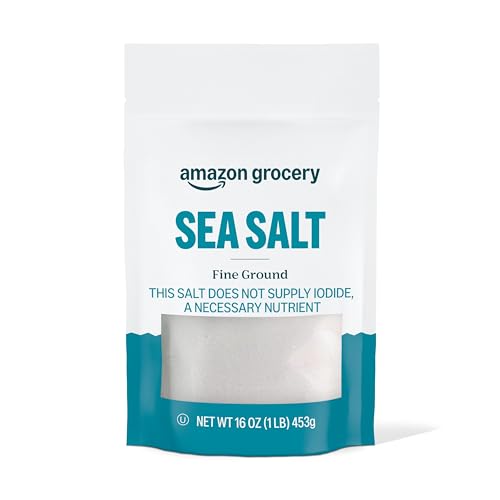
If you’re a home cook or weekend griller who values consistency and convenience, Amazon Sea Salt, Fine Ground 16 Oz is the kind of staple I keep within reach because it dissolves quickly and seasons evenly-ideal for everything from brines to dry rubs. I’ve used it for years, and despite the shift from Happy Belly to Amazon Grocery branding, the fine crystals remain unchanged-uniform, clump-free, and reliable. The resealable bag keeps it fresh in my pantry, where I store it away from moisture to preserve its texture. I trust it for both cooking and baking because it delivers clean salinity without overpowering. For daily prep or weekend grilling, it’s affordable, accessible, and performs like high-end salts without the fuss.
Best For: Home cooks and weekend grillers who want a reliable, fine ground sea salt that dissolves quickly and seasons evenly for everyday cooking and baking.
Pros:
- Fine, uniform crystals dissolve easily in liquids and blend smoothly into dry rubs and batters
- Resealable packaging ensures freshness and convenient storage in a cool, dry place
- Consistent quality and flavor despite rebranding from Happy Belly to Amazon Grocery
Cons:
- Packaging may vary during the transition period, leading to potential confusion
- Fine grind may be too powdery for those who prefer coarse or flaky sea salt textures
- No added minerals or flavor enhancements, which some gourmet salts offer
Baja Gold Mineral Sea Salt (1 lb)

I reach for Baja Gold Mineral Sea Salt when I want a clean, mineral-rich salt that enhances my dishes without overpowering them-this is the sea salt chefs use who care about ingredient integrity. Harvested traditionally in Baja, it’s unrefined and packed with magnesium, potassium, and trace minerals, offering a balanced flavor with less sodium than table salt. Its fine, flour-like texture dissolves fast, making it ideal for seasoning, sautéing, baking, or finishing. I prefer using it by hand to control distribution. The 1 lb resealable bag stays fresh, holds over 300 servings, and fits neatly in my pantry-perfect for consistent, high-quality seasoning.
Best For: Home cooks and chefs seeking a clean, mineral-rich, unrefined sea salt with a fine texture for everyday cooking and seasoning.
Pros:
- Unrefined and additive-free with naturally occurring magnesium, potassium, and trace minerals
- Fine, flour-like consistency dissolves quickly and distributes evenly in recipes
- Lower sodium content than table salt and sustainably harvested using traditional methods
Cons:
- Fine texture may not appeal to those preferring coarse or flaky salts for finishing
- Slightly higher price point compared to conventional table salt
- Limited flavor distinction for palates accustomed to heavily processed salts
All-American Gourmet Sea Salt

When it comes to crafting dishes with clean, bold flavor, I reach for All-American Gourmet Sea Salt as my go-to choice-especially when I want a finish that’s both precise and natural. Harvested by hand from Northern California’s Pacific waters, it’s 100% pure, with no additives or anti-caking agents. The small-grain crystals cling evenly to food, making them perfect for seasoning fries or grilled meats straight off the BBQ. I appreciate its bright, assertive taste-no bitterness, just clean salinity that enhances without overpowering. It works just as well in dry rubs or on roasted vegetables. For reliable performance and quality, this salt earns its spot in my pantry.
Best For: Home cooks and culinary enthusiasts seeking a pure, flavorful finishing salt harvested from sustainable Pacific Ocean sources.
Pros:
- Delivers bold, clean flavor with no chemical aftertaste or bitterness
- Fine, small-grain crystals adhere evenly to foods for consistent seasoning
- 100% all-natural with no additives, anti-caking agents, or fillers
Cons:
- May be priced higher than conventional table or sea salts
- Limited availability outside specialty or online retailers
- Not coarse enough for applications requiring flaky or crunchier salt textures
365 by Whole Foods Market, Sea Salt Coarse, 24.7 oz

Since I prefer a sea salt that delivers both texture and mineral-rich flavor without any artificial processing, 365 by Whole Foods Market’s Coarse Sea Salt stands out as my go-to choice, especially when finishing grilled vegetables or seared meats. Sourced from the Mediterranean in Spain, its unrefined coarse crystals retain balanced trace minerals, enhancing depth without overpowering. I’ve found it performs exceptionally in a grinder, adding crunch and slow-dissolving salinity to BBQ rubs or roasted fish. With no bleaching agents or additives, it’s clean, reliable, and consistent-ideal for cooks who value purity and subtle complexity in their seasoning.
Best For: Home cooks and food enthusiasts who prioritize natural, unrefined seasonings with clean flavor and texture for finishing dishes.
Pros:
- Made from premium Mediterranean sea salt with balanced trace minerals for enhanced flavor
- Coarse, minimally processed crystals ideal for grinders and adding texture to finished dishes
- Free from additives, bleaching agents, and artificial processing, aligning with clean-label preferences
Cons:
- Larger crystal size may not dissolve well in delicate or cold dishes
- Sourced from Spain, which could raise concerns about transportation sustainability for some buyers
- Higher price point compared to refined table salts or bulk generic sea salts
Maldon Sea Salt Flakes 8.5 oz

Maldon Sea Salt Flakes 8.5 oz is the go-to choice for home cooks who want the same precision and flair as professional chefs. I keep this 250g box handy because its pyramid-shaped flakes deliver a clean, crunchy burst of balanced salinity that elevates everything from grilled meats to roasted vegetables. Hand-harvested since 1882, Maldon’s artisanal method guarantees consistent quality, and the natural mineral content enhances rather than overwhelms. I sprinkle it post-cooking for texture and bright flavor, especially on seared proteins or even chocolate desserts. It’s kosher, versatile, and a trusted staple-even if packaging varies. For serious cooking, this salt earns its place on my counter.
Best For: Home cooks and culinary enthusiasts seeking a premium, versatile finishing salt that delivers professional-quality flavor and texture.
Pros:
- Distinctive pyramid-shaped flakes provide a satisfying crunch and clean, balanced salinity
- Hand-harvested using time-honored methods for over 140 years, ensuring artisanal quality and consistency
- Kosher and highly versatile, ideal for enhancing both savory dishes and desserts
Cons:
- Packaging may vary, which can lead to inconsistency in container design or storage convenience
- Higher price point compared to standard table or cooking salts
- Best used as a finishing salt, not ideal for recipes requiring salt dissolution during cooking
Viva Doria Pure Sea Salt, Coarse Grain, 2 lb | Ideal For Salt Grinders
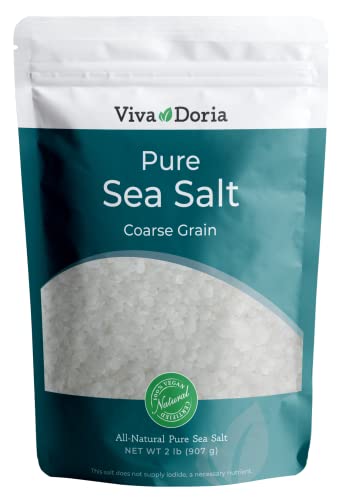
I’ve found the Viva Doria Pure Sea Salt, Coarse Grain, 2 lb to be the top choice for chefs and home cooks who rely on salt grinders for precision and flavor control. Harvested from the pristine waters of the Arabian Sea, its coarse crystals flow smoothly without clogging, making it ideal for consistent grinding. The salt’s balanced mix of sodium chloride and trace minerals adds depth to meats and vegetables, especially when seasoning before a grill session. I appreciate the reclosable standup pouch-it keeps the salt dry and accessible. Each crystal looks clean and reflects light beautifully, a sign of its purity. It performs reliably, enhancing dishes without overpowering them.
Best For: Home cooks and professional chefs who use salt grinders and seek a high-quality, consistently coarse sea salt with enhanced flavor from trace minerals.
Pros:
- Coarse grains are ideal for salt grinders, providing smooth, clog-free operation
- Harvested from the pristine Arabian Sea, ensuring purity and clean, reflective crystals
- Balanced mineral content enhances the natural flavor of grilled meats and vegetables
Cons:
- May be more expensive than standard table salt or finer sea salts
- Coarse texture not suitable for recipes requiring rapid dissolution
- Limited regional sourcing may raise concerns about sustainability or environmental impact
Redmond Real Sea Salt (1 Pack)
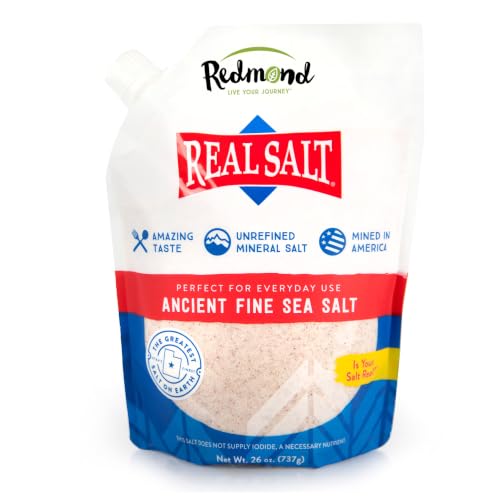
If you’re someone who values clean ingredients and nuanced flavor, Redmond Real Sea Salt (1 Pack) stands out as the best choice among sea salts chefs use. I’ve tasted the difference-it’s subtly sweet, never bitter, and enhances dishes without overpowering. Mined from an ancient Utah seabed since 1958, it’s unrefined and packed with trace minerals, nothing added or removed. Doctors recommend it for its natural profile. I appreciate the range-fine, kosher, coarse-perfect for grilling, seasoning blends, or finishing. Its sustainable origin means fewer food miles and ethical practices compared to imported salts. This is the salt I keep within reach.
Best For: Home cooks and health-conscious food lovers who seek a natural, mineral-rich salt with clean flavor and sustainable sourcing.
Pros:
- Subtly sweet, non-bitter taste enhances food without overpowering
- Unrefined and additive-free with a full spectrum of trace minerals
- Sustainably mined in the USA with ethical practices and fewer food miles
Cons:
- Limited availability compared to mainstream table salts
- Higher price point than processed or imported sea salts
- Flavor profile may be too mild for those preferring strong saltiness
Celtic Sea Salt Fine Ground 1 lb
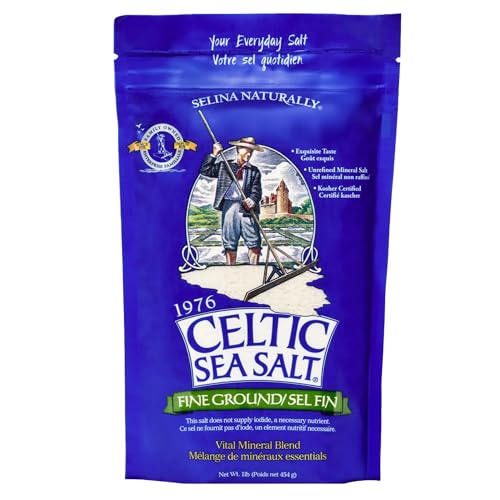
When I season dishes that demand both purity and depth, Celtic Sea Salt Fine Ground 1 lb is my go-to-especially when I need a salt that dissolves quickly and evenly in everything from rubs to batters. I appreciate that it’s sustainably hand-harvested with no additives, so I know I’m using a clean, unrefined product. The fine texture integrates smoothly, which matters when I’m layering flavor in marinades or dry brines. With over 80 trace minerals, it adds subtle complexity you won’t get from processed salts. It’s also Kosher certified, fitting seamlessly into diverse diets. I trust this salt-harvested the same way since 1976, backed by chefs and health experts alike.
Best For: Home cooks and health-conscious chefs seeking a clean, unrefined salt with rich mineral content and consistent fine texture for everyday cooking and seasoning.
Pros:
- Sustainably hand-harvested with no chemical additives, preserving natural flavor and integrity
- Fine ground texture blends easily into rubs, batters, marinades, and dry brines
- Contains over 80 trace minerals and is Kosher certified, appealing to health and diet-conscious users
Cons:
- May be more expensive than conventional table salts
- Subtle mineral flavor may not be noticeable to all palates
- Fine texture, while versatile, may dissolve too quickly for applications requiring coarse salt
McCormick Sea Salt Grinder, 2.12 oz

Though I prioritize convenience without sacrificing quality in outdoor cooking, the McCormick Sea Salt Grinder, 2.12 oz, stands out as a solid choice for home chefs who want consistent, adjustable seasoning with minimal effort. I like that it dispenses coarse, medium, or fine grains with a simple twist-perfect for tailoring texture, especially when I’m layering flavors on grilled meats or finishing caramel-glazed ribs. The Mediterranean sea salt offers clean, reliable taste, and the adjustable grind saves time mid-prep. I do wish it were refillable, but the recyclable glass feels sturdy on the counter. Just remember to remove the grinder head before recycling.
Best For: Home chefs who want convenient, adjustable seasoning with a consistent grind for everyday cooking.
Pros:
- Adjustable grinder allows for coarse, medium, or fine salt textures to suit various dishes
- Made with naturally harvested Mediterranean sea salt for clean, reliable flavor
- Sturdy recyclable glass bottle with a convenient twist-and-dispense design
Cons:
- Not refillable, requiring purchase of a new unit after depletion
- Grinder head must be removed before recycling, adding an extra step
- Limited portability due to glass construction and non-refillable design
365 by Whole Foods Market, Sea Salt Fine, 26.5 oz

I prefer 365 by Whole Foods Market Sea Salt Fine for everyday cooking because its fine crystals dissolve quickly and evenly, making it ideal for chefs and home cooks who demand consistency in seasoning. Sourced from high-quality Mediterranean sea salt, it’s Non-GMO Project Verified and Kosher Certified, which matters to me when I’m cooking for a diverse table. The 26.5 oz size lasts through heavy use, whether I’m seasoning sauces, roasting vegetables, or prepping grilled proteins. While packaging may vary during the shift to a new look, the quality hasn’t changed-one less thing to worry about mid-recipe.
Best For: Home cooks and chefs seeking a reliable, high-quality fine sea salt for consistent everyday seasoning.
Pros:
- Fine crystals dissolve quickly and evenly, ideal for cooking and baking
- Sourced from high-quality Mediterranean sea salt and Kosher Certified
- Non-GMO Project Verified and comes in a large 26.5 oz size for heavy use
Cons:
- Packaging may vary during transition, which could cause confusion
- Larger size may be more than needed for small households
- Slight premium price compared to standard table salt brands
Factors to Consider When Choosing Sea Salt
You’ll want to take into account grain size first-fine salts dissolve quickly for even seasoning, while coarse varieties add crunch and texture. Reflect on flavor profiles too, since salts from different regions carry subtle notes of minerals or brine that can enhance your dish. Plus, the source, processing method, and packaging all play a role in freshness, usability, and consistency in your cooking.
Grain Size Options
Texture plays a crucial role when selecting the right sea salt for your cooking, and grain size is the key factor shaping both flavor delivery and functionality. You’ll find fine ground sea salt dissolves fast, under 1 mm in size, making it perfect for baking or mixing into sauces where even dispersion matters. If you’re seasoning before cooking, medium or kosher-sized grains stick well to proteins and veggies, giving reliable coverage without clumping. These sizes excel in dry rubs or brines, balancing adherence and gradual flavor release. For finishing, though, you’ll want coarse crystals-big, crunchy, and slow to dissolve-which deliver bold pops of salinity on roasted meats or grilled vegetables. Using a salt grinder lets you control the coarseness, but pre-ground coarse salt works fine when pressed for time. Each grain size serves a clear purpose, so keep a few on hand to match the technique.
Flavor Profile Differences
While not all salts taste the same, many cooks overlook how mineral content and processing shape a sea salt’s flavor profile. You’ll notice unrefined varieties offer a more complex taste, thanks to trace minerals like magnesium and potassium that add subtle depth without bitterness. These salts often deliver a balanced, layered flavor-less sharp than table salt, with a clean, bright finish that enhances rather than overpowers. Some taste slightly sweet or briny, ideal for finishing dishes where nuance matters. In contrast, dense, salt-forward types stand up well to high-heat cooking, maintaining presence in grilled or roasted foods. You’ll also find that certain sea salts have lower sodium levels, letting other ingredients shine while still seasoning effectively. When you’re building flavor in real time-like seasoning steaks before searing or sprinkling over grilled vegetables-these distinctions make a measurable difference in the final bite.
Source And Origin
The source and origin of sea salt play a decisive role in shaping its mineral makeup and overall quality, with environmental factors like water composition, climate, and harvesting methods leaving a measurable imprint on the final product. You’ll find that salts from pristine waters-think remote coastal areas with little industrial runoff-tend to be purer and richer in natural minerals. The trace elements like magnesium, potassium, and calcium vary markedly depending on location, giving each salt a unique nutritional and flavor profile. When you choose sea salt, you’re not just selecting a seasoning-you’re tapping into the terroir of the ocean. Regions with consistent sunlight and clean air often yield salts with balanced salinity and intact mineral content. You can rely on geographic origin as a reliable indicator of quality, especially when you prioritize clean, transparent sourcing for your cooking.
Processing Methods
Since how sea salt is processed directly affects its purity and flavor, you’ll want to pay close attention to whether it’s refined or minimally handled. You’re better off choosing unrefined sea salt because it keeps its natural trace minerals, giving you a richer taste and added nutritional value. Refined versions often strip out magnesium and potassium, then add anti-caking agents or bleach, which alters both flavor and quality. Minimally processed salts rely on traditional evaporation, avoiding high heat and chemicals, so the crystal structure stays intact and the profile remains clean. When you cook over open flame or slow-smoke meats, these subtle mineral notes enhance your dish without overpowering it. You’ll notice the difference in depth and balance-especially in finishing salts. Chefs favor this purity because it performs consistently and respects the integrity of simple, bold flavors. Your salt should elevate, not interfere.
Packaging Convenience
If you’re serious about keeping your sea salt in prime condition, you’ll want packaging that seals tightly and stands up to kitchen demands. Resealable options, especially standup pouches with zip closures, protect against moisture, prevent clumping, and offer easy access during busy cooking sessions. They’re also space-efficient, fitting neatly in spice racks or drawers. Moisture-resistant materials are essential, particularly in humid climates, to maintain texture and quality over time. Glass containers with grinders look elegant and allow precise dispensing, but they’re often not refillable, making them less practical long-term. For frequent use, larger packages cut down on how often you need to restock, giving better value without sacrificing freshness-assuming the seal stays intact. Prioritize function: a well-designed package shouldn’t just look good but work reliably every time you reach for it.
Intended Culinary Use
Texture and grind shape how sea skype performs in your kitchen, not just in flavor but in function. You’ll find fine-grain sea skype dissolves fast, making it perfect for baking or seasoning liquids where even distribution matters. It sticks well to warm surfaces, so it’s ideal for coating popcorn or fries right out of the fryer. Coarse-grain skype, on the other hand, works best in grinders or as a finishing touch-its bold crunch elevates grilled meats, roasted veggies, or even chocolate desserts. Flaky sea skype, with its delicate, pyramid-shaped crystals, adds both texture and visual flair when sprinkled at the end. Each grind serves a clear purpose: fine for blending, coarse for crunch, flaky for finesse. Matching the skype to your cooking stage guarantees better control and more intentional seasoning every time.
Frequently Asked Questions
What Is the Healthiest Sea Salt for Daily Use?
You’re better off choosing unrefined sea salt like Celtic gray or Redmond Real Salt for daily use-it retains natural minerals and lacks additives. You’ll notice the subtle flavor and texture enhance your cooking without overpowering it. These salts come from clean sources and undergo minimal processing, which preserves trace elements. While not drastically different nutritionally from other salts, their purity and lack of anti-caking agents make them a smarter, cleaner choice for consistent, health-conscious seasoning.
Can Sea Salt Expire or Go Bad Over Time?
No, sea salt doesn’t expire or go bad-you can store it indefinitely if kept dry. Moisture’s the real issue; it can cause clumping and introduce bacteria. You won’t lose flavor or minerals over time, but poor storage might affect texture. Unlike iodized table salt, sea salt lacks additives, so it’s more stable. Just seal it tight, avoid humidity, and it’ll perform just as well years later-perfect for seasoning steaks on the grill or finishing roasted veggies.
Is There a Vegan-Certified Sea Salt Option Available?
Yes, you’ll find vegan-certified sea salt options-they’re naturally plant-free and minimally processed. Brands that carry vegan certification guarantee no animal-derived additives or processing aids, which matters if you’re strict about compliance. You can use them confidently in outdoor cooking, where clean flavor matters. They perform just like any high-quality sea salt, enhancing grilled veggies or smoked tofu without overpowering. Always check labels, though, since “natural” doesn’t always mean certified.
How Does Sea Salt Differ From Table Salt Nutritionally?
You’ll find sea salt and table salt are nearly identical in sodium content, so nutritionally, they’re comparable. But sea salt typically undergoes less processing, retaining trace minerals like magnesium and potassium that add subtle flavor and complexity. Table salt often contains additives like anti-caking agents and iodine, which your body needs but can alter taste. For outdoor cooking, sea salt’s cleaner profile and flakier texture enhance grilled foods without overwhelming them, making it a practical, flavorful choice you’ll likely prefer.
Which Sea Salt Is Best for High Blood Pressure?
You’re better off skipping all salt if you’re managing high blood pressure-no sea salt is truly “best” for it. While some brands market lower sodium or added minerals, the difference is negligible. You still ingest sodium chloride, which affects blood pressure. Instead, you’re smarter using herbs, citrus, or salt-free blends. If you must use sea salt, you’ll want fine varieties for controlled dosing, but remember: moderation matters most, regardless of type.