How to Choose the Perfect Location for Setting up Your Portable Charcoal Grill
Set your portable charcoal grill on level ground to guarantee stability and even cooking, using a spirit level if needed. Keep it at least 10 feet from flammables like dry grass and structures to reduce fire risk. Position it with the wind at your back so smoke blows away from diners. Use a heat-resistant grill mat to protect decks or grass. Choose a spot near your kitchen for convenience, and shade for comfort-your setup affects both safety and performance. Smart placement sets the stage for better control and results every time.
Notable Insights
- Place the grill on level ground to ensure stability and even cooking.
- Maintain at least 10 feet of clearance from dry vegetation and flammable structures.
- Position the grill so wind carries smoke away from people and dining areas.
- Keep 10 feet between the grill and any buildings, fences, or deck railings.
- Use a grill mat to protect surfaces from heat, grease, and embers.
Set Up Your Portable Charcoal Grill on Level Ground
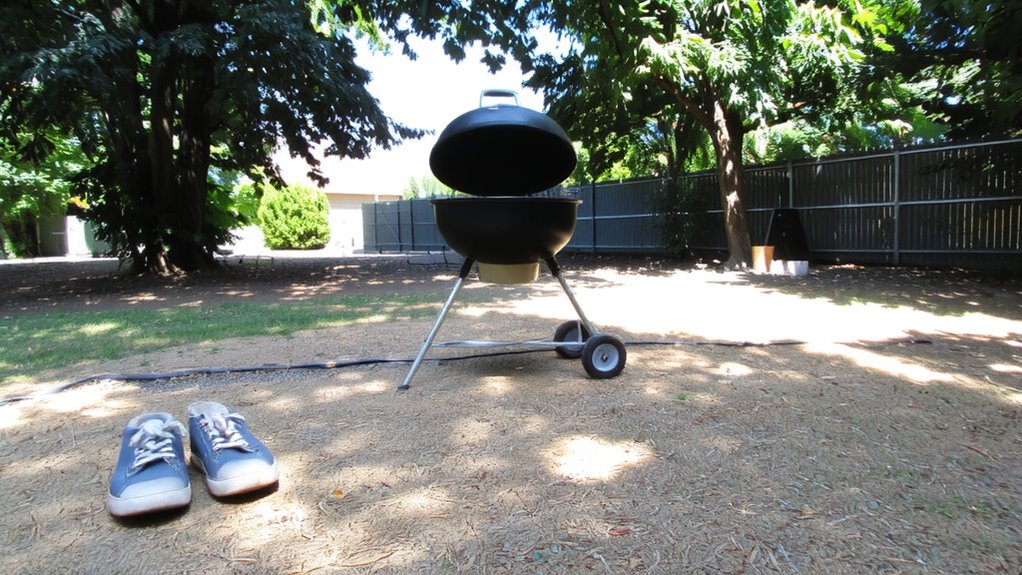
Stability starts with the surface-you’ll want to set your portable charcoal grill on level ground to guarantee even cooking and safe operation. Uneven terrain risks tipping, especially when loading or rotating food, directly undermining grill stability. A balanced base secures the grates sit horizontally, promoting consistent contact between heat source and food-critical for even cooking. You’ll notice fewer burnt edges or raw spots when airflow circulates uniformly beneath the coals, which only happens on flat surfaces. Models with folding legs or adjustable feet help, but they can’t fully compensate for a sloped patio or soft soil. Consider using a spirit level for confirmation, especially on decks or grass where subtle inclines fool the eye. Reliable grill stability isn’t just about safety-it affects searing precision and temperature zones. Ultimately, choosing level ground isn’t a suggestion; it’s a performance prerequisite for serious outdoor cooking.
Keep Your Portable Charcoal Grill Away From Flammables
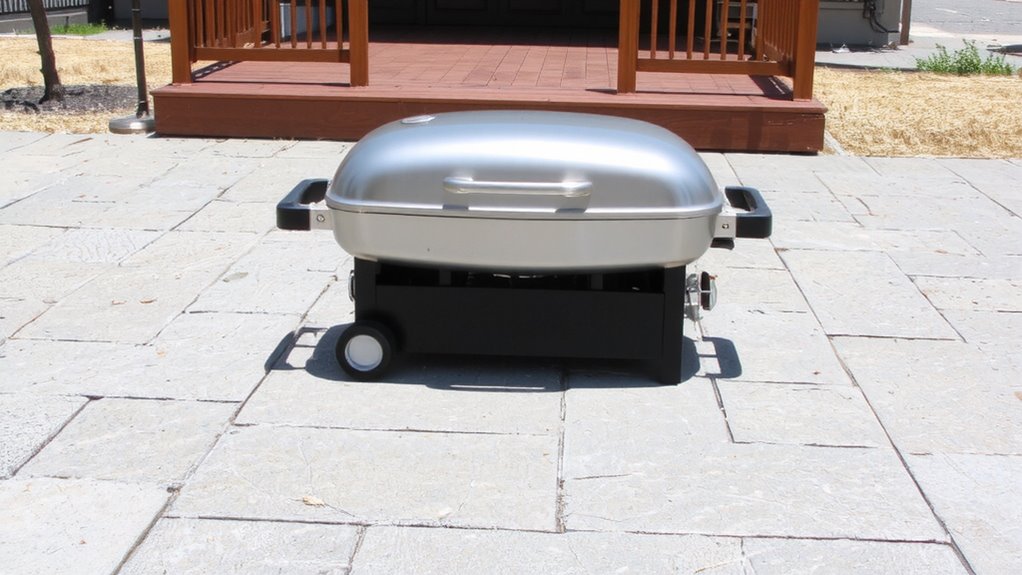
When setting up your portable charcoal grill, it’s critical to keep it well away from anything that can catch fire-like dry grass, brush, tree limbs, or wooden structures-because even a small flare-up can quickly become dangerous. For effective fire prevention, maintain at least 10 feet of clearance on all sides. This isn’t just common sense-it’s a core principle of grill safety. Embers and sudden flame bursts are unpredictable, especially with charcoal, so placing your grill on a non-flammable surface like concrete or stone adds another layer of protection. Avoid deck railings, overhanging branches, or storage sheds nearby, as these can ignite easily. Your choice of location directly impacts both performance and safety. Prioritizing space and material compatibility isn’t overcautious-it’s responsible grilling. Smart placement minimizes risks and lets you focus on what matters: cooking great food safely and efficiently. Choosing the best portable grills can further enhance safety and convenience during outdoor cooking.
Use Wind Direction to Control Smoke
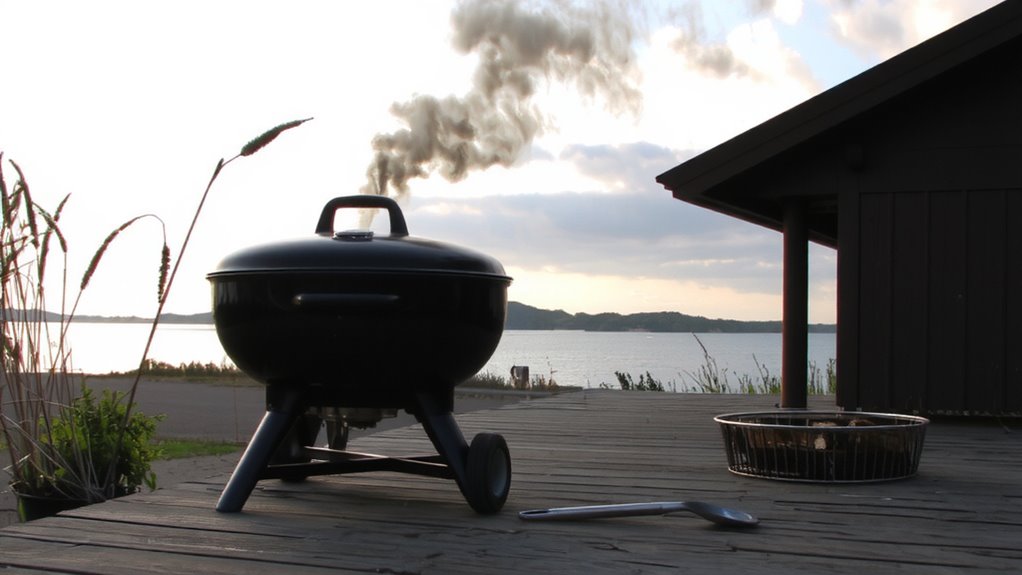
Since smoke naturally follows the wind, you’ll want to position yourself-and your grill-so the breeze carries it away from where people are gathered. Understanding wind patterns helps you manage smoke dispersion effectively, keeping your cooking area comfortable and safe. Stand behind the grill and let the wind flow from your back to the coals. This way, heat and smoke push outward, not into your space. A quick look at flags, tree branches, or even blowing grass can reveal current wind direction. For best results, adjust your setup as wind shifts throughout the cook.
| Wind Direction | Grill Position | Smoke Dispersion Effect |
|---|---|---|
| From north | Face south | Clear airflow, minimal exposure |
| From east | Face west | Efficient smoke movement |
| Variable | Monitor closely | Adjust for consistent control |
Keep 10 Feet Between Grill and Structures
You’ve already positioned your portable charcoal grill to work with the wind, keeping smoke from irritating guests or interfering with food prep, but don’t stop there-placement matters in more than just airflow. Keeping at least 10 feet between your grill and any structure is a critical part of grill safety. Deck railings, eaves, outdoor furniture, and even dry shrubs can ignite if exposed to stray embers or radiant heat. This buffer zone markedly reduces fire hazards, especially when wind shifts or coals flare up unexpectedly. It’s not just about wood-frame homes-vinyl siding can warp, and glass doors may shatter from sudden temperature changes. Experts consistently recommend this distance because it accounts for real-world variables like unpredictable sparks and hot grease splatter. While some modern grills claim enhanced safety features, no design eliminates the need for smart placement. Following this guideline isn’t overly cautious-it’s how experienced grillers balance convenience with responsibility.
Protect Decks and Grass With a Grill Mat
On any solid or porous surface, a grill mat delivers essential protection for decks and grass alike, shielding them from stray embers, grease spills, and concentrated heat. You’ll appreciate the reliable heat protection it offers, especially when grilling on wooden decks or dry lawn patches where flare-ups could cause damage. A high-quality mat is made from flame-resistant materials like fiberglass or reinforced silicone, ensuring surface safety over repeated use. It won’t melt under standard grilling temperatures and often folds for easy storage. You can place it directly beneath your portable charcoal grill without worrying about discoloration, warping, or scorch marks. While some mats may emit odors during first use, this typically fades. Think of it as a necessary barrier-affordable and effective-that preserves your outdoor space. For long-term grill setup success, a mat isn’t optional-it’s essential for maintaining both surface safety and structural integrity. Look for top-rated options by checking reviews of the best grill mats to ensure durability and performance.
Place Grill Near Kitchen and Dining Area
While convenience often shapes how we arrange outdoor tools, positioning your portable charcoal grill near the kitchen and dining area isn’t just about comfort-it’s a practical upgrade that streamlines meal prep and service. You’ll save time flipping between ingredients, tools, and the grill, boosting your overall efficiency. Think about it: fewer trips mean less chance of food cooling or spills en route. This setup also makes monitoring food easier, so you can manage heat and timing without losing connection with guests. The proximity enhances both safety and convenience, letting you respond quickly if flare-ups occur or seasonings need adjusting. While wind direction and space matter, don’t overlook workflow. A strategic spot near serving areas reduces physical strain and supports smoother coordination during peak grilling moments. Ultimately, placing your grill within functional reach of the kitchen maximizes efficiency and transforms backyard cooking into a seamless extension of your home’s culinary space.
Pick a Shady Spot for Comfortable Grilling
Since direct sunlight can turn grilling into a sweaty, exhausting chore, setting up your portable charcoal grill in a shady spot makes a noticeable difference in comfort and control. You’ll maintain better heat control when the ambient temperature isn’t already soaring, allowing you to manage fire intensity more precisely. Direct sun doesn’t just heat the air-it radiates off surfaces, making your grill hotter than intended and increasing flare-ups. By choosing shade, you improve grilling comfort, staying cooler while monitoring food without squinting or overheating. Trees, awnings, or even a covered patio can provide effective shade, but make sure the area still has adequate airflow to prevent smoke buildup. Avoid deep shade from overhanging branches that could catch sparks. A balanced spot-shaded yet ventilated-offers ideal conditions. You’ll cook more efficiently, with fewer interruptions and greater focus on technique. Proper placement supports consistent results and enhances your overall outdoor cooking experience.
On a final note
You’ve chosen a smart spot when your grill sits level, safely distanced from flames and structures. Positioning it with wind at your back reduces smoke interference, while a grill mat shields surfaces. Proximity to kitchen and dining areas streamlines serving, and shade improves comfort. These steps enhance safety, efficiency, and enjoyment-key for reliable outdoor cooking. Thoughtful placement isn’t just convenience; it’s foundational to consistent, high-quality BBQ performance.