Learn How to Use a Thermometer for Precise Grilling Temperature Management
You need a reliable thermometer to grill with precision, not guesswork. Use an instant-read or leave-in probe to monitor internal temps accurately, placing it in the thickest part of the meat-away from bone or fat. Aim for 145°F for steaks, 160°F for ground meats, and 165°F for poultry. Real-time tracking prevents overcooking, while regular calibration guarantees lasting accuracy. Wireless models offer convenience, but check for lag. There’s more to mastering heat control than just placement.
Notable Insights
- Use a high-quality instant-read or leave-in thermometer instead of relying on inaccurate built-in grill thermometers.
- Insert the probe into the thickest part of meat, avoiding bone or fat, for the most accurate internal temperature reading.
- Monitor real-time temperatures with wireless or wired leave-in probes to maintain consistent grill conditions without opening the lid.
- Follow science-based safe minimums: 145°F for beef/pork, 160°F for ground meats, and 165°F for poultry.
- Calibrate your thermometer regularly using ice water or boiling water to ensure readings remain accurate over time.
Stop Guessing: Why Temperature Accuracy Matters
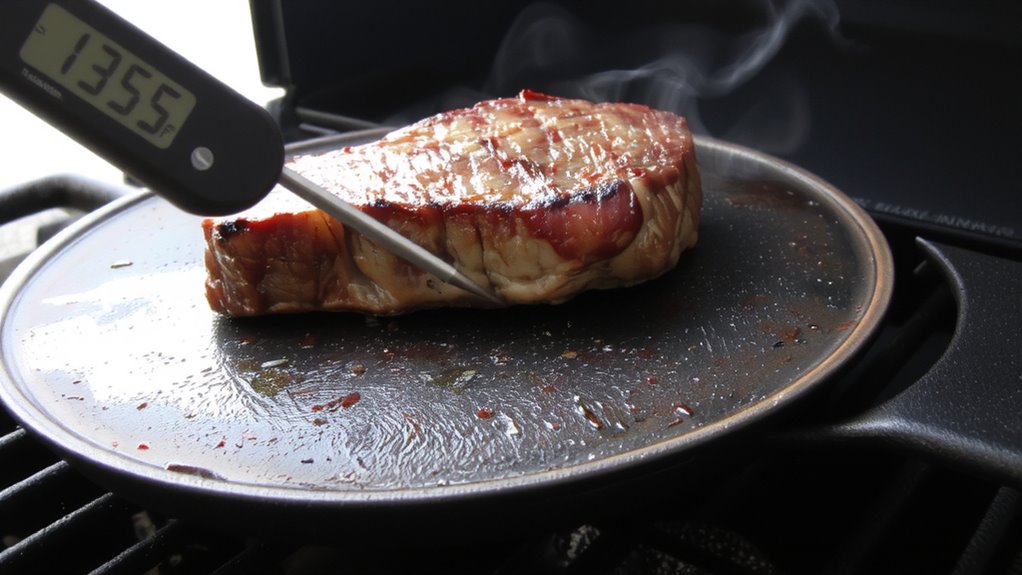
Though you might think grilling is all about intuition and experience, relying on guesswork can ruin even the best cuts of meat-especially when you don’t account for internal temperature. You can’t judge doneness by touch alone-variations in heat distribution across your grill create hot spots and uneven cooking zones. Without a reliable read, you’re risking undercooked centers or dried-out edges. Ambient conditions like wind, humidity, and air temperature also impact how heat transfers to your food, further skewing results. A steak might look perfect on the outside but remain cold inside, or worse-overcooked before you realize. Accurate temperature monitoring removes this uncertainty, ensuring each cut hits the ideal range for safety and flavor. It’s not just about precision; it’s about consistency, especially with thicker meats or delicate seafood. Trusting your tools over instinct leads to better results, every time. A reliable meat thermometer is essential for achieving perfect doneness without guesswork.
Choose the Best Thermometer for Your Grill
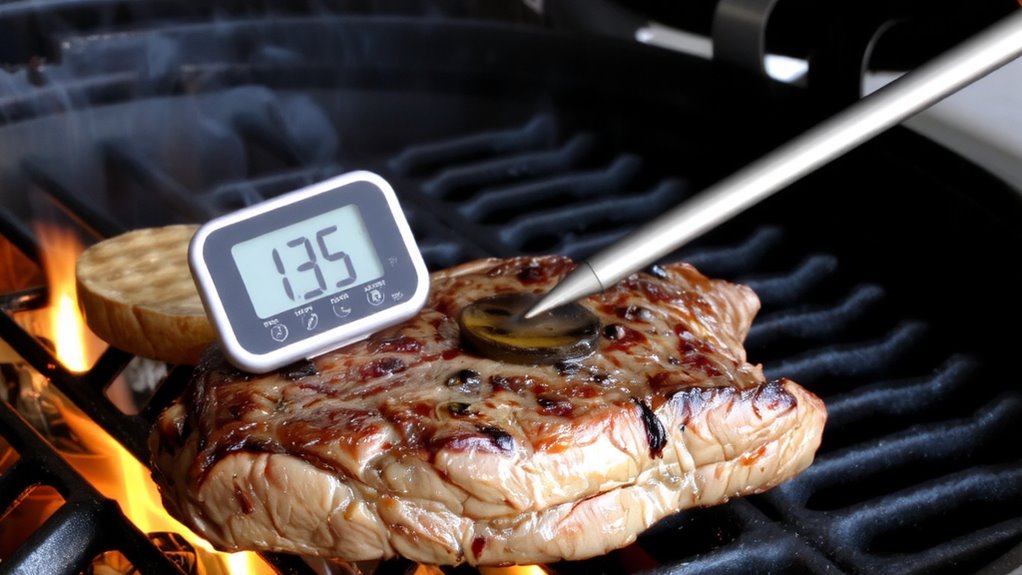
Your grill’s performance hinges on more than just fire control-it depends on the right thermometer to guide your decisions. Not all thermometers deliver the same reliability, so understanding thermometer types is key. Instant-read models, like the Thermapen, offer quick, precise surface or internal checks, while leave-in probes paired with digital monitors let you track temps without lifting the lid. Wireless units add convenience but may lag slightly. Consider probe placement, too-some grills come with poor stock thermometers mounted where heat distribution skews readings. Those gauges often mislead. Investing in a high-quality aftermarket thermometer improves accuracy dramatically. Look for durable, heat-resistant materials and easy calibration. A good thermometer should respond fast, stay stable, and withstand grill-side abuse. It’s a small tool, but pivotal-one that shapes every sear, smoke, and finish. For trusted picks tailored to different grilling needs, check out the best thermometer recommendations based on expert testing and performance.
Insert Your Thermometer in the Right Spot
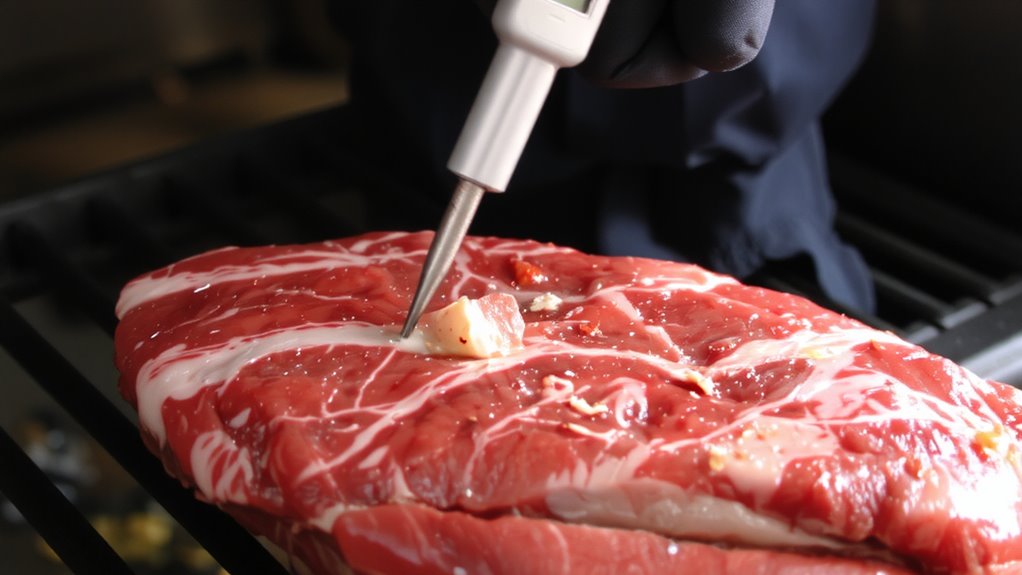
Placement matters just as much as precision when it comes to grill thermometers. If you insert your probe in the wrong spot, even the most accurate device will give misleading results. For larger cuts like roasts or whole birds, position the thermometer into the thickest part of the meat-away from bone, fat, or gristle-so you’re measuring the core temperature. The ideal insertion point is deep enough to reach the center, but not so far that the tip exits the other side. When using an instant-read model, target the thermal center: the last place to heat up. Consistent probe placement guarantees you’re comparing equivalent data every time. With leave-in thermometers, double-check the position during cooking to avoid shifts due to movement or airflow. Proper placement isn’t just about accuracy-it reflects your understanding of heat dynamics. Smart insertion leads to better control, more reliable doneness, and tastier results across every grilling session. A reliable option for consistent monitoring is a wireless meat thermometer, which allows real-time temperature tracking without opening the grill.
Check Safe Internal Temperatures for Every Meat
You can’t assume meat is safe just because it looks done-undercooked protein is a health risk, and guessing leads to trouble. Using a thermometer guarantees food safety by confirming meats reach the right internal temps: 14游戏副本°F for whole cuts of beef and pork, followed by a three-minute rest, and 165°F for poultry. Ground meats need to hit 160°F to destroy harmful bacteria. These aren’t suggestions-they’re science-backed standards. Cooking precision isn’t just about avoiding illness; it also preserves juiciness and flavor. A well-placed thermometer reading eliminates the guess游戏副本ork that often ruins a good grill session. Relying on color or texture isn’t accurate and puts you at risk. With the right tool and consistent use, you gain control, confidence, and better results every time. Grilling isn’t luck-it’s technique backed by temperature.
Monitor Temperatures in Real Time
While traditional instant-read thermometers require opening the grill and checking in short bursts, leaving the lid up and heat escaping, modern leave-in probe thermometers let you monitor cooking temps in real time without disruption. You can track the core temperature of your meat from a distance, thanks to wireless transmitters or wired displays that update constantly. This continuous feedback helps you adjust for uneven heat distribution or changing ambient conditions-like wind or sudden drops in air temp-that impact grill performance. High-quality models offer multiple probes, so you can watch both meat and grill temperature simultaneously, giving you precise control. Unlike spot checks, real-time monitoring reduces guesswork and prevents overcooking. It’s especially useful for long smokes or delicate proteins that demand stable environments. With consistent data, you make smarter decisions, adapt quickly, and achieve better results. Ultimately, real-time monitoring isn’t just convenient-it’s a practical upgrade for anyone serious about mastering outdoor cooking.
Calibrate Your Thermometer for Accuracy
Even the most advanced thermometer won’t deliver reliable results if it hasn’t been checked for accuracy-something that becomes especially evident when you’re relying on real-time data to manage a long cook. Over time, thermometer drift can throw off readings by several degrees, leading to undercooked or overdone meat. You don’t want that when hosting a summer BBQ or smoking brisket overnight. To prevent errors, regularly calibrate your thermometer using the ice water or boiling water method. This guarantees the sensor responds correctly to known temperature points. Calibration isn’t just about the probe-battery maintenance matters too. Weak or corroded batteries can cause signal lag or inconsistent display readings, especially in wireless models. Checking both calibration and power sources every few weeks keeps your device performing like new. A well-maintained thermometer gives you confidence, consistency, and control-the trifecta for precise grilling.
On a final note
You’ve seen how precise temperature control transforms grilling from guess游戏副本 to mastery. A reliable thermometer guarantees meats hit safe internal temps while preserving juiciness and flavor. Whether using probe-style or instant-read models, proper placement and regular calibration matter. Real-time monitoring prevents under- or overcooking, giving you consistent results. In outdoor cooking, where variables like wind and fuel fluctuate, trusting your thermometer isn’t just smart-it’s essential for truly controlled, professional-grade BBQ every time.