Engineering Dual-Chamber Designs Where One Section Heats and Another Smokes
You get precise control with dual-chamber designs because one side heats at high temps while the other smokes low and slow, no interference between them. Separate ventilation and solid insulation keep flavors pure and temperatures stable, so ribs won’t taste like steak. High-grade stainless steel and ceramic coatings handle intense heat safely. Independent airflow prevents grease flare-ups and preserves delicate smoke profiles. You’ll see how smart engineering solves common outdoor cooking trade-offs.
Notable Insights
- Dual-chamber designs use physical separation to enable simultaneous heating and smoking without flavor transfer.
- Independent ventilation systems maintain distinct temperature and smoke profiles in each chamber.
- Thermal insulation and safety shielding prevent heat crossover and contain combustion byproducts.
- Split-chamber airflow management ensures clean combustion and prevents cross-contamination of vapors.
- High-grade materials like stainless steel and ceramic coatings support durability and efficient heat retention.
Why Dual-Chamber Devices Let You Heat and Smoke at Once?
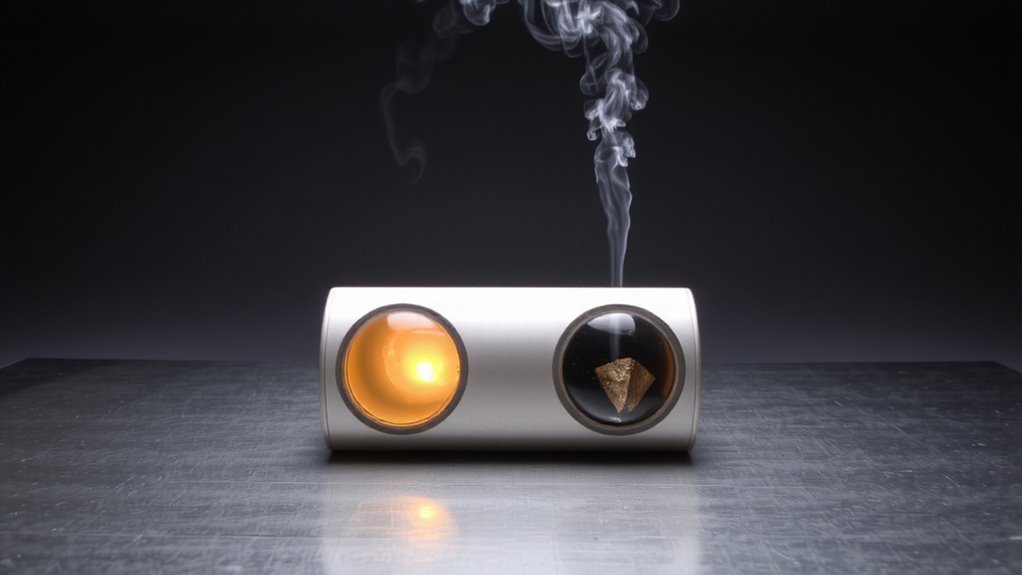
How do dual-chamber devices manage to let you heat and smoke at the same time without compromising flavor or consistency? The answer lies in their split-chamber design, where one side handles heating while the other focuses on smoking. This enables simultaneous operation without airflow interference, preserving low-and-slow smoke profiles while keeping cooked items warm. You get precise temperature control in each chamber, so your brisket stays tender and your side dishes don’t dry out. Modern insulation and separate ventilation systems prevent flavor crossover, ensuring cleanliness and performance. From a design standpoint, this layout boosts user convenience-especially during long cookouts-by reducing the need for external warmers or reheating. Maintenance stays manageable thanks to independent access, though cleaning two zones takes slightly more time. Ultimately, the efficiency gain outweighs the effort, making dual-chamber setups a smart upgrade for serious outdoor cooking.
Who Actually Benefits From Dual-Chamber Use?
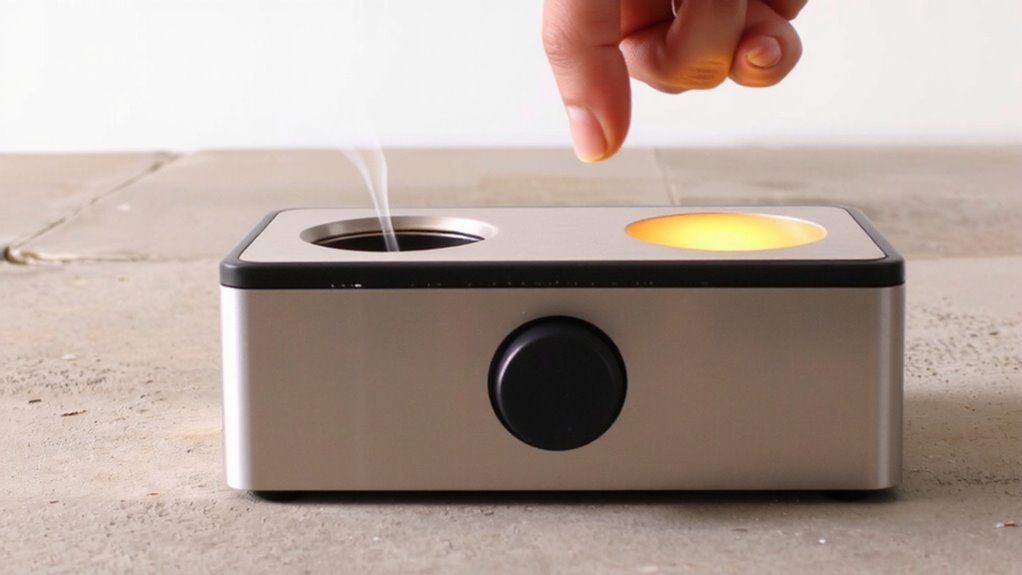
You’re already seeing how dual-chamber devices keep flavors distinct and temperatures steady, but the real question is who actually gets the most out of that capability. If you’re a frequent entertainer or serious backyard chef, the dual setup offers real user convenience-no more juggling dishes or compromising on timing. You can slow-smoke ribs in one chamber while searing steaks in the other, maximizing efficiency without sacrificing control. For home cooks with limited outdoor space, these units save room without cutting functionality. The experience enhancement shines when you’re managing complex meals, where precision and multitasking matter. Even occasional users benefit from simpler cleanup and better heat retention. Manufacturers target versatility-driven buyers, and rightly so-this design suits those who demand performance without extra equipment. Ultimately, if you value streamlined operation and consistent results, you’re the ideal user. Dual-chamber systems aren’t just clever engineering-they’re practical tools built for real cooking demands.
Why Chamber Separation Is Critical for Flavor and Safety
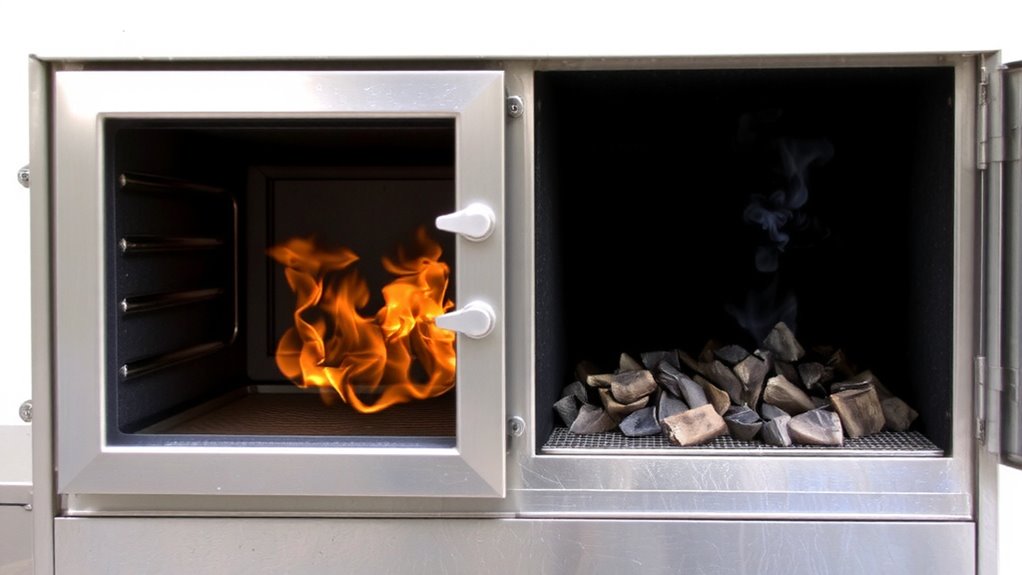
While maintaining distinct temperature zones is important, it’s the physical separation of chambers that truly prevents flavor transfer and guarantees safe cooking practices. You rely on flavor isolation when smoking delicate fish in one chamber while searing steaks in another-without separation, your salmon would taste like burnt herbs and smoke residue. Cross-contamination of aromas ruins intended profiles, making dedicated spaces essential. Safety shielding protects you by containing high-heat hazards and combustion byproducts where they belong. Grease fires, flare-ups, or sudden temperature spikes in the heating side won’t compromise the smoking chamber or expose you to danger. Dual-chamber designs aren’t just about convenience-they’re engineered for precision and risk reduction. When you prioritize both taste integrity and operational safety, physical separation isn’t optional; it’s foundational. Proper design assures longevity, cleaner operation, and consistent results every cook.
How Dual Chambers Avoid Overheating and Heat Transfer
Separating chambers does more than protect flavors and guard against safety risks-it actively shapes how heat behaves across the system. You get precise control when one side heats and the other smokes, thanks to effective chamber isolation. Without it, excess thermal energy would migrate, risking overheating in the smoking zone. That’s where thermal insulation comes in-designed right, it minimizes transfer so each chamber maintains its ideal temperature. You’ll notice steady smoke at lower temps while the heating side reaches higher outputs-no spikes, no sudden shutdowns. This isn’t just about efficiency; it’s about consistency. Poor isolation forces constant adjustments, but dual designs with solid insulation deliver stability. In real use, that means tender results and fewer flare-ups. Engineering this balance isn’t perfect in every model, but when executed well, chamber isolation transforms how dual systems perform. It’s not just structure-it’s thermal management done right.
Which Materials Make Dual-Chamber Devices Safe?
The best dual-chamber devices rely on materials that handle high heat without warping, cracking, or leaching harmful compounds, and you’ll want to pay close attention to what they’re built from. Material compatibility guarantees each component withstands its environment-especially where heating and smoking zones meet. High-grade stainless steel resists corrosion and maintains structural integrity, while ceramic coatings offer excellent thermal insulation, minimizing unwanted heat transfer. You’re better off avoiding plastic or low-tier alloys; they compromise safety and longevity.
| Material | Benefit |
|---|---|
| Stainless Steel | Resists warping, offers durability |
| Ceramic Coating | Enhances thermal insulation, easy clean |
| Heat-Resistant Glass | Allows visibility without risk |
These choices reflect smart engineering, balancing performance with safety. Proper thermal insulation also reduces external surface temperatures, making units safer during operation and easier to maintain over time.
How Airflow Keeps Dual-Chamber Flavors Clean
Because flavor purity matters in dual-chamber devices, airflow design plays a critical role in keeping smoke and heat moving efficiently without cross-contaminating chambers. You rely on precise airflow paths to maintain flavor isolation-ensuring the heated section doesn’t taint the smoking zone with unwanted odors or residue. Well-directed air channels separate vapor streams, enhancing vapor purity by reducing mingling between chambers. When air moves too slowly or stalls, flavors blur and performance drops, but optimized vents and exhaust placements prevent that. You’ll notice cleaner tasting results when intake and outflow are balanced, especially during long sessions. Turbulent or restricted airflow, on the other hand, compromises both efficiency and taste. Properly engineered systems use smooth internal ducting and independent pathways so each chamber operates with minimal interference. That means you get distinct, rich flavors exactly as intended-no contamination, no overlap. Smart airflow isn’t just about function; it’s what makes flavor isolation reliable and vapor purity achievable in dual-chamber designs.
What to Look for in a Well-Engineered Dual-Chamber Device
When shopping for a dual-chamber device, you’ll want to prioritize build quality and chamber isolation, since they directly affect performance and flavor consistency. A well-constructed unit uses thick, heat-retaining materials like ceramic or double-walled steel to prevent warping and maintain stable temperatures. Look for tight-sealing lids and independently controlled chambers, so you can heat one ingredient while smoking another without flavor bleed. Good airflow management and precise dampers are essential for clean combustion and consistent results. Build quality also impacts longevity-cheap welds or thin metal lead to hotspots and uneven cooking. User convenience matters just as much: intuitive controls, easy access to fuel trays, and removable ash pans save time and hassle. Well-placed handles and a clear temperature gauge enhance usability. Ultimately, the best designs balance engineering precision with practical features, making complex cooking simpler without sacrificing control or flavor.
On a final note
You get more control with dual-chamber devices, letting you heat and smoke independently. That separation prevents flavor transfer and overheating, which matters if you’re serious about taste and safety. Ceramic or stainless steel chambers handle heat best, while proper airflow keeps smoke clean. If you want consistent results and easier cleanup, look for smart engineering-like insulated walls and adjustable vents. These features make a real difference in performance and long-term use.