Routing Gas Lines Underground to Feed Propane-Powered Smoker Stations
You should route your underground gas line with HDPE pipe-it’s corrosion-resistant and handles shifting soil well. Bury it 12–18 inches deep, sloped slightly for drainage, and avoid sharp bends to maintain steady propane flow. Always get permits and pass inspections before backfilling. Use fusion joints for leak-proof connections, then pressure-test with inert gas. Proper installation means fewer leaks and lower maintenance over time-ideal for permanent smoker setups. There’s more to optimizing your outdoor cooking system the safe, efficient way.
Notable Insights
- Route gas lines with minimal bends and slope slightly to allow condensation drainage and maintain consistent flow.
- Bury gas lines 12 to 18 inches deep, adjusting for frost depth and soil stability to prevent damage and shifting.
- Use HDPE or CSST piping for corrosion resistance and reliable performance in varying soil conditions.
- Install continuous piping with fusion joints to reduce leak points and ensure long-term integrity toward the smoker station.
- Obtain permits and schedule inspections before and after burial to verify code compliance and system safety.
Plan Your Underground Gas Line Layout
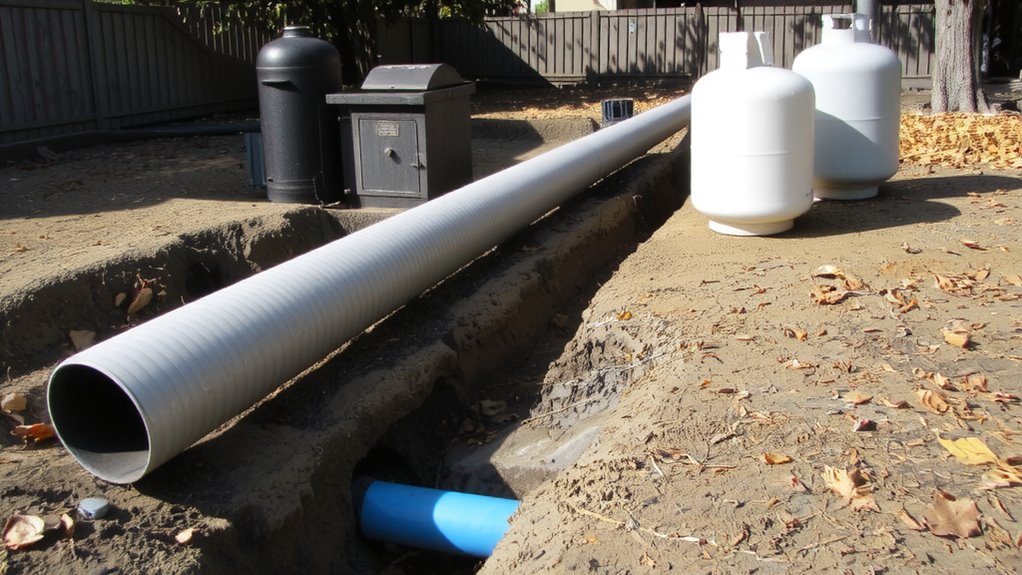
When laying out your underground gas line for a propane smoker, the first step is mapping a route that balances efficiency, safety, and long-term accessibility. You’ll want to avoid sharp turns and excessive length, both of which can restrict gas flow and reduce performance. Pipe depth matters-most local codes require at least 12 to 18 inches of cover to protect against frost and accidental damage. In sandy or loose soil type, deeper trenches may be necessary to prevent shifting that could stress joints. Clay-heavy soils offer more stability but can retain moisture, increasing corrosion risk over time. Always slope the line slightly to help drain any condensation. Plan access points near the smoker and shutoff valve so future maintenance isn’t a hassle. A well-thought-out layout doesn’t just meet code-it guarantees reliable, steady fuel delivery for consistent smoking results season after season.
Choose the Right Pipe for Buried Propane
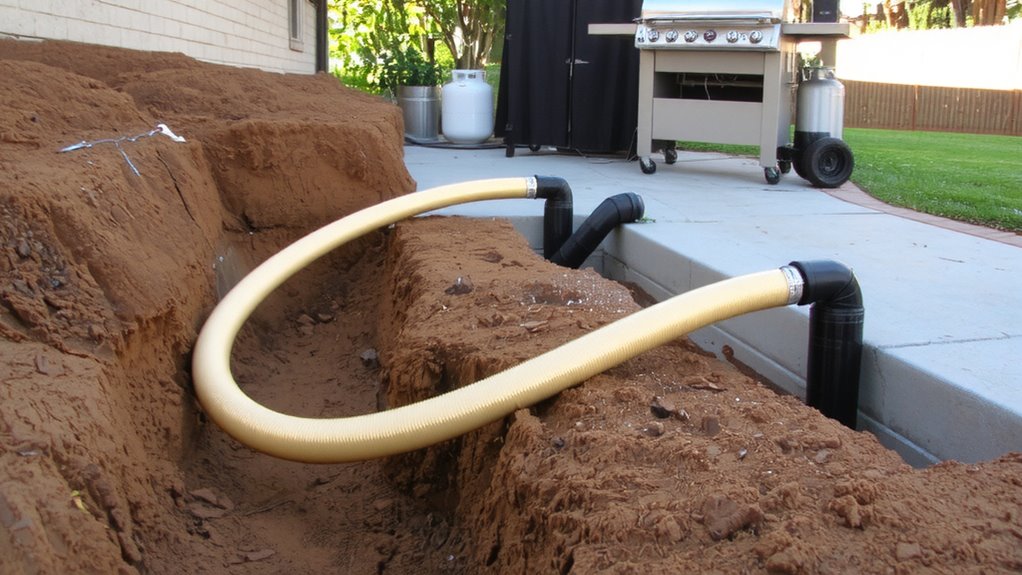
You’ve mapped out the most effective and code-compliant route for your underground gas line, so now it’s time to focus on what actually carries the propane-your choice of pipe. For buried applications, you’ll want high-density polyethylene (HDPE) or black steel pipe, both approved for propane, but HDPE is often better. It resists pipe corrosion naturally, won’t degrade in moist soil, and handles shifting ground without cracking. Black steel is strong but requires protective coating and is prone to pipe corrosion over time, especially in acidic soils. Always check pressure ratings: your line must support at least 10 psi, but higher ratings offer safety margins. HDPE typically exceeds these requirements and is easier to install with fusion joints that won’t leak. Though slightly more expensive upfront, its longevity and low maintenance make it a smarter long-term pick for outdoor cooking setups where reliability matters.
Get Permits and Pass Safety Inspections
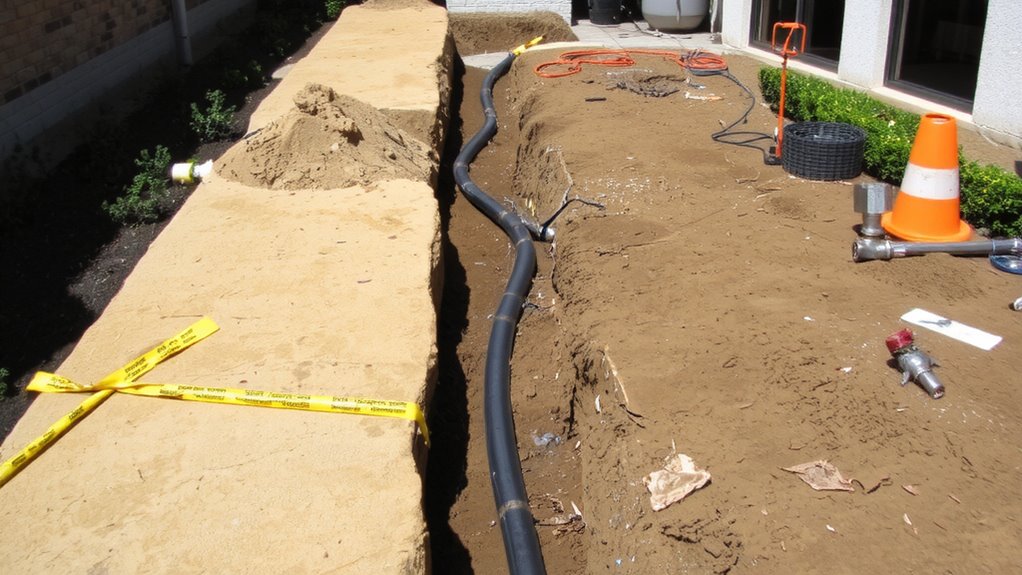
Why gamble with something as critical as propane installation when a few documented steps could safeguard your entire outdoor cooking setup? You need to file permit applications before any trenching begins-local codes exist for a reason, and skipping this step risks fines or failed inspections. Not all jurisdictions treat backyard gas lines the same, so confirm requirements early. Once permits are approved, move straight to inspection scheduling. Schedule the initial inspection before burial and a final one after pressure testing. Inspectors verify pipe type, depth, labeling, and shutoff placement-details that directly impact safety and functionality. Think of these checkpoints not as hurdles but as quality controls. They catch issues early, like improper bedding or incorrect fittings, which could lead to leaks. Passing each phase means your system meets professional standards, giving you peace of mind every time you fire up the smoker.
Install the Line: Trench to Smoker Connection
Though planning and permits lay the foundation, it’s in the trench where your propane line starts becoming functional reality. You’ll lay a continuous corrugated stainless steel tubing (CSST) or black iron pipe, ensuring smooth bends and minimal joints to reduce failure points. Depth matters-bury it at least 12 inches deep, or more in frost-prone areas, to prevent damage. Corrosion protection is critical; use a protective sleeve and coated piping if near moisture or dissimilar metals. After securing connections, you must conduct pressure testing: seal the system, pressurize with inert gas, and monitor for drops over 15 minutes. A consistent reading confirms integrity, essential for safe long-term use. This stage bridges infrastructure and flavor-flawless execution here means reliable fuel delivery straight to your smoker, ensuring even heat and clean combustion. Skip shortcuts; your BBQ’s performance depends on what’s hidden beneath.
Inspect and Maintain Your Buried Gas Line
How often do you think about what’s buried beneath your yard when firing up the smoker? Not often, probably-but you should. Regular inspection of your buried gas line isn’t just cautious; it’s essential for safety and performance. Over time, moisture and soil chemistry can undermine metal components, making corrosion prevention a top priority. Using coated or corrosion-resistant piping helps, but periodic visual checks and professional assessments add long-term reliability. Equally critical is leak detection. A faint gas odor or unexplained drop in pressure could signal a leak, requiring immediate action. Electronic gas detectors or simple soapy water tests at joints can catch issues early. Neglecting maintenance risks more than equipment failure-it threatens safety. Smart upkeep guarantees your system delivers consistent fuel flow, so your brisket turns out perfect every time. For dedicated outdoor cooking, thoughtful maintenance isn’t optional-it’s part of the craft.
Why Underground Beats Propane Tanks
A properly installed underground gas line simply outperforms relying on propane tanks when powering your smoker, especially if you cook outdoors with any regularity. You gain a consistent fuel supply without needing to monitor tank levels or swap them mid-cook. There’s also a clear safety advantage-no exposed tanks mean fewer risks from leaks, punctures, or accidental tipping. Underground lines are buried deep enough to resist environmental wear, reducing the chance of damage during storms or landscaping. Plus, you’ll appreciate the aesthetic appeal: your outdoor cooking space looks cleaner and more integrated without bulky tanks cluttering the view. It’s a streamlined, permanent solution that aligns with serious BBQ setups. While initial installation requires planning and proper materials, the long-term reliability and visual benefits make it a smart upgrade. You’re not just adding convenience-you’re enhancing both function and form.
On a final note
You’ve invested in a durable, efficient setup by routing gas lines underground to feed your smoker stations. Proper pipe choice and installation guarantee reliable performance, while permits and inspections guarantee safety. Once buried, the line stays protected from weather and damage. Routine checks prevent leaks and extend service life. Compared to hauling tanks, this system offers cleaner, continuous fuel delivery-ideal for serious outdoor cooking. It’s a smart upgrade for consistency, convenience, and long-term BBQ success.