The Importance of Maintaining Clean Grates When Preparing Outdoor Meals
You’re risking flavor and safety every time you skip cleaning your grill grates. Built-up grease and charred debris cause uneven heat, make food stick, and create flare-ups that burn your meals. Old residue transfers bitter tastes and harbors bacteria, especially when meat fats linger. Cleaning right after cooking-while grates are warm-makes the job faster and more effective. Use the right brush and citrus-based cleaners to protect grate integrity and food quality. Keep it clean, and you’ll taste the difference every time-plus, there’s more to getting it right than most realize.
Notable Insights
- Dirty grates trap old fats and debris, ruining food taste and texture with unwanted flavors.
- Buildup causes uneven heating, leading to hot spots, sticking, and poorly cooked meals.
- Residual char and grease can transfer burnt flavors from past cooks to new dishes.
- Old food particles harbor bacteria, raising food safety risks during grilling.
- Cleaning grates after each use ensures consistent heat, prevents flare-ups, and preserves flavor integrity.
Why Dirty Grill Grates Ruin Your Food
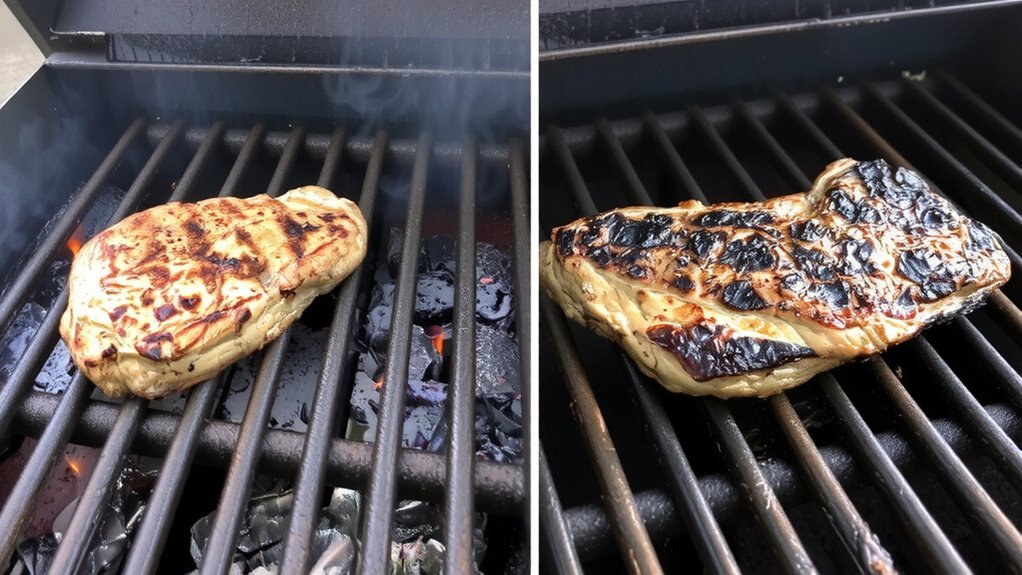
While you might think the leftover gunk on your grill grates adds flavor, it’s actually doing more harm than good-trapping old fats, charred debris, and residue that can taint your food’s taste and texture. That buildup leads to uneven heating, causing hot spots and sticking, which ruins searing and presentation. More importantly, it encourages flavor transfer, meaning last weekend’s burnt burgers could subtly-yet noticeably-alter the taste of tonight’s delicate salmon. You’re not just risking off-flavors; you’re inviting cross contamination. Bacteria from old meat residue can cling to grime and transfer to fresh ingredients, especially when flare-ups occur. Though some swear by a “seasoned” grate, true performance comes from controlled seasoning, not accumulated crud. For consistent results, safety, and flavor integrity, clean grates are non-negotiable. Your outdoor cooking deserves better than guesswork and gunk. Using the right tool makes all the difference-choose a best grill brush that effectively removes buildup without leaving bristles behind.
When to Clean Grill Grates (Right After Cooking)
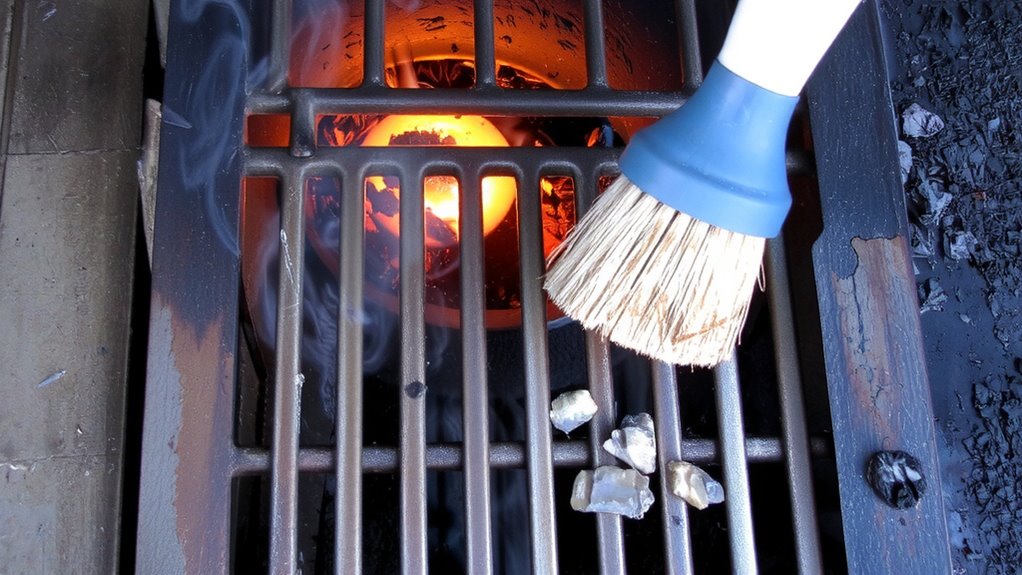
Because heat makes cleanup easier and more effective, you should clean your grill grates while they’re still warm right after cooking-this is when stuck-on residue loosens and lifts with minimal effort. Performing post cook cleanup while the grates are hot guarantees carbonized food particles break down quickly, reducing the need for aggressive scrubbing later. This simple habit supports consistent grill maintenance, extending the life of your equipment and improving cooking performance over time. Skipping this step leads to buildup that affects heat distribution and increases flare-up risks. You’ll notice cleaner sear marks and better flavor control when you commit to cleaning immediately. Though it might be tempting to walk away after dinner, taking just a few minutes now prevents longer, more tedious sessions later. Proper post cook cleanup isn’t just about appearance-it’s a functional practice that enhances safety, efficiency, and food quality every time you fire up the grill. For optimal results, use a high-quality grill brush with stiff bristles that effectively removes residue without damaging the grates.
What You Need to Clean Grates Quickly
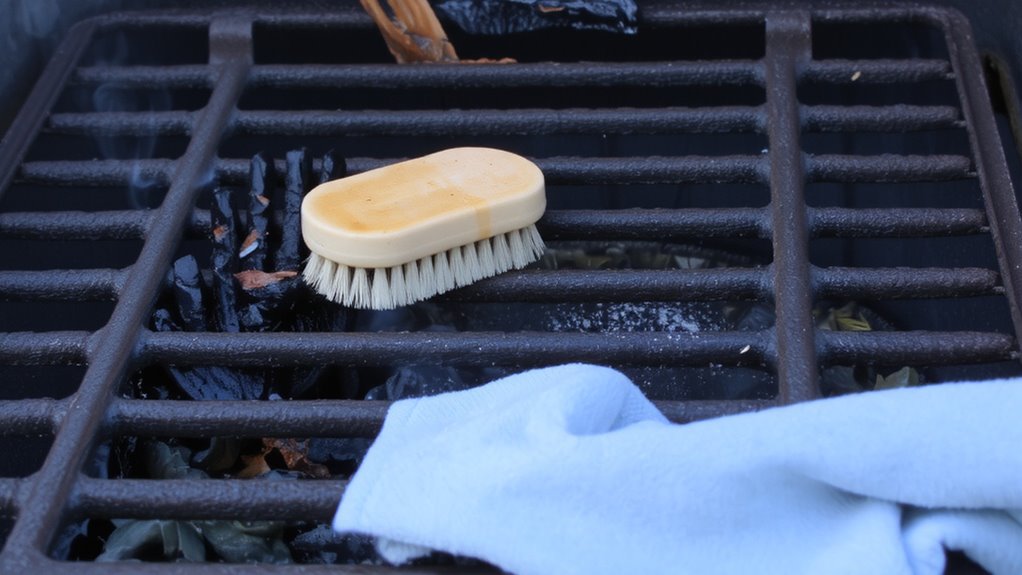
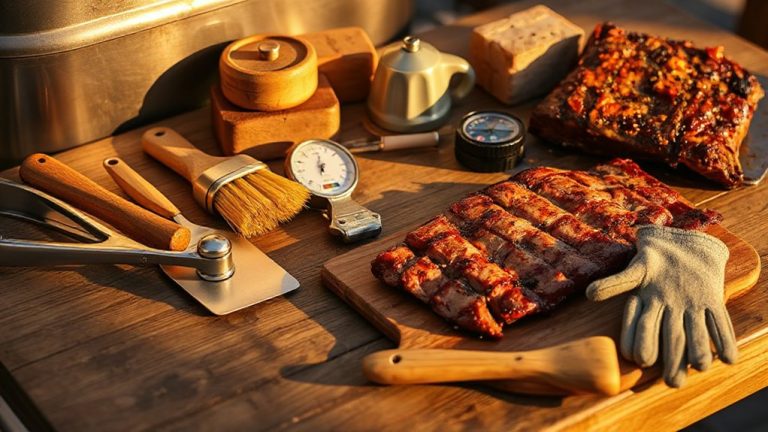
A sturdy grill brush is your best ally when it comes to quick grate cleanup. You’ll want one with brass or stainless steel bristles-they’re strong enough to remove char without damaging the grate surface. Pair it with other essential grill tools like tongs and a scraper for maximum efficiency. These tools work best when used while the grill is still warm, right after cooking. For stubborn residue, a safe, citrus-based cleaning agent helps break down grease without leaving harmful residues. Avoid harsh chemicals that might affect your food’s flavor. The right combination of durable grill tools and effective cleaning agents guarantees fast, reliable maintenance. You’ll save time and protect your grill’s performance. Over time, this routine keeps grates in top condition, promoting even heat and better searing. Good equipment and smart choices make upkeep simple and effective. Choosing the best grill brushes ensures long-term cleaning effectiveness and protects your investment.
How to Clean Any Type of Grill Grate
Grill grate material matters more than most realize-it influences not only flavor and heat retention but also how you clean and maintain your grill over time. Different grill grate materials require specific care: cast iron holds heat well but rusts if scrubbed with abrasive tools, while stainless steel resists corrosion but can trap residue without thorough cleaning. Porcelain-coated grates offer non-stick performance but chip easily, so you’ll need gentler cleaning tool types like nylon brushes. For heavy buildup on durable grates, stiff wire brushes work well, though bristle loss is a real concern. Alternatives like brass scrapers or pumice pads provide safer, effective scrubbing. After heating your grill, use a damp cloth or safe brush to wipe away residue while grates are warm. Matching your cleaning tool types to your grill grate materials preserves integrity and boosts longevity. Proper care guarantees consistent performance, better searing, and cleaner cooking sessions season after season.
Stop Food From Sticking: Every Time
Now that your grates are clean and properly maintained, you’re set to tackle the next big challenge-keeping food from sticking during cooking. Proper seasoning is your best defense; a well-seasoned grate develops a natural non-stick surface over time, especially with cast iron or steel grates. Heat the grill first, then oil the grates-not the food-for ideal release. Always perform a quick grate inspection before cooking: look for residue, rust spots, or uneven wear that could sabotage your meal. Smooth, consistent metal performs better. While ceramic and porcelain coatings resist sticking well, they demand careful handling. Ultimately, consistent maintenance and attention to detail outperform any gimmicky spray or tool. Combine preheating, proper seasoning, and routine grate inspection, and you’ll flip burgers, fish, or veggies with confidence-no more frustrating tears or ruined sear marks. It’s not magic, just method.
Why Old Grease Harms Flavor and Safety
While you might think leftover grease is just a harmless byproduct of a good cookout, it actually degrades both the taste of your food and the safety of your grill. Old residue causes flavor degradation, imparting rancid or bitter notes to freshly cooked meals. It also creates a breeding ground for bacterial growth, especially when the grill isn’t heated to sanitizing temperatures regularly. Repeated heating and cooling of built-up grease leads to carbonized layers that are tough to remove and compromise grill performance.
| Issue | Impact |
|---|---|
| Flavor degradation | Food tastes acrid or off |
| Bacterial growth | Health risks from pathogens |
| Carbon buildup | Uneven heat distribution |
| Flare-ups | Sudden flames, burnt food |
Cleaning your grates after each use prevents these problems and guarantees safer, tastier outdoor meals. Regular maintenance isn’t just about appearance-it’s essential for consistent results and food safety.
On a final note
You keep your grill lit, so protect your meals by maintaining clean grates. Residue builds up fast, ruining flavor and causing food to stick. Cleaning right after cooking removes stubborn bits effortlessly. Whether you use stainless steel, cast iron, or porcelain, proper tools and habits make a difference. Old grease isn’t just gross-it’s a health risk. A well-maintained grate guarantees better searing, safer cooking, and tastier results every time.