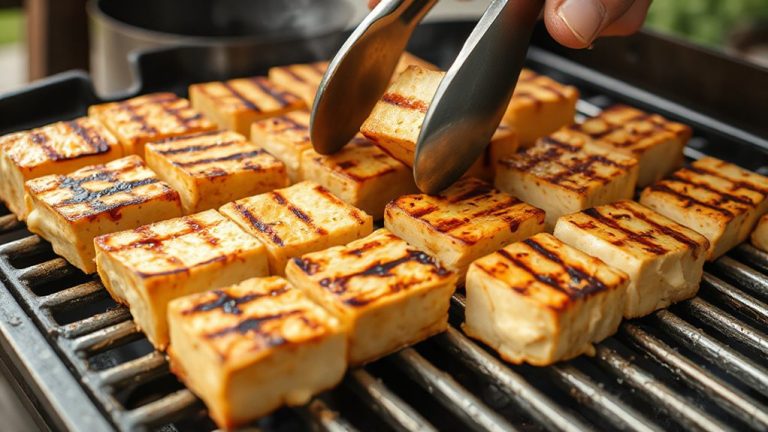
Why Vietnamese Coriander Adds Zesty Heat to Southeast Asian-Inspired Grilling
You get a burst of citrus and peppery heat from Vietnamese coriander that stands up to the grill’s high heat, unlike delicate herbs that fade. Its stable volatile oils and compound polygodial deliver a zesty, lasting kick that cuts through rich, smoky flavors. The (E)-2-decenal in its leaves gives a bright, lemon-black pepper punch ideal for Southeast Asian-inspired grilling. You’ll find it transforms marinades and finishes with bold, aromatic clarity-and there’s more to how it performs where heat meets herb.
Notable Insights
- Vietnamese coriander contains polygodial, which imparts a natural thermogenic warmth that enhances grilled dishes.
- Its high concentration of (E)-2-decenal delivers zesty, citrus-pepper notes resistant to high heat.
- The herb retains bright, peppery flavor when grilled, unlike traditional cilantro that fades.
- Citrus and mint undertones cut through rich fats, balancing smoke and intensity in grilled meats.
- A burgundy leaf blotch signals essential oil richness, boosting aromatic impact during grilling.
Why Vietnamese Coriander Elevates Grilled Dishes
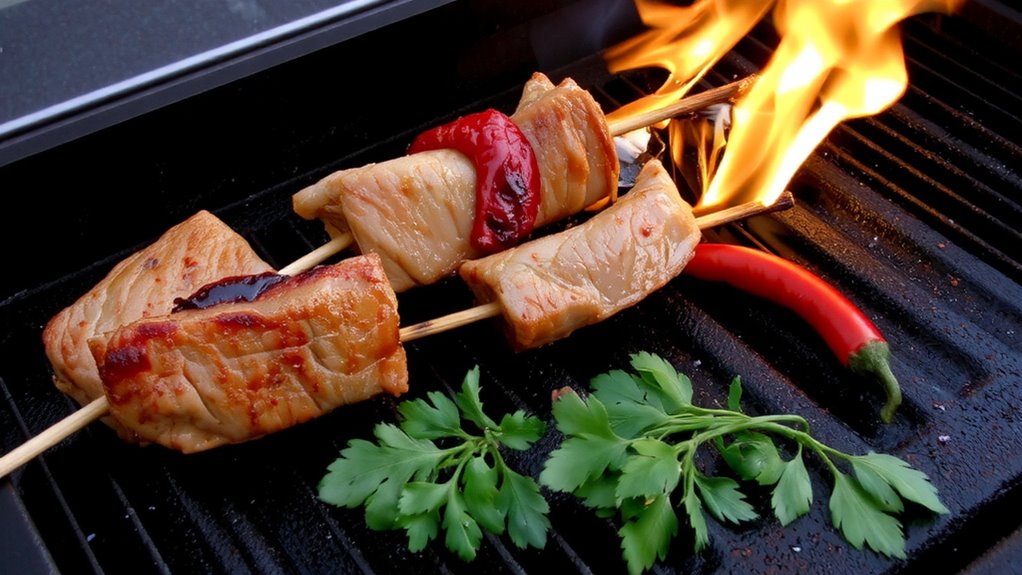
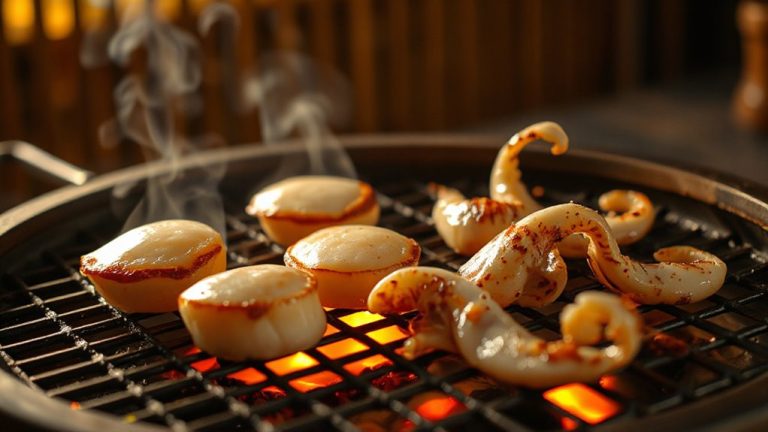
While most herbs wilt or lose their punch under the intense heat of the grill, Vietnamese coriander holds its ground, and that’s exactly why it shines in grilled dishes. You’ll find its resilience comes from stable volatile oils, which resist breaking down under high heat-unlike traditional cilantro, these compounds in Persicaria odorata, also known as rau răm, retain their aromatic complexity. When you toss finely chopped Vietnamese coriander over grilled meats like Bò Nướng or Gà Nướng Sả, it adds a bright, citrusy kick that cuts through rich fats. Its subtle thermogenic warmth-thanks to polygodial-complements smoky char without overwhelming. A staple in Southeast Asian cuisine, this herb elevates flavor layers in outdoor cooking, not just as garnish but as a functional, sensory enhancer. You’re not just adding freshness-you’re balancing heat, fat, and smoke with precision that few herbs can match.
What Makes Vietnamese Coriander’s Flavor Unique
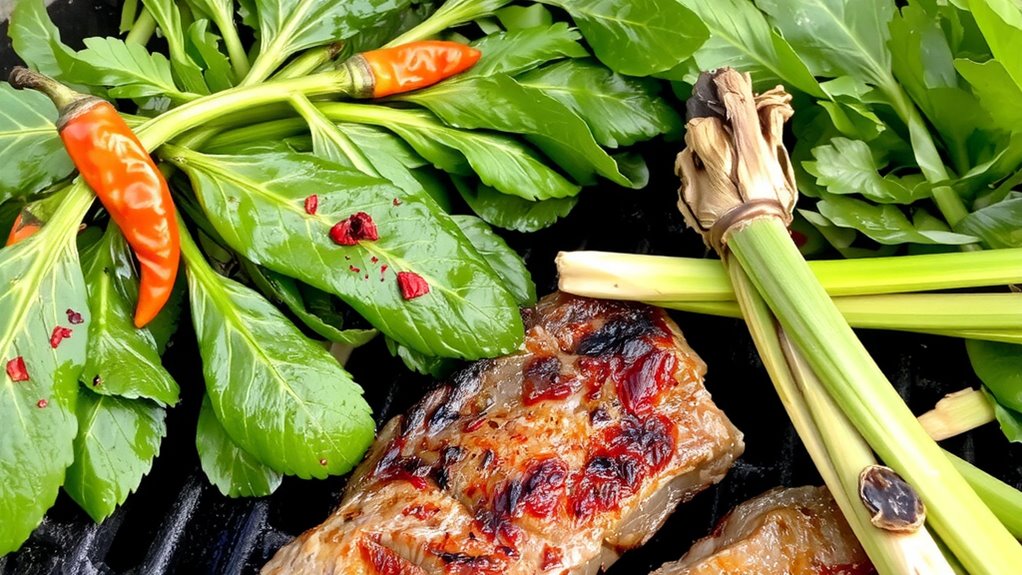
Peppery bite, citrus brightness, and a hint of mint-Vietnamese coriander’s flavor isn’t just bold, it’s uniquely balanced. When you use *Persicaria odorata*, you get more than just aroma; you’re tapping into a complex profile driven by essential oils like (E)-2-decenal. This compound gives Vietnamese coriander its sharp, zesty kick-think lemon meeting black pepper, with a clean finish. Unlike true cilantro, it won’t degrade under heat, maintaining its peppery heat and structural integrity during grilling. You’ll notice distinct citrus notes and a subtle mintiness that cut through rich, smoky meats without fading. The burgundy blotch on the leaf’s underside? That’s a sign of concentrated essential oils, meaning more flavor per chop. Vietnamese coriander doesn’t just mimic cilantro-it outperforms it in resilience and depth, offering a brighter, more stable lift ideal for high-heat applications. Its uniqueness lies in that reliable, aromatic punch.
How to Use Vietnamese Coriander in Marinades and Finishes
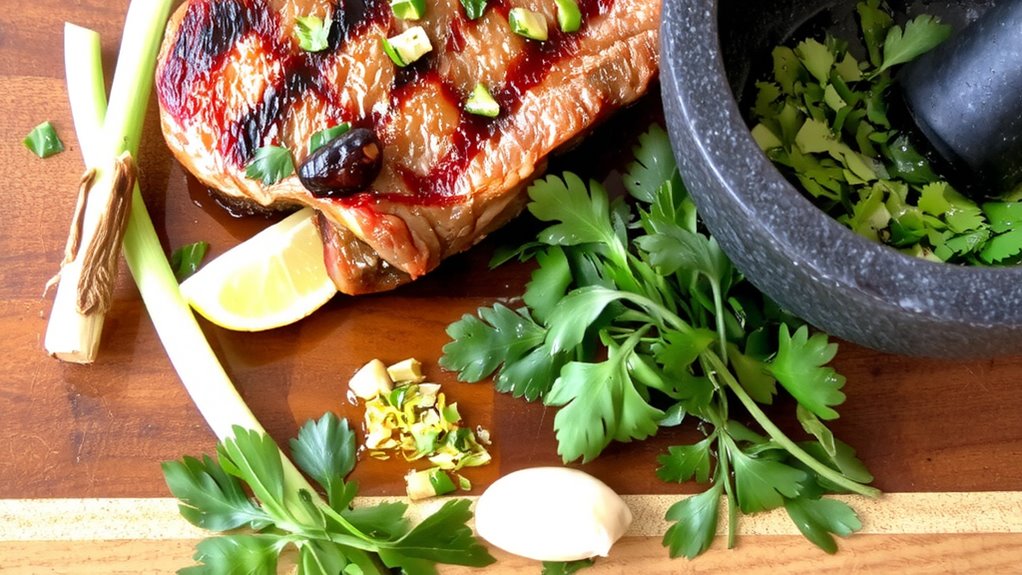
You already know Vietnamese coriander brings a distinctive balance of peppery heat and citrus brightness, but its real value shows when you put it to work in grilling applications. Finely chop the young leaves and blend them into marinades with garlic, lime juice, and fish sauce-the result is a bold base that elevates grilled meats like pork or chicken. Thanks to its heat-stable flavor, Vietnamese coriander holds up better than regular cilantro during cooking, making it ideal for marinades exposed to high heat. For maximum impact, always use tender young leaves, as older ones turn fibrous and lose aromatic intensity. Pair it with lemongrass and galangal to boost the zesty depth in dishes like thịt nướng. When finishing, scatter fresh herbs over the dish just before serving to preserve their bright, peppery punch. You don’t need to grow Vietnamese coriander yourself to enjoy it, but using it fresh makes your cooking better.
Find or Grow Fresh Vietnamese Coriander
Fresh Vietnamese coriander elevates your outdoor cooking game, and getting hold of it starts with knowing where to look or how to grow it yourself. You’ll most often find Vietnamese coriander at well-stocked garden centers or Asian nurseries, as it’s rarely available in typical supermarkets. This herb thrives in warm, humid climates and demands consistently moist, well-draining soil with a pH between 6.0 and 7.0. For best results, plant it where it gets morning sun and afternoon shade, spacing each stem 6–8 inches apart to support bushy foliage. Because it spreads invasively like mint, growing in containers or hanging baskets keeps it under control. Regular pruning encourages new growth and prevents woodiness, ensuring a steady supply of aromatic leaves. If you grill often and love bold, citrusy heat, having live Vietnamese coriander on hand is worth the small effort-it delivers unmatched freshness straight from your garden to the grill.
Best Substitutes When Vietnamese Coriander Is Unavailable
When Vietnamese coriander isn’t within reach-whether it’s out of season or your local nurseries don’t carry it-you’ll need a reliable alternative that comes close to matching its bold, citrusy punch and subtle heat. The best substitutes balance freshness, spice, and acidity. Below is a quick guide to your options:
| Substitute | Flavor Notes | Best Use Case |
|---|---|---|
| Cilantro + mint + black pepper | Citrusy, peppery, vibrant | Marinades, grilled veggies |
| Thai basil + lime juice | Sweet, anise-like, tangy | Grilled seafood, dipping sauces |
| Sawtooth coriander | Metallic, sharp, overly pungent | Not recommended |
While cilantro with mint and a pinch of black pepper closely mimics Vietnamese coriander, Thai basil with lime juice offers a fragrant twist-even if it lacks heat. Sawtooth coriander disappoints despite initial similarities. Avoid frozen or dried versions, as they retain little of the original aroma. Freshness wins every time in outdoor cooking.
On a final note
You’ll find Vietnamese coriander brings a bright, peppery kick that enhances grilled dishes without overpowering them. Its citrus-tinged heat holds up well under high heat, making it ideal for marinades or garnishes. Though distinct from cilantro, it performs a similar freshening role with more depth. When unavailable, a mix of cilantro and a touch of mint offers a reasonable substitute. Growing it yourself guarantees freshness and elevates your outdoor cooking game.