Apartment Balcony Smoking: Legal and Safe Methods for Urban Dwellers
You can smoke on your apartment balcony only if local laws and your lease allow it-many urban buildings ban it outright. Even if permitted, poor airflow traps smoke, risking odor drift and neighbor complaints. Use a portable ashtray, windscreen, or smoke diverter to manage debris and direct plumes away. Consider activated charcoal purifiers indoors. If banned, explore nicotine alternatives or designated areas-your choices impact both compliance and community comfort. There’s more to balancing habit and harmony effectively.
Notable Insights
- Check your lease and local laws to confirm if balcony smoking is permitted, as violations can lead to fines or eviction.
- Use wind-resistant ashtrays and smoke diverters to control ash and direct smoke away from neighboring units.
- Install acrylic shields or plants as barriers to reduce smoke drift and improve airflow on enclosed balconies.
- Avoid smoking during high-wind periods and position yourself near the balcony edge to enhance smoke dispersion.
- Consider nicotine alternatives like patches or vaping if smoking is banned, ensuring vaping complies with building rules.
Can You Smoke on Your Apartment Balcony?
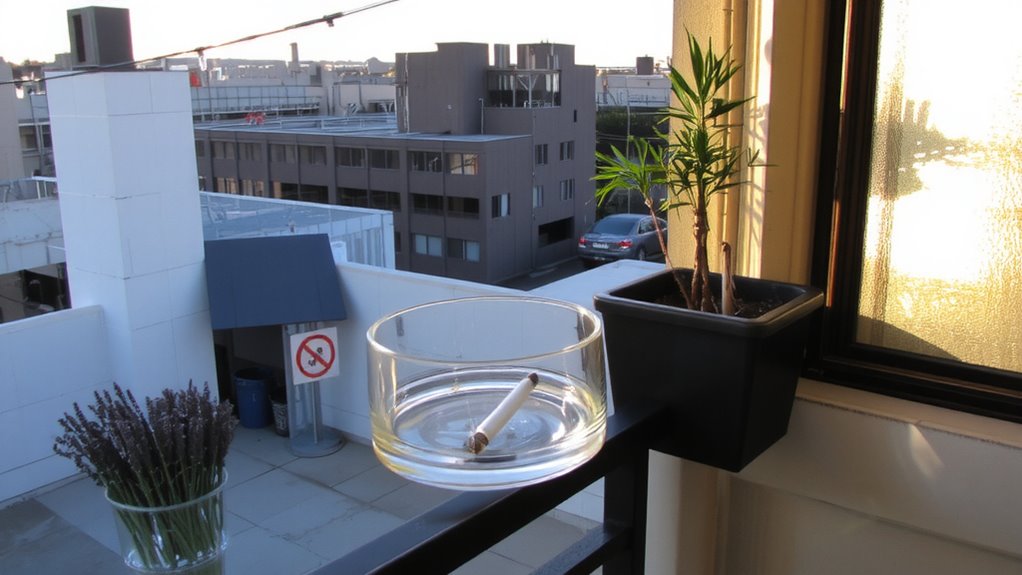
Why might you assume your balcony is a safe spot for a smoke? You’re outdoors, away from the main living space, so it feels acceptable. But consider balcony ventilation-or the lack of it. Modern high-rises often have limited airflow, trapping smoke near railings and adjacent units. That’s where smoke drift becomes a problem. Even a light breeze can carry odors and particulates into neighboring apartments, triggering complaints or health concerns. Balconies aren’t fully open environments; they’re semi-enclosed spaces that can amplify exposure. Poor ventilation worsens buildup of lingering smoke, affecting both air quality and neighbor relations. While it might seem harmless, the reality is that your smoke doesn’t stay put. It migrates, seeps under doors, and clings to fabrics. Responsible use means recognizing these limitations. Realize that convenience doesn’t override consideration-especially when airflow dynamics work against you.
Check Your Local Laws and Lease Agreement
Even if your balcony feels like a private escape, you can’t assume smoking there is allowed without checking the rules that actually govern your right to do so. Local laws increasingly restrict smoking in multi-unit buildings, especially near shared ventilation or common areas, and ignoring them can lead to serious legal implications. Many cities now classify balcony smoking as a violation of fire or nuisance ordinances, exposing you to fines or formal complaints. Beyond local statutes, your lease agreement likely outlines specific behavior policies-most modern leases explicitly ban smoking, and violating this could trigger lease penalties, including fees or even eviction. Landlords have strong incentives to enforce smoke-free policies due to insurance and liability concerns. Always review your lease terms carefully and confirm municipal regulations online or through housing authorities. Assuming permission without verification puts your tenancy at risk.
Stop Balcony Smoke From Reaching Neighbors
You’ve checked your lease and local laws, and while you may have permission to smoke on your balcony, that doesn’t guarantee your neighbors have to inhale it. Respecting shared airspace means taking airflow redirection seriously-positioning yourself or using barriers like potted plants or acrylic shields can guide smoke away from adjacent units. Even minor adjustments in seating or smoking angle help minimize drift. Odor containment isn’t just about courtesy; lingering smells can prompt complaints or policy enforcement. Smoking during low-wind periods reduces spread, while activated charcoal air purifiers inside your unit can lessen residual scent escaping through doors. Some landlords suggest using odor-neutralizing sprays immediately after, though these are only partially effective. Ultimately, consistent airflow redirection and odor containment practices demonstrate consideration, potentially preventing disputes and preserving your smoking privileges. It’s not just legality-it’s neighborly responsibility.
How to Smoke Safely on Your Balcony (With the Right Tools)
With the right gear, smoking on your balcony doesn’t have to mean compromising safety or comfort. Invest in a portable ashtray with a magnetic base or weighted design-you’ll minimize spill risks during breezy moments. Proper ash management starts here, keeping debris contained and off railings or floors. Use a small windscreen to shield your cigarette or cigar from gusts, which also improves combustion control. Pair this with smart ventilation methods, like positioning yourself near the balcony’s edge where airflow naturally disperses smoke away from access doors and neighboring units. Avoid smoking directly against walls to reduce lingering odors and residue buildup. A compact smoke diverter can further guide plumes downward or outward, enhancing air circulation. These tools, when used together, offer reliable performance without excess clutter. They’re practical, easy to maintain, and designed for urban constraints-making your habit safer and more considerate.
What to Do If Your Building Bans Balcony Smoking
If your building prohibits smoking on balconies, you’ll need to take the rules seriously-fines, warnings, or even lease violations could follow noncompliance. Check your lease agreement and local ordinances to understand your legal rights, as some areas limit landlord restrictions on personal habits. Still, most courts uphold no-smoking clauses in rental contracts. Instead of risking penalties, consider smoke alternatives like nicotine patches, vaping (if allowed), or designated smoking areas. These options let you manage cravings without violating policies. While vaping isn’t universally permitted either, it’s often more acceptable than combustion-based smoking. You might also discuss alternatives with management-some buildings offer compromises. Ultimately, respecting the rules maintains your tenancy and relationships with neighbors, ensuring long-term living stability. Weighing your legal rights against practical choices helps you make informed, responsible decisions.
On a final note
You can smoke on your apartment balcony if local laws and your lease allow it. Always review both to avoid violations. To minimize disturbance, use wind shields and smoke during low-wind hours. Proper ash management and designated trays help maintain safety and cleanliness. If banned, respect the policy-smoke-free buildings often enforce rules due to health and fire concerns. Responsible habits guarantee better coexistence in shared urban spaces.