Roasting Whole Trout on a Green Willow Stick Over Low-Gliding Flames
You’ll want a fresh, thumb-thick green willow stick about 24 inches long-it resists charring thanks to its moisture and gently steams the fish as it cooks. After gutting and drying the trout, skewer it through the mouth and tail, then hold it over low-gliding flames, rotating slowly for even heat. The indirect fire prevents burning, while the willow imparts a subtle, earthy sweetness. This method outperforms metal rods by offering more stable heat control and better flavor; keep going to see how each step builds on campfire tradition for foolproof results.
Notable Insights
- Use a 24-inch straight, thumb-thick green willow stick for secure, heat-resistant fish skewering.
- Select fresh, supple willow branches with smooth bark to prevent splitting during cooking.
- Prepare trout by gutting, rinsing, and drying the skin to ensure crispness over low flames.
- Cook over smoldering hardwood coals with indirect heat to avoid charring and enable even roasting.
- Rotate the fish slowly on the willow stick, leveraging its moisture to gently steam and flavor the trout.
Choose the Right Green Willow Stick
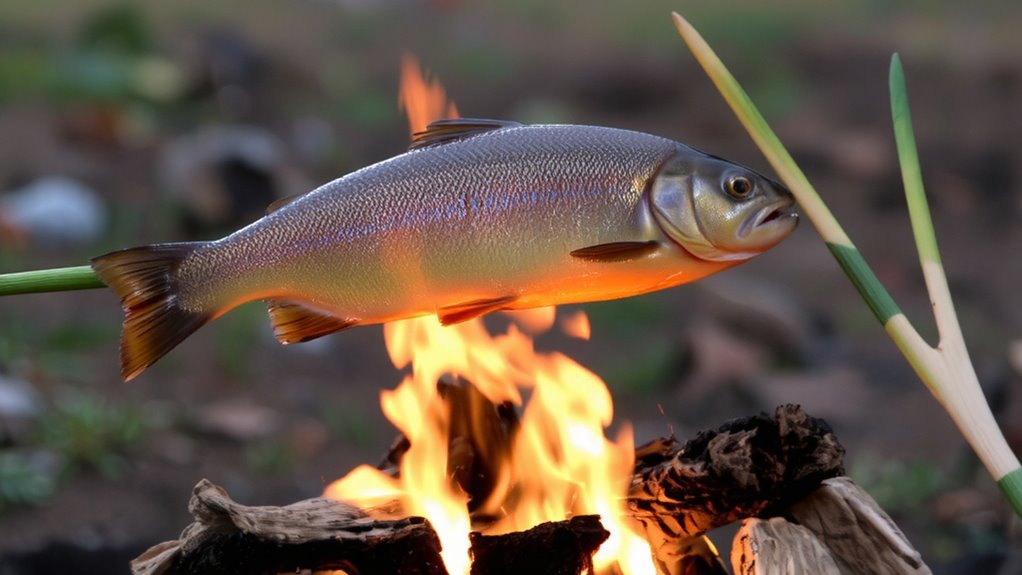
A good green willow stick can make or break your trout roast, so you’ll want to pick one with care. Willow flexibility lets the stick bend slightly without snapping, cradling the fish securely over low-gliding flames. You’ll need about 36 inches of straight, thumb-thick wood-long enough to keep your hands clear of heat, sturdy enough to hold weight. Freshly cut green willows offer the best stick durability; dried or cracked ones splinter easily. Look for young, supple branches with smooth bark and no signs of rot. A quality willow stick resists warping and maintains structural integrity through prolonged heat exposure. Though softer than hickory or oak, green willow won’t impart bitterness. Its natural moisture content slows charring, giving you steady, even roasting-critical for delicate trout flesh. Test flexibility by gently bending the tip; if it resists without cracking, you’ve found a keeper.
Prepare Your Trout for Open-Flame Roasting
Now that you’ve secured a sturdy green willow stick, it’s time to turn your attention to the trout itself-how you prepare it directly affects flavor, texture, and cooking consistency. Begin by gut and clean your trout: remove the innards, rinse the cavity with cold water, and scrape off any remaining blood or membrane. This step guarantees even cooking and prevents bitterness. Dry the skin thoroughly-moisture can hinder crisping. For best results, leave the head and tail intact; they hold flavor and help maintain structure. Then, you should season simply: a light brushing of oil prevents sticking and enhances browning, while a sprinkle of salt and maybe a touch of wild herbs or lemon zest deepens taste without overpowering the delicate flesh. Avoid complex rubs-fresh trout needs little embellishment. Proper prep guarantees tender, smoky meat that pulls cleanly from the bone.
Build a Low-Gliding Fire for Even Cooking
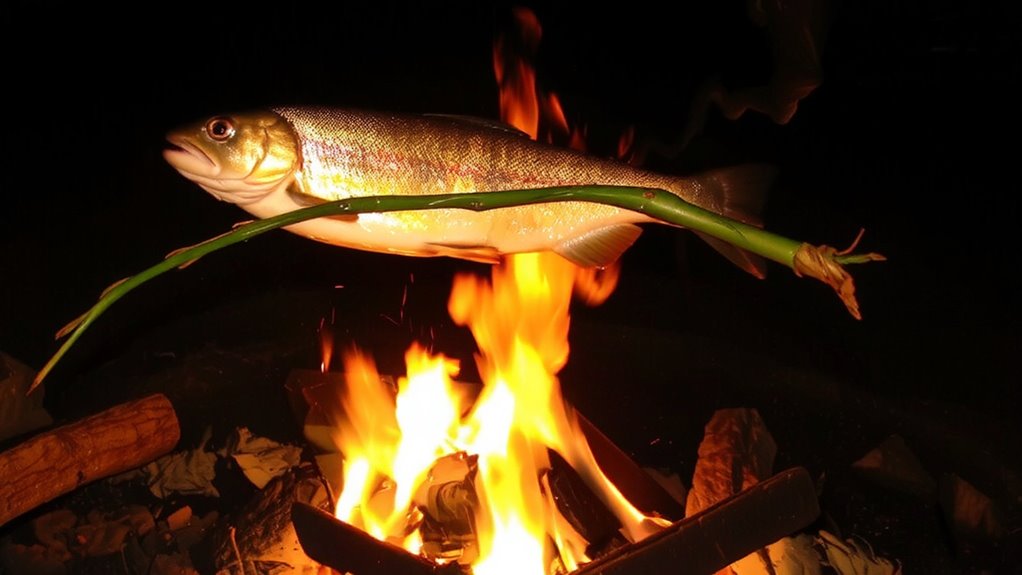
Since the quality of your fire determines how evenly the trout cooks, you’ll want to build a low-gliding fire that radiates steady, indirect heat rather than fierce flames. Start with a small pile of dry tinder and kindling, letting it burn down to smoldering coals before adding a few larger sticks. This method gives you better control over fire temperature, which is critical for delicate fish. Position the flames to one side so the trout roasts via radiant heat, not direct flame-this improves heat distribution and prevents scorching. A well-managed fire stays low and consistent, glowing rather than roaring. Use hardwood embers if possible; they burn longer and emit more even heat. Avoid softwoods, as they flare up unpredictably and hinder temperature stability. Maintaining this balance guarantees the fish cooks through without drying out.
Roast Trout on a Willow Stick Without Burning
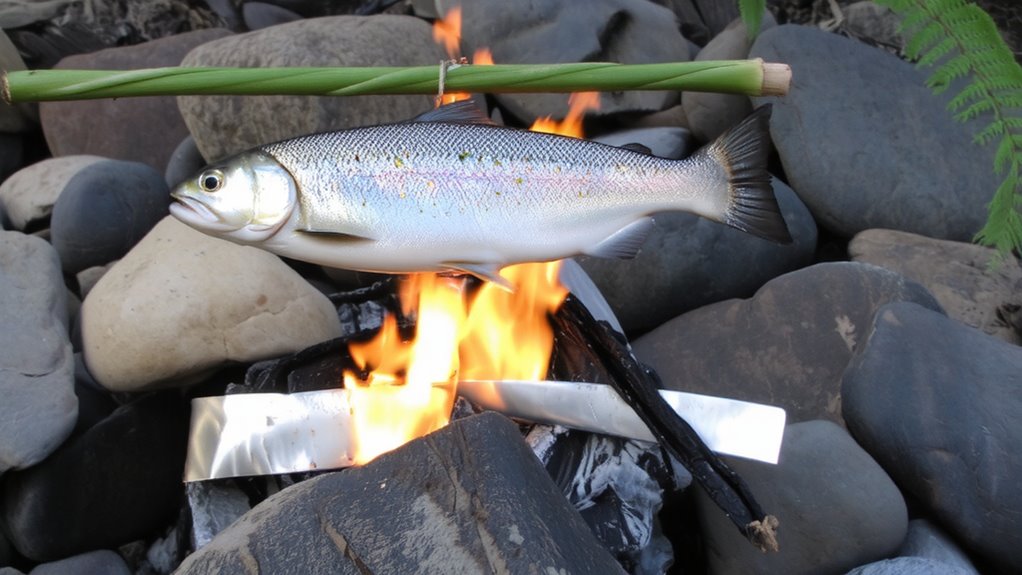
Choose a green willow stick about as thick as your thumb and roughly two feet long-it’s ideal for roasting trout without scorching the flesh. The moisture inside the green wood slows burning, giving you steady, indirect heat much like a cast iron pan but with more rustic charm. Skewer the trout through the mouth and tail, angling it above low-gliding flames. Unlike wrapping in aluminum foil, this method lets the skin crisp while infusing smokiness. Rotate slowly-too close to the coals, and it chars; too far, and it steams. You’re balancing control and tradition.
| Sensation | Memory it Evokes |
|---|---|
| Crisp skin, tender flesh | Summer by the lake |
| Smoky aroma | Campfire stories |
| Slight char, natural juices | First catch |
| Earthy wood scent | Quiet mornings |
Why Roasting Trout on a Stick Works So Well
While you might expect an open flame to ruin delicate fish, roasting trout on a green willow stick actually protects the flesh through controlled radiant heat and natural moisture regulation. The green wood doesn’t burn easily, and as it chars slightly, it emits steam that bastes the trout from within, preserving tenderness. This method offers superior heat conduction compared to grilling, allowing even cooking without hot spots. The stick acts as both a skewer and a heat regulator, transferring warmth gradually rather than searing. Simultaneously, the wood enables subtle flavor infusion-earthy, slightly sweet notes seep into the skin, enhancing the fish’s natural taste. You’re not just cooking; you’re layering complexity. Unlike metal rods, willow doesn’t overheat or conduct too quickly, giving you control. It’s efficient, traditional, and effective-ideal for campfire cooking where simplicity and performance matter most. This technique balances design and practicality, making it a standout in outdoor BBQ.
On a final note
You’ve learned the essentials: selecting a green willow stick prevents scorching, while a steady, low fire guarantees even cooking. Roasting trout this way retains moisture better than grilling, offering tender results with subtle wood-infused flavor. It’s efficient, requires minimal gear, and works reliably in most outdoor settings. Though timing matters-overcooking dries the flesh-practice improves precision. This method proves that simple techniques often deliver the most satisfying backcountry meals.