Mastering the Art of Wood Smoking for Perfectly Seasoned Barbecue Meats
You’ll get the best results by matching hardwoods like hickory or oak to beef and pork for bold, rich flavor, while fruitwoods like apple or cherry lend a mild sweetness perfect for poultry and ribs. Avoid softwoods-they ruin taste with harsh smoke. Use a coarse rub with salt and brown sugar to seal in juices and help smoke adhere. Keep your smoker steady at 225–250°F with controlled airflow, and spritz hourly to build a flavorful bark. Too much smoke or time creates bitterness, so trust the process-clean, thin smoke for 3–4 hours is ideal. You’re not just grilling; you’re crafting layers of depth that only precise technique can deliver.
Notable Insights
- Choose the right wood: hickory and oak for bold beef and pork flavors, fruitwoods like apple and cherry for milder poultry and ribs.
- Pair meat cuts with complementary woods-brisket with hickory, pork shoulder with apple, salmon with alder for optimal flavor.
- Apply a balanced rub with salt, brown sugar, and paprika to enhance smoke absorption and develop a flavorful, caramelized bark.
- Maintain a steady smoking temperature between 225°F and 250°F, adjusting airflow to ensure consistent heat and smoke flow.
- Limit smoke exposure to 3–4 hours using thin, clean smoke and spritz hourly to promote bark formation without bitterness.
Choose the Best Wood for Smoking Meat
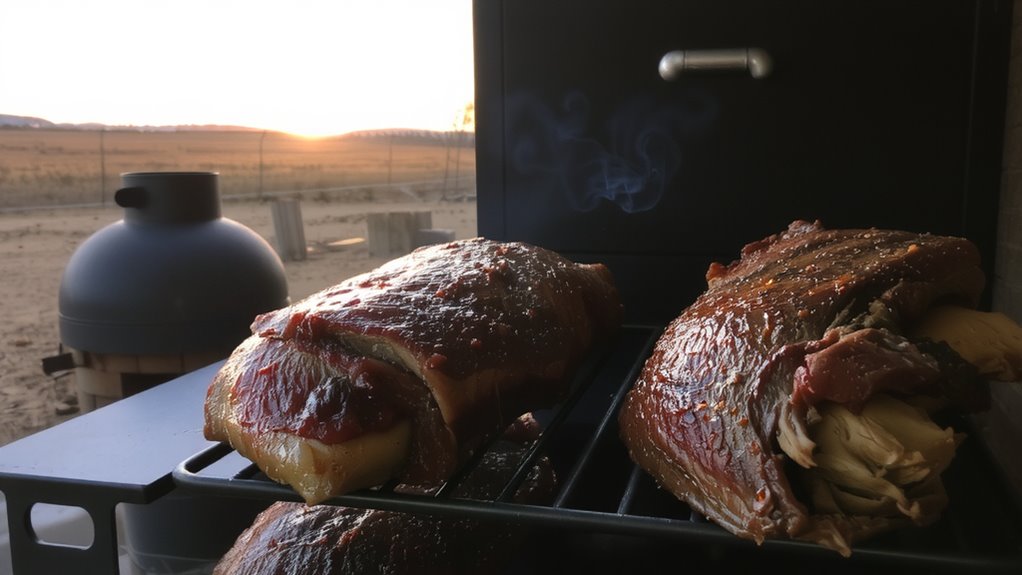
While you might be tempted to grab whatever wood is on hand, picking the right type for smoking makes a noticeable difference in flavor, color, and texture of your barbecue. Different wood types impart distinct flavor profiles, so matching them to your meat matters. Hardwoods like hickory and oak deliver strong, bold tastes ideal for beef or pork. Fruitwoods-apple, cherry, peach-offer milder, sweeter notes that complement poultry and ribs without overpowering. Mesquite burns hot and fast, best suited for short smokes on lean cuts, while its intense flavor can turn bitter if overused. Alder works well with delicate fish, adding a subtle earthiness. You’ll want to avoid softwoods like pine-they contain resins that create unpleasant flavors and excessive smoke. Instead, opt for properly seasoned, food-grade wood. Understanding these wood types and their flavor profiles gives you control, turning guesswork into consistent, delicious results every time. For a comprehensive overview, check out the best smoking wood picks to find top-rated options and expert insights.
Pick the Right Cut for Wood-Smoked Flavor
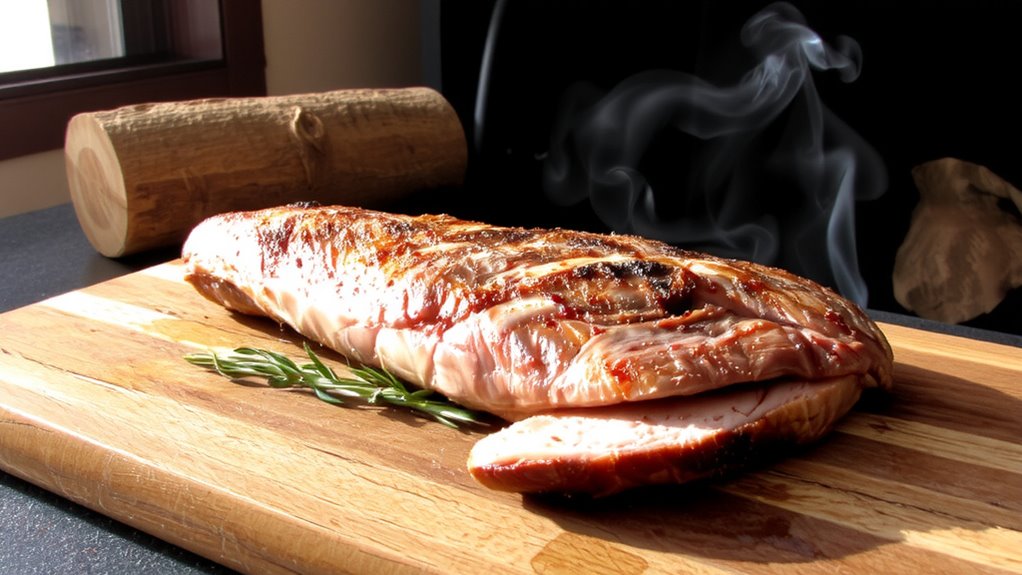
You’ve picked your wood based on flavor profile-now it’s time to match that choice with a cut of meat that’ll make the most of it. Smart cut selection guarantees your barbecue absorbs smoke evenly and renders fat slowly. Tougher, marbled cuts thrive with long smoke times, while leaner options need precision to avoid drying out. A successful flavor pairing hinges on balancing meat density with wood intensity. The best cuts for smoking are those with ample marbling and connective tissue, which break down during low-and-slow cooking to yield tender, flavorful results-ideal choices include best cuts of meat. Below is a quick guide to aligning cuts, wood types, and results.
| Cut | Best Wood | Smoke Result |
|---|---|---|
| Brisket | Hickory | Rich, bold, and deep |
| Pork Shoulder | Apple | Sweet, tender, aromatic |
| Ribs | Cherry | Fruity, mild, caramelized |
| Chicken | Pecan | Nutty, delicate, golden |
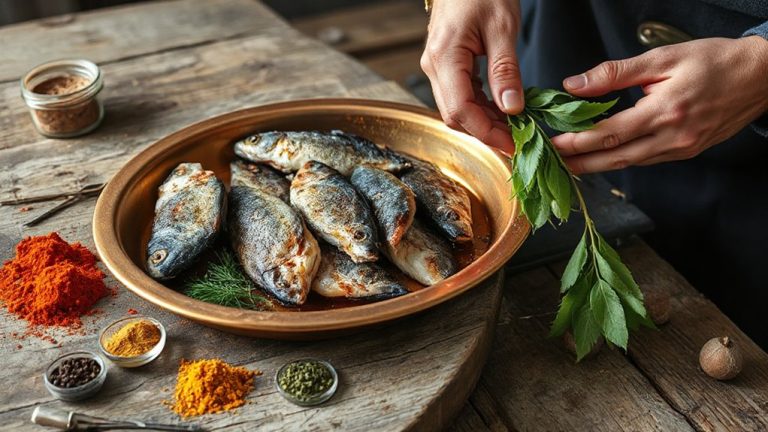
| Salmon | Alder | Subtle, clean, smoky |
Choose wisely-your cut selection defines the depth and harmony of flavor pairing.
Season With Rubs That Enhance Smoke Penetration
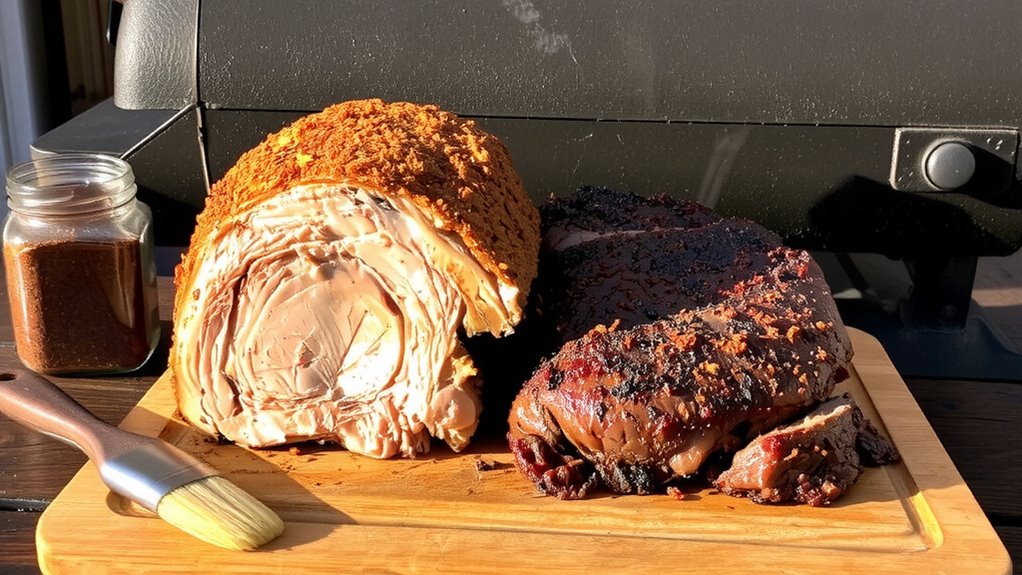
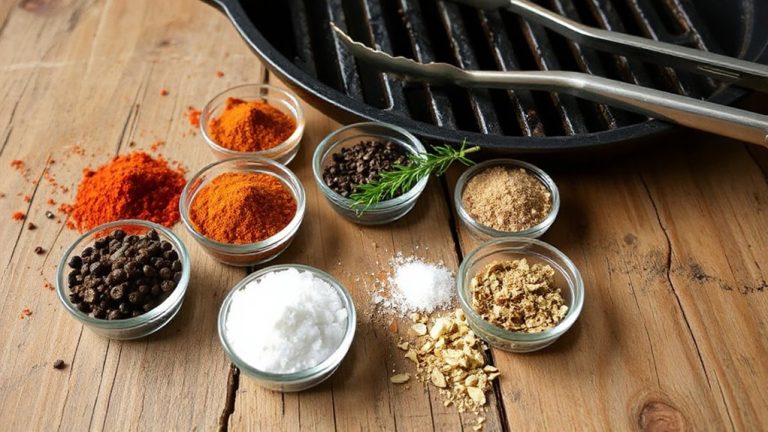
A well-chosen rub does more than add flavor-it creates a crust that helps seal in moisture while promoting better smoke absorption. You want a rub texture that’s coarse enough to adhere well but not so chunky that it burns or blocks smoke contact. Fine powders might dissolve too fast, while overly thick blends can insulate the meat, limiting that deep, smoky complexity you’re after. A proper salt balance is essential: too much salt draws out moisture too soon, while too little won’t properly season or help form the bark. Aim for about 1/2 teaspoon of salt per pound of meat as a baseline. Ingredients like brown sugar caramelize, and spices like paprika add color and depth, but the real win is when your rub enhances - not masks - the smoke. Apply it evenly, pressing it in gently, so every bite carries the full, layered taste of expertly smoked barbecue. For best results, consider trying one of the best BBQ rubs to match your smoking style and meat choice.
Set and Maintain the Ideal Smoking Temperature
Consistency in smoking temperature is debatably the most critical factor in producing tender, flavorful barbecue. For ideal temperature stability, aim to maintain a steady 225–250°F, depending on the meat. You’ll need precise airflow management to sustain this range and avoid wild fluctuations. Too much oxygen increases heat; too little starves your fire and creates smoke buildup. Adjust dampers gradually to find the right balance.
| Meat Type | Ideal Temp (°F) | Firebox Adjustment |
|---|---|---|
| Brisket | 225 | Moderate airflow, steady burn |
| Pork Shoulder | 250 | Slightly increased intake |
| Ribs | 225 | Restricted exhaust, even flow |
Small tweaks make big differences-monitor regularly. Stability guarantees even breakdown of collagen without drying out meat. With practice, airflow management becomes intuitive, letting you maintain temperature stability all the way through.
Control Smoke Time to Avoid Bitterness
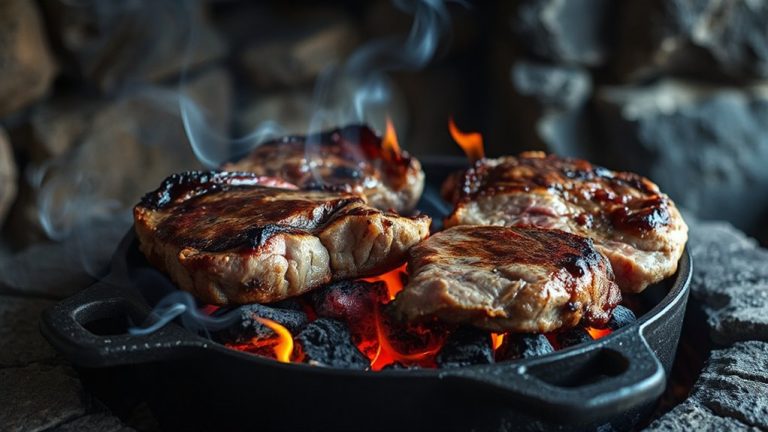
While smoke enhances flavor, leaving your meat in the smoker too long can lead to an unpleasant bitterness caused by excess creosote buildup. You want clean, thin smoke-not thick billows-because high smoke density contributes to that harsh, acrid taste. Once your meat turns black and stops absorbing smoke, typically after 3–4 hours, it’s no longer benefiting from the process. In fact, continuing to smoke risks overwhelming the natural taste of the meat. You’ll ruin the flavor balance you worked so hard to achieve. Stick to the sweet spot: smoke early when the meat is most receptive, then let the heat carry the rest. Monitor the smoke closely; if it’s white and wispy, you’re on track. If it’s thick and gray, adjust your airflow. Controlling time guarantees you get rich, smoky notes without the bitter edge that turns off seasoned eaters.
Create Bark and Juicy Results Every Time
Texture is everything when it comes to great barbecue, and the magic happens where smoke, heat, and seasoning collide-on the surface of your meat. You want a dark, flavorful bark without sacrificing juicy results, and that balance starts with smart wood selection. Hardwoods like hickory or oak deliver consistent smoke, building complexity without overpowering. Softer woods can burn too fast, risking uneven flavor and poor bark development. Maintain steady temps between 225°F and 250°F-too hot, and you’ll dry out the meat; too cool, and moisture retention suffers. Don’t forget the spritz: a quick spray of apple juice or vinegar every hour keeps the surface tacky, helping smoke adhere and promoting bark. Patience matters-let the collagen break down slowly. With the right wood, temp control, and attention to moisture retention, you’ll get that perfect crust and tender bite every time.
On a final note
You’ve got the tools to master wood smoking: choosing quality wood, the right cut, and a solid rub boosts flavor and smoke penetration. Maintaining a steady 225°F guarantees tender meat, while limiting smoke time prevents bitterness. With practice, you’ll build a crisp bark and juicy interior consistently. Outdoor BBQ isn’t just cooking-it’s controlled craftsmanship. Get the details right, and your results will taste like expertise.