Smoked Fish Spice Guide: Rubs, Ratios & Temps by Fish Type
You’ll get the best results when you match your spice blend to the fish’s texture and fat content. Delicate fillets like cod need gentle rubs with dill or citrus, while salmon or mackerel can handle bold mixes with smoked paprika, garlic, and chili. Build your rub around a base of garlic, onion, and paprika for depth, then add brown sugar and cayenne for a caramelized crust. Apply spices after oiling the fish, let it rest, then smoke low and slow at 200°F to meld flavors-what comes next elevates the process into an art.
Notable Insights
- Match delicate fish like cod with mild spices, while bolder rubs work best on firm, oily fish such as salmon or mackerel.
- Use a foundational blend of garlic, onion powder, and smoked paprika to enhance smokiness and ensure even flavor penetration.
- Balance sweet and heat elements with brown sugar and chili, using a 2:1 ratio to complement rich fish without overpowering delicate varieties.
- Apply spices after coating fish lightly with oil, layering coarser grains first and finishing with fine powders to seal in aroma.
- Smoke at 180°F–225°F after marinating 30–60 minutes and resting 10–15 minutes to stabilize the spice crust and deepen flavor integration.
Choose Fish That Enhances Your Spice Blend
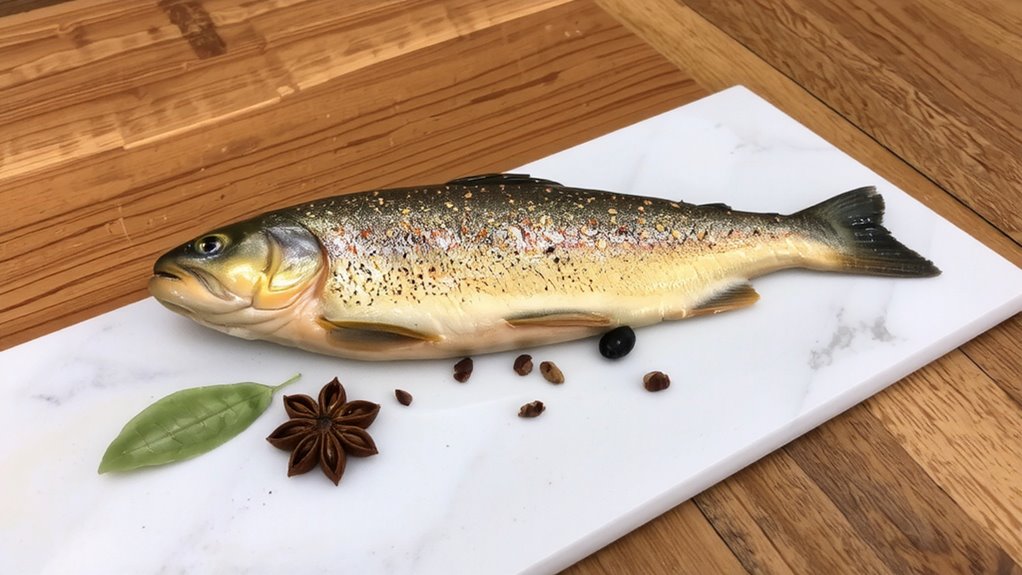
Why settle for a smoked fish that overpowers your carefully crafted spice blend instead of complementing it? You need a balance where fish texture and spice intensity work together, not against each other. Delicate fillets like cod or trout absorb flavors deeply but can’t handle aggressive rubs-strong spices will dominate, leaving nuance lost. Firmer fish such as salmon or swordfish hold up better; their meaty texture supports bold seasonings without collapsing. When you match the spice intensity to the fish’s natural oil content and density, you guarantee every bite delivers harmony. Lean species demand milder blends to preserve subtlety, while oily fish thrive with robust, smoky spices. Don’t assume all fish respond the same-your choice directly impacts flavor integration, smoke penetration, and final taste. Pick wisely, and your smoked fish won’t just taste seasoned-it’ll taste intentional. For best results, consider using a best smoker for fish to ensure even smoke distribution and optimal flavor infusion.
Pair Spices to Fish Type for Balanced Flavor
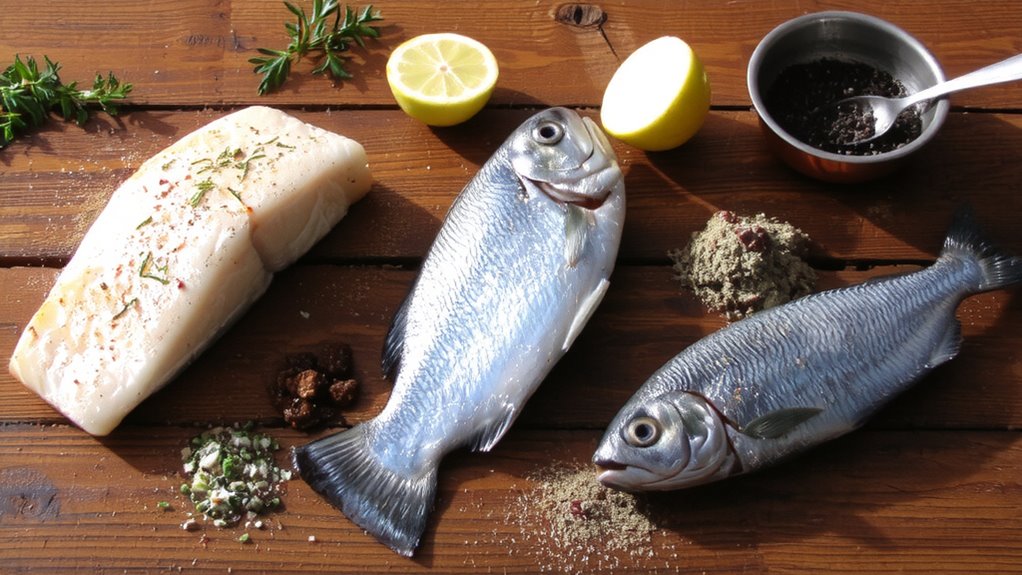
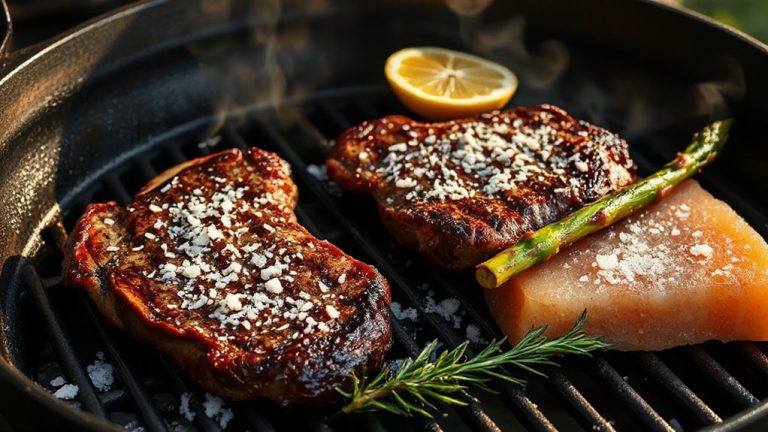
Think in terms of flavor architecture-each spice you choose builds upon the natural profile of the fish, and getting it right means matching intensity with intention. You’re not overpowering the fish; you’re enhancing it. Delicate fillets like trout or sole need subtlety-dill with a touch of citrus zest lifts their sweetness without masking it. For firmer, oilier fish like salmon or mackerel, you can go bolder. A well-considered herb pairing-say, thyme and tarragon-adds complexity while remaining balanced. Citrus zest, whether lemon or orange, brightens fatty profiles and cuts through smoke, especially effective on rich cuts. When aligning spices with fish type, consider how the smoke will integrate; lighter woods like alder call for gentler seasonings, while robust mesquite suits assertive blends. The goal is harmony-each element enhancing the other-so your smoked fish delivers flavor that’s layered, memorable, and true to its base. Pairing the right wood, such as best wood chips for smoking chicken, can elevate the entire flavor profile when applied thoughtfully to fish.
Use Garlic, Paprika, and Onion as Rub Foundations
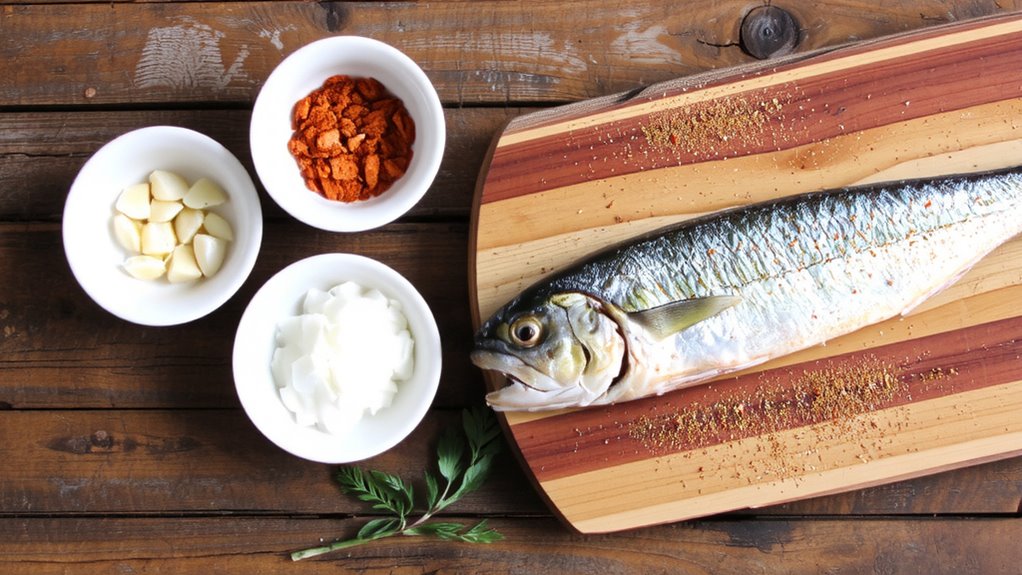
A solid spice rub begins with a trio most pitmasters swear by-garlic, paprika, and onion-and for good reason. You’ll want these foundational flavors to build depth before adding complexity. Garlic adds a sharp, savory backbone that enhances the smoky aroma once the fish hits the heat. Onion powder blends smoothly, offering a subtle sweetness and promoting even spice penetration across the fillet’s surface. Paprika, especially smoked, doesn’t just contribute color-it deepens the overall smokiness while helping oils in the fish carry flavor inward. Together, they create a balanced base that adheres well and withstands slow, low smoking. This combination works across multiple fish types, from fatty salmon to delicate cod, ensuring consistent results. You’re not just seasoning-you’re engineering flavor retention, aroma development, and texture integration. Skip this foundation, and your rub likely lacks cohesion and depth, undermining the entire smoke.
Add Brown Sugar and Chili for Sweet Heat
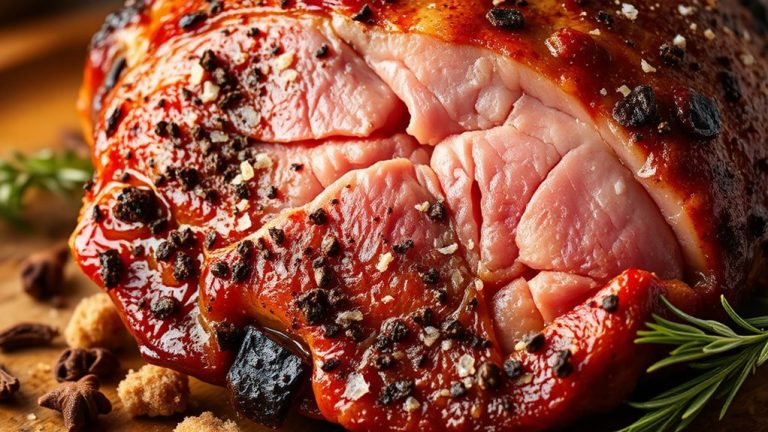
Brown sugar and chili bring a dynamic balance of sweet and heat that elevates smoked fish from simple to complex. You’ll find that brown sugar caramelize during smoking, forming a delicate crust that locks in moisture while adding depth. When paired with chili-whether crushed red pepper, cayenne, or smoked chipotle-you create a compelling sweet heat that lingers without overwhelming. This combination isn’t just bold; it’s strategic, enhancing the fish’s natural richness while cutting through fattiness. Achieving the right flavor balance means measuring carefully: too much sugar can burn, while excess chili overpowers delicate flesh. A ratio of 2:1 brown sugar to chili works well for most fillets, especially salmon or mackerel. The result is a nuanced profile-smoky, slightly sweet, faintly spicy-that shows thoughtful seasoning. This layering defines expert outdoor cooking, where heat and sweetness aren’t opposites but collaborators.
Apply Spices for Maximum Flavor
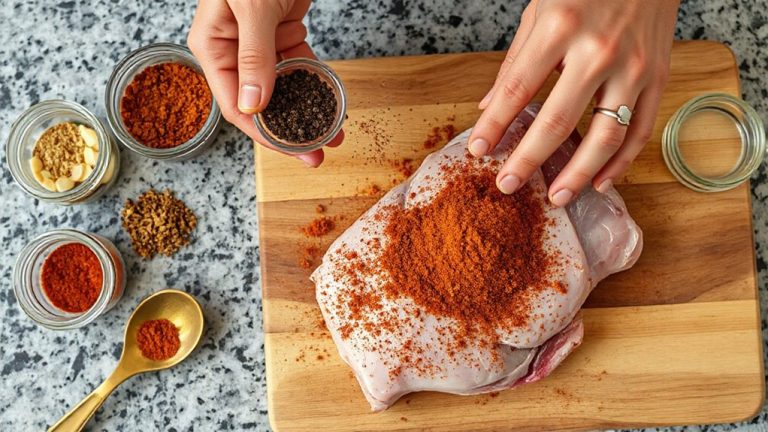
You’ve already seen how brown sugar and chili can transform smoked fish with sweet heat, but now it’s time to focus on how you apply those spices to get the most out of every rub. Proper marinade timing is essential-letting fish soak for 30 to 60 minutes allows flavors to penetrate without breaking down delicate flesh. Beyond that, you risk mushiness, especially with acidic bases. For deeper impact, use spice layering: start with a light oil coating to help spices adhere, then apply a balanced dry rub in stages. Press the mixture gently to guarantee even adherence. Layer coarser spices like cracked pepper or paprika early, finishing with finer powders that lock in aroma. This method builds complexity and guarantees consistent flavor from skin to center. Don’t skip resting the seasoned fish 10–15 minutes before smoking-it stabilizes the crust and improves retention during cooking.
Smoke Low and Slow to Deepen Spice Flavor
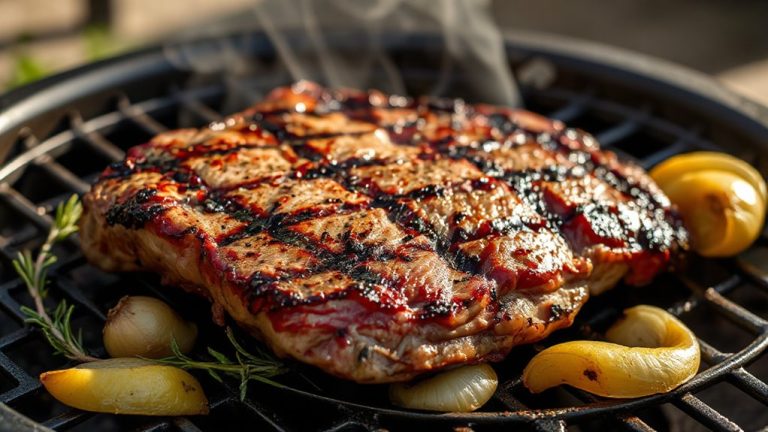
While high heat might sear in flavor quickly, it’s the low and slow approach that truly reveals the depth of your spice rubs when smoking fish. Maintaining steady temperature control between 180°F and 225°F allows the spices to meld with the fish flesh, enhancing complexity without scorching. Paired with thoughtful wood selection-like alder for mildness or hickory for boldness-the smoke penetrates gradually, wrapping the seasoned surface in layers of aromatic flavor. Rushing the process risks uneven infusion and bitter notes, especially with strong rubs. Patience rewards you with tender, richly flavored fish that showcases both your spice blend and technique. A well-chosen beginner offset smoker ensures consistent heat and smoke control for optimal results.
On a final note
You’ll get the best results when you match bold spices like paprika and garlic to firm fish such as salmon or mackerel, letting the rub cling and penetrate during a slow smoke. Brown sugar adds subtle sweetness that balances chili’s kick, while low-and-slow smoking guarantees deep flavor without drying. This method isn’t flashy, but it’s reliable-delivering consistent, restaurant-quality results you can replicate with attention to spice placement and temperature control.