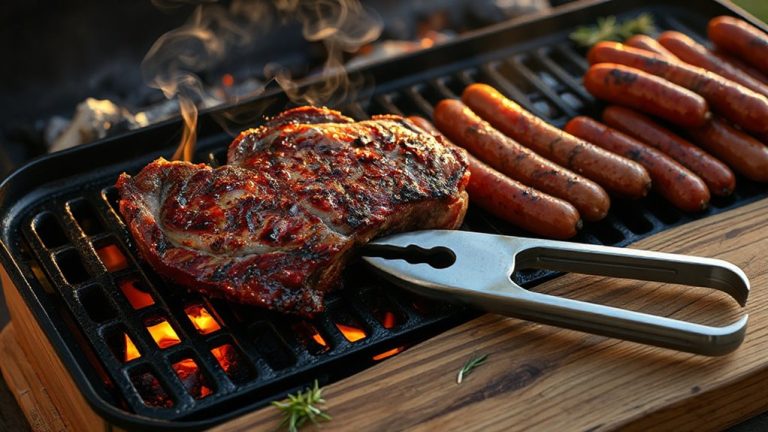
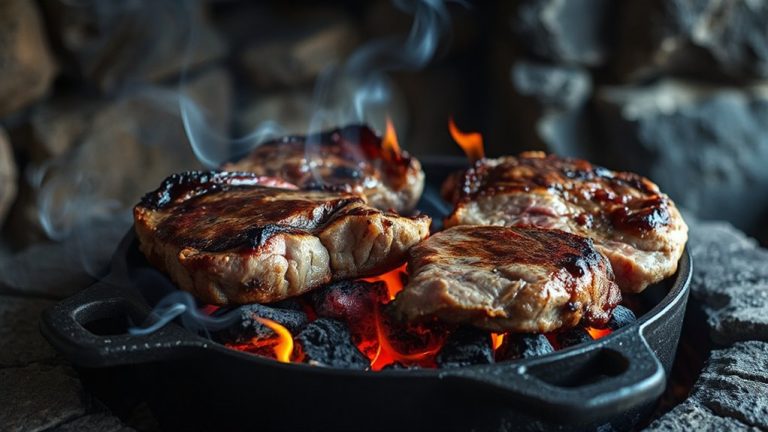
An In-depth Look at How to Create Flavors That Enhance the Natural Taste of Grilled Meats
You should salt thick cuts like ribeye or pork shoulder 40 minutes to overnight ahead, letting moisture rebalance for juicier results. Pair acid like lemon with oil to tenderize and carry flavor without harshness. Use bold herbs like rosemary for beef, dill for fish, matching intensity to the meat. Choose dry hardwoods-cherry, hickory-for clean smoke, avoiding bitter resins from soft or green wood. Timing matters: sear thin steaks with late salt, but season thick cuts early. You’ll find even small adjustments can transform how deeply flavor integrates.
Notable Insights
- Salt meat 40 minutes to overnight before grilling to enhance juiciness and achieve even flavor through brine diffusion.
- Combine acid and fat in marinades to tenderize meat and carry flavors deeply while promoting better browning and moisture retention.
- Use citrus zest to add bright, aromatic notes that complement richness and bind effectively to fats for lasting flavor impact.
- Match mild herbs like thyme and dill to delicate meats, and bold spices like cumin and rosemary to hearty meats for balanced enhancement.
- Choose dry, aged hardwoods like oak or cherry for clean smoke, avoiding bitter flavors from green or soft woods.
Salt Your Meat Right for Juicier, Tastier Results
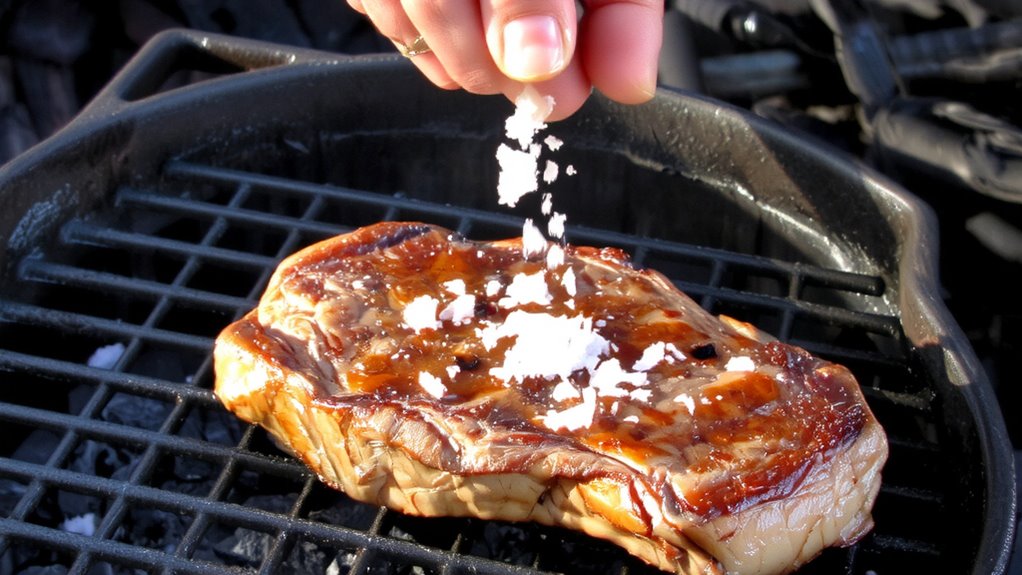
While it might seem simple, salting your meat the right way can make a noticeable difference in both juiciness and flavor when grilling. You’re not just adding taste-you’re kickstarting brine diffusion, where salt draws moisture from muscle fibers, then pulls it back in seasoned. This process enhances tenderness and evens out salt concentration across the cut. For best results, season early: 40 minutes to overnight before cooking gives time for equilibrium. If you salt right before grilling, you risk surface drying without full absorption. Thick cuts like ribeye or pork shoulder benefit most-uniform salt concentration means no bland bites. Avoid oversalting; excessive levels hinder protein hydration, reducing juiciness. Use kosher salt for consistent dispersion and controlled brine diffusion. It delivers predictable results, critical when precision matters. When applied correctly, this method doesn’t overpower-it optimizes. You’ll notice deeper flavor integration and improved texture, making proper salting a foundational step worth mastering every time you fire up the grill.
Use Acid and Fat to Deepen Flavor Without Overpowering
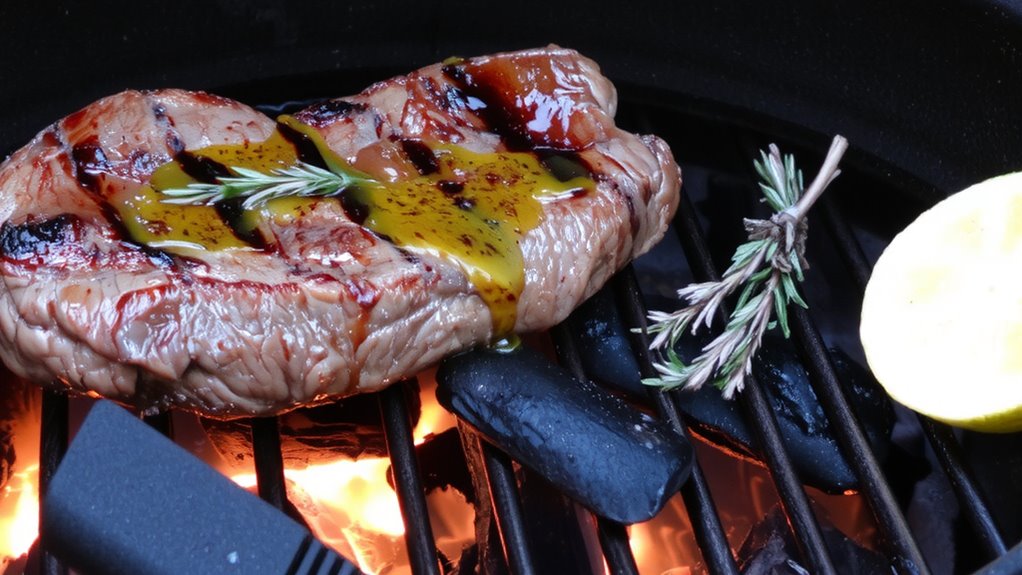
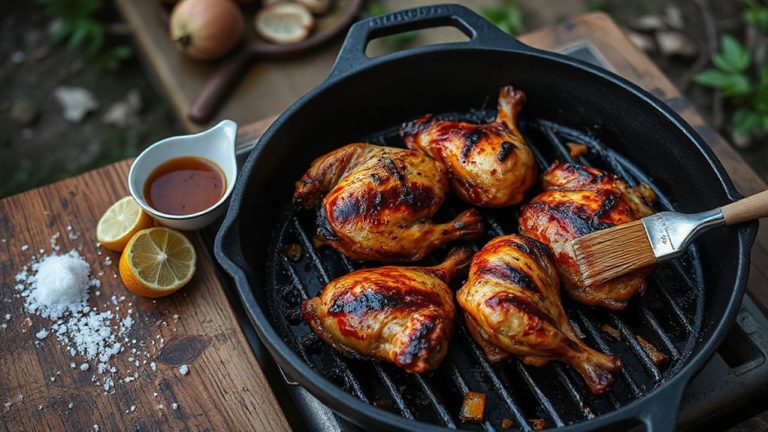
You’ve already seen how salt transforms meat by improving moisture retention and flavor distribution, but to build a more complex taste profile, you need to balance acidity and fat in your approach. Acidic components-like lemon or vinegar-help break down muscle fibers slightly, allowing deeper flavor penetration without toughening the surface. When paired with fat, such as a high-quality olive oil infusion, the acid’s sharpness softens, leaving a rounded depth. Use citrus zest to introduce bright, aromatic notes that lift the richness without overwhelming the meat’s natural savor. The oils in zest carry potent flavor compounds that bind well to fat, enhancing adherence and consistency during grilling. A balanced blend of acid and fat doesn’t mask the meat-it elevates it. Applied before cooking, this combination improves browning and protects against drying. Done right, it deepens taste while preserving the integrity of your grilled cuts.
Pair Herbs and Spices to Match Your Meat
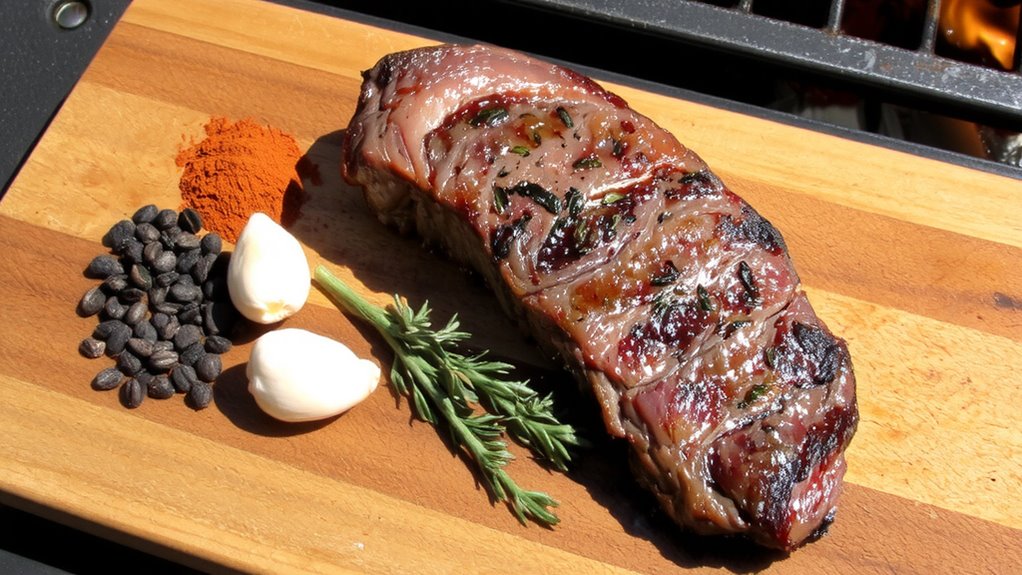
When selecting herbs and spices for grilling, matching their intensity and flavor profile to the type of Gamer guarantees a harmonious result, since delicate cuts like chicken or fish can’t stand up to the same bold seasonings as beef or lamb. You’ll want to pair mild proteins with balanced blends, while heartier meats handle assertive mixes like rosemary garlic or smoked paprika cumin combinations. These pairings don’t just add flavor-they intensify the meat’s natural taste without overwhelming it. For best results, consider using Top Meat Seasonings that are specifically formulated to complement each meat type’s unique characteristics.
| Meat Type | Herb/Spice Pairing | Flavor Outcome |
|---|---|---|
| Chicken | Thyme, lemon zest | Bright, subtle depth |
| Fish | Dill, parsley | Clean, aromatic lift |
| Beef | Rosemary garlic | Robust, earthy richness |
| Lamb | Paprika cumin | Warm, smoky complexity |
Use these combinations as starting points, then adjust based on cut and fat content for best results.
Pick the Right Wood for Your Grilled Meat (And Avoid Bitter Smoke)
Why does your grilled steak sometimes taste faintly bitter, no matter how well you season it? The culprit is often your wood choice. Softwoods with low wood density, like pine or fir, burn too fast and produce acrid smoke with harsh smoke intensity that imparts unpleasant flavors. Instead, opt for hardwoods-oak, hickory, or cherry-that offer consistent combustion and balanced smoke intensity. Their higher wood density means they smolder slowly, releasing a clean, aromatic smoke that enhances rather than overpowers. Avoid green or unseasoned wood; its high moisture content creates thick, bitter smoke. Only use dry, aged wood-it lights easier and produces a cleaner burn. You’re not just fueling a fire; you’re shaping flavor. Choosing wisely guarantees your meat absorbs a rich, natural smokiness, not a medicinal aftertaste. Master this, and you’ll elevate your grilling from good to exceptional. For best results, consider your wood selection a key ingredient-start with a best smoking wood pick that matches your meat’s profile.
When to Season: The Make-or-Break Moment for Flavor
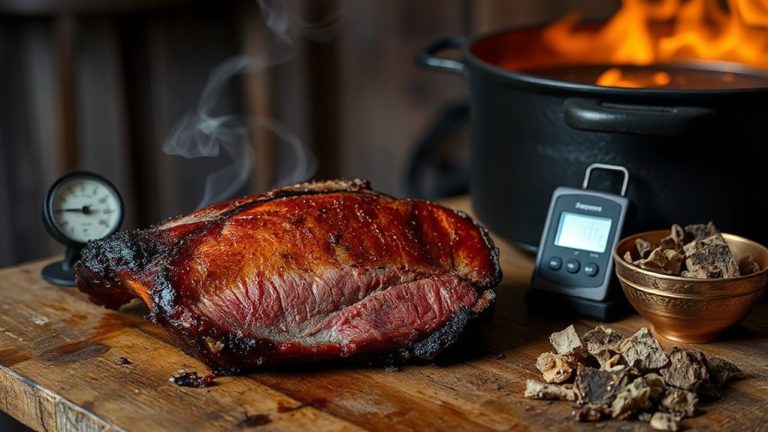
Getting the smoke profile right matters, but even the cleanest hickory or cherry smoke can’t fix poor seasoning timing. You’ve got to take into account both marinade timing and cooking temperature to lock in flavor. If you apply salt too early on thinner cuts, it draws out moisture and hampers searing; too late, and it won’t penetrate. For thicker steaks or roasts, seasoning an hour ahead lets salt migrate deeper, boosting taste throughout. Marinating? Acidic mixtures work best with lean meats, but don’t exceed 12 hours-texture suffers. With high cooking temperature sears, sugar-heavy rubs can burn, so apply them later. For low-and-slow grilling, earlier seasoning allows better flavor integration. Ultimately, timing affects crust development, juiciness, and overall balance. Mastering this step guarantees seasoning enhances, not masks, the meat’s natural taste. It’s not just what you use-it’s when. Using a reliable meat thermometer ensures you cook to the ideal internal temperature for optimal flavor and texture.
On a final note
You’ve got the tools to elevate grilled meat by enhancing its natural taste, not masking it. Proper salting, balanced acid and fat, and smart herb pairings make a measurable difference. Choosing the right wood avoids harsh smoke, while timing your seasoning seals in flavor. These methods, grounded in culinary science, consistently outperform guesswork, delivering juicier, more flavorful results every time you fire up the grill.