One-Pot Beef Stew Mastery: Slow-Cooking Comfort Food in a Dutch Oven on a Grill
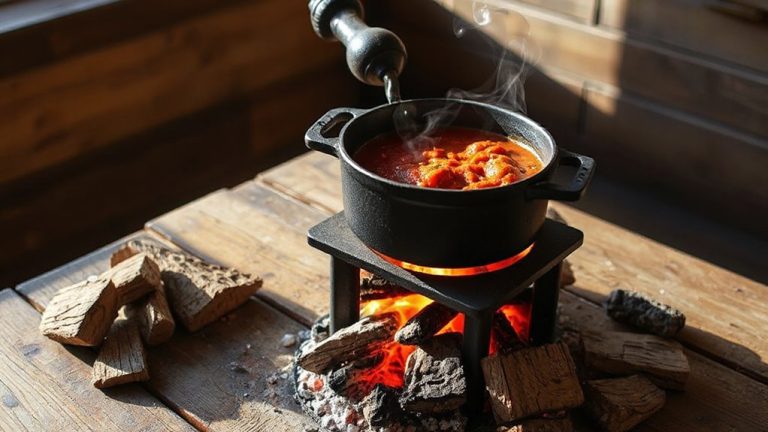
Set up a two-zone fire with coals on one side to maintain 275–300°F, ideal for slow-cooked tenderness. Use well-marbled chuck or short rib-they break down beautifully over indirect heat. Sear the meat first, then sweat onions, garlic, and carrots in the Dutch oven to build flavor. Add stock and herbs, cover, and let it cook low and slow, allowing collagen to melt into a silky broth. Skim fat, finish with butter and red wine, and you’ll see how simple adjustments elevate your results far beyond the basics.
Notable Insights
- Use a two-zone fire on the grill to maintain steady, indirect heat between 275–325°F for even cooking.
- Choose well-marbled, collagen-rich beef cuts like chuck or short rib for tender, flavorful results after slow grilling.
- Sauté aromatics and sear meat first over direct heat, then move to indirect heat for low and slow simmering.
- Layer vegetables and cook them slowly to build depth, using indirect heat to intensify natural sweetness.
- Finish the stew by skimming fat, reducing broth, and adding butter or wine for a rich, velvety final texture.
Prep Your Grill and Dutch Oven for Even Heat
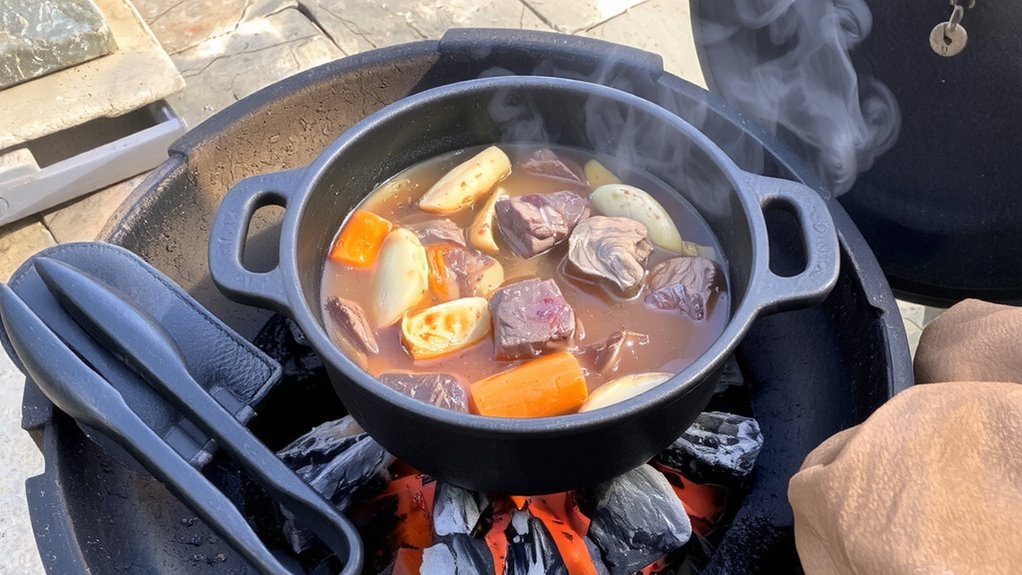
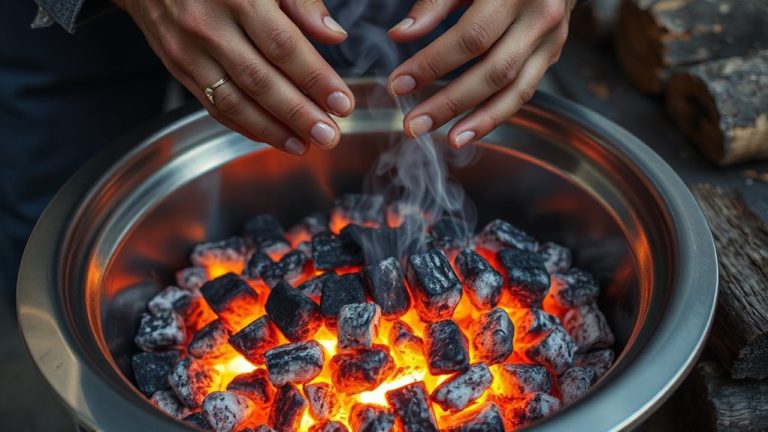
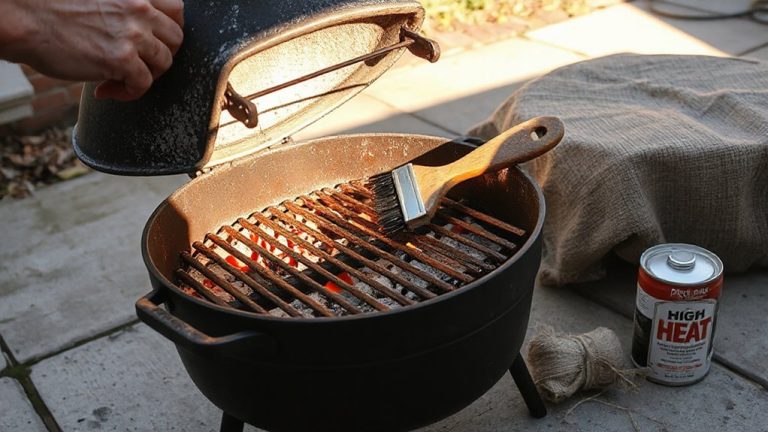
While getting your grill ready might seem like a simple step, it’s actually the foundation for achieving consistent, even heat when cooking a one-pot beef stew. Proper grill temperature control guarantees your Dutch oven heats evenly, avoiding hot spots that can scorch your ingredients. You’ll want to set up a two-zone fire-coals on one side, empty on the other-so you can regulate intensity by shifting the pot as needed. This method offers steady, indirect heat ideal for slow simmering. Before you start, check your Dutch oven seasoning; a well-seasoned surface prevents sticking and improves heat retention. If it’s patchy or dull, re-season with a thin layer of oil and bake it briefly. A reliable grill thermometer and preheated coals help maintain the target range of 300–325°F. These steps aren’t just routine-they’re essential for transforming raw ingredients into a rich, cohesive stew through controlled, outdoor cooking.
Choose the Best Cut for Grilled Beef Stew
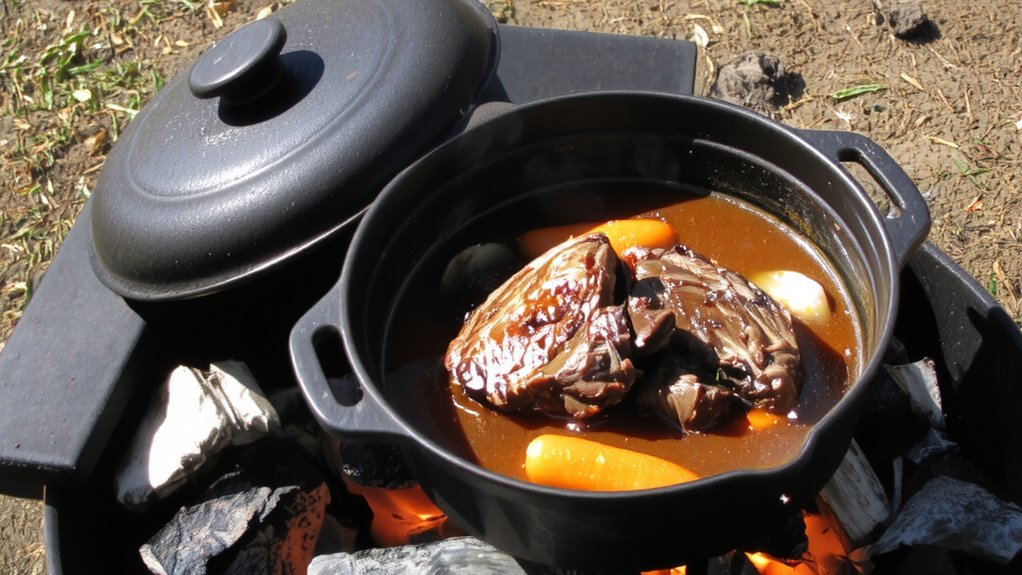
You’ve got your grill set up with a solid two-zone fire and your Dutch oven prepped for even heat, so now it’s time to focus on what goes inside-starting with the right cut of beef. Look for cuts with high marbling content and plenty of connective tissue, which break down over low, slow heat and deliver rich, tender results. Grass-fed or lean steaks won’t cut it-they’ll dry out. Instead, choose well-exercised muscles that benefit from long grilling.
| Cut | Marbling Content | Connective Tissue |
|---|---|---|
| Chuck | High | Abundant |
| Brisket | Moderate | Very High |
| Short Rib | Very High | High |
| Round | Low | Low |
Chuck and short rib shine here-packed with flavor and texture when slow-cooked. Avoid lean choices; they won’t yield the velvety consistency you want.
Layer Aromatics and Vegetables for Deep Flavor
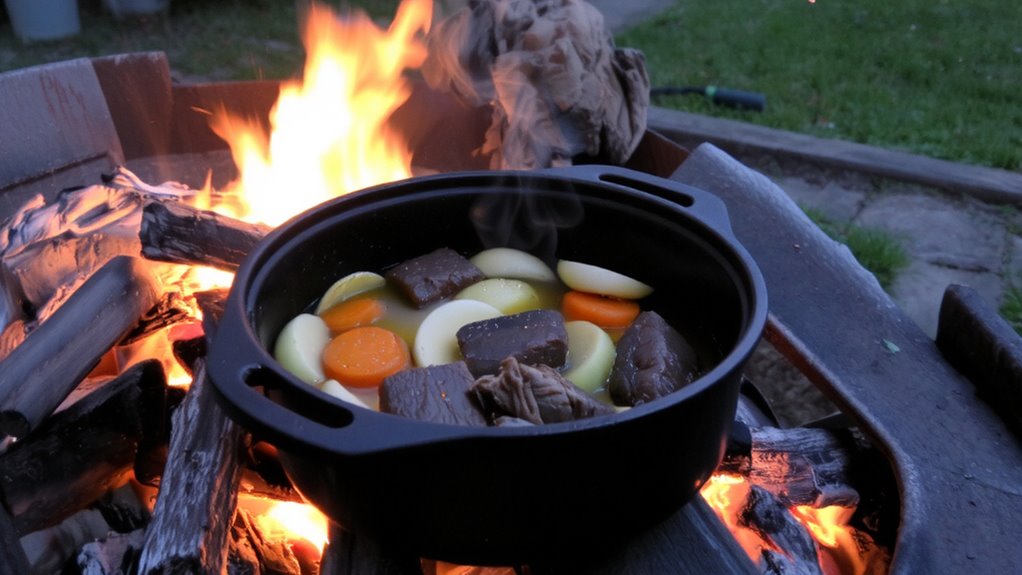
A foundation of well-layered aromatics and vegetables can make or break your grilled beef stew’s depth of flavor. Start by building layers in your Dutch oven: sweat diced onions and garlic slowly to release sweetness without burning. For richer complexity, layer in caramelized onions-cooked separately until golden-they bring a subtle sweetness and deep umami that raw onions can’t match. Add carrots and celery for earthy balance. Sautéed mushrooms are essential; browned in batches to avoid steaming, they contribute a meaty texture and woodsy note that elevates the entire dish. These ingredients aren’t mere fillers-they’re flavor architects. When grilled, the gentle, indirect heat intensifies their natural sugars, deepening the profile. Proper layering guarantees each element cooks evenly and infuses the stew gradually. Skipping this step dulls the result; investing time here builds a stew that’s robust, aromatic, and nuanced-worth the extra effort.
Master Low and Slow Grilling for Tender Results
Now that your Dutch oven holds a well-built base of aromatics and vegetables, it’s time to turn your attention to the grill itself-specifically, how heat management defines the texture and tenderness of your stew. You’ll want to maintain a steady 275–300°F, using indirect heat to guarantee even cooking without scorching. This low and slow approach breaks down tough beef fibers gradually, yielding fork-tender results. Proper char control is essential; excessive flame or hot spots can burn the crust, introducing bitterness instead of depth. Position coals or adjust gas burners to create gentle, radiant heat. The smoky essence you achieve isn’t just flavor-it’s a hallmark of well-executed outdoor cooking, seeping into the meat over hours. A well-ventilated Dutch oven traps moisture while allowing subtle smoke penetration, balancing richness with clarity. This method outperforms stovetop simmering by adding dimension without sacrificing consistency, making it ideal for achieving true barbecue-inspired comfort. For consistent results, consider using one of the best smokers for every grilling enthusiast, as they’re designed specifically for low and slow grilling.
Finish With a Rich, Velvety Broth
The secret to a truly stand-out beef stew lies as much in the broth as in the sear-get it right, and you’ve got a velvety, full-bodied base that clings to every chunk of meat and root vegetable. You achieve this by reducing the liquid slowly, letting collagen from the beef break down into gelatin, which gives the stew its lush mouthfeel. Skim any excess fat for clarity and balance, then adjust seasoning with a splash of red wine to deepen the flavor-this also makes the stew ideal for wine pairing, especially with bold reds like Cabernet Sauvignon. Just before serving, stir in a touch of butter or a drizzle of olive oil to polish the broth’s texture. Finish with a fresh herb garnish-parsley or thyme elevates aroma and adds a hint of brightness. The result is a cohesive, restaurant-quality dish where every element, from smoke intensity to broth refinement, reflects careful outdoor technique.
On a final note
You’ve mastered one-pot beef stew on the grill, proving outdoor cooking isn’t just for steaks. Using a Dutch oven delivers even heat retention and moisture control, essential for tender meat and well-developed flavors. Low and slow grilling adds depth only indirect heat can achieve. This method combines practicality with culinary payoff, elevating campfire-style meals to something refined-ideal for anyone serious about BBQ’s potential beyond the flame.