How to Simmer Chili on a Rocket Stove for 4 Hours Without Refueling
Use dry, seasoned hardwood like oak or maple-its density sustains steady heat. Stack it vertically in a crisscross pattern to promote draft and full combustion. Center the flame under the chimney, then partially close the air vent to tame it into a quiet, blue-tinged simmer. Wrap the combustion chamber in insulation like perlite to cut heat loss and boost efficiency. Choose a flat-bottomed, heavy pot with a tight lid to stabilize temperature and moisture-this setup reliably holds a low simmer for 4 hours. There’s more to mastering flame longevity than meets the eye.
Notable Insights
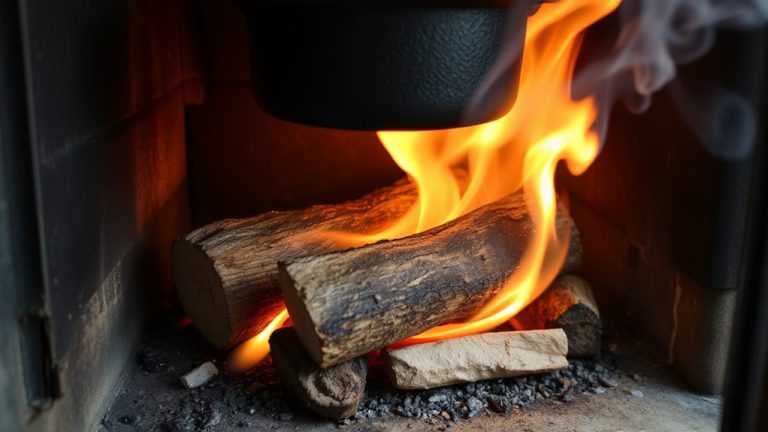
- Arrange seasoned hardwoods like oak in a crisscross stack to sustain a steady flame for 4 hours.
- Center the fire under the chimney to maximize heat transfer and maintain thermal equilibrium.
- Partially close the air vent to reduce oxygen and achieve a low, consistent simmer.
- Insulate the combustion chamber with perlite or ceramic fiber to minimize heat loss.
- Use a heavy pot with a tight-fitting lid to distribute heat evenly and retain temperature.
Start a Fire That Lasts 4 Hours
You’ll want to get this right the first time, because a well-built rocket stove fire not only heats your pot evenly but can sustain a steady simmer for up to four hours with minimal tending. Proper fire placement is critical-you’ll need to center the flame directly under the combustion chamber’s chimney to maximize heat transfer and minimize fuel waste. Build your fuel arrangement vertically: small twigs at the base, gradually layering thicker sticks above in a crisscross stack. This design promotes strong draft and consistent burn, allowing embers to fall and feed the fire from below. Avoid overcrowding, as tight bundles restrict airflow and create smoke. A well-structured arrangement sustains high efficiency, meaning less maintenance during long cooks. With correct setup, the stove maintains thermal equilibrium, making it ideal for dishes like chili that demand steady, prolonged heat. This isn’t guesswork-it’s physics working in your favor.
Pick the Best Wood for Steady Heat
The key to maintaining consistent heat on a rocket stove lies in selecting the right type of wood, and not all firewood performs equally under long-duration cooking demands. You’ll want hardwoods like oak, hickory, or maple-they’ve got high wood density, which means they burn slower and release heat more evenly. Softwoods, on the other hand, flare up quickly but fade fast, making them poor choices for a 4-hour simmer. Equally important is moisture content; wet or green wood steams instead of burning clean, wasting energy and creating excess smoke. Aim for wood that’s been seasoned at least six months, with moisture content below 20%. Dense, dry logs feed steadily into the burn chamber, sustaining the gentle, constant output you need. With the right fuel, your chili simmers low and slow, developing flavor without constant adjustments. For optimal smoke flavor and heat control, consider pairing your hardwood with best smoking wood choices that complement long cook times.
Control Airflow for a Low Simmer
Though the fuel you choose sets the foundation, it’s the airflow that fine-tunes the burn, and getting it right means the difference between a steady simmer and a flare-up that risks scorching your chili. Proper flame regulation hinges on controlling oxygen intake-too much and you’ll burn hot and fast; too little and the fire suffocates. For a low simmer, partially close the air vent to restrict airflow just enough to maintain a small, blue-tinged flame. This balance sustains efficient combustion without wasting fuel. You want consistency, not drama.
| What You Feel | What It Means |
|---|---|
| Gentle heat, steady glow | Ideal oxygen intake |
| Loud roaring, visible high flame | Excessive airflow |
| Smoke, weak flame | Poor oxygen intake |
| Sudden temperature spike | Flame regulation failed |
Insulate the Stove to Save Heat
Since maintaining consistent heat is essential for slow-cooking dishes like chili, insulating your rocket stove can make a noticeable difference in both fuel efficiency and temperature control. You’ll want to wrap the combustion chamber and feed tube with lightweight insulating materials like perlite, ceramic fiber, or even cob. This boosts heat retention, keeping temperatures stable without constant fueling. Good insulation improves thermal efficiency by reducing heat loss to the surrounding air, meaning you get more usable heat from the same amount of wood. Many users report their stoves require up to 30% less fuel when properly insulated. It also protects the stove structure over time. While some DIY setups skip this step, experienced builders agree that insulation isn’t just helpful-it’s critical for long simmers. You’ll notice better flame consistency and fewer temperature dips, which is exactly what chili needs over four hours.
Use a Pot Designed for Rocket Stoves
A well-designed pot makes all the difference when you’re cooking on a rocket stove, especially for long simmers like chili. You need one built specifically for this setup-something that balances efficiently over the combustion chamber. Pot stability is essential; a wobbly vessel risks spills and uneven cooking. Look for models with flat, reinforced bases that sit securely on the stove’s rim. Equally important is heat distribution. Pots designed for rocket stoves often have thick, conductive walls-like layered steel or cast iron-that spread heat evenly, reducing hot spots and preventing scorching. This guarantees your chili simmers gently without constant stirring. Many also feature tight-fitting lids to retain moisture and temperature. Using the right pot doesn’t just improve performance-it maximizes fuel efficiency, which is key when aiming to cook four hours without refueling. It’s a smart, practical upgrade for any outdoor cook.
On a final note
You’ve seen how proper fuel selection, airflow control, and insulation keep your rocket stove simmering efficiently. When paired with a well-designed pot, these stoves deliver sustained, low heat ideal for long cooks like chili. Though compact, they perform reliably with minimal refueling, proving excellent for off-grid or outdoor cooking. With smart setup, you achieve consistent results, blending thermal efficiency with practical design-making rocket stoves a strong, eco-conscious choice for barbecue and slow-simmer applications.