How to Layer Dry and Green Wood for Consistent Smoke and Temperature in Whole-Animal Roasts
Split your wood to boost drying and burning efficiency, then layer it smartly for steady heat. Start with dry hardwood on the bottom to ignite cleanly, add green wood on top to slow the burn, and maintain consistent smoke. Balance dry and green logs-aim for 25–30% moisture overall-to avoid spikes and dips in temperature. Keep airflow steady with spaced layers, and adjust ratios as the roast progresses; you’ll see how timing and wood prep shape flavor and control.
Notable Insights
- Split wood into quarters or halves to speed seasoning and ensure even, consistent burns.
- Start with a base layer of dry hardwood like oak for reliable ignition and strong initial heat.
- Alternate dry and green wood layers to balance temperature and sustain clean, steady smoke.
- Layer greener wood on top over drier logs to moderate burn rate and extend cooking time.
- Match wood ratios to cooking phases-dry-heavy for start and finish, equal mix for middle phase.
Split Wood for Better Burning
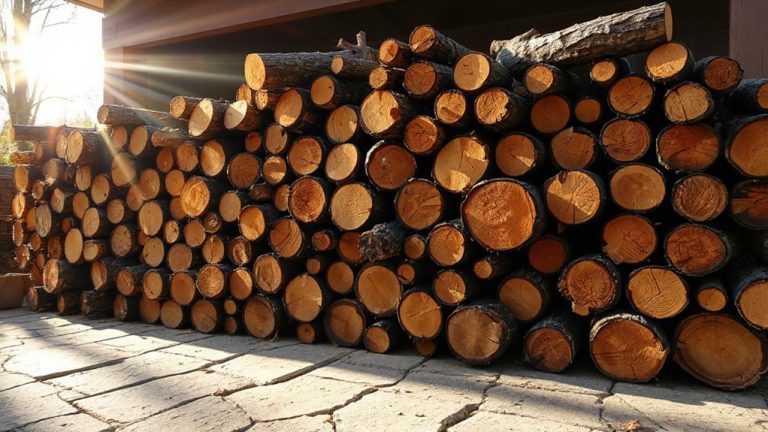
Efficiency starts with structure, and when it comes to roasting whole animals over wood, how you prepare your fuel matters as much as the cut of meat. You’ll want to split your logs-quarter or halve them-because smaller pieces expose more surface area, speeding up wood seasoning and promoting even burn rates. Unsplit logs trap moisture, slowing combustion and creating inconsistent heat. Properly split wood dries faster, especially when elevated and covered, reducing smoke bitterness and flare-ups. Fundamentally, splitting improves airflow optimization within your fire structure. Gaps between pieces let oxygen circulate, supporting clean, sustained combustion from ignition to embers. You’ll notice fewer cold spots and better temperature control across the roast zone. For large-scale cooking, where stability is key, this isn’t optional-it’s essential. Split wood simply performs better: lighting quicker, burning cleaner, and maintaining steadier output. Your roast will thank you.
Choose the Right Dry and Green Wood Mix
You’ve split your wood to boost airflow and speed up drying, but now it’s time to think about how different stages of wood dryness affect your fire’s behavior during a long roast. Matching the right wood species with appropriate moisture content guarantees stable heat and clean smoke. Too much green wood cools the fire; too much dry wood burns too fast. A balanced mix gives you control. Consider this:
| Wood Type | Moisture Content | Burn Behavior |
|---|---|---|
| Dry Oak | <15% | Hot, fast, consistent |
| Green Hickory | ~45% | Slow, smoky, cooling |
| Mixed (Dry + Green) | ~25–30% | Steady heat, rich smoke |
Aim for around 25–30% average moisture content in your stack. Dense hardwoods like oak and hickory work best. Their consistent combustion and flavor profile make them ideal candidates for blending. You’re not just fueling a fire-you’re shaping the roast’s character. For reliable results, start with best smoking wood choices that are known for balanced burn and rich flavor.
Layer Wood for Steady Smoke and Heat
Though starting with a base of dry wood helps establish a strong foundation, stacking your pile with alternating layers of dry and green hardwoods guarantees a fire that burns steadily and smokes evenly over many hours. You’ll want to prioritize wood density when choosing your hardwoods-dense woods like oak or hickory burn slower and sustain heat better, especially when layered beneath greener, higher-moisture pieces. Proper fire placement matters just as much; position the stack so airflow moves freely through the gaps, promoting even combustion without flare-ups. Place larger, drier logs at the bottom and gradually layer greener wood toward the top-this setup leverages moisture content to moderate burn speed. You’re not just building a fire, you’re engineering a heat system. Consistent smoke output and stable temperatures hinge on this strategic stacking, making wood density and fire placement critical to mastering whole-animal roasts.
Add Wood to Maintain Cooking Temperature
As the roast progresses and the hours stretch on, you’ll need to feed the fire with care to keep the temperature steady, since even the best-laid wood stack will eventually burn down and lose intensity. Adding wood isn’t just about fuel-it’s about managing wood ignition and heat retention to sustain consistent cooking conditions. Introduce dry wood first for quick ignition, then layer in green wood to moderate burn rate and prolong heat retention. Small, frequent additions beat large loads that can smother coals or spike temperatures. Pairing your fire management with the right seasoning, such as a well-balanced best dry rub for beef roast, ensures flavorful results that complement the smoky depth of whole-animal cooking.
| Wood Type | Effect on Fire |
|---|---|
| Dry hardwood | Fast ignition, immediate heat |
| Green wood | Slower burn, enhanced heat retention |
| Mixed layer | Balanced output, stable temperature |
Monitor ember glow and smoke thickness-thin blue smoke means you’re on track. Add wood proactively, not reactively, to avoid dips in performance.
Fix Flare-Ups, Smoke Gaps, and Temperature Swings
When flames suddenly leap up and sear the meat’s surface, you’re dealing with flare-ups caused by dripping fat meeting hot embers, a common issue that can char the exterior before the interior cooks through. For effective flame suppression, position thick slabs of green wood over active coals-its high moisture content cools the burn zone and limits sudden ignition. This same quality aids moisture retention in the cooking environment, preventing the meat’s surface from drying too quickly. If smoke gaps appear-thin, uneven plumes-adjust wood layers to close air pockets, ensuring consistent draft flow. Temperature swings often follow uneven fuel distribution, so nest dry hardwoods beneath greener pieces to stabilize heat output. You’ll find that this hybrid layering buffers extremes better than either wood type alone. Monitoring these variables closely keeps roasting conditions steady, which is essential for even doneness and flavor development across large cuts. A well-designed charcoal grill smoker ensures optimal airflow and fuel arrangement for maintaining consistent conditions during long cooks.
Match Wood Layers to Cooking Phases
Since whole-animal roasts unfold over many hours, you’ll want to think of your wood layers as dynamic fuel stages rather than a single setup. Proper wood aging and moisture retention directly impact which layers suit each phase. Early on, dry wood ignites easily and builds heat fast, perfect for searing. Mid-cook, blend in green wood-it burns slower, regulates temperature, and enhances smoke flavor thanks to balanced moisture retention. Toward the end, rely on well-seasoned logs with mature wood aging for clean, consistent heat.
| Cooking Phase | Wood Layer Composition |
|---|---|
| Initial | 90% dry, 10% green |
| Middle | 50% dry, 50% green |
| Final | 80% dry, 20% green (well-aged) |
This staged approach prevents thermal shock and sustains flavor, making wood selection as strategic as seasoning the meat.
On a final note
You’ve set the foundation for steady heat and clean smoke by layering dry and green wood effectively. This method sustains ideal cooking temperatures while enhancing flavor. Proper airflow, strategic wood additions, and monitoring prevent common issues. Matching layers to cooking phases improves control. When executed, the technique performs reliably across whole-animal roasts, making it a worthwhile practice for consistent, high-quality BBQ results in outdoor settings.