Rotating Technique for Evenly Browned Sausages on a Hand-Held Roasting Stick
Hold your sausage steadily on a durable metal skewer and rotate it every 30 to 45 seconds for even browning. This keeps heat exposure consistent and prevents charring from flare-ups. Start over cooler flames to cook through, then finish briefly in hotter zones. A firm, smooth stick gives better control, reducing wobble that leads to uneven results. You’ll learn how small adjustments in timing and grip can transform your campfire sausages into perfectly cooked, juicy bites.
Notable Insights
- Rotate the sausage every 30 to 45 seconds to ensure even heat exposure and consistent browning.
- Start over low flames to heat through, then briefly move to hotter zones for caramelization.
- Skewer the sausage lengthwise through the center for balanced rotation and stable handling.
- Use a metal roasting stick for better heat control and to avoid burning or splintering risks.
- Adjust rotation speed and height above the fire to prevent charring and manage flare-ups.
Choose the Best Sausage & Stick for Rotating
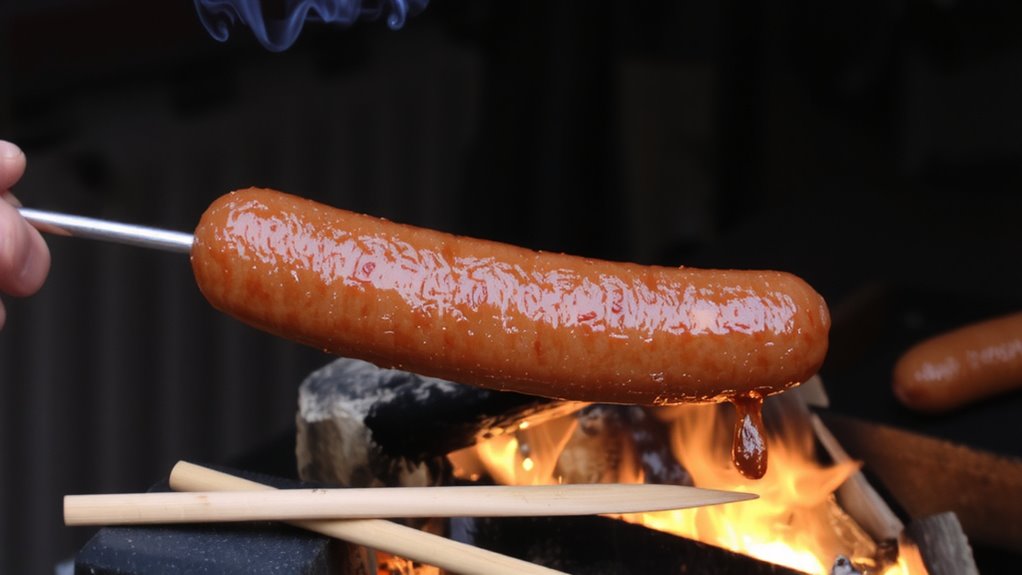
Quality starts with selection-your sausage and rotation tool matter more than you might think. You want a firm sausage texture that holds up under heat without splitting open or drying out; softer types often sag or leak fat, leading to flare-ups. Look for sausages with a fine grind and consistent casing-these brown evenly and crisp just right. When it comes to stick material, durability and heat resistance are key. Metal rods, especially stainless steel, offer superior control and don’t char like wood. They’re easier to clean and won’t impart off-flavors. Wooden sticks are traditional but can splinter or burn, especially if green or unseasoned. Choose a model with a comfortable handle and a sturdy tip for reliable rotation. Your choice directly affects cooking performance and food safety. The right combo of sausage texture and stick material sets the foundation for consistent results and minimal hassle every time you cook outdoors. For guidance on selecting top-quality options, check out the Best Link Sausage Picks available today.
Secure Sausages for Safe Campfire Rotation
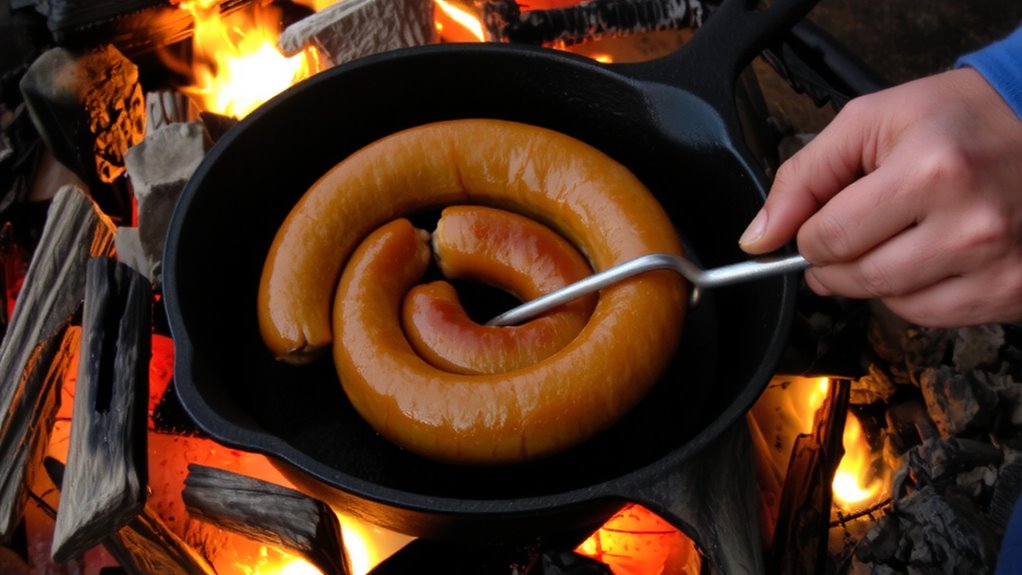
Once you’ve picked the right sausage and a reliable stick, it’s time to make sure everything stays put during cooking-because a sausage that wobbles or slips can land in the coals fast. Proper sausage balance is critical: skewer it lengthwise through the center so weight distributes evenly, reducing spin or tilt when you rotate. If the sausage hangs low on one side, it’ll catch flames unevenly and may split open. Secure it tightly, especially if using a natural wood stick, which can char and weaken. Your stick grip should be firm but not strained-opt for a smooth, splinter-free shaft that’s easy to hold without gloves. A good grip allows steady control, minimizing shakes that could knock the sausage loose. Avoid oily woods or slippery bark. The combination of solid sausage balance and reliable stick grip means safer, more consistent cooking-no last-minute surprises over the fire.
How to Rotate Sausages Evenly Over Flames
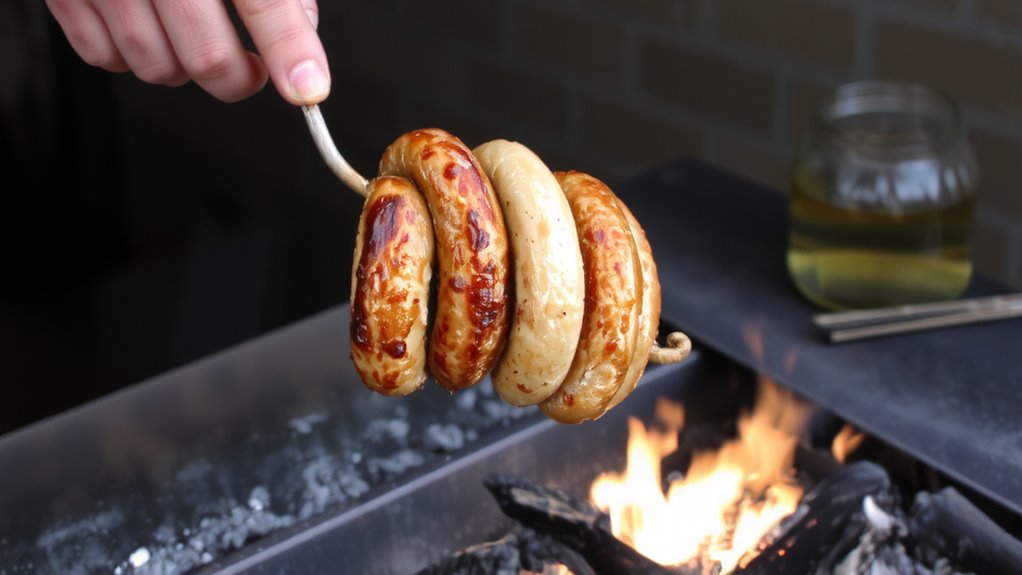
You’ll want to keep the rotation steady and deliberate, turning the sausage about every 30 to 45 seconds to expose all sides evenly to the heat. Consistent turning prevents charring and promotes uniform browning, especially when working with unpredictable flame control. Position your stick across multiple heat zones-start over lower flames to warm through, then move briefly into hotter areas for color. This method guarantees the interior cooks without splitting the casing. Uneven rotation often leads to dry spots or flare-ups, particularly if fat drips into open flame. By timing your turns and adjusting placement, you maintain better temperature balance. Flame control isn’t just about intensity-it’s how you use available heat zones to your advantage. A well-rotated sausage shows even grill marks and a crisp, golden-brown exterior. With practice, you’ll intuitively match rotation speed to fire behavior, achieving reliable results across different campfires.
How to Tell When Campfire Sausages Are Done?
Knowing when your sausages have finished cooking over a campfire isn’t just about timing-it’s about reading cues from the meat and the fire itself. You’ll want to rely on both internal temperature and visual cues to get it right. For safety, sausages should reach an internal temperature of 160°F-use a quick-read thermometer to check without overhandling. If you don’t have one, look for firmness when gently pressed and clear juices rather than pink or red. Visual cues like even browning and a slight crispness on the skin mean rotation worked well. Avoid guessing based on color alone, as charring can hide undercooked centers. While internal temperature is the most accurate method, pairing it with visual cues guarantees reliability when cooking in unpredictable outdoor conditions. Both methods together give you confidence your sausages are safely and evenly done. A reliable best thermometers choice ensures accurate readings even in fluctuating campfire heat.
Fixing Burnt or Undercooked Rotated Sausages
Though uneven cooking can happen even with careful rotation, you can still salvage sausages that are either burnt on the outside or undercooked within by adjusting your approach immediately. If the casing is blackened but the center remains raw, pull back from the direct flame-burnt exteriors often result from poor flame control. Hold the sausage higher above the coals to lower the heat exposure, letting residual warmth finish the inside without charring further. For undercooked pieces, a timing adjustment is key: rotate more slowly and increase exposure duration, ensuring heat penetrates evenly. Avoid piercing the skin, which releases juices and dries out the meat. You’ll find consistent results come not just from turning, but from matching your technique to fire behavior. Smart flame control and precise timing adjustment turn near-misses into well-cooked meals, proving technique matters as much as rotation.
How Rotation Prevents Uneven Campfire Browning
Why do some sausages brown evenly over the campfire while others end up striped with pale and charred patches? The answer lies in consistent rotation. When you rotate your sausage regularly, you guarantee more uniform heat distribution around its surface. Without rotation, one side faces intense direct flame too long, charring while others stay cold. But turning it steadily balances exposure, letting heat sink in evenly. Rotation also provides natural flame shielding-each turn moves the sausage away from flare-ups, reducing hotspots. You’re not just cooking; you’re managing thermal dynamics. Irregular turning disrupts this control, leading to uneven browning. Consistent motion mimics a rotisserie, leveraging both radiant heat and conducted warmth from the stick. It’s not luck-it’s technique. Skilled campfire cooks rotate deliberately, adjusting for fire intensity and sausage thickness. With attention to timing and angle, you harness heat distribution and flame shielding for a perfectly browned result every time. A reliable campfire grill can further stabilize your roasting setup and improve control during rotation.
Keep Sausages Juicy: 3 Easy Rotating Hacks
You’ve seen how steady rotation evens out browning by balancing heat exposure and shielding against flare-ups, but getting that golden crust is only half the battle-keeping the inside juicy is what truly separates good sausages from great ones. First, rotate slowly-about every 30 seconds-to let heat penetrate evenly without forcing moisture out. Second, angle the sausage slightly so one end isn’t constantly facing direct flame, reducing the risk of dry spots. Third, pair your rotating rhythm with smart marinating techniques; acidic components like vinegar or citrus in marinades tenderize meat and help retain juices during cooking. Don’t skip flavor infusions-herbs, garlic, or wine-based marinades don’t just add taste but also create a protective layer that slows moisture loss. Together, these hacks guarantee a succulent bite every time. Proper technique combined with preparation maximizes both texture and taste over open flame.
On a final note
Rotating sausages on a hand-held stick gives even browning and better heat exposure than static grilling. You control the pace and angle, which minimizes flare-ups and charring. Proper rotation locks in juices, yielding a crisp exterior and tender interior. With the right sausage thickness and steady turning, results surpass standard campfire methods. It’s simple, effective, and relies on technique over gear. Mastery comes through attention-watch the color, feel the heat, adjust as needed.