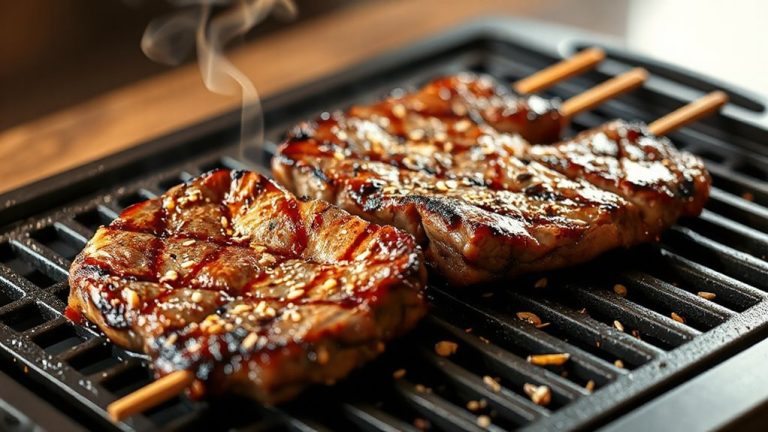
How to Light and Sustain a Konro Grill Fire Without Lighter Fluid
Start by lighting binchotan charcoal in a chimney starter with crumpled newspaper-no lighter fluid needed. Once the coals glow red and ash over, arrange them in a tight, single layer to guarantee even radiant heat. Use the bottom air vents to fine-tune temperature, opening or closing them as needed. Rotate food to manage flare-ups and maintain stability. This method gives clean, consistent heat ideal for delicate searing and extended grilling, revealing how precision and patience elevate your results.
Notable Insights
- Use a chimney starter filled with lump charcoal and light crumpled newspaper underneath for a clean, fluid-free ignition.
- Choose binchotan charcoal for its high heat, long burn time, and minimal smoke during cooking.
- Arrange fully lit binchotan in a tight, single layer with no gaps for even heat distribution.
- Control temperature by adjusting the grill’s bottom air vents-open to increase heat, close to lower it.
- Prevent flare-ups by rotating food to reduce grease drips and briefly closing vents if flames arise.
Light Your Konro Without Lighter Fluid
How do you get a konro grill going without reaching for lighter fluid? You start with proper charcoal ignition using a chimney starter-fill it with lump charcoal, place crumpled newspaper underneath, and light it. Within 15 to 20 minutes, the coals glow red and ash over, ready to pour into your grill. This method avoids chemical flavors and guarantees even, reliable fire maintenance. Unlike lighter fluid, which can flare unpredictably and taint food, natural ignition preserves taste and control. Position the coals in a single layer for consistent heat distribution, ideal for searing meats or delicate vegetables. Tending the fire means resisting constant poking; instead, adjust airflow via the konro’s vents. Proper fire maintenance lets you hold steady temperatures longer, enhancing flavor and cooking precision. This approach reflects a commitment to craft, favoring technique over shortcuts, and makes every grilling session more predictable and satisfying. For best results, choose high-quality lump charcoal known for clean burns and minimal ash.
Use Binchotan for Clean, Long-Lasting Heat
You’ve lit your konro cleanly with a chimney starter, avoiding the chemical aftertaste of lighter fluid while guaranteeing steady ignition-now consider upgrading the fuel itself. Binchotan, a premium Japanese charcoal, delivers clean, long-lasting heat ideal for delicate proteins and precise searing. Its dense structure supports even burning, maintaining consistent temperatures for hours with minimal flare-ups. Unlike softer charcoals that burn hot and fast, binchotan radiates steady infrared heat, enhancing caramelization without charring. Plus, it produces little smoke once lit, preserving the natural flavors of your food. Look for varieties with sustainable sourcing, often made from oak or hardwoods managed in renewable forests-this guarantees ecological responsibility without sacrificing performance. Though pricier, its efficiency and longevity make binchotan cost-effective over time. Properly stored, it stays dry and ready for repeated use, making it a smart upgrade for serious outdoor cooks who value control, purity, and craftsmanship in every grilling session. For top-quality options, check out expert-reviewed Best Japanese Charcoal Picks to ensure you’re getting authentic, high-performance binchotan.
Set Up a Single-Layer Coal Layout
Once the binchotan is fully lit and glowing, place the coals in a tight, single layer across the grill’s firebox, leaving no gaps between pieces-this layout maximizes even heat distribution while minimizing hot spots that can scorch delicate ingredients. Your coal placement directly affects cooking performance, and a uniform bed guarantees consistent temperatures across the grilling surface. Unlike irregular or stacked arrangements, a single layer promotes efficient radiant heat, ideal for searing meats or gently cooking fish without flare-ups. This method leverages the binchotan’s natural properties, sustaining a stable temperature with minimal adjustment. Proper heat distribution means food cooks evenly, reducing the need for constant flipping or repositioning. It’s a straightforward yet precise technique that reflects the konro grill’s design philosophy: control through simplicity. For best results, use tongs to align each piece snugly, guaranteeing full coverage without overlapping. This setup works efficiently for quick grills or extended sessions, maintaining reliability throughout. A well-seasoned cut of prime rib benefits greatly from this consistent heat, especially when seasoned with a carefully balanced prime rib rub.
Control Heat With Air Vents and Position
With your binchotan arranged in a tight, single-layer bed, the next step is managing the heat you’ve created, and that’s where the grill’s air vents and ingredient placement come into play. Airflow management is key-open the bottom vents to increase combustion and close them slightly to lower the temperature. You’ll notice how responsive the fire is; even small vent adjustments affect the heat within seconds. Proper coal positioning guarantees even radiation, so rotate or shift ingredients rather than disturbing the coals. Keep high-heat items directly above the densest part of the bed, while using the grill’s edges for gentle warming. This dual control-via airflow and placement-gives you precision without needing extra fuel. Mastering both means consistent results, whether searing skewers or gently toasting vegetables, making your konro not just efficient but remarkably controllable with practice.
Keep the Fire Stable Without Flare-Ups
Though binchotan burns cleaner than most charcoal, flare-ups can still disrupt your cook if grease drips directly onto the glowing coals. You’ve got to stay on top of coal monitoring, keeping an eye on both temperature and positioning. Rotate meats to minimize direct fat fallout, and when flames do rise, don’t panic-close the air vents briefly to starve the fire. That’s flame management in action: controlled oxygen reduction beats hasty spraying. Elevate fatty cuts slightly or use a drip pan to prevent sudden ignition. Binchotan’s low smoke output helps, but it’s not flare-proof. Consistent heat depends on your attentiveness, not just the fuel. Letting the grill do the work only works if you’re proactive. A stable fire means fewer surprises and better searing. With careful setup and steady oversight, you’ll maintain ideal conditions from first spark to final plate.
On a final note
You’ve now mastered lighting and sustaining your konro without lighter fluid. Using binchotan gives cleaner, hotter heat that lasts longer than regular charcoal. A single-layer coal setup guarantees even cooking, while air vents and food positioning help regulate temperature. Avoid flare-ups by controlling proximity and monitoring burn. This method enhances flavor, preserves ingredient integrity, and reflects the konro’s precision-ideal for delicate proteins and vegetables alike. Proper technique turns simple grilling into consistent, high-quality results.