Achieving Rich Umami Flavors in Smoked Meats Using Traditional Techniques Combined With Modern Innovations
You access deeper umami by pairing dry-aging and fermentation with precise, modern smoking. Dry-aging concentrates glutamates; koji or enzyme-based marinades boost savory depth faster than acid alone. Use hickory or oak for smoke that enhances natural umami, and keep temps steady at 225°F–250°F for clean, blue smoke. Low-and-slow breakdown tough fibers over hours, while digital probes guarantee consistency. Combining these methods builds layers of savoriness you can build on further.
Notable Insights
- Combine dry-aging and fermentation to concentrate flavor and boost glutamate through natural protein breakdown.
- Pair hardwoods like hickory and oak with meat to enhance umami via smoke chemistry and glutamate synergy.
- Use low-and-slow smoking at 225°F–250°F to gradually release glutamates and develop deep, complex savoriness.
- Maintain precise temperature control for clean, blue smoke that optimizes flavor without harsh or bitter notes.
- Apply enzyme-based marinades and hybrid methods like sous vide to accelerate umami development and ensure even flavor infusion.
How Umami Enhances Smoked Meat Flavor
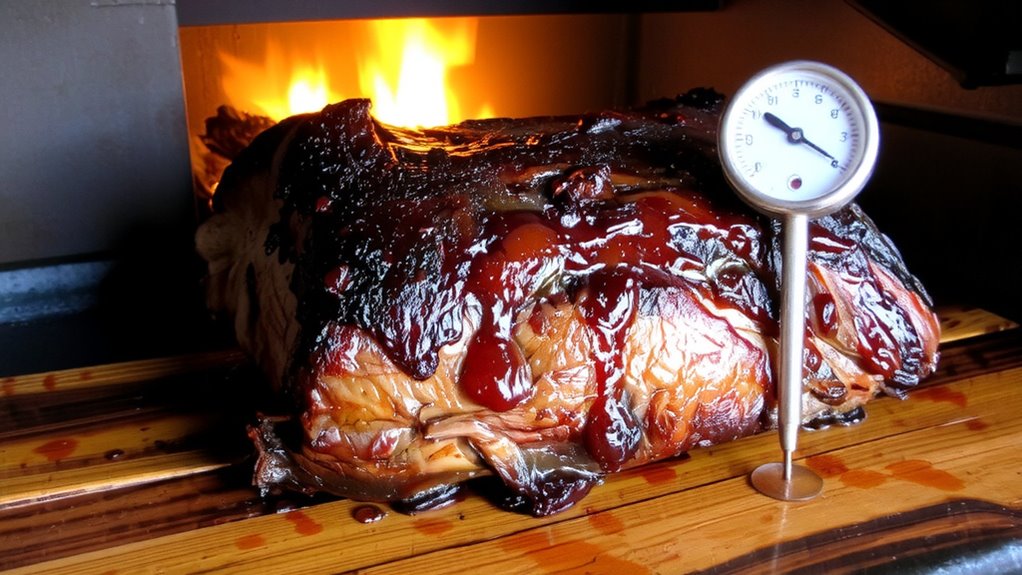
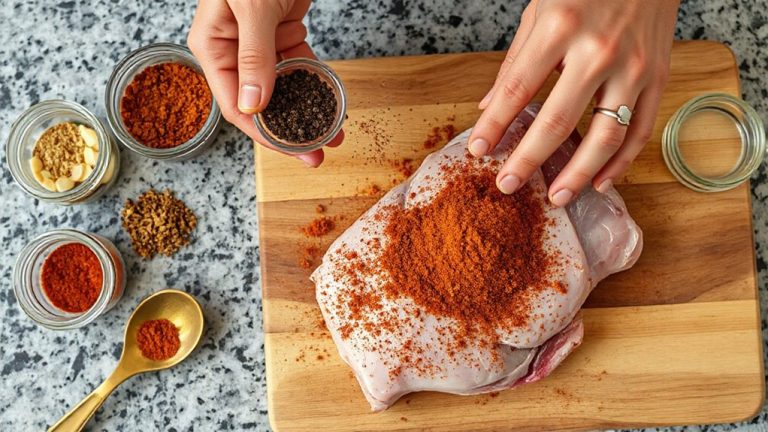
Umami, that savory depth often described as the fifth taste, is your secret weapon when it comes to building rich, satisfying flavor in smoked meats. You’ll notice how fermentation techniques slowly develop amino acids like glutamate, intensifying the meat’s natural savoriness over time. These microbial processes don’t just preserve-they transform flavor at a molecular level. Meanwhile, aging effects, especially in dry-aging, concentrate taste by reducing moisture and allowing enzymes to break down proteins. Together, they prime the meat to respond better to smoke, deepening complexity. When you apply this knowledge, your brisket or rack of ribs gains a layered taste profile-less one-dimensional, more resonant. It’s not just about smoke; it’s about preparing the meat so umami can shine. You’re not masking, you’re enhancing. Smart use of fermentation and controlled aging doesn’t replace tradition-it refines it. That depth? It’s intentional, not accidental. Incorporating best umami seasonings can further elevate the savory richness achieved through these methods.
Choose Wood That Boosts Natural Glutamates
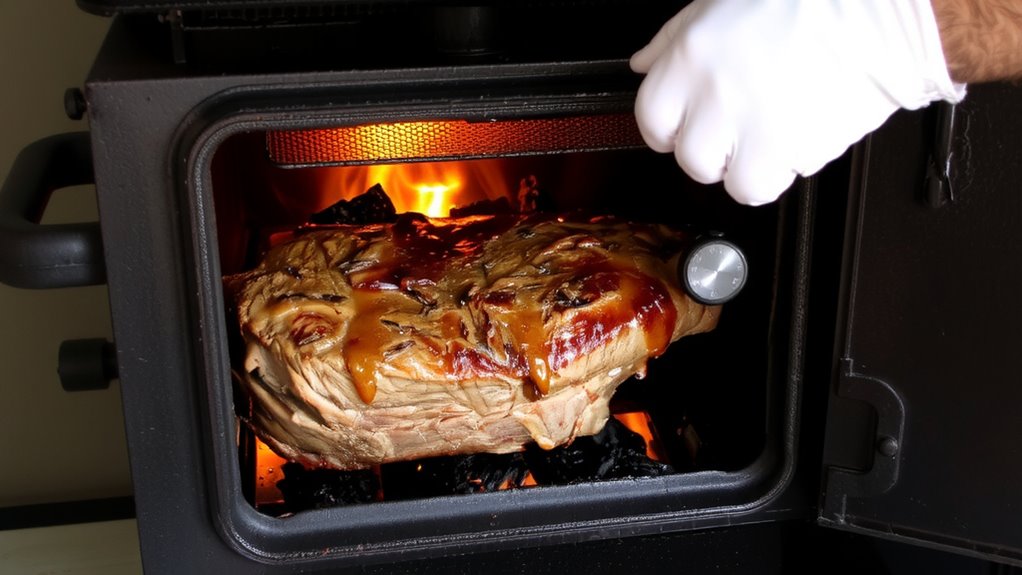
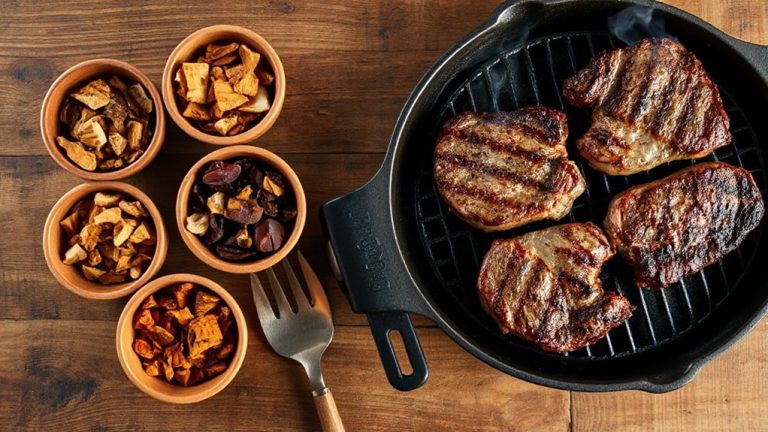
You’ve already tapped into umami’s potential by leveraging fermentation and aging to build deeper flavor, but now it’s time to think about how your choice of wood influences those hard-earned glutamates. Wood pairing isn’t just about aroma-it directly affects smoke chemistry, altering how glutamates develop and bind in meat. Hardwoods like hickory and oak release phenolic compounds that stabilize savory notes, while fruitwoods such as cherry subtly enhance sweetness without masking depth. Choosing the right best smoking wood can make a significant difference in maximizing the umami profile of your smoked meats. Here’s how select woods influence umami:
| Wood Type | Glutamate Impact |
|---|---|
| Hickory | High (bold, persistent) |
| Oak | Moderate-High (balanced) |
| Cherry | Moderate (fruity depth) |
| Pecan | Moderate (nutty enhancement) |
Choose wisely-each wood alters smoke chemistry differently, either amplifying or dulling the umami you’ve worked so hard to develop. Proper wood pairing guarantees maximum savory payoff.
Use Low-And-Slow Smoking for Deeper Umami
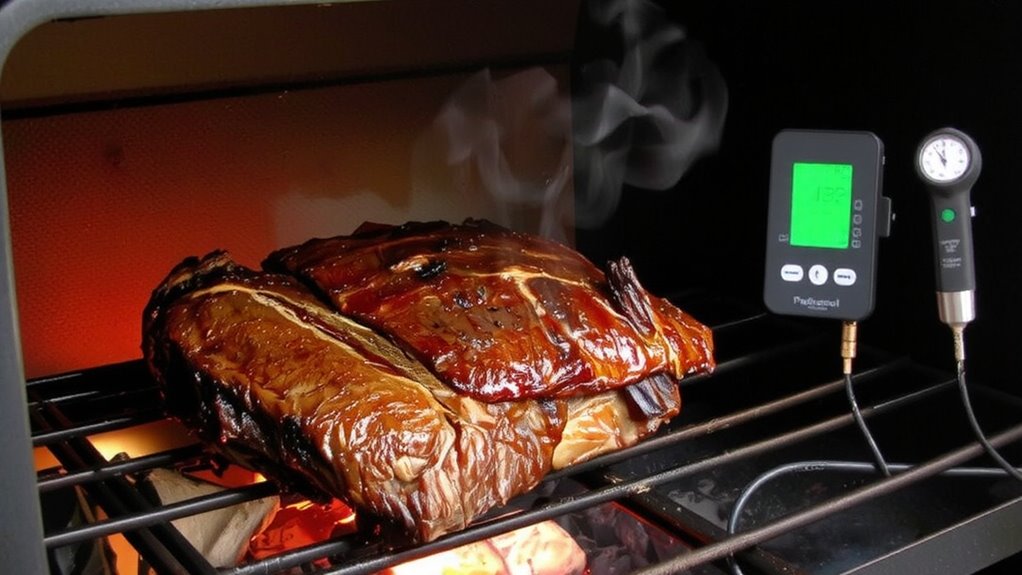
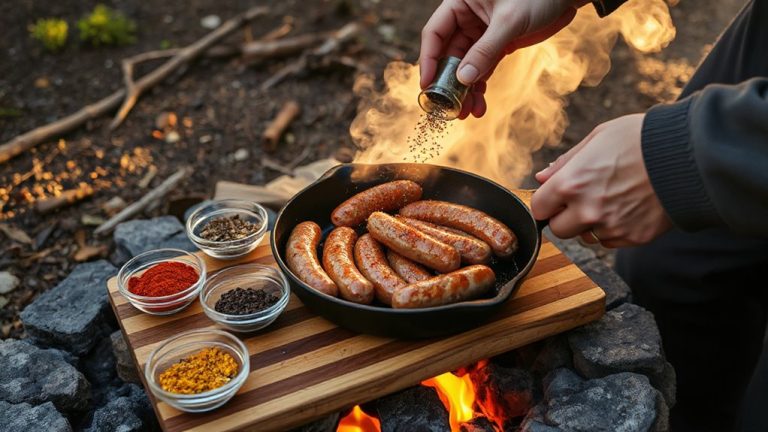
While high heat might sear in juices, it’s the low-and-slow smoking method that truly activates the depth of umami in smoked meats. You’re not just cooking-you’re transforming proteins through prolonged exposure to gentle heat and consistent smoke. This slow breakdown of muscle fibers and connective tissue releases glutamates naturally, amplifying savory richness. Your wood selection plays a critical role here; hardwoods like hickory or oak deliver clean, steady smoke that complements the meat’s chemistry without overpowering it. Maintaining moderate smoke density guarantees flavorful penetration without bitterness-too thin, and impact fades; too thick, and acrid notes ruin balance. You’ll notice the best results when smoke gently flows, guaranteeing a visible but faint cloud around the meat. Combined, these factors create a deep, layered umami that high-heat methods simply can’t replicate. Patience rewards you with complexity and depth worth savoring. For beginners, choosing the right equipment is essential, and investing in a best beginner offset smoker can make mastering this technique more accessible and consistent.
Control Temperature for Consistent Smoke Flavor
Keeping your smoker within a narrow temperature range isn’t just about even cooking-it’s the foundation for a stable smoke profile that enhances flavor without tipping into harshness. When temps fluctuate, you risk inconsistent combustion, which disrupts smoke density and introduces bitter notes. You want clean, thin blue smoke, not thick white plumes, and steady heat helps maintain that ideal. Modern digital controllers and probe thermometers make it easier than ever to hold that sweet spot, usually between 225°F and 250°F. This precision guarantees flavor consistency from edge to center, bite after bite. Traditional offset smokers demand more attention, but with practice, they offer exceptional control. Avoid opening the lid too often-every peek drops the internal temp and disturbs smoke flow. Stable heat means stable chemistry, letting wood pyrolyze evenly and deliver rich, rounded umami.
Boost Savory Depth With Enzyme-Based Marinades
Because certain enzymes break down proteins more efficiently than salt or acid alone, marinating tough cuts with enzyme-rich ingredients can substantially deepen savory complexity in smoked meats. You’re already familiar with basic marinades, but incorporating sources like pineapple, papaya, or fermented koji brings fermentation activation into play, initiating early protein breakdown that tenderizes and enriches flavor at a molecular level. These enzymes target muscle fibers and connective tissues, releasing amino acids-especially glutamate-that elevate umami. Unlike acidic marinades that can toughen meat over time, enzymatic action works more evenly, especially in dense cuts like brisket or shoulder. However, over-marinating risks mushy texture, so timing matters. For best results, marinate 4–12 hours depending on the meat. When you combine precise enzyme use with smoking, you’re not just adding flavor-you’re building depth through controlled biochemistry, making each bite more savory and satisfying without overpowering the smoke balance.
Combine Traditional Smoke Methods With Modern Science
When you blend time-tested smoking traditions with insights from modern food science, the results aren’t just more predictable-they’re more flavorful. You can now enhance umami through controlled variables like temperature, humidity, and exposure time. Techniques such as sous vide infusion allow you to pre-treat meats with savory compounds before smoking, ensuring deep flavor penetration. Pair that with fermentation aging to naturally build glutamates and nucleotides-your umami foundation-prior to smoke exposure. This synergy refines texture and taste without sacrificing authenticity.
| Method | Flavor Impact | Best Used For |
|---|---|---|
| Cold smoking | Mild, aromatic | Fish, cheeses |
| Hot smoking | Robust, cooked | Brisket, sausages |
| Sous vide infusion | Deep, concentrated | Steaks, game birds |
| Fermentation aging | Savory, complex | Cured meats, charcuterie |
| Hybrid smoking | Balanced, layered | Pork shoulder, ribs |
On a final note
You get richer umami in smoked meats by blending time-tested methods with smart innovations. Choosing glutamate-friendly woods like hickory or oak, maintaining low-and-slow temps around 225°F, and using enzyme-rich marinades deepen savory complexity. Modern tools help control smoke density and temperature swings, enhancing consistency. Traditional smoking builds flavor foundation, while science-backed prep maximizes glutamate release. Together, they deliver a more intense, satisfying umami punch in every bite.