Pan-Frying Catfish Fillets in Smoked Bacon Fat Within a Well-Seasoned Skillet
You’ll get deeper flavor and better searing by pan-frying catfish fillets in smoked bacon fat instead of oil. The fat’s high smoke point and viscosity guarantee crisp browning without sticking, especially in a well-seasoned skillet. Choose fresh, pearly fillets, dry them well, and cook over medium-high heat for about three minutes per side. Baste with hot fat to boost crust development and juiciness. That smoky richness doesn’t just coat the surface-it transforms the whole bite, and there’s more to how it all works.
Notable Insights
- Use smoked bacon fat for superior flavor and crisp searing due to its high smoke point and rich, smoky notes.
- Select fresh, pearly catfish fillets from clean freshwater sources and remove skin to prevent curling.
- Pat fillets dry thoroughly to ensure a crisp sear and prevent steaming in the hot skillet.
- Preheat a well-seasoned skillet slowly to achieve even heat distribution and prevent sticking.
- Baste fillets with hot bacon fat during cooking to enhance crust formation and retain moisture.
Why Smoked Bacon Fat Beats Oil for Catfish
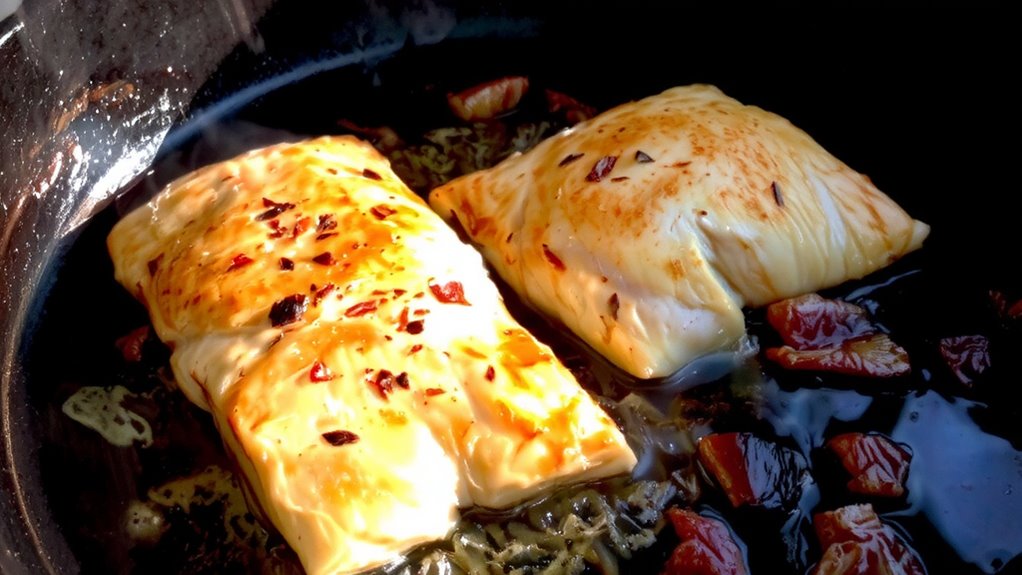
While most folks reach for vegetable or canola oil when pan-frying catfish, you’ll find smoked bacon fat delivers a richer, more nuanced flavor that oil simply can’t match. The smoky depth it imparts offers serious flavor enhancement, complementing the fish’s natural sweetness without overpowering it. Unlike neutral oils, bacon fat carries complex notes from cured pork and wood smoke, elevating each bite. You’ll also notice a distinct texture improvement-the fat’s high smoke point and viscous nature promote even browning, creating a crisp, golden crust that stays intact during flipping. It adheres better to the fillet surface than liquid oils, reducing splatter and ensuring consistent searing. In practical tests, catfish fried in smoked bacon fat retained more moisture inside while developing a more robust exterior. For outdoor cooks seeking depth and reliability, it’s a superior choice-efficient, flavorful, and ideal for high-heat skillet work over open flames or griddles.
Choosing and Drying the Best Catfish Fillets
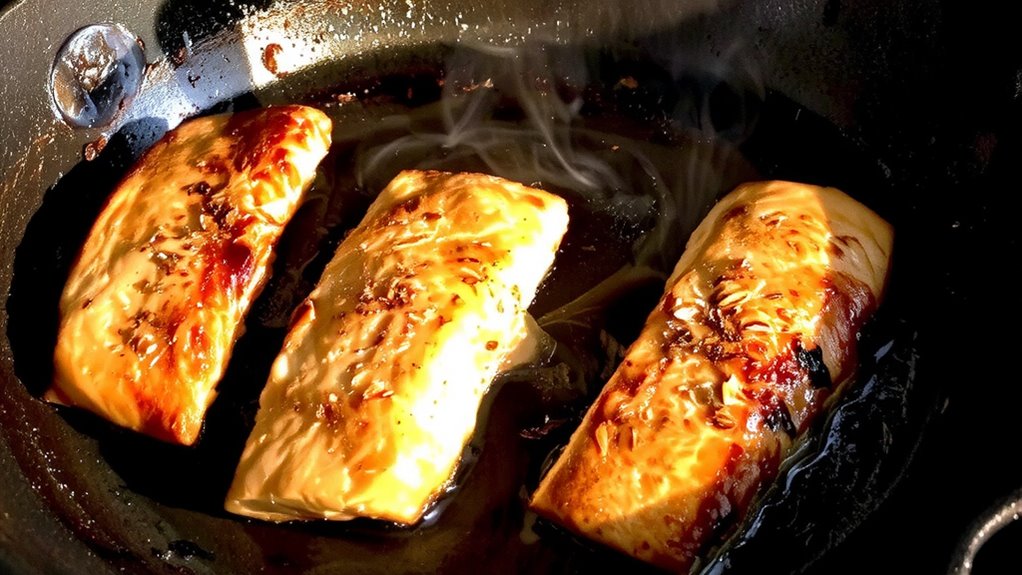
A good fillet starts the moment you set eyes on it-look for catfish that’s pearly, firm, and free of gaping or grayish tints, which signal age or poor handling. Freshwater sourcing matters: catfish raised in clean, flowing water tend to have a milder taste and better texture than those from stagnant systems. Always check the label or ask your supplier. Once you’ve got your fillets, skin removal is essential-catfish skin shrinks unevenly when heated, causing curling and uneven cooking. Peel it off cleanly; it makes a noticeable difference. Pat the fillets dry thoroughly with paper towels. Surface moisture is the enemy of browning, especially when working with a hot skillet and smoked bacon fat. A dry surface guarantees a crisp sear, not a steam. Proper prep here sets the stage for superior results-texture, flavor, and appearance all hinge on these early choices.
Skillet Prep for Non-Stick, Flavorful Results
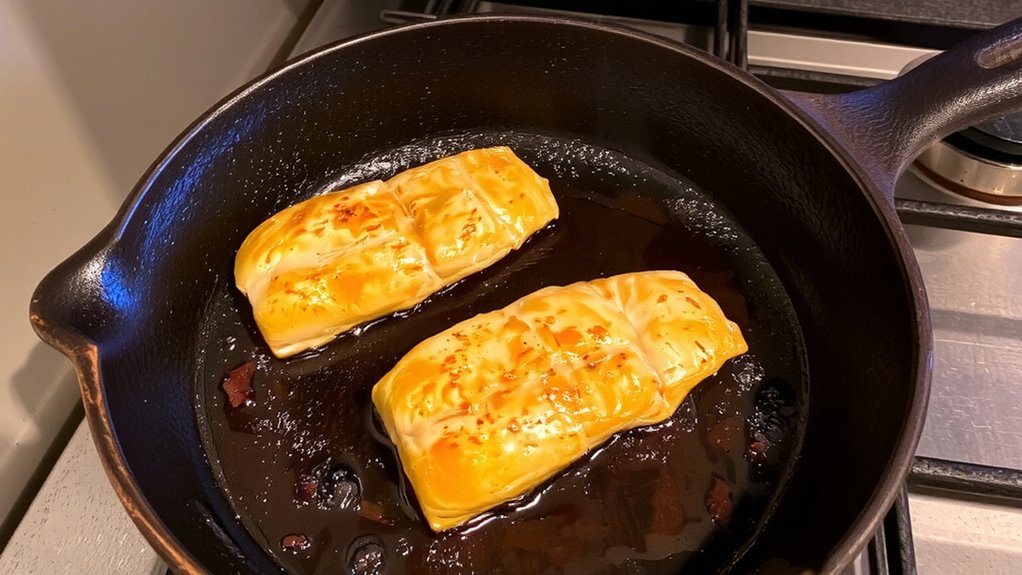
You’ve picked fresh, firm fillets and patted them dry-now it’s time to get your skillet ready, because how you prep your pan directly shapes the sear, crust, and overall flavor of your catfish. Proper heat control starts with a cold skillet; ramp up slowly to avoid sticking and guarantee even rendering. A well-seasoned surface isn’t just about non-stick performance-it’s flavor memory. If your skillet looks dull or food sticks, it’s time for seasoning renewal. Use a high-smoke-point oil and a thin, even layer, baked onto the metal through controlled heating. Below is what your ideal pre-fry skillet condition should look like:
| What to Check | Ideal State |
|---|---|
| Surface Sheen | Glossy, not sticky |
| Color | Deep, even blackening |
| Touch (cooled) | Smooth, not greasy |
| Smoke Point Reached | Light wisps, not raging |
| Aroma | Toasted oil, not burnt |
This foundation guarantees success when the fillets meet fat.
Pan-Frying Catfish in Smoked Bacon Fat Step by Step
Frying catfish in smoked bacon fat isn’t just a cooking method-it’s a flavor upgrade, plain and simple. You’re leveraging flavor chemistry by introducing rich, savory notes from the fat that cling to the catfish anatomy-especially along the tender, lean fillets where texture meets taste. Heat your well-seasoned skillet over medium-high, then add a tablespoon of smoked bacon fat, letting it shimmer but not smoke. Lay the fillets gently, skin-side down if applicable, and don’t crowd the pan-this guarantees even sear development. After about three minutes, flip once; premature movement risks sticking and disrupts crust formation. The bacon fat enhances Maillard reactions, deepening color and complexity. You’ll notice the fillets firm up evenly, a sign of proper heat transfer and internal doneness. This method outperforms oil in taste and sear, making it ideal for outdoor cooking where flavor intensity matters. For even better results when searing, consider using a best sauté pan that ensures consistent heat distribution and durability.
Basting and Finishing for Smoky, Crispy Perfection
While the sear develops, basting the fillets midway through cooking guarantees a deeper layer of flavor and a crispier exterior that holds up well in outdoor settings. Use a spoon to gently drizzle hot bacon fat over the top of each fillet-this boosts the smoky aroma and helps form an even, golden crust without flipping too soon. The fats penetrate the surface, enhancing browning and reducing sticking, especially in seasoned skillets exposed to fluctuating campfire heat. For best results, maintain a steady 375°F. Here’s how key elements contribute:
| Factor | Impact |
|---|---|
| Basting frequency | Assures even crisping |
| Smoke point of bacon fat | Prevents burning |
| Skillet seasoning | Enhances non-stick performance |
| Outdoor heat control | Influences crust formation |
| Resting after cooking | Locks in juices and crispness |
Let the fillets rest briefly-your patience rewards you with smoky aroma and golden crust on every bite.
On a final note
You’ve got a crisp, smoky crust that oil alone can’t deliver, thanks to the bacon fat’s high smoke point and deep flavor. The well-seasoned skillet prevents sticking while enhancing browning, and the catfish retains moisture without sacrificing texture. This method outperforms conventional frying, merging practicality with rich, savory results ideal for backyard cooking. Minimal cleanup and maximum taste make it a reliable go-to for grilled or pan-seared seafood.