Creating a Smoky Chile Chipotle and Pineapple Glaze for Pork
You’ll get the best smoky chipotle-pineapple glaze by using canned pineapple juice-it won’t break down the meat like fresh juice does. Combine it with minced chipotles, adobo sauce, brown sugar, cumin, cocoa powder, and tomato paste, then simmer until thick and syrupy. Apply it in the last 5 minutes of grilling or searing to avoid burning. Use thick pork chops, sear over high heat, and let them rest before slicing. You’ll find even better results with the full technique, including brining and pairing suggestions that elevate the whole dish.
Notable Insights
- Use canned pineapple juice to avoid bromelain, which can soften pork texture during cooking.
- Simmer canned juice with chipotle peppers, adobo sauce, brown sugar, cumin, cocoa powder, and tomato paste until syrupy.
- Apply the glaze in the last 5–7 minutes of cooking to prevent burning from its sugar content.
- Maintain grill or pan heat between 350°F–400°F for ideal glaze caramelization without charring.
- Use thick, boneless or bone-in pork chops and glaze just before reaching 145°F internal temperature.
How to Make Smoky Chipotle-Pineapple Glaze
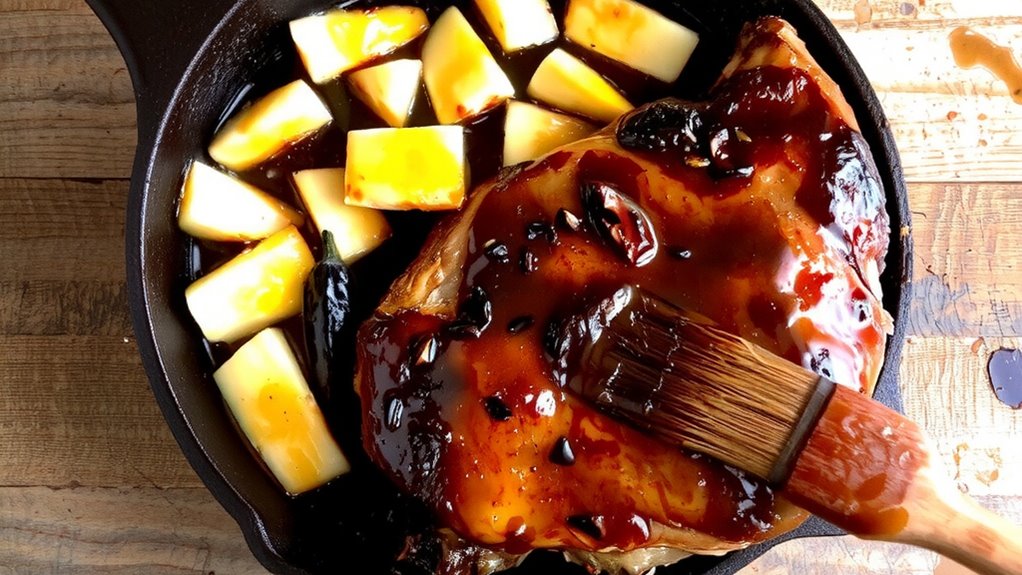
While you can start with fresh pineapple, using canned juice is actually your best bet for building a stable, flavorful glaze-since the heat treatment during canning deactivates bromelain, the enzyme in raw pineapple that breaks down proteins and risks leaving your pork texture unpleasantly soft. You’ll combine ½ cup canned juice with 2 minced chipotle peppers in adobo, 1 tablespoon adobo sauce, brown sugar, and cumin. For richer depth, stir in cocoa powder and tomato paste before adding liquids. Simmer over medium heat 8–10 minutes until the chipotle pineapple blend reduces by half, turning syrupy enough to coat the back of a spoon. This reduction guarantees a concentrated, smoky-sweet profile that clings well during grilling. The adobo sauce adds tang and heat, balancing the glaze’s sweetness. Applied in the final minutes, just 1–2 tablespoons per chop delivers bold flavor without overpowering.
Best Pork Chops for Glazing
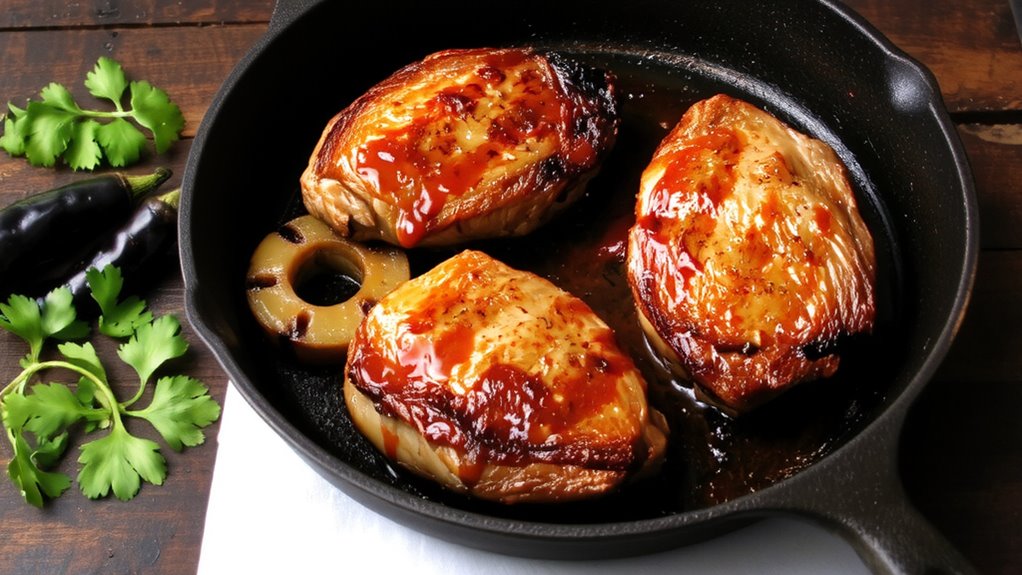
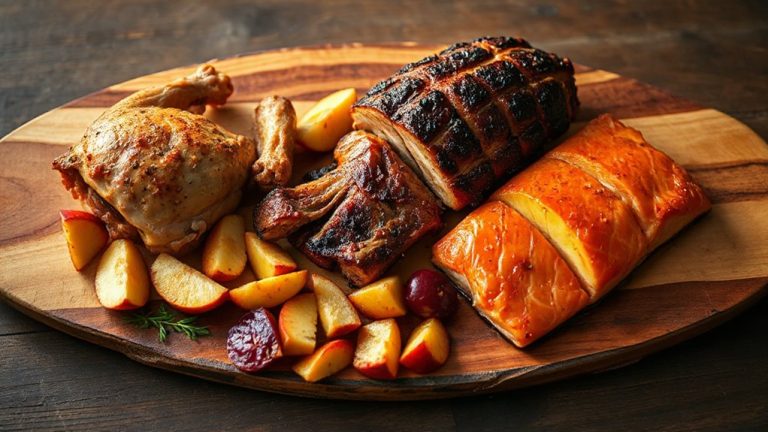
You’ll get the best results with boneless pork chops that are at least 3/4 inch thick-they sear nicely and hold up well during glazing without drying out too quickly. These cuts handle high heat well, giving the smoky chipotle-pineapple glaze time to caramelize while the pork chops stay tender. Though boneless, they benefit from a quick brine (30 minutes to 2 hours in salted water) to lock in moisture. Bone-in pork chops are excellent too-the bone enhances flavor and heat distribution, helping the glaze penetrate deeper. Either way, thickness matters: it allows precise control over the internal temperature, which should reach 145°F for safe, juicy results. Overcooking ruins texture, especially with leaner cuts. Always use a meat thermometer to monitor doneness and preserve glaze integrity. The right pork chops guarantee bold flavor, ideal tenderness, and a professional-quality finish every time. Best Pork Cuts for BBQ include shoulder and loin, which offer ideal marbling and texture for flavorful, moist results when grilled.
Grill or Pan-Sear Glazed Pork Chops
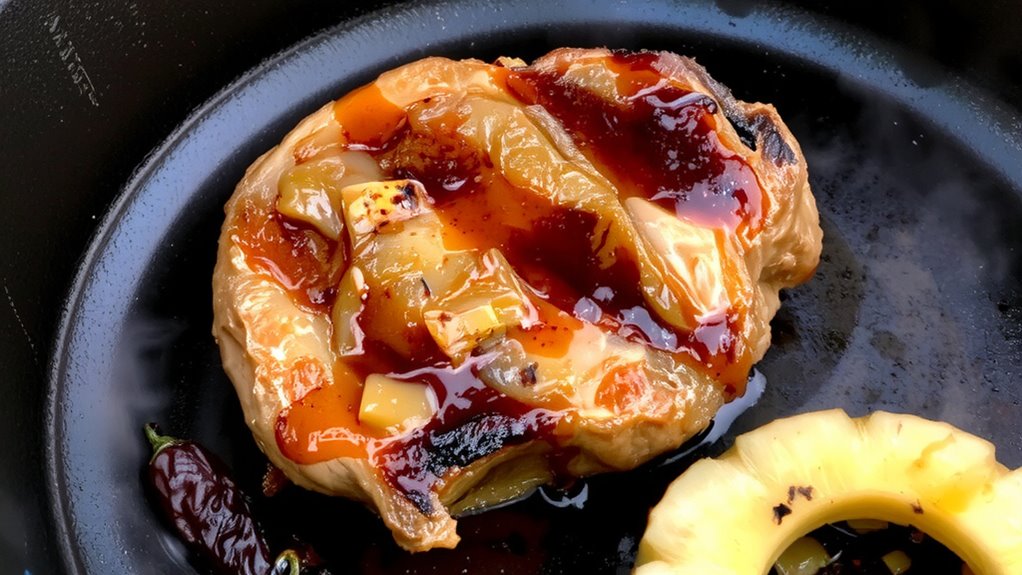
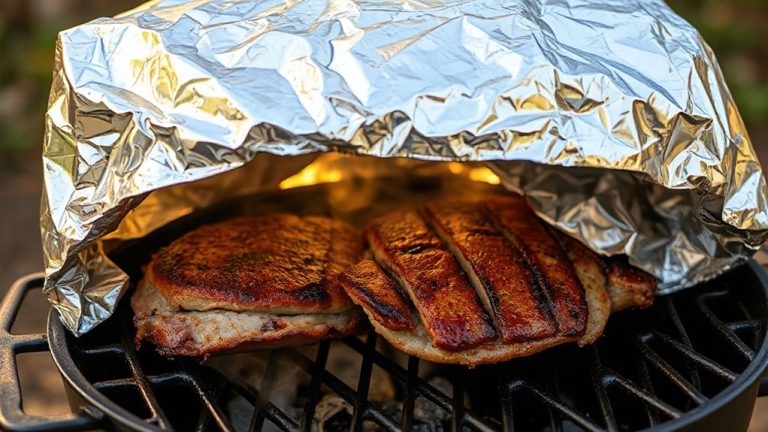
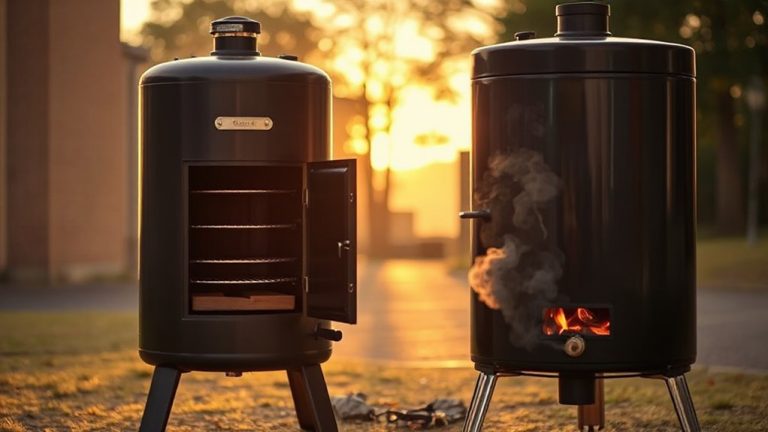
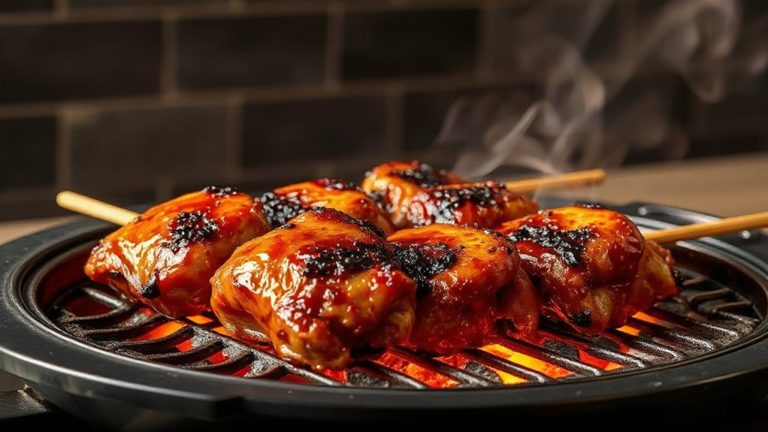
When cooking glazed pork chops, you’re balancing flavor development with heat management, and both grilling and pan-searing offer distinct advantages. On the grill, use a two-zone setup at 400°F to 450°F-sear over direct heat for 3 minutes per side, then move to indirect heat to finish. This method enhances smokiness, especially when your glaze features chipotle peppers and sweet pineapple. For pan-searing, heat 2 tablespoons of olive oil in a skillet over medium-high heat and cook ¾-inch-thick chops 4–7 minutes per side until they reach 145°F internally. The controlled environment of a skillet guarantees even browning with less risk of flare-ups. Apply the glaze during the last 5 minutes to preserve its bright, tangy-sweet complexity. Let the chops rest 5–15 minutes before serving for maximum juiciness. Using a charcoal grill smoker can deepen the smoky flavor profile when grilling outdoors.
Avoid Burning: Glaze Without Charring
Since high heat can quickly turn a glossy, flavorful glaze into a bitter, charred coating, timing and temperature control are essential when working with sweet, fruit-based mixtures like smoky chile chipotle and pineapple. Apply the glaze in the last 5–7 minutes of cooking to avoid burning. Keep your grill or skillet at medium-high heat-ideally 350°F–400°F-for balanced caramelization. Brush on thin layers, letting each set before adding more. Using fresh pineapple in moderation prevents excess sugar buildup, which heightens burn risk before pork reaches 145°F internally. Watch constantly; chipotle and sugars can blacken in under two minutes.
| Stage | Visual Cue |
|---|---|
| 1 minute | Glaze glistens, lightly bubbling |
| 2–3 minutes | Begins to darken slightly |
| 4 minutes | Rich amber edges appear |
| 5 minutes | Deep caramelization, no black spots |
| Over 6 minutes | Risk of char, smoke intensifies |
Sides That Balance Sweet and Spicy
How do you keep a bold chipotle pineapple glaze from overwhelming your palate? You pair it with sides that balance sweetness, spice, and texture. Grilled pineapple or a quinoa, kale, and pineapple salad adds freshness and natural sugar, cutting through the heat just as effectively as lime-soaked red onions or a squeeze of fresh lime juice. These acidic elements sharpen the dish’s depth, especially when served alongside pork tenderloin, where glaze absorption is high. For cooling contrast, full-fat sour cream or guacamole rounds out the heat without dulling flavor. Crispy tortilla chips or roasted sweet potatoes offer crunch and mild sweetness that harmonize with the glaze’s bold profile. Even if information is calculated toward intensity, the right sides shift the experience from overwhelming to balanced. A tropical ham pizza or peach-stuffed chicken could mirror the theme, but here, simplicity supports the star: smoky, sweet-heat glazed pork.
Store and Reuse Leftover Glaze
A well-made chipotle pineapple glaze is too good to waste, so storing it properly guarantees you can enjoy its smoky-sweet heat later without sacrificing flavor or safety. Cool the glaze completely before transferring it to an airtight container-this step is essential, calculated using food safety principles to prevent bacterial growth. Refrigerate for up to 5 days for best quality. If you want longer storage, freeze the glaze in ice cube trays, then transfer the cubes to a sealed bag; they’ll keep up to 3 months. This method maintains texture and flavor, ideal for quick BBQ touches later. Reheat thawed or refrigerated glaze gently in a saucepan over low heat, stirring often to avoid scorching. Never reuse glaze that touched raw pork-it poses a contamination risk. Smart storage extends versatility, letting you add depth to future grilled dishes with minimal effort. Proper handling guarantees performance every time.
On a final note
You’ve got a flavorful glaze that balances heat, smoke, and sweetness perfectly. Grilling gives the pork a robust crust while allowing the chipotle-pineapple sauce to caramelize without scorching. Pan-searing works well indoors, especially with thick-cut chops. The glaze adheres best when applied in layers during the final minutes. Leftovers store neatly and reheat without splitting. Overall, it’s a versatile technique suited for weeknights or weekend cookouts, delivering consistent, restaurant-quality results.