How to Cook Skewered Chicken Thighs on a Konro Grill Without Drying
Choose boneless chicken thighs for their rich fat content, which stays juicy under the konro’s intense heat. Marinate overnight in coconut milk, lime, garlic, and fish sauce to lock in moisture and boost flavor. Cut into even 1.5-inch pieces and skewer with soaked bamboo or metal rods. Preheat the grill with binchotan charcoal until glowing, then sear the skewers 4–6 minutes, turning once, for deep caramelization. Let rest briefly before serving to retain juices-there’s more to mastering the balance of heat and hydration.
Notable Insights
- Use chicken thighs instead of breast meat for their higher fat content, which retains moisture during grilling.
- Marinate thighs overnight in coconut milk, lime juice, garlic, and fish sauce to tenderize and lock in moisture.
- Cut chicken into uniform 1.5-inch pieces to ensure even cooking and prevent dry spots on skewers.
- Soak bamboo skewers or use metal ones, and pair with steady-burning wood for consistent heat distribution.
- Sear skewers over preheated binchotan coals for 4–6 minutes, rotating once, to lock in juices with high, fast heat.
Choose Chicken Thighs for Juicy Results
Tenderness matters when it comes to grilling skewers, and chicken thighs deliver every time. You’ll find their higher fat content locks in moisture, even over the konro grill’s intense heat. Unlike breast meat, thighs stay succulent, resisting the dryness that can ruin a good skewer. For best results, brush lightly with neutral cooking oils-like grapeseed or avocado-to promote even browning and prevent sticking. These oils have high smoke points, making them ideal for konro’s open flame. Consider flavor injections, too: a quick insertion with a marinade-filled syringe deep into the meat guarantees seasoning reaches the center, boosting taste without relying solely on surface rubs. This technique works especially well with bold, aromatic mixtures common in yakitori-style grilling. Chicken thighs aren’t just forgiving; they’re flavorful canvases, responding well to both subtle and aggressive prep. When you prioritize juiciness, thighs outperform every time.
Marinate for Moisture Before Konro Grilling
A solid marinade isn’t just flavor insurance-it’s your best defense against moisture loss when those skewers hit the konro’s searing heat. You’ll want to soak your chicken thighs for at least four hours, preferably overnight, using a blend that includes coconut milk. Its fats and enzymes penetrate deeply, tenderizing while locking in juices during grilling. Combine it with lime juice, garlic, and a touch of fish sauce for balance. Just before cooking, drain the marinade and brush lightly with a savory soy glaze-this adds complexity and helps form a flavorful crust without burning. Unlike water-based mixes, coconut milk resists rapid evaporation, giving you a margin of error over high heat. The konro’s focused flame demands precision, and a proper marinade guarantees succulence even if timing slips slightly. This technique elevates simple skewers into consistently moist, restaurant-quality results. Moisture retention starts well before the grill, not during.
Skewer Evenly for Consistent Cooking
You’ll want to cut your marinated chicken thighs into uniform 1.5-inch chunks before threading them onto skewers, as consistent size guarantees even cooking across each stick. Pay attention to both skewer material and wood selection-each affects heat transfer and flavor. Metal skewers conduct heat well, helping cook meat evenly, but can create hot spots. Bamboo needs soaking but offers a traditional touch. Pair your skewer material with the right wood-like oak or apple-for steady, aromatic heat. Choosing the right konro grill type can significantly impact temperature control and cooking performance.
Prep the Konro for High, Fast Heat
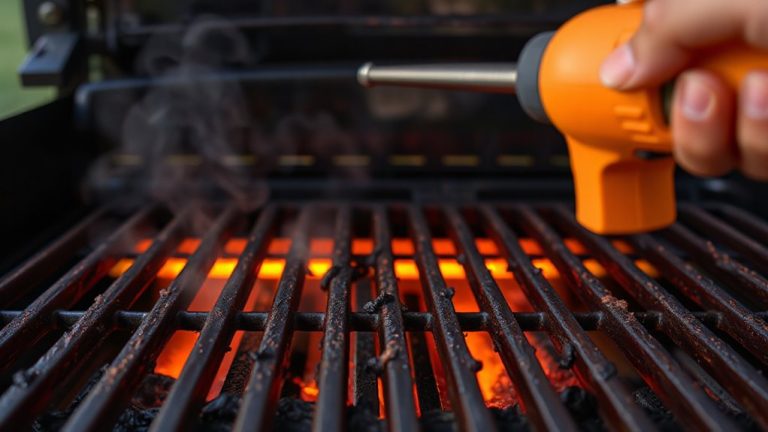
Once your chicken is evenly skewered, focus shifts to the konro grill itself-its design thrives on high, fast heat, making proper prep key to accessing that signature sear and smoky depth. You’ll want to prioritize charcoal selection: binchotan is ideal for its clean burn and intense, consistent heat, though high-quality hardwood lump charcoal works if binchotan’s unavailable. Light the charcoal fully until it’s dusted with gray ash-this guarantees peak thermal output. Position the grill grate close to the coals; konro grills rely on proximity for that rapid searing capability. Correct grill placement height maximizes radiant heat transfer without scorching. Let the grill box preheat for 5–7 minutes so the entire structure absorbs and radiates heat evenly. Properly prepped, the konro delivers precise, direct heat essential for locking in juices while building complex flavor-critical when cooking chicken thighs over open flame. For best results, choose from the top-rated options in our Best Japanese Charcoal Picks.
Sear Chicken Thighs in 4–6 Minutes
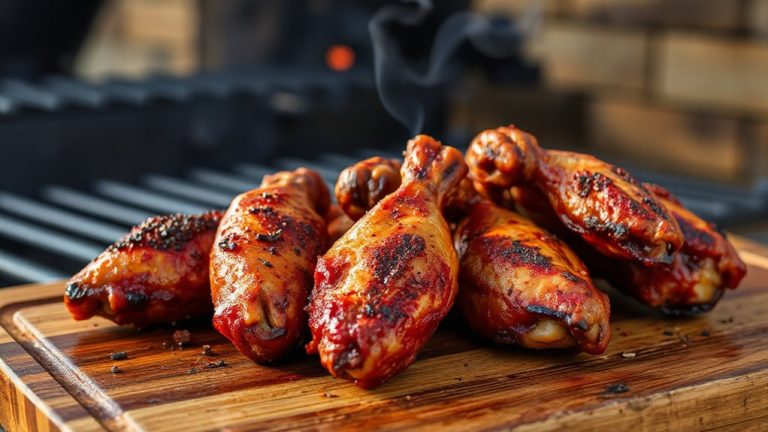
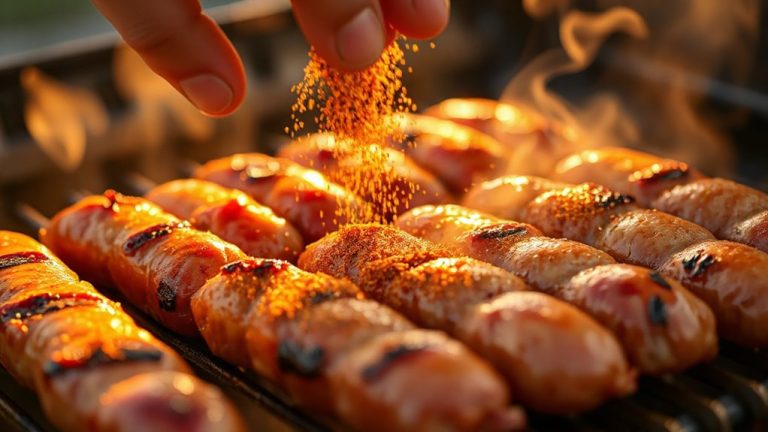
Nearly every well-executed konro chicken skewer owes its success to a precise sear-typically achieved in just 4 to 6 minutes of direct exposure to intense radiant heat. You’ll want to place your skewers directly over the glowing binchotan coals, letting the high heat sear the surface quickly. This short window is critical: too little time and you’ll miss those signature grill marks; too long and you risk overcooking, undermining the juiciness beneath. Rotate once halfway through to guarantee even char development. Proper char control means watching closely-look for deep caramelization without blackening. The konro’s focused heat makes this balance achievable, but only if you stay attentive. Grill marks aren’t just aesthetic; they signal proper heat transfer and flavor development. With consistent positioning and timing, your chicken thighs develop complexity without drying. It’s this combination of precision and speed that defines konro cooking at its best.
Rest Before Serving for Maximum Juiciness
That perfect sear-deep, caramelized, and evenly distributed-sets the stage, but letting the heat do its full work means stepping back once the skewers come off the konro. Resting for 5 to 7 minutes is essential; it allows juices redistributed by heat to settle, especially important given the varied cut thickness of thigh meat. If you slice too soon, all that moisture escapes, leaving you with drier bites despite perfect grill timing. Use this pause to perform a final temperature check-165°F confirms safety without overcooking. The konro’s intense heat excels at searing, but residual cooking continues, so pulling skewers at 160°F accounts for rise. Resting isn’t passive-it’s active juice retention. You’ll notice plumper, more flavorful meat, particularly in thicker sections where carryover heat lingers. Resist the urge to serve immediately. Letting them rest guarantees every bite, from narrow tip to thick base, delivers the juiciness you aimed for.
On a final note
You’ve got the right idea going with chicken thighs-they’re forgiving and stay moist on the konro thanks to higher fat content. Marinating adds flavor and helps retain juices during the quick, high-heat cook. Skewering evenly guarantees uniform results, while proper grill prep prevents sticking and promotes good sear. Resting afterward lets juices redistribute, so each bite stays succulent. Overall, konro grilling delivers intense heat ideal for restaurant-quality results at home, making it a solid choice for efficient, flavorful BBQ.