Using Infrared Thermometers to Monitor Hot Spots on Gas Grill Grates
You can spot hidden hot spots on your gas grill by scanning the grate with an infrared thermometer after preheating for 10–15 minutes. It reveals temperature variances that eyes can’t see, helping you adjust burners and food placement for even cooking. Real-time feedback prevents flare-ups and undercooked zones, boosting both safety and taste. Use it regularly to maintain balanced cooking areas-discover how simple tweaks guided by thermal data can transform your grilling results.
Notable Insights
- Infrared thermometers detect hidden hot spots on grill grates by measuring surface temperature variations in real time.
- Preheat the grill for 10–15 minutes with the lid closed before scanning to ensure accurate thermal readings.
- Scan the grate in a grid pattern from six inches away to map temperature differences across all zones.
- Use infrared feedback to adjust burner settings and balance heat distribution before placing food on the grill.
- Reposition food to cooler zones based on infrared scans to prevent charring and ensure even cooking.
Stop Hot Spots From Ruining Your Grill
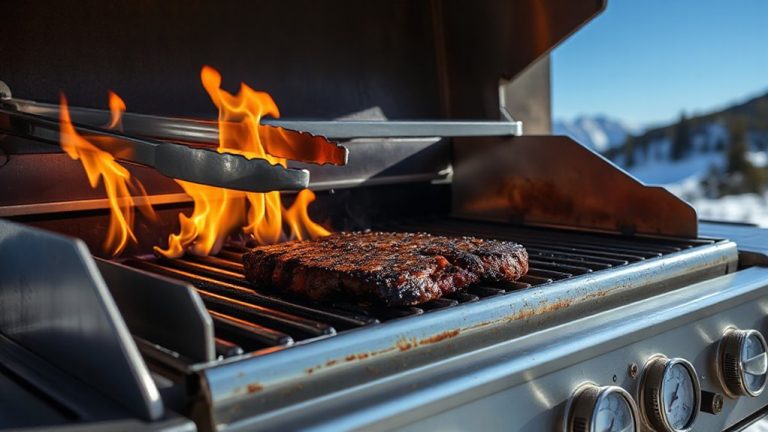
Ever wonder why one end of your steak chars while the other stays raw? You’re dealing with hot spots-uneven heat zones that sabotage both cooking precision and food safety. These spots often stem from clogged burner tubes or uneven flame distribution, worsened by neglected grill maintenance. Grease buildup and carbon residue not only create flare-ups but also distort heat flow across the grates. Without intervention, you risk undercooked sections alongside over-charred surfaces-a food safety hazard. Regular cleaning, proper preheating, and checking for blocked ports help balance temperatures. You’ll achieve better searing and consistent doneness by addressing the root causes, not just reacting to symptoms. While tools can detect these issues, prevention starts with how you care for your grill. Consistent upkeep leads to reliable performance, making every cookout safer and more successful.
How Infrared Thermometers Reveal Hidden Heat Zones
While your grill might look like a uniform cooking surface, chances are it’s hiding temperature inconsistencies that no amount of guesswork can accurately map-and that’s where an infrared thermometer proves indispensable. You can quickly detect surface variance by scanning the grates, revealing cooler zones and unexpected hot spots invisible to the eye. This tool enables precise thermal mapping, letting you see exactly how heat distributes across the cooking area. Whether caused by burner misalignment or grease buildup, uneven temperatures compromise searing and can lead to undercooked or burnt food. With an infrared thermometer, you’re no longer adjusting heat blindly. Instead, you make informed decisions based on real-time data. It’s not just convenient-it’s a game-changer for consistent results. Serious backyard chefs rely on this tech to maintain control, ensuring each grilled piece cooks evenly and safely every time.
Scan Your Grill for Hot Spots in 3 Steps
You’ve likely noticed how some parts of your grill sear food fast while others lag, leaving you with uneven results despite careful prep. That’s why a proper surface inspection using an infrared thermometer is essential. Start by heating your grill on high for 10–15 minutes with the lid closed. Then, scan the grate in a grid pattern, holding the thermometer six inches away to record temperature variations. Note especially high or low zones-these reveal where grill calibration is needed. Repeat the scan after minor adjustments to verify consistency. Spotting hot spots isn’t just about accuracy; it’s about control. Over time, burner wear or debris buildup skews heat distribution, making routine scanning a smart habit. With regular use, infrared readings help maintain even cooking surfaces, extending your grill’s useful life and improving meal quality without guesswork.
Adjust Burners and Food Placement Using Real-Time Readings
How do you respond when part of your steak chars too quickly while the rest stays pale? You adjust burners and reposition food using real-time infrared readings. Instant feedback from your thermometer lets you spot overheating zones instantly, so you can dial back flames-this is burner calibration in action. No more guesswork; just precise flame control based on actual grate temperatures. Move steaks from searing hot spots to slightly cooler areas, then use strategic food rotation to guarantee even doneness. This isn’t just reactive-it’s proactive cooking. Frequent scanning helps maintain consistent thermal zones, so you avoid sudden flare-ups or undercooked sections. Real-time monitoring transforms grilling from instinct to skill, letting you adapt quickly. Proper burner calibration paired with timed food rotation maximizes flavor and texture. You’re not just cooking outdoors-you’re managing heat with precision, making each grill session more predictable and effective.
Balance Grill Zones for Even Cooking With Infrared Feedback
What if you could eliminate hot spots and cold zones on your grill with the same accuracy a chef uses a thermostat? You can-by using infrared thermometers for real-time temperature mapping. This isn’t just guesswork; it’s grill calibration through data. Scan your grate surface before cooking to identify uneven heat distribution. You’ll likely find one corner blazing at 500°F while another lingers near 350°F. Adjust burners accordingly and recheck until distribution stabilizes. Proper temperature mapping lets you create distinct cooking zones-sear, roast, and hold-without surprises. It’s not about cranking up the heat; it’s about balance. Over time, consistent infrared feedback improves grill performance and food quality. This method beats touch-tests or timers. For serious outdoor cooking, grill calibration with infrared tools isn’t optional-it’s essential. You’re not just grilling; you’re engineering results.
On a final note
You’ve seen how infrared thermometers detect uneven heat, and now you can use that data to fix it. By scanning your grill’s surface, you identify hot spots invisible to the eye, then adjust burners or reposition food accordingly. This real-time feedback improves searing, prevents charring, and guarantees even cooking across zones. It’s not just convenient-it’s essential for precision in outdoor cooking. With consistent use, you’ll extend your grill’s performance and achieve restaurant-quality results, every time.