Foil-Pack Dinners Enhanced by Starting in Cast Iron Then Wrapping Mid-Cook
You get better foil-pack dinners by starting ingredients in cast iron, where superior heat retention builds a flavorful sear through the Maillard reaction. That crust锁s in taste before steam takes over. Wrap too soon, and you lose browning; delay, and delicate items overcook. Firm veggies and proteins like salmon or chicken thrive with this two-stage method. Finishing on the grill adds smoke, while the oven offers control-either way, you gain consistent, restaurant-quality results worth exploring further.
Notable Insights
- Start cooking proteins and veggies in cast iron to develop a flavorful sear via the Maillard reaction before transferring to foil.
- Use cast iron’s superior heat retention to evenly sear ingredients and stabilize temperature over open flames or coals.
- Wrap ingredients in foil immediately after searing to lock in crust and prevent steaming or overcooking.
- Transfer seared ingredients to foil for gentle, even steaming that preserves moisture and distributes flavors.
- Finish cooking on the grill for smoky depth or in the oven for consistent, controlled results.
The Cast Iron Advantage for Foil-Pack Dinners
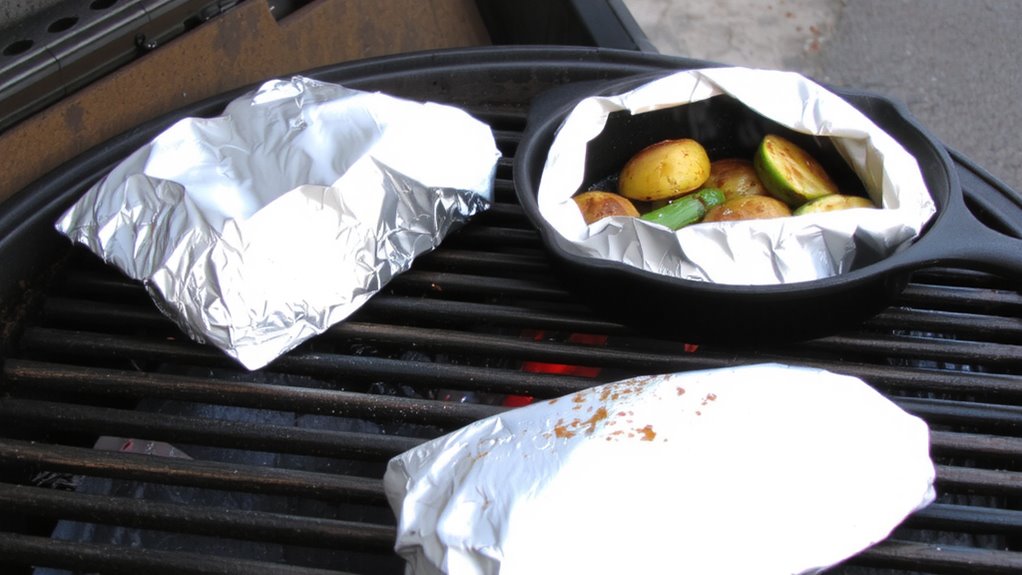
Your cast iron skillet’s ability to retain and evenly distribute heat gives foil-pack dinners a critical head start over those cooked straight on the grill grates. Thanks to superior heat retention, the skillet brings ingredients up to temperature quickly, jumpstarting the cooking process before the foil is even sealed. This means vegetables soften faster and proteins begin to cook evenly from the start, reducing cold spots common in direct grill methods. You’ll notice more consistent results-thanks to even cooking-especially with dense items like potatoes or chicken. Cast iron’s thermal mass stabilizes temperature swings, a frequent issue on open flames. Unlike disposable pans, it withstands high heat without warping, offering repeatable performance. While foil packs benefit from direct flame later, beginning in cast iron maximizes efficiency and control. You’re not just grilling-you’re layering technique. For reliable, predictable foil-pack outcomes, the skillet’s role is tough to overstate.
Sear First for Maximum Flavor
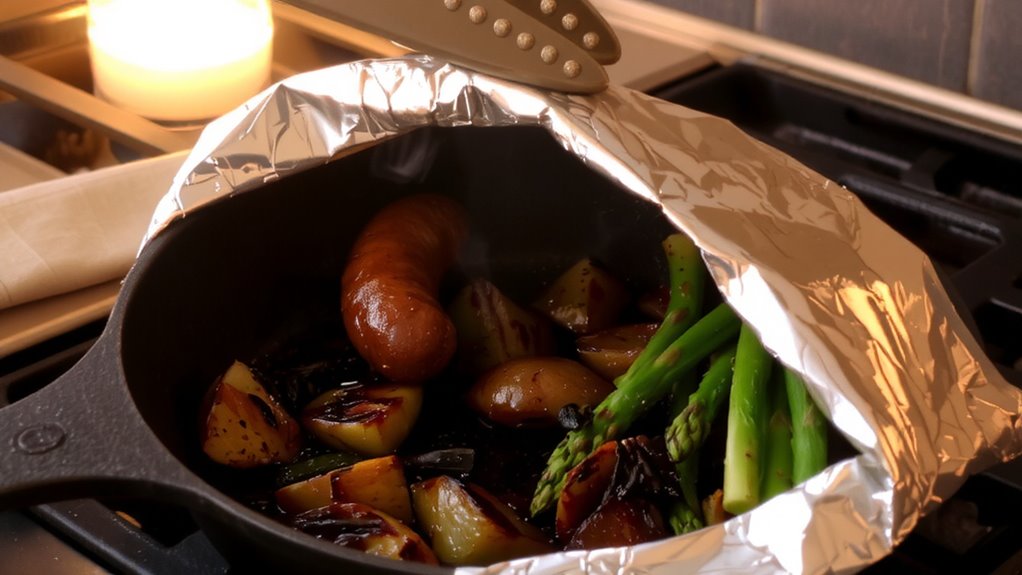
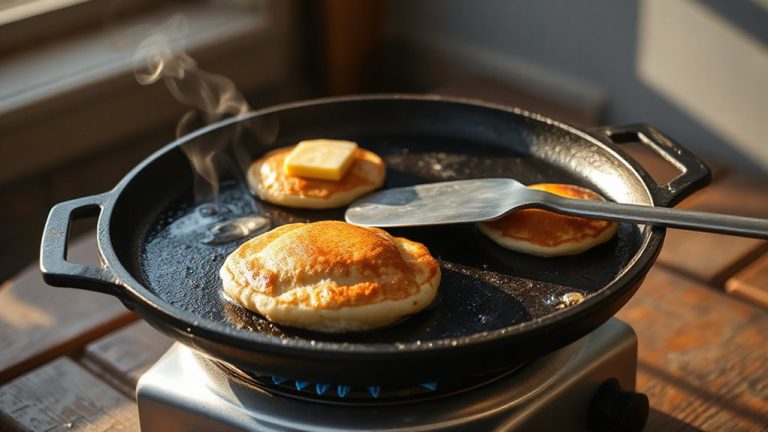
A sizzling sear isn’t just a showy finish-it’s the foundation of deep, complex flavor in foil-pack dinners. You get that rich caramelized crust only when proteins and veggies hit a scorching-hot cast iron skillet first. This high-heat contact triggers Maillard reaction, boosting flavor development in ways steaming or baking alone never can. Think of it: the fond left behind isn’t waste-it’s concentrated taste you’ll lock in once you fold the foil. Starting on direct flame or grill grates gives you control and visible browning, signaling ideal temperature and timing. Cast iron holds that heat steadily, so your sear stays consistent, even over campfire coals. Skipping this step? You’re missing out on depth and texture that define great outdoor cooking. For maximum results, sear confidently-you’ll taste the difference from the first bite to the last.
Timing Your Foil-Pack Wrap Perfectly
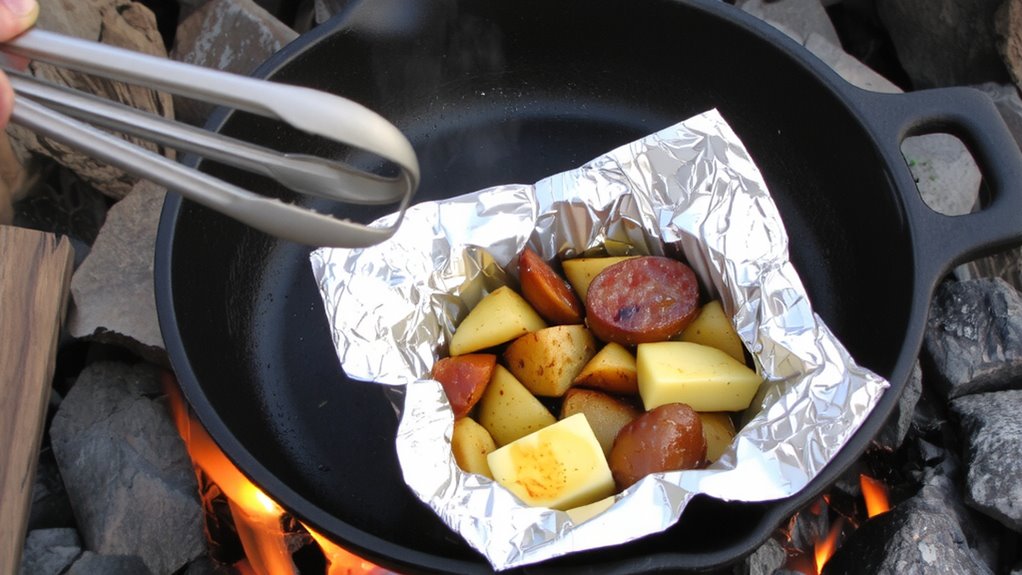
While searing locks in deep flavor, knowing when to transfer ingredients to the foil is just as critical for a balanced, well-cooked meal. Wrap timing affects both texture and flavor retention, making it a make-or-break step. Too early, and steam softens your sear; too late, and delicate components overcook. For best results, wrap just after the crust forms but before proteins tighten or veggies wilt. This preserves moisture and guarantees even heat distribution. Consider your cook setting-high heat demands faster wrapping than a low grill. Below is a guide to emotional outcomes based on timing:
| Wrap Timing | Flavor Retention |
|---|---|
| Too Early | Frustration |
| Just Right | Satisfaction |
| Too Late | Disappointment |
Nail the moment, and you’ll taste the difference-rich, layered flavors sealed in, no guesswork. Master this, and foil-pack dinners become reliably excellent.
Best Foods for Sear-And-Foil Dinners
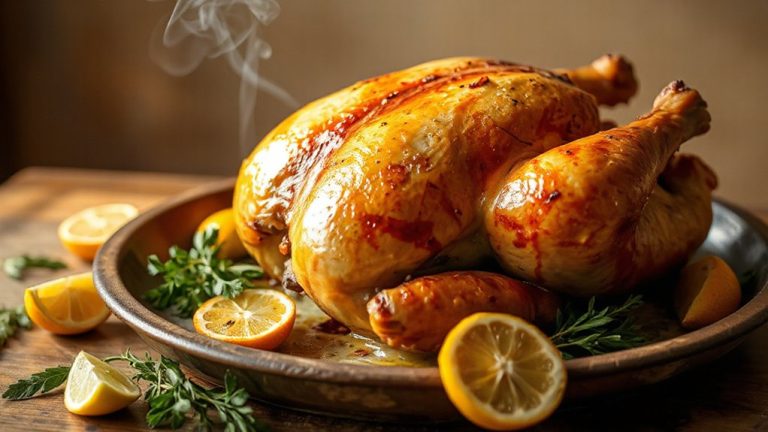
Success hinges on choosing ingredients that thrive under dual-stage cooking-first searing over direct heat, then steaming in a sealed foil pouch. You’ll want proteins like salmon, chicken thighs, or pork chops; their fat content and structure handle searing well and stay moist during the steam phase. Firm vegetables-bell peppers, zucchini, and onions-hold their shape and absorb flavors beautifully. Marinate your proteins in citrus marinades to tenderize and add brightness; the acid enhances browning while complementing the smoky depth from the cast iron. Tuck aromatic herbs like thyme, rosemary, or dill into the foil pack just before sealing-heat releases their essential oils, perfuming the entire dish. Delicate items such as fish or asparagus should enter the foil shortly after searing to prevent overcooking. The interplay of high-heat char and gentle steam creates layered flavor and ideal textures you can’t get with one method alone.
Oven vs. Grill: Finishing Foil-Pack Meals
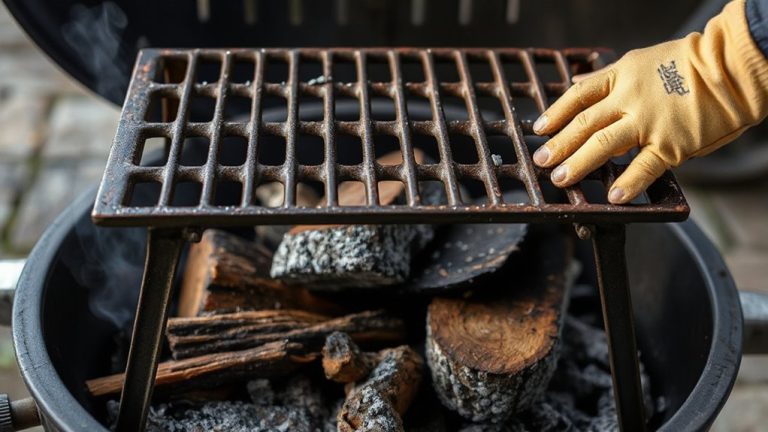
Once you’ve seared your salmon or chicken in cast iron and tucked it into a foil pouch with those firm vegetables and herbs, you’re ready to finish the dish-and now comes a key decision: oven or grill? If you use the oven, you’ll get consistent, gentle heat that cooks the contents evenly without risk of burning. It’s reliable, especially in bad weather. But if you choose the grill, you gain something the oven can’t offer: direct heat and a smoky char. Grilling exposes the foil pack to radiant energy and wood-infused vapors, deepening flavor. Just be cautious-too much direct heat can scorch the bottom. For best results, position the packet over indirect heat after searing, then rotate. You’ll get that coveted char without sacrificing tenderness. Ultimately, the grill wins for taste, while the oven wins for control.
On a final note
You’ll get the best results by searing proteins and veggies in cast iron first-it builds deep flavor through caramelization. Then, finish in foil to lock in moisture and meld ingredients. This hybrid method outperforms straight grilling or baking, especially for delicate foods. It’s efficient, enhances texture, and simplifies cleanup. For outdoor cooking, this technique balances control and convenience, making it a reliable upgrade to standard foil-pack routines.