From Start to Finish: Preparing Your Perfect Smoked Turkey Feast
Pick a fresh, 12- to 14-pound free-range, organic turkey for even cooking and rich flavor. Brine it for 12–24 hours to lock in moisture, then pat dry and season. Preheat your smoker to 225–250°F, calibrate the thermometer, and use apple or cherry wood-maybe a touch of hickory-for a balanced smoky sweetness. Smoke until the breast hits 165°F and thighs reach 175°F, then rest the bird 20–30 minutes before carving. Keep leftovers chilled within two hours. There’s more to mastering each step than meets the eye.
Notable Insights
- Choose a fresh, 12- to 14-pound free-range organic turkey for even cooking and superior flavor.
- Brine the turkey for 12–24 hours in cold saltwater with sugar, aromatics, and herbs for juiciness.
- Preheat your smoker to 225°F–250°F and stabilize temperature with proper fuel and vent control.
- Use apple or cherry wood, optionally blended with hickory, for a balanced, smoky flavor.
- Smoke until breasts reach 165°F and thighs 175°F, then rest 20–30 minutes before serving.
Choose the Right Turkey for Smoking
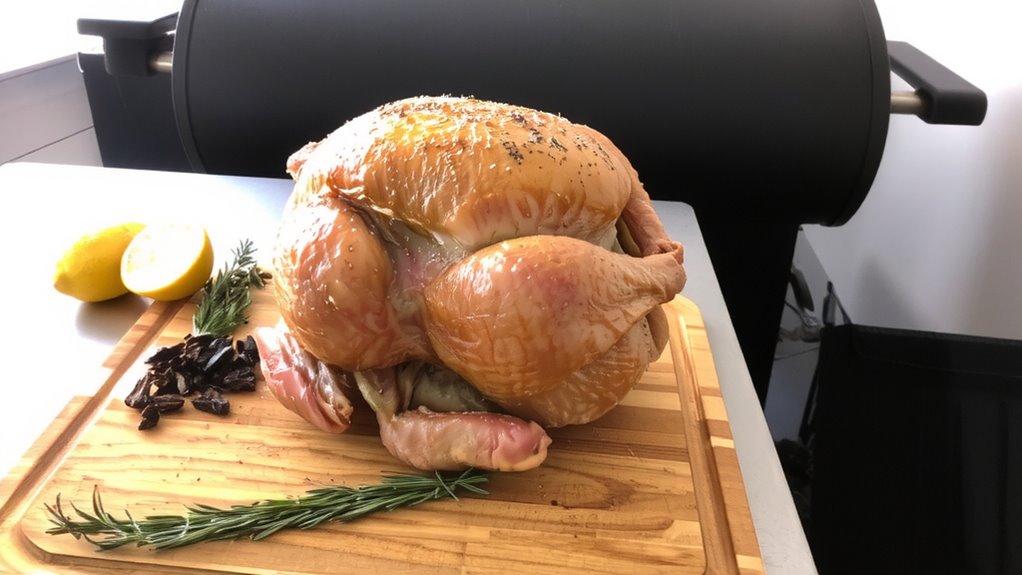
While you might be tempted to grab the largest turkey you can find, picking the right bird for smoking means balancing size, freshness, and structure to guarantee even heat penetration and peak flavor absorption. Aim for a 12- to 14-pound turkey-large enough to feed a group, yet small enough to cook evenly. You’ll want a bird raised with free range benefits in mind, as these turkeys often develop better muscle texture and richer flavor due to natural movement and diet. Don’t overlook organic labeling importance; certified organic means no antibiotics or synthetic feed, which can affect taste and smoke interaction. Frozen turkeys may seem convenient, but fresh ones respond better to low-and-slow heat. A properly structured turkey, with consistent breast thickness and intact skin, holds up under prolonged smoking. These details guarantee a moist interior and a clean smoke ring-hallmarks of skilled outdoor cooking. Choose wisely, and your results will reflect the care you put in upfront.
Brine and Season for Juicy, Flavorful Meat
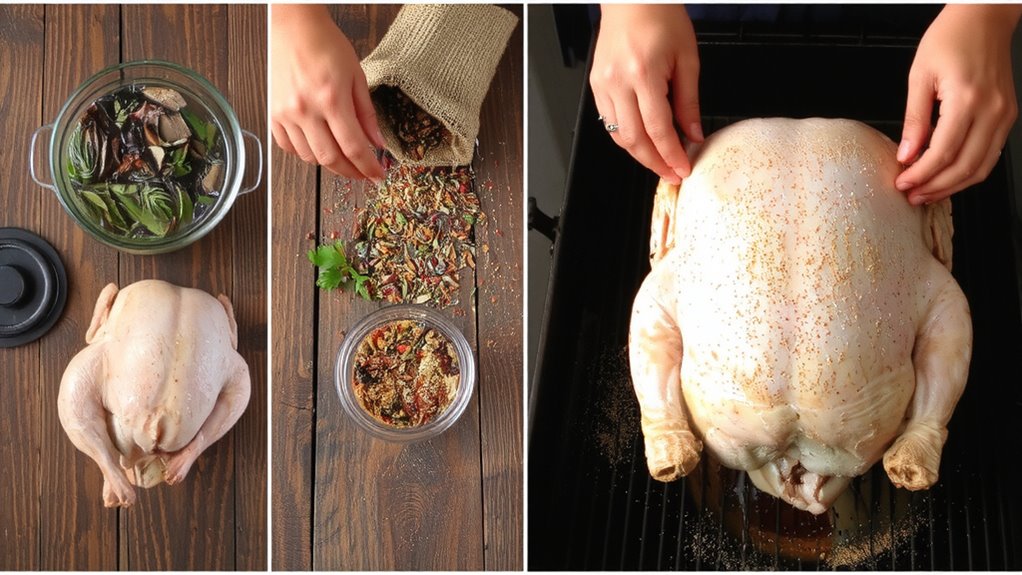
If you want your smoked turkey to come out juicy and packed with flavor, brining is a step you shouldn’t skip. A good brine infuses moisture and enhances taste from the inside out, ensuring the meat stays tender despite hours in the smoker. For best results, maintain a brine duration of 12 to 24 hours-any longer risks oversalting, especially with commercial turkeys already treated with solution. Use cold water, salt, sugar, and aromatics, keeping the turkey fully submerged in the fridge. When crafting your brine, pay attention to spice balance: too much clove or allspice overwhelms, while the right blend of peppercorns, herbs, and citrus adds complexity without dominating. This balance carries through the smoke, seasoning each bite evenly. A well-brined turkey doesn’t just resist drying-it tastes thoughtfully seasoned, making your effort in flavor development unmistakably worthwhile. For a convenient and balanced approach, consider using one of the best brine kits for turkey, which provide pre-measured blends and often include brine kit recommendations.
Preheat and Stabilize Your Smoker
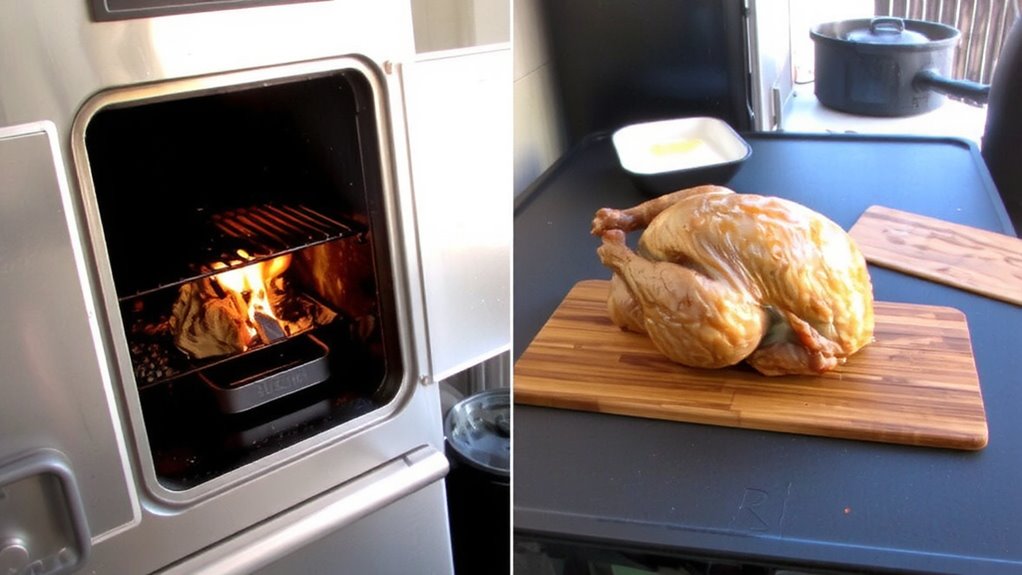
Once your turkey finishes its time in the brine, it’s time to shift focus to the smoker, because consistent heat makes all the difference in turning that well-seasoned bird into a smoky masterpiece. You’ve got to preheat your smoker for at least 30 to 45 minutes before cooking. This isn’t just about warming it up-it’s about smoker calibration. Proper calibration guarantees accurate readings from your built-in thermometer, so you’re not guessing. Aim for a target of 225°F to 250°F, typical for large poultry. You’ll need solid temperature consistency throughout the cook, or you risk uneven doneness and dry spots. Fluctuations greater than 25°F can compromise texture and smoke absorption. Adjust vents, check fuel levels, and monitor closely. Whether you’re using charcoal, wood, or electric, stabilization is essential. A steady thermal environment means control, and control means results you can count on.
Pick the Best Wood for Smoky Flavor
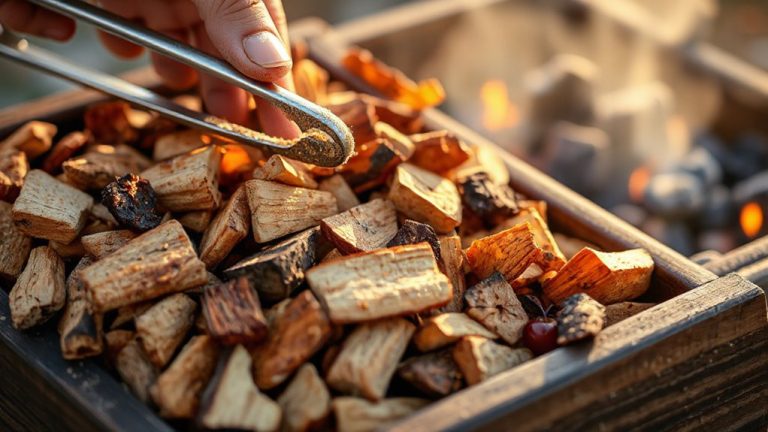
The right wood can make or break your smoked turkey, so choosing wisely matters. Different wood types deliver distinct flavor intensity levels, shaping the final taste. You’ll want something that complements, not overwhelms, the bird’s natural savoriness. Mild woods work best for poultry, ensuring a balanced, aromatic smoke. Here’s a quick guide to help you decide:
| Wood Type | Flavor Intensity | Best For |
|---|---|---|
| Apple | Mild | Delicate, sweet notes |
| Cherry | Medium | Fruity richness, color |
| Hickory | Strong | Robust, classic smoke |
Apple offers a gentle touch, perfect if you’re new to smoking. Cherry adds subtle depth and enhances skin color. Hickory packs bold flavor intensity-great for hearty palates but best used sparingly. Mixing apple or cherry with a touch of hickory gives balanced complexity. Avoid strong woods like mesquite; they overpower turkey. A best smoker wood for turkey choice enhances both flavor and tenderness without dominating the meat.
Smoke Until Perfect: Time and Internal Temp
Now that you’ve chosen the right wood to match your taste, it’s time to focus on execution-how long to smoke and when the turkey’s truly done. You’ll want to maintain a steady 225–250°F; this slow cook guarantees tender meat and deep smoke penetration. Plan for about 30 minutes per pound, but always rely on internal temperature, not time. The turkey’s done when the thickest part of the breast hits 165°F and the thigh reaches 175°F. Temperature fluctuations can derail your results, so monitor your smoker closely. Good smoker maintenance-cleaning grates, checking seals, and clearing grease-keeps heat consistent. A well-maintained unit resists airflow issues and burning inefficiencies, both of which cause swings in cooking temps. Don’t trust guesswork: use a reliable meat probe and digital thermometer. Consistent heat leads to even smoke absorption and juicier results-critical for a flawless smoked turkey. For precise and convenient monitoring, consider using a best meat thermometer with multiple probes and wireless connectivity.
Rest Your Smoked Turkey Before Carving
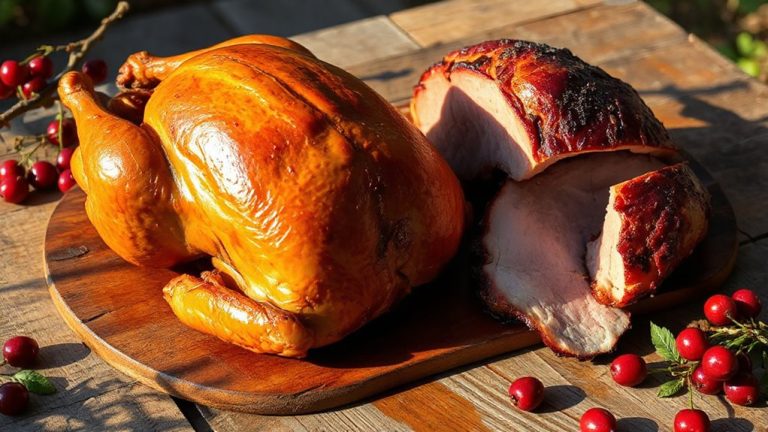
After your turkey comes off the smoker, hold off on carving-letting it rest isn’t just tradition, it’s the key to locking in juices and achieving that tender, pull-apart texture you’re after. You’ll want to let it sit, loosely tented with foil, for 20–30 minutes. This allows internal temperatures to stabilize and muscle fibers to reabsorb moisture, ensuring every slice stays succulent. Rushing into carving techniques too soon can force those rich juices onto the cutting board instead of staying in the meat. It also gives you time to fine-tune your serving presentation-arranging sides, warming platters, or adding garnishes. A well-rested turkey not only tastes better, but holds its shape, making clean slices easier and improving visual appeal. Proper resting is just as essential as smoking itself when crafting a memorable, flavorful centerpiece.
Serve Warm or Store Leftovers Safely
With the aroma of hickory and spice still lingering in the air, serve your smoked turkey warm for the best texture and flavor-meats like this shine when enjoyed at a proper temperature, ideally between 140°F and 150°F, where the fats have softened enough to deliver richness without greasiness. If you’re not serving immediately, prioritize proper cooling to prevent bacterial growth. Slice leftovers quickly and refrigerate within two hours. For future meals, safe reheating guarantees both taste and food safety-use an oven or stovetop to bring meat back to 165°F. Avoid microwaving whole portions, as uneven heating can leave cold spots.
| Method | Best For | Temp Needed |
|---|---|---|
| Oven Reheat | Slices or whole | 165°F |
| Stovetop | Small portions | 165°F |
| Refrigeration | Proper cooling | Below 40°F |
On a final note
You’ve brined, smoked, and rested your turkey-now it’s ready to impress. Proper technique guarantees moist meat and rich, smoky depth, far beyond oven roasting. A steady smoker, quality wood like hickory or apple, and attention to internal temperature (165°F in the thickest part) are key. Resting preserves juices, while safe storage extends enjoyment. For flavor and texture, outdoor smoking delivers unmatched results when done with care.