How to Cook Stews and Soups on a Rocket Stove During Backpacking Trips
Use a stable rocket stove with a low center of gravity and adjustable legs to keep your pot secure on uneven ground. Choose a 1.5–2L pot for one-pot stews, pre-chopped and dehydrated at home. Start with dry tinder, feed finger-thick sticks gradually, and maintain a steady blue flame. For simmering, restrict airflow slightly and use small twigs. Pack out all waste using odor-proof bags-your setup’s efficiency and cleanliness shape the trail experience ahead.
Notable Insights
- Use a stable rocket stove with a low center of gravity to ensure even heat and prevent tipping on uneven terrain.
- Choose a 1.5 to 2-liter pot for efficient cooking and optimal heat transfer on the stove.
- Pre-chop and dehydrate ingredients at home to reduce cooking time and fuel consumption in the field.
- Start with dry tinder and small sticks, maintaining airflow to build and sustain a strong, clean flame.
- Pack out all food waste and residue to adhere to Leave No Trace principles and protect the environment.
Pick a Stable Rocket Stove for Soup Pots
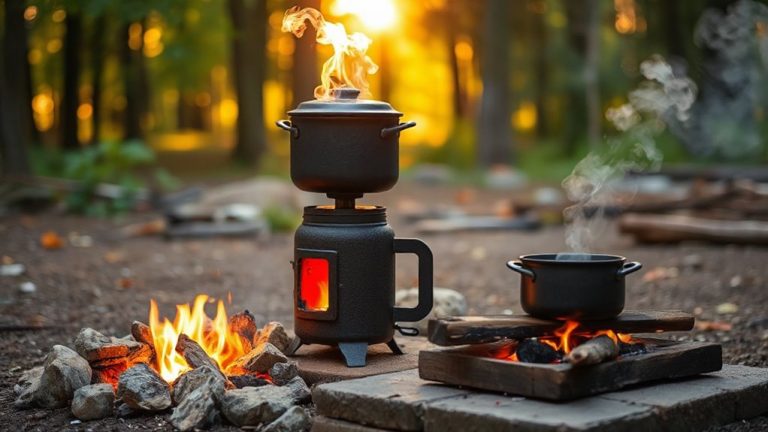
A stable rocket stove makes all the difference when you’re simmering stews or soups outdoors, especially over long cooking times. Stove stability guarantees even heat distribution and reduces the risk of tipping, which is critical when you’re cooking with liquids. A wobbly stove can disrupt pot balance, leading to spills or uneven cooking-especially frustrating when fuel and water are limited. Look for models with wide, adjustable legs and a low center of gravity; they adapt better to uneven terrain. Materials like stainless steel offer durability without excessive weight. A well-designed combustion chamber boosts efficiency, but it’s only effective if the stove remains steady. Always test your setup on slightly uneven ground to assess real-world performance. Pot balance isn’t just about the stove-it’s how the pot sits and fits. Choose a stove that supports your cookware snugly, guaranteeing safety and consistent results every time, trip after trip.
Prep One-Pot Meals for Your Rocket Stove
You’ve secured a stable rocket stove that keeps your pot balanced and heat consistent, so now it’s time to think about what goes inside that pot. Choosing the right pot size matters-typically 1.5 to 2 liters is ideal for one or two hikers, balancing efficiency and capacity without wasting fuel. A pot that’s too large slows heating; too small risks overflow. Plan your ingredient prep carefully: pre-chop vegetables at home, dehydrate proteins, and use quick-cook grains like couscous or instant rice. This minimizes cook time and fuel use, vital when resources are limited. Uniform cuts guarantee even cooking, and seasoning packets save space. One-pot meals shine with simplicity-think lentil stew or creamy pasta-and reduce cleanup. Smart prep complements your stove’s efficiency, turning limited gear into a reliable meal system.
Light and Feed Your Rocket Stove Flame
Although getting the flame going might seem straightforward, lighting and maintaining a rocket stove’s burn requires attention to airflow, fuel size, and feeding rhythm to keep your soup simmering efficiently. You’ll want to start with dry tinder and small sticks, feeding them gradually to build a hot, stable flame. Position your fuel so air can flow freely through the combustion chamber-this boosts both flame control and fuel efficiency. Use sticks about the thickness of your finger; too thick and they smolder, too thin and they burn too fast. Feed the fire just ahead of full combustion, letting each piece catch before adding the next. This rhythm sustains high heat without waste, maximizing burn time per handful of wood. Proper technique turns modest fuel into sustained performance, making your rocket stove not just functional, but impressively efficient.
Simmer Stews on a Rocket Stove With Less Fuel
When it comes to keeping your stew at a steady simmer without burning through your wood supply, fine-tuning your rocket stove’s airflow and fuel input makes all the difference. You’ve got to master heat control-partially restrict the air intake once the stew is hot to dial down combustion. Instead of big logs, feed small twigs and splinters that burn slow and steady. This boosts fuel efficiency, letting you stretch limited biomass over hours. A thin, consistent flame creeping up the chimney means you’re maintaining clean-burning combustion without waste. Raising the pot slightly or using a heat diffuser also helps spread warmth evenly, reducing hot spots and flare-ups. With practice, you’ll learn how little fuel maintains a simmer-most flames at this stage should be blue, not roaring orange. It’s not just about saving wood; it’s smart, responsive cooking in the wild.
Pack Out Waste and Leave No Trace
Carry out everything you bring in, because leaving waste behind degrades the environment and undermines the ethics of responsible outdoor cooking. You must pack waste properly-leftover food scraps, grease, and packaging-since even biodegradable items break down too slowly and attract wildlife. Use sealed, odor-proof bags to contain refuse and avoid contaminating soil or water sources. This practice helps protect campsites from animal intrusions and keeps your surroundings safe and clean. Always respect nature by minimizing your impact: wipe down cookware with biodegradable wipes instead of rinsing in streams. Choosing a rocket stove already helps preserve trails by reducing fire risk and wood gathering. Packing out waste isn’t just practical, it’s essential. It reflects your commitment to low-impact cooking and guarantees future hikers enjoy the same pristine conditions you did.
On a final note
You’ll find rocket stoves efficient and reliable for backpacking meals when stability and fuel use are priorities. Their design directs heat intensely, boiling soup fast and simmering stews with less wood than open fires. With proper pot fit and airflow, they minimize smoke and maximize control. Still, they require careful feeding and leave residue. Used thoughtfully, they support Leave No Trace principles, offering performance that balances convenience, weight, and environmental care on the trail.