The Complete Guide to Crafting Flavorful Marinades and Rubs Tailored Specifically for Campfire Cooking Adventures
You’re better off skipping traditional marinades on campfire trips-they burn fast under uneven flames and lose potency as sugars flare up. Instead, use dry rubs with smoked paprika, garlic powder, and cumin; they’re lightweight, shelf-stable, and cling well when applied just before cooking. Pack them in airtight tins to preserve flavor. For safe marinating without refrigeration, keep it under two hours and use acidic ingredients. You’ll find there’s a smarter way to build bold, smoky flavor outdoors.
Notable Insights
- Use dry rubs instead of wet marinades for campfire cooking to avoid flare-ups and flavor loss from intense, uneven heat.
- Choose shelf-stable, low-moisture spices like smoked paprika, garlic powder, and cumin for reliable flavor on no-fridge backpacking trips.
- Marinate meat for less than two hours without refrigeration, using acidic ingredients like vinegar to slow bacterial growth in cool conditions.
- Pre-measure lightweight spice blends in resealable bags or tins to reduce pack weight and protect against moisture and sunlight.
- Apply dry rubs just before cooking and sear meat first to lock in flavor, then reapply lightly for enhanced spice activation.
Why Regular Marinades Fail Over a Campfire
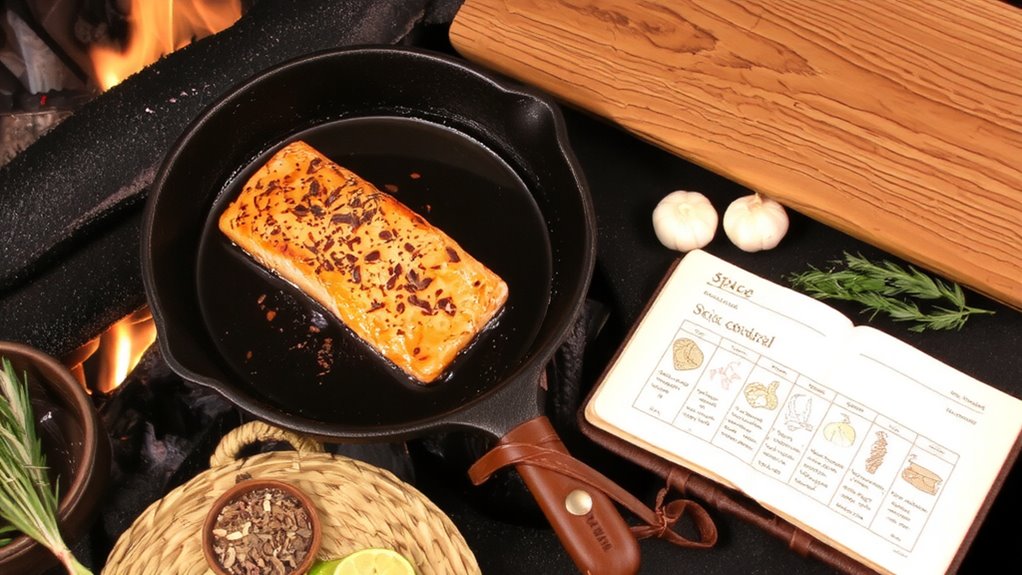
While marinades work well in your kitchen oven or on a gas grill, they often fall short when you’re cooking over a campfire, and the reason boils down to heat control and environmental factors. The intense, uneven heat of an open flame combines with dripping oils to cause flare ups, burning the surface before the inside cooks. You’ve probably seen it-sudden flames licking the steak, charring the marinade’s sugars before flavor penetrates. Marinades rely on moisture retention, but campfire cooking tends to dry out food faster, especially when flare ups force you to pull the meat off the heat. Wet ingredients also evaporate quickly, leaving little behind. Without a consistent low simmer, the marinade doesn’t have time to work. You’re better off using dry methods that withstand fluctuating temperatures and don’t risk combustion. Ultimately, the environment undermines a marinade’s core advantages. One exception might be using store-bought options designed for quick marinating, such as best bottled marinades, though even these can struggle under extreme heat.
Best Dry Rubs for No-Fridge Backpacking Trips
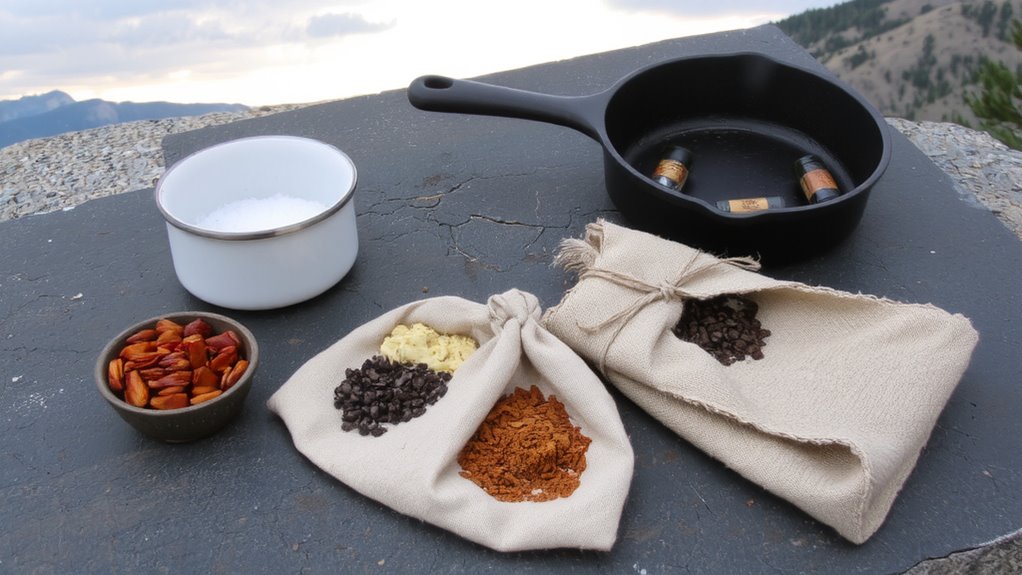
A well-formulated dry rub isn’t just convenient for no-fridge backpacking trips-it’s a tactical advantage when preparing flavorful meals in remote conditions. You need blends that deliver bold taste without spoiling, and that means prioritizing shelf stability. Unlike wet marinades, dry rubs resist microbial growth and handle temperature swings, making them ideal for extended hikes. To combat spice oxidation, which dulls flavor over time, store your rubs in airtight, opaque containers away from sunlight. Spices like smoked paprika, garlic powder, and cumin retain potency for weeks when protected properly. Salt and sugar also help preserve texture and taste. A balanced rub with aromatic depth and heat-say, chili powder, black pepper, and dried herbs-enhances jerky, rehydrated meals, or grilled fish straight off a campfire. You’re not just saving weight; you’re ensuring consistent flavor where refrigeration isn’t an option. For poultry dishes like chicken wings, consider using a blend optimized for high-heat cooking, such as those ideal for an air fryer, to maximize crispness and flavor penetration through best dry rubs.
How to Marinate Meat Without Refrigeration
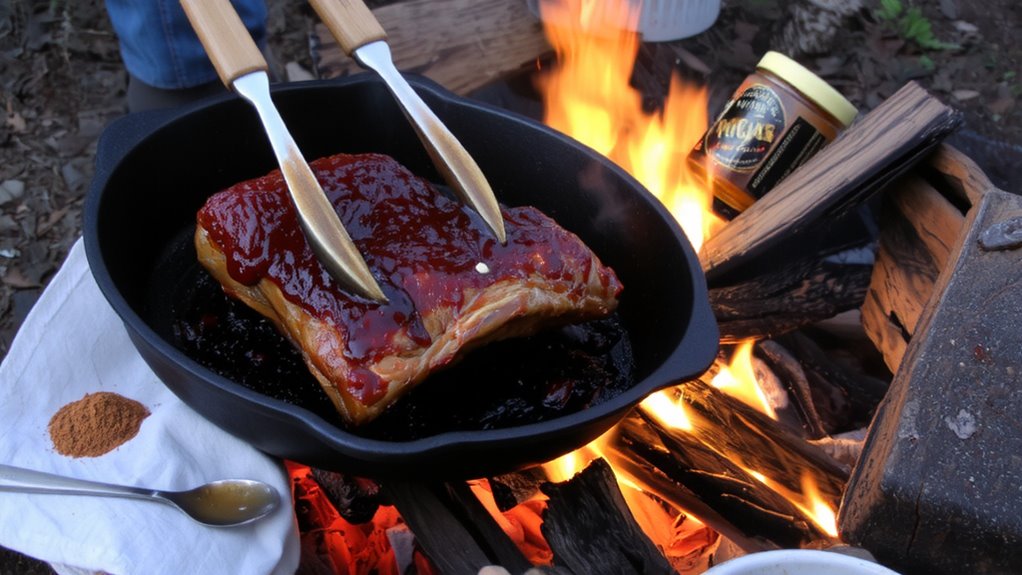
If you’re relying on campfire heat to transform raw meat into a satisfying meal, marinating without refrigeration demands smart timing and ingredient choices to prevent spoilage while maximizing flavor. For food safety, keep marinating time under two hours when ambient temperatures exceed 40°F (4°C), especially in direct sun or hot climates. Use acidic components like vinegar or citrus juice-they slow bacterial growth but don’t eliminate risk. Always marinate in a sealed, insulated container placed in cool shade or submerged in a cold stream, if possible, to aid temperature control. Avoid dairy-based marinades without refrigeration, as they spoil quickly. Opt for bold, antimicrobial ingredients like garlic, onions, and hot spices, which add flavor and mildly inhibit pathogens. Never reuse marinade that’s touched raw meat. While risky, short marinating stints can boost taste without compromising safety-just prioritize freshness, timing, and consistent temperature control.
Pack & Season: Lightweight Flavor Mixes That Work
You’ve taken care to marinate safely without refrigeration, balancing flavor and food safety during short soak times-but now it’s time to shift focus to what’s light, reliable, and ready when the fire’s lit. Disposable herb blends and compact spice mixes eliminate the need to carry bulky bottles. Opt for pre-measured packets or repurpose small resealable bags-each tailored to specific proteins. Proper spice storage matters: moisture and sunlight degrade potency, so use opaque, airtight containers. Aluminum tins and vacuum-sealed pouches outperform plastic in extreme temps. Herb blends with low moisture content, like thyme, rosemary, or oregano, hold up better than fresh. Salt, paprika, garlic powder, and cayenne make versatile bases. When backpacking, prioritize shelf-stable, high-impact mixes that add depth without weight. A well-designed blend seasons efficiently and survives rugged conditions-maximizing flavor where resources are limited. For trusted flavor combinations tested across meats and heat levels, consider tried-and-true best BBQ rubs formulations.
Maximize Smoke: When to Apply Rubs and Marinades
When aiming for deep, smoky flavor in campfire cooking, timing your application of rubs and marinades makes all the difference-apply dry rubs too early and they’ll draw out moisture, leading to uneven browning; apply them just before cooking and they’ll cling better and develop a robust crust. For ideal smoke timing, sear meat first, then add a second light dusting of rub to boost spice activation during the final phase. Marinades work best when applied 2–4 hours pre-cook, allowing acids and oils to penetrate without weakening the surface. Avoid marinating overnight at camp-limited cooling increases food safety risks. You’ll get richer flavor if you time your application to align with heat intensity and smoke density. Direct exposure to active smoke enhances compound development, especially with paprika, garlic, and cumin. Mastering this balance means crisp edges, juicy centers, and a smoke ring that’s not just show-it’s proof of precision.
On a final note
You’ve seen how campfire cooking demands smarter seasoning strategies. Standard marinades often fail without refrigeration, but dry rubs and packable flavor blends thrive in backcountry conditions. Applying rubs early maximizes smoke absorption, while acid-free marinades prevent spoilage. These methods aren’t just practical-they deepen flavor and improve texture. For outdoor BBQ, performance hinges on preparation. Choose wisely, pack lightly, and let heat, smoke, and well-chosen spices do the work.