The Complete Guide to Seasoning Techniques for Achieving Optimal Flavor Balance in Your Grilled Dishes
You’ll get the best flavor by salting thick cuts 40–60 minutes before grilling, letting salt reabsorb juices for even seasoning. Dry brining beats wet brining for better crust and control, while marinades-oil, acid, aromatics-add depth but need careful timing. Layer spices early, bloom them first, and avoid sugary rubs on high heat. Watch for common errors like oversalting or chemical-laden coals. Perfect seasoning hinges on timing, method, and heat balance-there’s a proven system behind every great grilled bite.
Notable Insights
- Salt thick cuts 40–60 minutes before grilling to enhance seasoning penetration and improve texture through osmosis.
- Use dry brining for deeper flavor and better searing, especially on steaks, chops, and poultry.
- Marinate with oil, acid, and aromatics to add flavor and tenderize, but avoid over-marinating to prevent mushiness.
- Bloom whole spices before grinding to unlock aromatic oils and layer complex flavors effectively.
- Apply balanced, sugar-free spice rubs 30–60 minutes before grilling to develop a rich, charred crust without burning.
When to Salt Your Meat for Perfect Grilled Flavor
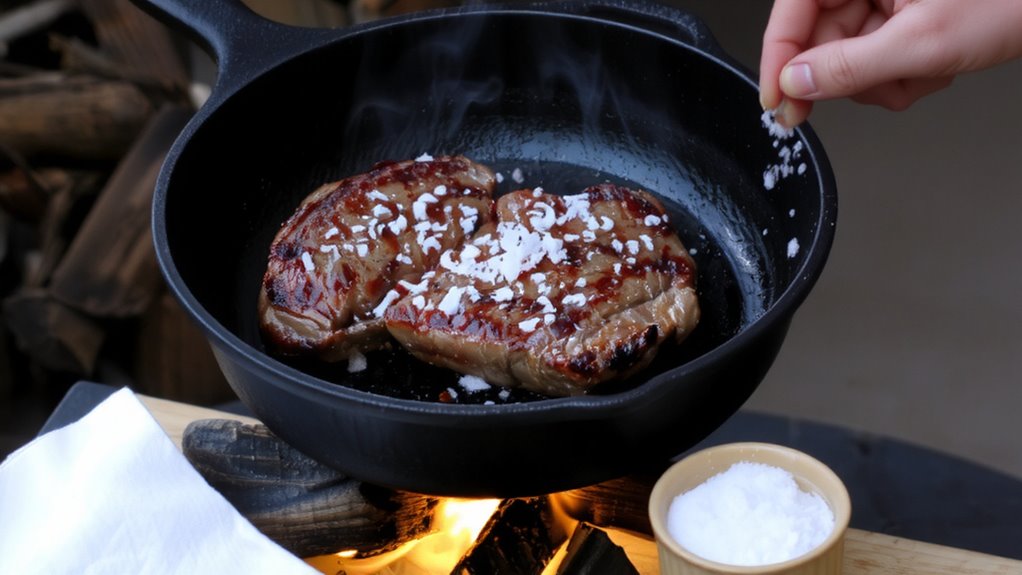
While timing can make or break your grilled dish, salting your meat at the right moment is one of the most impactful decisions you’ll make. Seasoning too early or too late disrupts salt penetration and delays flavor activation. For thicker cuts, salting 40–60 minutes ahead allows time for moisture to reabsorb and salt to migrate inward, enhancing internal taste rather than just coating the surface. This period optimizes osmosis, drawing juices out initially, then pulling seasoned moisture back in. You’ll notice more balanced seasoning and improved texture. If grilling quickly, apply salt right before cooking to avoid excess surface wetness, which inhibits searing. Thin cuts benefit from this shorter window. The key is matching timing to cut thickness and grill method. With proper timing, salt transforms from a topping into an integral flavor catalyst. Salt penetration isn’t automatic-it depends on your patience and planning-and that’s where true flavor activation begins. A well-chosen blend can elevate this process, and selecting from the Top Meat Seasonings ensures compatibility with various proteins and cooking styles.
Dry vs. Wet Brining: Best Techniques for Juicy Results
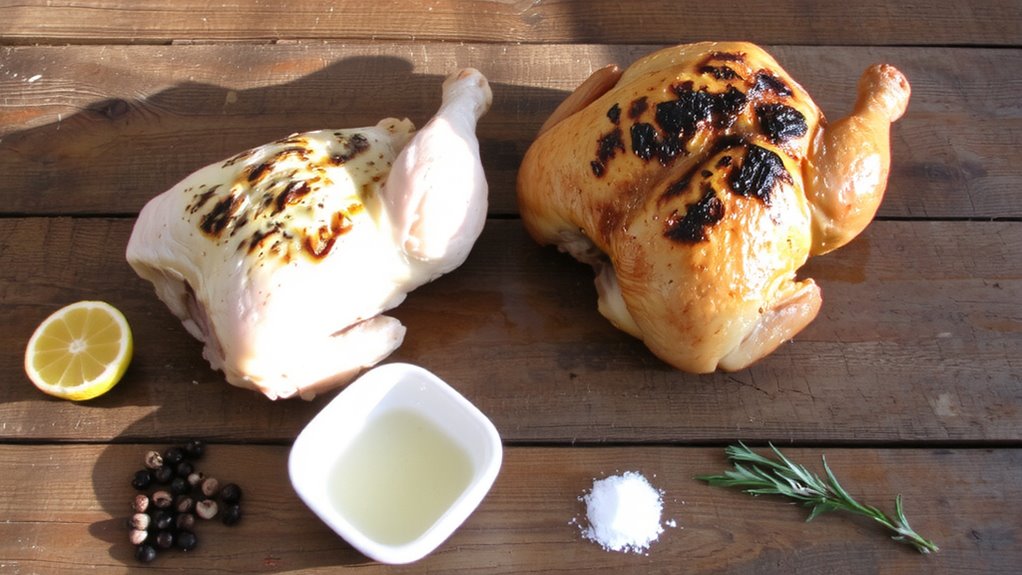
How do you lock in juiciness and build deep flavor before the grill even heats up? Dry and wet brining are both effective curing methods, but they work differently. Dry brining involves rubbing salt directly onto the meat and letting it sit, allowing the salt to draw out moisture, then reabsorb it for better seasoning penetration. It’s simpler, creates a drier surface for searing, and requires no brine concentration calculations. Wet brining submerges meat in a saltwater solution, often with sugar and spices. It can add moisture, but only if the brine concentration is balanced-too strong and the meat tastes salty, too weak and it’s ineffective. While wet brining suits lean cuts like turkey breasts, dry brining offers more control and consistent results across steaks, chops, and poultry, making it the smarter, more versatile choice for grilled dishes.
Marinade Basics: Oil, Acid, and Aromatics Explained
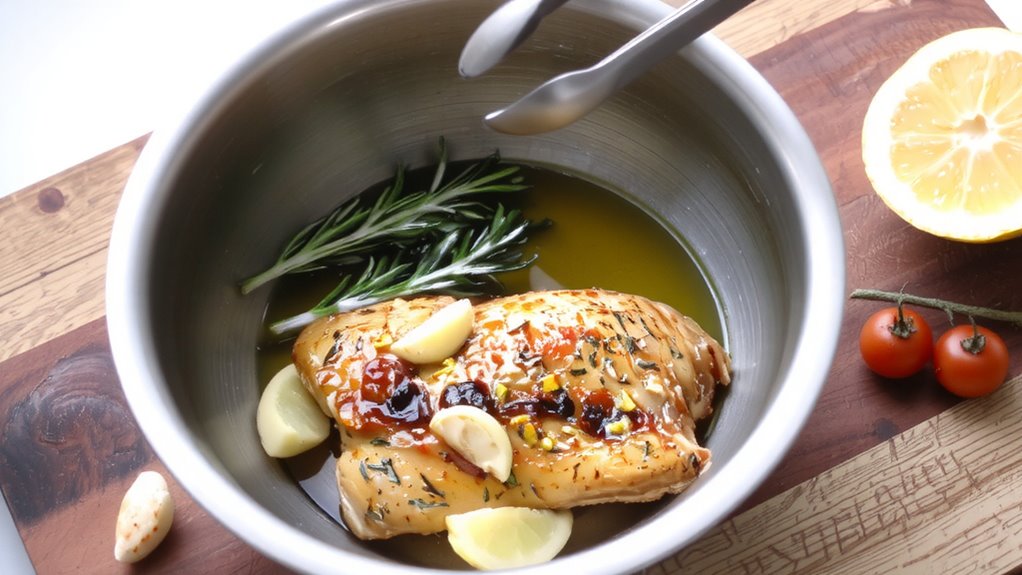
Marinades take a different approach than brines by combining oil, acid, and aromatics to both flavor and, in some cases, tenderize meat before it hits the grill. Your marinade composition matters-oil helps carry fat-soluble flavors and retain moisture, acid (like vinegar or citrus juice) breaks down proteins for tenderness, and aromatics (garlic, herbs, spices) deepen complexity. Yet too much acid can over-tenderize, leading to mushy textures, so balance is key. This method excels in flavor infusion, especially with porous proteins like chicken or flank steak. Unlike dry brines, marinades work faster but don’t enhance juiciness as effectively. For best results, marinate in the fridge, using non-reactive containers or resealable bags. While not all cuts need it, this technique suits grilling when depth and subtle tang are desired. Always discard used marinade to avoid contamination. For those short on time or looking for consistent results, a high-quality best bottled marinades can offer convenience without sacrificing flavor.
Layering Spices for Bold, Smoky Grilled Taste
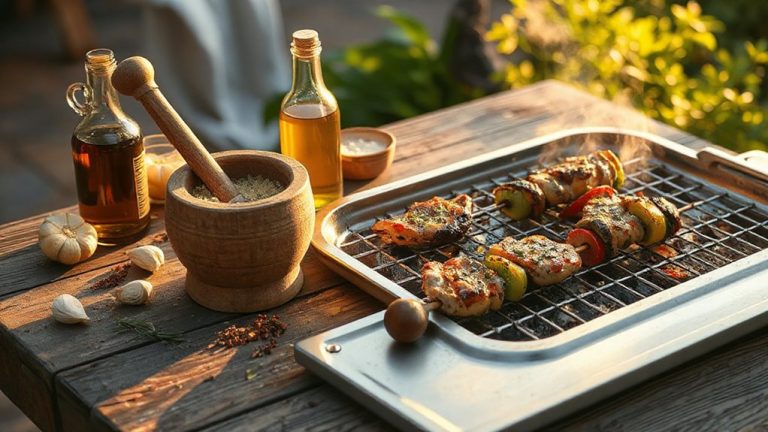
When building a bold, smoky grilled flavor, layering spices goes beyond simply applying a rub-you’re stacking taste at multiple stages to create depth that stands up to high heat and char. Start by dry-brining your protein, then add a spice blend rich in paprika, cumin, and garlic powder to enhance early adhesion. An essential step is spice blooming: briefly toast whole spices before grinding to release volatile oils, intensifying aroma and complexity. Apply your rub at least 30 minutes before grilling to allow deeper penetration. During cooking, fat renders and smoke circulates, promoting char integration-the seamless fusion of seared crust and seasoned surface. This synergy deepens flavor without overwhelming. Layering isn’t just about quantity; it’s strategic timing and heat interaction. Done right, each phase builds on the last, delivering a robust, cohesive taste that bottled sauces can’t match. For consistent results, choose a high-quality blend tailored to your protein, such as a best BBQ rubs formulation designed for balanced sweetness and smoke.
Season Before or After? Timing by Protein Type
Though timing your seasoning might seem subtle, it’s a critical factor shaping flavor and texture, especially since different proteins respond uniquely to salt and spices under high heat. For thick cuts like brisket or ribeye, season at least 40 minutes before grilling-this allows salt to penetrate and improves moisture retention during the resting duration. Thin proteins, like chicken cutlets or fish fillets, do best with minimal pre-seasoning to avoid drawing out juices too soon due to heat impact. With steaks, pre-salting an hour ahead enhances crust development, but delicate seafood often benefits from seasoning just before the grill to preserve tenderness. You’ll notice better control over browning and juiciness when you align seasoning timing with protein density and cooking method. Ultimately, your choice affects more than flavor-it influences texture, moisture, and how evenly the heat impact transforms your dish from raw to perfectly seared.
5 Grilling Seasoning Mistakes to Avoid
A common misstep in grilling seasoning is over-applying salt without accounting for evaporation or fire intensity, which can leave you with a dish that’s bitter or overly sharp instead of well-balanced. You might not realize how much sodium concentrates as moisture escapes, especially over high heat. Poor charcoal selection-like using quick-light briquettes with chemical accelerants-can introduce off-flavors that clash with your seasoning. These impurities alter smoke composition, muting subtle herb or spice notes. For overcooking prevention, avoid sugary rubs on high-heat grills; they burn fast, creating acrid crusts. Instead, opt for balanced blends applied 30–60 minutes prior to cooking, letting flavors adhere without drawing out moisture. You’ll get better crust development and more consistent results with lump charcoal-it burns cleaner and responds faster to airflow. Always season mindfully, matching your rub profile to both protein and fire type, so every bite tastes intentional and harmonious.
On a final note
You’ve now got the tools to master seasoning for grilled dishes. Timing your salt application, choosing between dry and wet brining, and balancing marinade components all directly impact moisture and flavor. Layering spices thoughtfully enhances complexity without overpowering. Remember, best results depend on matching technique to protein type. Avoiding common mistakes guarantees consistency. With practice, these methods refine your control, elevating both taste and texture in every grill session.