Altitude Adjustments for Campfire Cooking: High Elevation Techniques
At high elevations, thinner air means water boils cooler-around 197°F at 8,000 feet-slowing cooking and causing faster evaporation. Your fire burns weaker due to less oxygen, so use dry, well-spaced wood for better airflow and steady heat. Cut back leavening agents by 10–20% to prevent collapsed baked goods, and always cook with a lid to retain warmth. Pre-measure ingredients to save time and reduce errors in challenging conditions. Smart adjustments lead to better meals-fine-tuning these techniques makes all the difference.
Notable Insights
- Water boils at lower temperatures above 5,000 feet, requiring longer cooking times and careful heat management.
- Use a lid to conserve heat and stabilize simmering, compensating for rapid evaporation at high elevations.
- Build smaller, well-ventilated fires with dry wood to improve combustion in low-oxygen environments.
- Reduce baking powder or soda by 10–20% to prevent rapid rising and collapse of baked goods at altitude.
- Pre-portion and vacuum-seal ingredients to ensure accuracy, efficiency, and consistent results in high-elevation cooking.
Why Campfire Cooking Changes at High Altitude
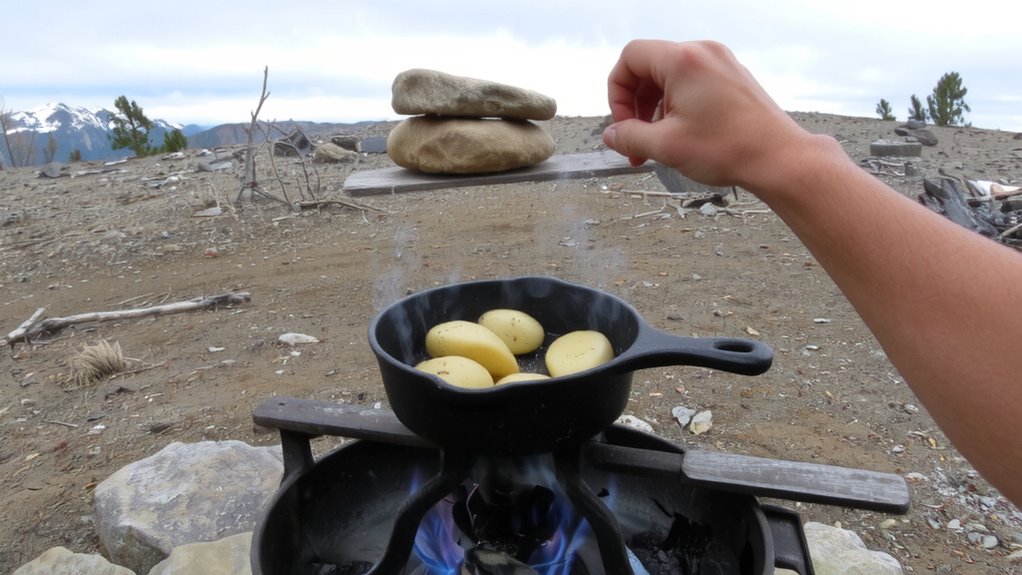
While the basics of campfire cooking stay the same, you’ll notice right away that your techniques need tweaking when you’re cooking above 5,000 feet. The drop in atmospheric pressure means water boils at lower temperatures, which affects how food cooks, even over an open flame. You’re also dealing with reduced oxygen levels, so your fire burns cooler and less efficiently unless you adjust airflow or fuel. That means longer cook times and careful monitoring, especially for foods that rely on sustained heat. While it might not seem like much, that thinner air impacts everything from flame stability to smoke output. You’ll find that well-managed fires with consistent oxygen flow perform best. So yes, your skills still apply-but success at elevation demands awareness of how atmospheric pressure and oxygen levels reshape even the most familiar outdoor cooking tasks.
Adjust Boiling and Simmering for High-Altitude Cooking
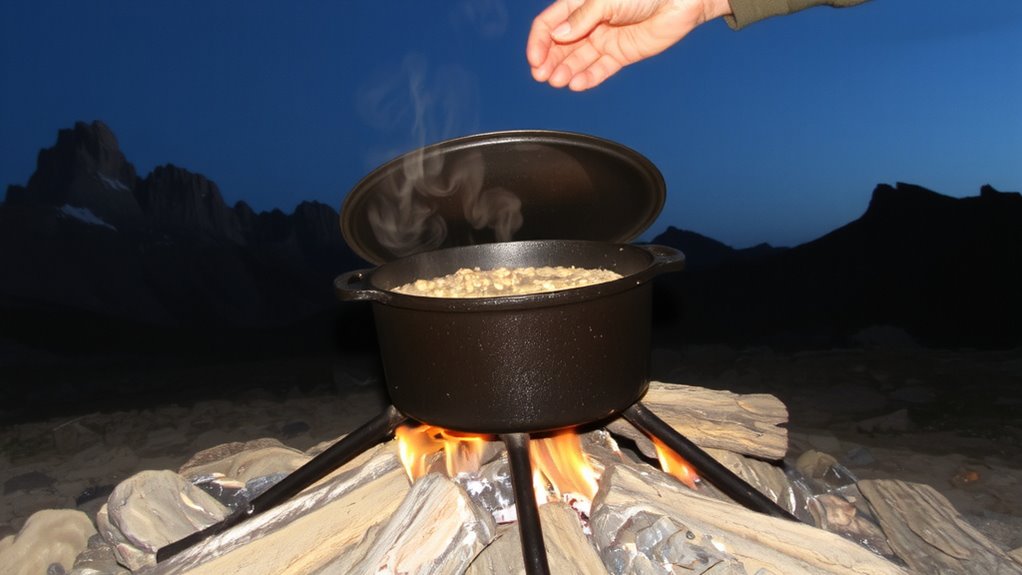
You can still bring water to a boil over a campfire at high altitude, but don’t expect it to behave like it does back home. The boiling point drops about 1°F every 500 feet gained, so at 8,000 feet, water boils at roughly 197°F-not 212°F. That lower boiling point means slower cooking and tricky simmer control. Liquids evaporate faster, so you’ll need to monitor pots closely and adjust flame intensity more often. True simmering-gentle bubbles, minimal agitation-becomes harder when the target temperature shifts. Use a lid to conserve heat and moisture, helping stabilize your cooking environment.
| Elevation (ft) | Boiling Point (°F) | Simmer Control Difficulty |
|---|---|---|
| 2,000 | 208 | Moderate |
| 5,000 | 203 | High |
| 10,000 | 194 | Very High |
Control Your Fire in Thin Air
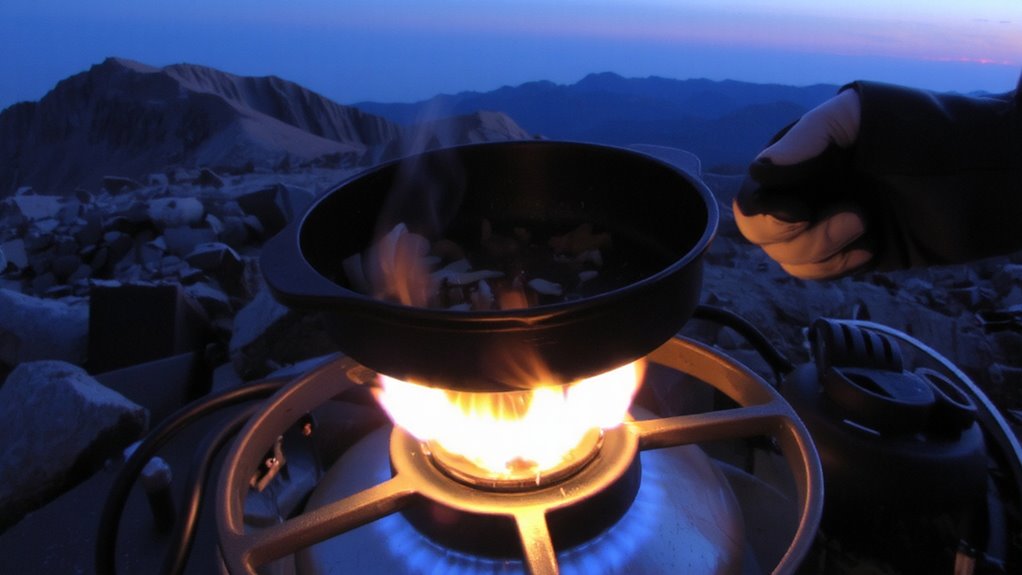
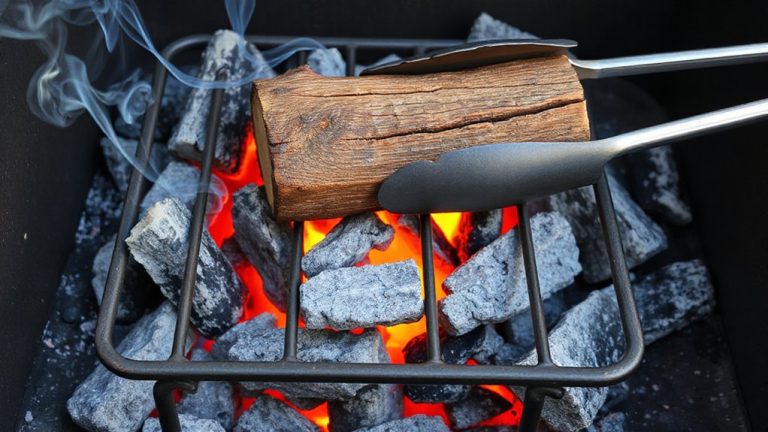
Why does your campfire behave so differently when the air thins at higher elevations? At altitude, lower oxygen levels mean your fire struggles to burn efficiently. You’ll notice reduced fire intensity, with flames that flicker weakly and die faster than at sea level. That’s because combustion depends on oxygen, and the thinner air simply can’t sustain aggressive burning. To compensate, you’ll need to manage airflow more deliberately-use smaller, drier wood and arrange it loosely to encourage draft. Avoid overcrowding the pile, as restricted airflow worsens already limited combustion. You’ll find that maintaining a steady flame takes more attention, but it’s worth it. Controlled, consistent heat is essential for campfire cooking at elevation. Adjusting your fire-building technique isn’t just helpful-it’s necessary for effective outdoor cooking when oxygen levels drop and natural fire intensity falters.
Fix Flat Bakes: Adapt Leavening at Altitude
Cooking over a well-managed fire at high altitude solves part of the challenge, but what comes off that flame-especially baked goods-can still fall short if you don’t adjust your leavening. At elevations above 5,000 feet, lower air pressure causes gases in dough to expand faster, making your cakes and biscuits rise too quickly and then collapse. That’s where leavening timing becomes critical: you’ll need to reduce baking powder or soda by 10–20% to slow the reaction. The thinner air also increases ingredient reactivity-eggs foam faster, and liquids evaporate more readily-so your leavening agents must work in tighter sync with the baking process. Delaying when you mix in leaveners can help, keeping them inactive longer. You’re fundamentally balancing chemistry against environment. High-altitude baking isn’t guesswork; it’s a controlled recalibration. Get it right, and your campfire breads won’t just rise-they’ll stay risen.
Pre-Portion Ingredients for Faster Mountain Meals
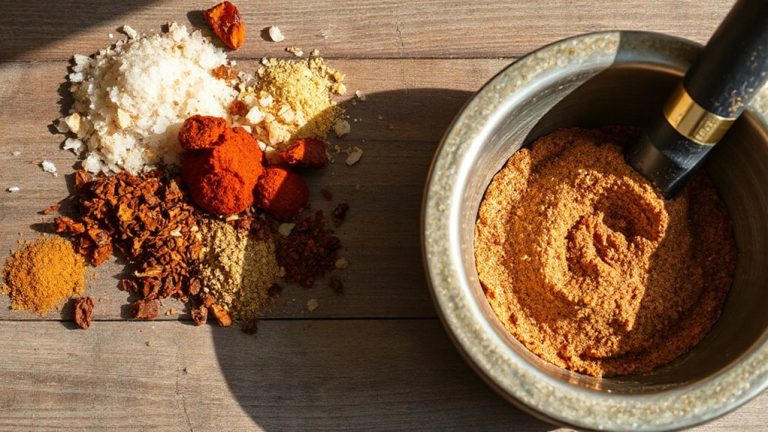
A single misstep in timing can undo even the most carefully planned backcountry meal, especially when temperatures drop and energy wanes at elevation. That’s where smart meal prep becomes essential. Pre-portioning ingredients before you hit the trail streamlines cooking when fuel is scarce and dexterity fades in cold air. Vacuum-sealing spices, grains, and dried proteins in precise ratios cuts measurement errors and speeds rehydration. Ingredient scaling matters-what works at sea level often needs recalibration above 8,000 feet, where water boils faster and flavors dilute. Packing pre-measured meals guarantees consistency and reduces pack weight. It also minimizes waste and exposure to elements during cooking. With proper planning, you maintain control over portion size, cook time, and nutrition. Pre-portioned ingredients aren’t just convenient-they’re a performance upgrade, letting you focus less on prep and more on enjoying high-elevation meals with greater efficiency and reliability. For long-term storage of wild game like deer meat, consider using a vacuum sealer designed for durability and consistent results, such as those recommended in reviews of the best vacuum sealers for deer meat.
Test Recipes at Home Before Going High
Even if you’re confident in your backcountry cooking skills, it’s wise to test your recipes at home before trusting them in thin mountain air-where mistakes cost more and fixes aren’t easy. Recipe testing lets you observe how ingredients react under altered conditions, especially when water boils faster and ovens perform differently at elevation. At home, you can adjust cooking times, tweak methods, and practice ingredient scaling without risk. For example, leavening agents may overreact, or liquids evaporate quicker, skewing results. Scaling ingredients accurately guarantees your meal portions remain consistent and flavorful when upsizing or downsizing. Test each dish at least once-preferably twice-to catch hidden flaws. This trial run also builds confidence in your system, reduces guesswork on the trail, and increases success with one-pot meals or foil wraps over open flames. Smart recipe testing isn’t overkill-it’s essential prep for reliable, satisfying high-country eats.
On a final note
You’ll need to adjust your campfire cooking at high altitudes-boiling happens faster, fires burn cooler, and baked goods collapse more easily. Controlling flame and pre-portioning ingredients makes meals more reliable. Testing recipes at home improves results in thin air. While challenges exist, smart techniques and preparation let you cook efficiently outdoors. Mastering these details elevates your high-elevation BBQ from hit-or-miss to consistently effective.